Search for:
How car seats work and common mistakes.
Car Seat Mistakes That Are Very Common

I remember sitting in a dimly lit hospital corridor during a night shift, listening to a father explain how he’d spent three hundred pounds on a “smart” car seat that promised advanced safety sensors, only to realize he’d installed it so poorly the base was practically pivoting on the upholstery. It’s a special kind of heartbreak when you realize that all that expensive tech doesn’t matter if you haven’t mastered the basics of how car seats work and common mistakes like the ones we all make when we’re running ten minutes late. The industry loves to sell you features that look great in a glossy brochure, but those features won’t do a damn thing if the harness is too loose or the angle is off by a few degrees.

I’m not here to sell you a premium model or recite a dry manufacturer’s manual at you. Instead, I want to give you the real-world mechanics of what keeps a child secure, stripped of the marketing fluff. I’ll walk you through the physics of a crash and the specific, frustrating errors I’ve seen—and made myself—when the sun is down and the kids are screaming. We’re going to focus on what actually keeps them safe, not just what looks good in the driveway.

Table of Contents

The Science of Impact Force Distribution vs Real World Chaos

The Science of Impact Force Distribution vs Real World Chaos.

The physics of a crash are brutal, and the whole point of a car seat is managing impact force distribution. In a textbook, the seat absorbs the energy and the harness keeps the child’s body positioned so they don’t become a projectile. The science is elegant: the shell manages the hit, and the straps manage the person. But science assumes a controlled environment, not a chaotic Tuesday morning where you’re trying to navigate a supermarket car park with a teething ten-month-old who has decided that being strapped in is a personal insult.

In the real world, the “perfect” physics often get undermined by small, tired mistakes. You might get the seat into the car, but if you haven’t done a proper harness tightness check, that force distribution fails. I remember with my second, I’d tighten the straps until my own fingers hurt, only to realize later that if you can pinch any fabric at the shoulder, the seat isn’t actually doing its job when it matters most. It’s not just about the seat being there; it’s about how that seat interacts with a moving, wiggly human being.

Child Passenger Safety Standards What the Manuals Leave Out
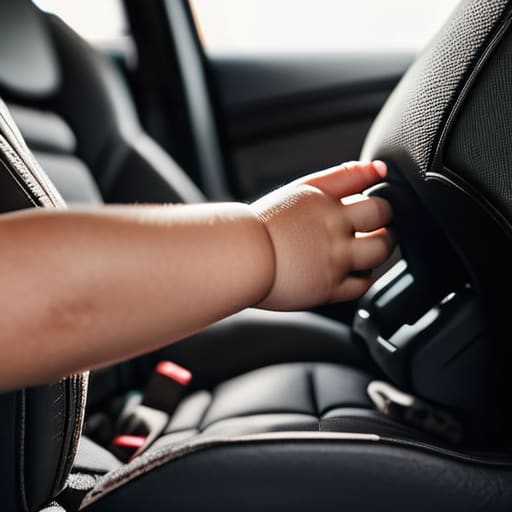
Child Passenger Safety Standards What the Manuals Leave Out

The official child passenger safety standards are written in a vacuum of perfect conditions. They assume you have a bright light, a steady hand, and the patience of a saint. In reality, most of us are wrestling a heavy, awkward plastic shell into a seat that seems designed to resist it, usually while a toddler is screaming in the background. The manuals focus heavily on the technicalities of convertible car seat stages and weight limits, but they rarely mention how much the seat can shift when you’re actually driving over a speed bump or navigating a tight supermarket car park.

One thing the textbooks don’t emphasize enough is the sheer physical reality of the harness tightness check. You can follow the instructions to the letter, but if you haven’t accounted for the thick, winter puffer jacket your four-year-old insists on wearing, that harness isn’t doing its job. I learned that the hard way with my second; I thought he was secure, but the extra padding created enough slack to negate the whole point of the restraint. It’s not just about following the rules; it’s about understanding how those rules fail when they meet a real, squirming human being.

How Car Seats Work and Common Mistakes We All Make

How Car Seats Work and Common Mistakes We All Make

The basic physics is simple: the seat is designed to turn a sudden, violent stop into a controlled deceleration. It’s meant to cradle the child and manage the impact force distribution so their little bodies don’t take the full brunt of the momentum. But physics doesn’t account for a two-year-old who decides to perform a full-body gymnastics routine the moment you pull out of the driveway.

The most common car seat installation errors I see aren’t usually about someone being careless; they’re about being tired. You think the base is locked in, but it’s actually pivoting just enough to be dangerous. Then there’s the harness. I used to tell parents in the ward that the straps should be snug, but I didn’t realize how much “snug” changes when a child is wearing a thick winter coat. You have to do the pinch test—if you can grab a fold of the webbing at the shoulder, it’s too loose. And please, for the love of sanity, check that chest clip placement is at armpit level. If it’s down by the belly, the seat isn’t protecting them; it’s just waiting for a moment of impact to fail.

The Harness Tightness Check Why Snug Isnt Enough

The manual tells you that the harness should be snug, but “snug” is a dangerous word because it’s subjective. When I was working on the ward, I saw plenty of kids who looked perfectly secure, only for their parents to realize later that the harness was loose enough for them to slide halfway out during a sudden stop. The real test isn’t how much you can pull the straps, but the pinch test. If you can grab the webbing at the shoulder and pinch it together between your thumb and forefinger, it’s too loose. It doesn’t matter how much you’ve tightened it; if there’s slack, the impact force distribution won’t work the way it’s designed to, and that’s when the seat fails to do its job.

I remember my second child, who was about 14 months old at the time, and how I’d swear the straps were tight, only to find him slumped in a way that looked terrifyingly unsupported. Most car seat installation errors aren’t about the base being wrong; they’re about the harness being too forgiving. You also need to watch that chest clip placement. It should be at armpit level, every single time. If it’s sitting too low on the tummy, a sudden jolt can cause the child to slide right out from under the straps. It feels pedantic when you’re just trying to get to the supermarket, but it’s the difference between a seat that holds and a seat that just sits there.

The transition through the various convertible car seat stages is where the theory of child passenger safety standards meets the messy reality of a growing child. On paper, it’s a logical progression: rear-facing until they hit a weight limit, then forward-facing. In practice, it’s a series of frantic checks while you’re trying to navigate a supermarket car park with a kid who has suddenly decided they hate being strapped in. I remember with my second, the moment we switched to forward-facing, I felt this strange mix of “they’re growing up” and a deep, nagging suspicion that I’d done something wrong.

The real trick isn’t just knowing when to switch, but understanding how the mechanics change. When you move to forward-facing, your focus has to shift entirely toward chest clip placement and ensuring that the harness isn’t just “snug,” but positioned correctly for the new angle of impact. It’s easy to get complacent once you’ve mastered the rear-facing setup, but that’s exactly when car seat installation errors tend to creep in. You aren’t just changing a strap; you are fundamentally changing how the seat manages force.

Tether Anchor Importance and the Chest Clip Placement Trap

Then there is the tether anchor, which is one of those things that sounds like a technicality until you’re staring at the back of a car seat wondering if you’ve actually secured it properly. Most manuals make it sound simple, but in the rush of a school run, it’s easy to overlook. The tether anchor importance cannot be overstated; it’s what stops the seat from rotating forward during a collision, effectively managing the impact force distribution so the child isn’t pitched forward. I remember with my second, I thought we were fine without it because the base felt solid, but the science is clear: without that top strap, the seat is essentially a projectile.

While you’re checking the anchors, don’t forget the chest clip. It’s a common one of those car seat installation errors that people make by sheer habit. You’ll find yourself clicking it too high, near the chin, because it feels “secure.” But if it’s not level with the armpits, it won’t do its job when it matters most. I’ve seen parents—and I’ve been one of them—fixating on the harness tightness check but completely missing that the clip is sitting way too high. Keep it at armpit level, even if it feels a bit low, and you’ll sleep a lot better.

The 'Real World' Checklist: Five Things to Check Before You Pull Out of the Driveway

  • The Pinch Test (The ‘Not-So-Snug’ Reality Check): The manual tells you to tighten the harness until it’s secure, but what that actually looks like is trying to pinch the webbing at the shoulder. If you can grab a fold of the strap between your thumb and forefinger, it’s too loose. I learned this the hard way with my second—he was three, a wiggle-worm by nature, and I thought he was ‘snug enough’ until I realized the strap had shifted halfway up his chest during a sharp turn.
  • The ‘Head-Tilt’ Trap: When you’re transitioning from a rear-facing infant carrier to a convertible seat (usually around 12 to 18 months, though every kid is different), watch the angle of their head. If they are slumped forward so their chin is hitting their chest, their airway can get compromised. It’s a terrifying thought, but usually, it just means the recline angle of the seat needs a slight adjustment. It’s not a sign of a broken seat; it’s just physics meeting a sleepy toddler.
  • The Bulky Coat Blunder: This is the one that kills me every winter. You want them warm, so you strap them in wearing a thick puffer jacket. The problem? That jacket compresses in a crash, leaving a massive, dangerous gap between the child and the harness. I’ve spent many a frosty morning wrestling a screaming toddler out of a coat just so I could get the straps tight against their actual body. Put the coat on over the harness once they are buckled.
  • The Chest Clip ‘Low-Rider’ Mistake: I see this constantly, and I did it myself. The chest clip isn’t there to keep them from sliding out of the seat; it’s there to keep the harness straps positioned correctly on their shoulders. If that clip is sitting down by their tummy, the straps will slide off their shoulders the second you hit the brakes. Aim for armpit level. If it’s too low, the whole physics of the seat fails.
  • The ‘One-and-Done’ Installation Check: We all do it. We install the seat, check it once, and then go about our day. But car seats move. Every time you load a heavy bag in the boot, or every time a child climbs in and out, that seat shifts. I tell parents to treat the installation like a daily check. A quick hand-shake of the seat base every single time you get in the car will save you from the creeping looseness that happens over weeks of use.

The Midnight Reality Check: Three Things to Remember When You’re Done

Trust the manual for the physics, but trust your gut for the reality; if you’re struggling to get a harness tight while a two-year-old is performing a gymnastics routine in the backseat, stop, take a breath, and try again when you aren’t both vibrating with frustration.

Safety isn’t a “set it and forget it” task; the harness that felt perfect during a calm Sunday afternoon might be dangerously loose by Tuesday morning after a heavy winter coat or a frantic school run.

Don’t let the “perfect” installation become the enemy of a “safe” one—if you’ve checked the tether, the chest clip height, and the tightness of the straps, you have done the work, and you can stop second-guessing yourself in the middle of the night.

The Reality Check

At the end of the day, we’ve covered a lot of ground—from the physics of impact force to the frustratingly specific way a chest clip needs to sit on a wriggling three-year-old. If you remember nothing else, remember that the manual is your baseline, but your intuition is your guide. Check those straps when you’re calm, check them again when you’re tired, and don’t be afraid to re-read the instructions even if you think you know them by heart. The goal isn’t to achieve some sterile, textbook perfection; it’s about making sure that when the unexpected happens, the seat is doing exactly what it was engineered to do. It’s about the small, repetitive things—the tightness of the harness, the position of the tether, the awareness of the transition stages—that bridge the gap between safety theory and real-world protection.

I know how it feels to sit in that driver’s seat, staring at a complicated array of buckles and clips while your toddler is having a full-scale meltdown in the rearview mirror. It feels like you’re failing a test you never studied for. But please, hear me on this: you are doing a hard thing. You are navigating a sea of conflicting advice and expensive gear, all while trying to get through a Tuesday. If you get the harness tight and the seat secure, you have done the job. Give yourself some grace. You don’t need to be a crash technician; you just need to be a parent who cares, and from where I’m sitting, that is more than enough.


How to eat together as a family.
Eating Together Even When Schedules Fight It

If you ever pick up a parenting magazine and see a glossy spread promising that “structured mealtime routines” are the secret to social cohesion, please, put it down. They make it look so peaceful—linen napkins, balanced plates, and children engaged in meaningful dialogue. In my house, trying to figure out how to eat together as a family usually involves a three-year-old deciding that broccoli is a personal insult and a six-year-old narrating a Minecraft level with the intensity of a football commentator. The textbooks treat dinner like a seminar, but they completely ignore the sheer, unadulterated chaos of trying to eat a warm meal while someone is actively using their peas as projectiles.

I’m not here to sell you on a lifestyle you can’t maintain once the kids are actually hungry. I’m going to tell you what actually works when you’re exhausted and the kitchen is a disaster zone. We’ll look at the difference between the clinical advice and the battle-tested reality of feeding four growing humans. I’ll give you the timescales for when the tantrums peak and when they finally settle, and I’ll be honest about the days when the only “family connection” you manage is all of you staring at your phones in silence.

Table of Contents

The Theory of How to Eat Together as a Family

The Theory of How to Eat Together as a Family.

The textbooks make it sound incredibly tidy. If you look at the clinical literature, they’ll tell you that strengthening family bonds through food is a cornerstone of child development. The theory suggests that by sitting down at a set time every day, you create a predictable rhythm that fosters emotional security. It’s all about improving communication at the dinner table—the idea being that a structured environment allows children to practice social cues and language skills while absorbing the nutritional benefits of a balanced plate.

In a perfect world, the theory posits that healthy mealtime routines for kids act as a buffer against the stresses of the day. You sit, you talk, you eat, and everyone leaves the table feeling connected and nourished. It sounds lovely on a glossy infographic. But the science often misses the nuance of the “failure modes.” It assumes that a child, say, three years old, is going to participate in a calm, bidirectional dialogue about their afternoon. In reality, the theory forgets that human biology is messy, and a hungry toddler isn’t a participant in a social experiment; they are a small, unpredictable force of nature.

Strengthening Family Bonds Through Food Versus the Actual Chaos

Strengthening Family Bonds Through Food Versus the Actual Chaos.

The textbooks love the idea of strengthening family bonds through food, painting this idyllic picture of a quiet table where everyone shares their feelings and learns about empathy. In theory, it’s the perfect setting for improving communication at the dinner table. But when I was sitting with my second child, who was about two and a half and had just discovered the particular joy of throwing peas like tiny, green grenades, that theory didn’t just fail—it evaporated. You aren’t “building connection” when you are physically bracing yourself against a highchair to prevent a slow-motion collapse.

The reality is that creating a positive mealtime environment often feels less like a bonding exercise and more like a tactical negotiation. You want to focus on reducing screen time during meals, but sometimes that iPad is the only thing standing between a semi-peaceful evening and a full-scale meltdown. I’ve learned that the nutritional impact of family dinners matters, sure, but if the price of a balanced plate is a parent vibrating with stress, the math doesn’t quite add up. Sometimes, the most successful “family meal” is just everyone managing to swallow something without a fight.

Healthy Mealtime Routines for Kids and the Midnight Reality Check

Healthy Mealtime Routines for Kids and the Midnight Reality Check

The clinical literature is obsessed with healthy mealtime routines for kids, usually focusing on the nutritional impact of family dinners and the supposed magic of consistent schedules. On paper, it’s simple: sit down at 6:00 PM, no distractions, everyone eats the same thing. But paper doesn’t account for the three-year-old who has suddenly decided that broccoli is a personal insult, or the ten-year-old who is too deep in a gaming session to hear you calling them. I remember with my second, when I tried to enforce a strict “no electronics” rule to aid in improving communication at the dinner table. For three days, it was a battlefield of silent glares and heavy sighs.

The midnight reality check is this: a routine is only as good as your ability to survive it without losing your temper. When you’re exhausted and the house is a mess, the “perfect” environment feels like a cruel joke. I’ve learned that creating a positive mealtime environment isn’t about the perfect seating arrangement or a balanced plate; it’s about whether you can actually sit down and breathe for twenty minutes without feeling like you’re failing a test. Sometimes, the most successful routine is just making sure everyone gets fed, even if it’s in shifts.

Improving Communication at the Dinner Table Without the Shouting Matches

The textbooks love to talk about improving communication at the dinner table as if it’s a calm, meditative exchange of ideas. They suggest asking open-ended questions to encourage emotional intelligence. In theory, it’s lovely. In practice, when you have a four-year-old who only wants to discuss the structural integrity of a Lego tower and a ten-year-old who is currently in a state of silent, hormonal protest, “open-ended questions” usually just lead to someone throwing a pea or a heavy, awkward silence.

I learned the hard way—specifically when my second was five and my eldest was seven—that you can’t force connection. If you try to turn dinner into a mandatory therapy session, you aren’t creating a positive mealtime environment; you’re just hosting a very small, very hungry interrogation. Instead, I found that the best way to actually start talking is to stop trying so hard. Sometimes, the most productive thing you can do is just sit there, model a bit of calm, and stop the interrogation. It’s about lowering the stakes. When the pressure to “communicate” vanishes, that’s usually when they finally decide to tell you why they’re actually cross.

Reducing Screen Time During Meals While Fighting the Digital Battle

The textbooks are incredibly loud about reducing screen time during meals. They talk about “distraction-free environments” and “mindful eating” as if you’re sitting in a quiet meditation retreat rather than a kitchen with a four-year-old who has just discovered they can use a spoon as a catapult. The theory is that if the iPad goes away, the child will focus on the food and the conversation. In practice, the iPad is often the only thing standing between a relatively peaceful meal and a full-scale negotiation over why we can’t have chocolate for breakfast.

I remember with my second, when I tried the “no screens at the table” rule religiously. By day three, I was staring at a bowl of lukewarm pasta, feeling like a failure because my toddler was having a meltdown because he couldn’t watch Bluey while chewing. We eventually found a middle ground. It wasn’t about perfection; it was about creating a positive mealtime environment that didn’t involve everyone feeling like they were in a disciplinary hearing. Sometimes, a bit of background noise is better than a silent, tense standoff.

The Nutritional Impact of Family Dinners and Why Perfection Is a Lie

If you look at the clinical studies, the data is pretty clear: the nutritional impact of family dinners is significant. When kids sit down with adults, they tend to eat more vegetables, consume less processed junk, and actually listen to satiety cues. In my nursing days, we talked about this in terms of long-term metabolic health. The theory is that a predictable, seated meal provides a steady foundation for growth. It sounds lovely on paper, doesn’t it? A calm, nutrient-dense ritual that sets the stage for a lifetime of good habits.

But here is the part the journals leave out: the nutritional benefit of a broccoli floret is almost entirely negated by the cortisol spike of a parent having a meltdown because the toddler decided the peas were “too green” today. When I was trying to implement healthy mealtime routines for kids, I quickly learned that a child who is stressed, rushed, or being forced to eat through tears isn’t actually absorbing the benefits of that meal. Perfection is a trap. If you spend forty minutes plating a rainbow of organic produce only for it to end in a battlefield, you haven’t failed at nutrition; you’ve just had a very long Tuesday.

Five ways to survive the table without losing your mind

  • Forget the “five-a-day” pressure cooker. When my second was two, I spent every dinner panicking that the broccoli wasn’t being eaten enough. The reality? If they eat three bites of something green and then spend the rest of the meal negotiating for more pasta, call it a win. The goal is being at the table together, not passing a nutrition exam.

  • Lower the bar on the menu. The textbooks suggest “interactive meal preparation,” which sounds lovely until you realize a four-year-old treats flour like confetti. Some nights, “eating together” just means we all sat around a pile of toasted sandwiches because I didn’t have the bandwidth for a roast. That counts.
  • Use the “High-Low” trick for conversation. Asking “How was your day?” is a one-way ticket to a one-word answer. When my oldest was six, we started doing “Highs and Lows”—the best part of the day and the worst. It gives them a structure, and more importantly, it gives you permission to admit your “low” was a stressful meeting, which makes you human.
  • Accept the “Exit Strategy.” There is no rule that says a toddler has to sit for thirty minutes. If they’ve had ten minutes of decent engagement and then decide they need to go play with a plastic dinosaur, let them go. Forcing them to stay just turns the dinner table into a battleground, and you won’t get any meaningful connection out of a child who is actively simmering with resentment.
  • Ditch the “Good Job” commentary. I used to praise every single bite, thinking I was building a healthy relationship with food. It didn’t work; it just made them perform for me. Now, I focus on the atmosphere. If the table feels safe and the shouting has stopped, you’ve succeeded. The nutrition will follow the stability.

The Reality Check Summary

Forget the “perfect” mealtime; if you manage to sit down together for even fifteen minutes without a screen or a meltdown, you’ve won the day. The goal isn’t a picture-perfect scene for Instagram, it’s just being in the same room.

Focus on the connection, not the nutrition. You can’t force a three-year-old to eat broccoli while you’re trying to have a meaningful conversation, so pick your battles: either eat the veg or have the chat, but trying to do both at once is a recipe for a headache.

Flexibility is your best tool. The clinical guidelines suggest a rigid routine, but life with four kids means some nights are about a calm family dinner and other nights are about surviving a pasta spill and getting everyone to bed. Both are okay.

The Long Game of the Dinner Table

If you try to implement everything we’ve discussed—the routines, the screen-free zones, the nutritional balance—all at once, you are going to have a very bad Tuesday. I know, because when my second child was three, I tried to turn dinner into a silent, meditative nutrition seminar, and it ended with a bowl of peas being launched at the hallway mirror. The reality is that family meals are a messy compromise between what the paediatric textbooks suggest and the sheer exhaustion of being a human being. Some nights you’ll manage the connection and the conversation; other nights, you’ll be lucky if everyone eats something that isn’t a plain piece of toast. The goal isn’t a perfect, Instagram-ready tableau of domestic harmony; it’s simply about showing up, even when it’s chaotic.

At the end of the day, your children won’t remember if the vegetables were perfectly steamed or if you managed to keep the iPad out of their hands for the full thirty minutes. They will remember the feeling of being in the same room as you, the sound of your voice, and the fact that there was a place set for them. Parenting is a marathon of small, often frustrating, repeated actions. Don’t let the pursuit of a “perfect routine” rob you of the joy of the imperfect reality. Just sit down, take a breath, and eat what you can. You’re doing better than you think you are.

Complete guide to returning to work book.
The Complete Guide to Returning to Work

I remember sitting in the staff room during a night shift, staring at a glossy HR pamphlet that promised a “seamless transition” back into professional life. It was filled with diagrams about time management and “optimising childcare synergies,” but it felt like it had been written by someone who had never actually had to negotiate a toddler’s meltdown while trying to join a Zoom call. If you are looking for a polished, corporate-approved complete guide to returning to work that ignores the reality of sleep deprivation and the sheer guilt of leaving your baby for the first time, you’ve come to the wrong place.

I’m not here to give you a checklist of productivity hacks that only work in a vacuum. Instead, I want to talk about the messy, unscripted stuff: how to handle the first week when your brain feels like it’s made of cotton wool, and how to manage the logistical nightmare of the school run when everything goes wrong at once. I’ll give you the evidence-based strategies that actually hold up, paired with the hard-won lessons I’ve learned from four different children. We’ll look at what works, what fails spectacularly, and how to survive the transition without losing your mind.

Table of Contents

The Complete Guide to Returning to Work Theory vs Reality

The Complete Guide to Returning to Work Theory vs Reality

The textbooks and HR handbooks love to talk about a phased return to work plan, as if you can simply dial your capacity up from zero to sixty like a volume knob. They suggest you start with two days a week, ease into meetings, and gradually reclaim your professional identity. On paper, it’s logical. In practice, it’s a collision course. You’ll find that while you’re trying to “ease in” at the office, your toddler—who was perfectly fine for the last six months—has suddenly decided that your departure is a profound personal betrayal. You aren’t just managing a workload; you are managing a full-scale domestic revolution while trying to remember your login credentials.

Then there is the concept of managing work-life balance after leave. The theory suggests you can set boundaries and maintain equilibrium. The reality is that you will likely spend your first month back feeling like a fragmented version of yourself, oscillating between professional competence and the crushing realization that you forgot to pack a clean change of clothes for the baby. You aren’t just re-establishing workplace routines; you are attempting to rebuild a life that has fundamentally shifted its axis.

The Phased Return to Work Plan Navigating the First Week

The Phased Return to Work Plan Navigating the First Week

On paper, a phased return to work plan looks like a tidy little ladder: Monday you’re in for four hours, Wednesday for six, and by week three, you’re a full-time professional again. It’s a logical way to ease back in. But in reality, that first week is less of a ladder and more of a tightrope walk over a pit of Lego. When I went back after my second, I thought I’d mastered the art of the “soft landing,” only to find that my toddler had decided my departure was a personal betrayal. You aren’t just re-establishing workplace routines; you are simultaneously trying to rebuild a sense of self that hasn’t been interrupted by teething or sleep deprivation.

The biggest trap is the expectation that you can somehow “switch on” your old productivity levels immediately. You can’t. You’ll be sitting in a meeting, nodding at a spreadsheet, while your brain is actually running a high-stakes simulation of whether the daycare provider has remembered to feed your child lunch. Overcoming parental guilt at work isn’t about finding a magic mental switch; it’s about accepting that you are going to be slightly less efficient for a while, and that is perfectly okay.

Employment Rights During Reintegration Knowing What You Are Owed

Employment Rights During Reintegration Knowing What You Are Owed

Now, I’m not a solicitor, and I’m certainly not the person you want in a courtroom, but I spent enough years in the NHS to know that knowing your rights is the only thing that keeps you from feeling like you’re begging for permission to exist. When we talk about employment rights during reintegration, the textbooks make it sound like a tidy, bureaucratic process. In reality, it often feels like you’re negotiating for your life while trying to remember if you actually packed a spare change of clothes for the toddler. You have a right to your contract, a right to your statutory entitlements, and a right to be treated as a professional, not a “distracted parent.”

The gap between what is legal and what is actually possible is where the stress lives. You might have a formal phased return to work plan on paper, but if your manager is looking at you like you’ve just handed in your resignation because you need to leave at 4:30 PM, that paperwork won’t stop the sinking feeling in your gut. Don’t let the “polite” culture of an office make you feel like you’re asking for a massive favour. You aren’t. You are simply re-establishing the boundaries that allow you to be both a functioning employee and a person who isn’t constantly apologizing for having a family.

Re Establishing Workplace Routines Without Losing Your Entire Mind

The theory of re-establishing workplace routines suggests you’ll simply slot back into your old rhythms like a well-oiled machine. In reality, you’re trying to recalibrate a life that has been fundamentally rearranged. When my second child was eighteen months old, I thought I could master the “lunch hour gym session” and the “structured evening wind-down” simultaneously. I was wrong. The reality is that your capacity for complex problem-solving is often hijacked by the mental load of wondering if the toddler actually ate their broccoli or if the baby has a fever. Managing work-life balance after leave isn’t about finding a perfect equilibrium; it’s about accepting that some days the balance will be heavily tilted toward survival.

Don’t try to overhaul everything in week one. If you attempt to reclaim your professional identity, your fitness regime, and a tidy house all at once, you will crash by Wednesday. Start with one anchor—perhaps it’s a set time you leave the office or a specific way you handle the school run. I found that lowering the bar for domestic perfection was the only way to keep my head above water while navigating the mental shift back to a desk. Focus on the small, repeatable wins.

Managing Work Life Balance After Leave and the Midday Meltdown

The theory of managing work-life balance after leave looks beautiful on a spreadsheet. It involves “setting boundaries,” “prioritising tasks,” and “utilising childcare providers.” In practice, it usually looks like you sitting in a Zoom meeting with one hand on your camera and the other frantically searching for a lost shoe, praying the toddler doesn’t decide that the hallway is the perfect place for a tantrum. When my second child was eighteen months old, I thought I had mastered the art of the “seamless transition.” I was wrong. The reality is that your brain is now split into two different hemispheres: one focused on quarterly targets, and the other hyper-vigilant about whether the nursery has actually fed them lunch.

Then comes the midday meltdown. It’s rarely a grand, cinematic event; it’s usually a sudden, crushing wave of overwhelming parental guilt that hits you right around 1:00 PM. You’re staring at an email, but all you can think about is the look on your child’s face when you dropped them off that morning. It’s a heavy, hollow feeling, and no amount of professional “time-management hacks” can fix the fact that you feel like you’re failing at both jobs simultaneously.

Overcoming Parental Guilt and Seeking Mental Health Support at Work

The guilt is a heavy, physical thing. It’s that hollow ache in your chest when you’re sitting in a meeting, staring at a spreadsheet, while your brain is halfway across town wondering if your two-year-old actually ate their lunch or if they’re currently trying to eat a Lego. I remember when my second went to nursery; I spent my entire lunch break feeling like a criminal for being productive. You feel like you’re failing your employer by being distracted, and failing your child by being absent. But here is the clinical truth I learned on the wards: you cannot pour from an empty cup. Overcoming parental guilt at work isn’t about magic; it’s about accepting that you are now a person with two distinct, demanding roles, and you will occasionally be mediocre at both.

If the guilt starts to morph into something darker—anxiety that keeps you awake or a sense of dread when the alarm goes off—please don’t just “tough it out.” Most companies have formal mental health support for returning employees, but they won’t always knock on your door to offer it. You have to be the one to flag it. Whether that’s through an Employee Assistance Program or a quiet word with your manager about adjusting your hours, asking for help isn’t a sign that you can’t handle the transition; it’s a tactical move to ensure you actually survive it.

Five Things the HR Handbook Won't Tell You About Day One

  • Build a “Buffer Zone” into your schedule, because the transition from toddler-chaos to professional-composure isn’t a light switch. When my second child was eighteen months, I tried to jump straight from a morning of spilled milk and tantrums into a 9 AM Zoom call; I spent the first ten minutes staring at the screen, unable to remember my own middle name. Give yourself twenty minutes of silence—even if it’s just in the car—before you log on.
  • Treat your childcare provider like a professional partner, not a service. The experts say “establish clear communication,” but what that actually looks like is having a WhatsApp group or a notebook where you can exchange the vital, unglamorous data: did they eat? did they nap? did they have a blowout? When my oldest was two, knowing exactly how many hours of sleep she’d actually managed meant I knew whether I was dealing with a “cranky” afternoon or a “total meltdown” afternoon.
  • Stop trying to be the “Old You” immediately. There is a specific kind of grief in realizing you can no longer stay late for a drink or tackle a massive project without checking your phone every twelve minutes. I spent the first month back with my third child trying to prove I hadn’t lost my edge, and I ended up exhausted and ineffective. Accept that you are a different version of yourself now—one with more context and less free time—and work from that reality.
  • Prep your “Emergency Kit” the night before, and I don’t mean for work. I mean the mental and physical kit for when the childcare falls through or the child wakes up with a fever at 4 AM. When my fourth was a baby, I learned that having a pre-decided “Plan B” (a specific relative, a backup sitter, or a known day of remote work) saves you from the paralyzing panic that happens when the phone rings at dawn.
  • Lower the bar for “success” at home during the first month. The guidance says “maintain routines,” but the reality is that your house will be a mess and your dinners will be more toast than actual meals. When I first went back to work, I tried to keep the house spotless while managing a full workload and four kids; I failed miserably and felt like a terrible parent. It is okay if the laundry stays in the basket for a week; your priority is reintegrating your professional self without burning out your domestic one.

The Reality Check: Three Things to Hold Onto When the Dust Settles

The “perfect” transition plan is a myth; your actual success won’t be measured by how well you follow a spreadsheet, but by how quickly you learn to pivot when the daycare calls or the toddler decides sleep is optional.

Protect your legal rights like they’re your most precious resource, because while your manager might be lovely, the HR handbook is what actually keeps your flexible working arrangements from evaporating when things get busy.

Forgive yourself for the guilt and the exhaustion; you aren’t failing at being a professional or a parent, you’re just navigating a massive physiological and emotional shift that no amount of “expert advice” can fully prepare you for.

The Reality Check You Actually Need

We’ve covered a lot of ground here, from the legalities of your rights to the messy, unscripted reality of that first week back. If you try to follow every piece of advice in this guide to the letter, you’re going to burn out by Tuesday. The truth is, you can plan your phased return and your childcare transitions all you want, but there will still be mornings where the toddler has a meltdown because their toast was cut into triangles instead of squares, and you’ll end up logging onto a Zoom call feeling like a complete fraud. The goal isn’t to achieve a flawless reintegration; the goal is to find a rhythm that doesn’t leave you feeling like a stranger to both your job and your children.

If you’re sitting there right now feeling like you’re failing at both ends of the spectrum, please listen to me: you aren’t. I’ve seen parents on the ward who were managing everything perfectly on paper, and I’ve seen my own four kids turn my most “expert” plans into absolute chaos. This transition is a marathon, not a sprint, and it’s okay if you stumble in the first few miles. Give yourself the same grace you’d give a patient recovering from surgery. You are doing a hard thing, and while the “perfect balance” might be a myth, finding your footing is entirely possible. Just take it one school run at a time.

Tips on how to manage sibling rivalry.
Sibling Fights: Referee Less, Coach More

I remember sitting on the floor of my hallway when my middle two were four and six, watching them tear into each other over a single, headless dinosaur. The internet is full of glossy articles telling you that you need “structured mediation” or “emotional intelligence workshops” to fix the problem, but nobody tells you that those theories tend to evaporate the moment someone actually gets a bloody nose. Most of the advice on how to manage sibling rivalry is written by people who have never had to referee a battle while trying to stir a pot of pasta and prevent a toddler from eating a crayon. It’s easy to talk about conflict resolution when your house is quiet and your coffee is still hot.

I’m not here to give you a list of perfect, textbook solutions that only work in a vacuum. What I want to do is bridge the gap between what the nursing manuals say and what actually happens when the screaming starts. I’ll give you the evidence-based tactics that actually hold up, but I’ll also tell you when you should just walk into the other room and let them settle it themselves. We’re going to look at what works, why it fails, and how to survive the chaos without losing your mind.

Table of Contents

Understanding How to Manage Sibling Rivalry

Understanding How to Manage Sibling Rivalry.

The clinical approach to this is usually framed around conflict resolution for children, which sounds lovely on a training seminar. The theory suggests that if you step in as the mediator, you can teach them to use their words and negotiate their needs. But when I was dealing with my second and third in quick succession, I learned that “negotiation” is a hard sell to a three-year-old who has just decided that his brother’s dinosaur is actually his dinosaur. In those moments, you aren’t a mediator; you are a weary peacekeeper trying to prevent a domestic incident.

The reality is that much of the fighting stems from dealing with jealousy in children—a natural, biological response to a perceived threat to their resources (which, in toddler terms, means your attention and the blue Lego brick). While the books focus on promoting sibling bonding through shared activities, they often skip the messy middle part: the territorial disputes. You can’t force a bond, but you can manage the environment. I’ve found that the most effective way to lower the temperature isn’t to force them to be best friends, but to focus on setting boundaries between siblings that actually hold up when the room is spinning.

Key Things to Know

Key Things to Know: conflict resolution.

First, you need to understand that fighting isn’t necessarily a sign that you’re failing; it’s often just a sign that they’re practicing being humans. When my second and third were about three and five, the house sounded like a construction site. The clinical literature talks about conflict resolution for children as if it’s a polite negotiation over tea, but in reality, it’s usually a desperate scramble to reclaim a stolen toy or a bit of territory. You can’t teach them to share when they’re in the middle of a full-blown meltdown; at that point, you’re just a referee in a very loud, very sticky arena.

The goal isn’t to stop the friction entirely—that’s impossible—but rather about setting boundaries between siblings so the chaos doesn’t become the permanent house rule. I found that once my oldest hit six, we could actually start talking about how they fought, rather than just shouting “stop it.” It’s about moving from pure damage control to teaching them how to navigate the inevitable clashes. It takes a long time, a lot of patience, and usually a fair amount of caffeine.

Practical Tips and Steps

Practical Tips and Steps for sibling conflict.

When you’re in the thick of it, the textbooks suggest “conflict resolution for children” through calm, mediated discussion. That sounds lovely in a seminar, but it’s a lot harder when a three-year-old is mid-tantrum and a five-year-old is trying to use their brother as a human shield. My practical approach starts with setting boundaries between siblings that are actually enforceable. For my middle two, when they were four and six, I stopped trying to play judge and jury over who started the fight. Instead, I focused on the immediate physical safety. If they’re hitting, they separate. Period. You can’t teach empathy while they are in a state of neurological red-alert.

Once the dust has settled—and I mean really settled, usually twenty minutes later when everyone has stopped vibrating with rage—that’s when you try the teaching part. I’ve found that promoting sibling bonding doesn’t happen during the fight; it happens in the quiet moments afterward. I used to try to force them to “make up” immediately, which was a disaster. Now, I wait until they can actually speak. When my eldest was seven, I learned that the most effective way to handle the fallout wasn’t a forced apology, but helping them find a way to repair the connection on their own terms.

Common Mistakes to Avoid

The biggest mistake I see—and I’ve made it myself, usually when I’m too tired to think straight—is the urge to play judge and jury. When the screaming starts over a stolen toy, the instinct is to rush in, find the “guilty” party, and hand out a sentence. But when you’re constantly playing referee, you aren’t actually teaching conflict resolution for children; you’re just teaching them that the person who yells loudest or cries the hardest gets the win. I remember with my second, when he was about three, I tried to be the “fair” parent by splitting everything down the middle. It didn’t work. It just turned every afternoon into a high-stakes negotiation that left us all exhausted.

Another trap is trying to force “harmony” through sheer willpower. You can’t mandate promoting sibling bonding by making them sit together and play nicely; that usually just leads to more resentment. Instead of trying to fix the relationship in the heat of the moment, focus on setting boundaries between siblings that actually hold up. If they are hitting, the play stops. It’s not about being mean; it’s about providing the guardrails they aren’t capable of building themselves yet.

Final Thoughts

If you’re sitting there feeling like you’ve failed because your house sounds like a battlefield, please hear me: you haven’t. I’ve spent a decade in clinical settings watching “perfect” families crumble under the weight of a single broken toy, and I’ve spent my own living room doing the exact same thing. There is no magic switch for promoting sibling bonding that suddenly turns a chaotic household into a peaceful sanctuary. You can implement every parenting strategy in the book, but when a three-year-old decides a five-year-old’s Lego tower is a target, the theory goes right out the window.

The goal isn’t to eliminate the noise; it’s to ensure the noise doesn’t break you. Focus on setting boundaries between siblings that actually stick, but allow for the messy, loud, and often unfair reality of growing up together. Some days you will be the calm mediator, and some days you will just be the person trying to survive until bedtime. Both are okay. Just remember that the friction they are feeling now is often just the growing pains of learning how to exist alongside another person.

Five things that actually work (and the ones that don't)

  • Stop playing judge and jury. The textbooks tell you to get to the bottom of “who started it,” but when you’re standing in a kitchen covered in spilled milk, you don’t have the bandwidth for a forensic investigation. When my second and third were four and two, I learned that trying to find the truth usually just gives both kids an audience to perform for. Instead of “who did this?”, try “I can see you’re both angry, so we’re going to sit in separate corners until the screaming stops.” It’s not a permanent fix, but it stops the escalation.
  • Watch out for the “fairness” trap. Kids have a biological radar for perceived injustice that would put a Supreme Court justice to shame. If you give one child a bigger slice of toast or five minutes more of screen time, you aren’t just being “unfair”—you are effectively declaring war. I used to try to make everything perfectly equal, but by the time my oldest was six, he realized that if he complained enough, he could manipulate the “equality” rule. Now, I aim for equity: “You get the blue plate because you’re using the red one,” rather than “Everyone gets the exact same thing regardless of the chaos.”
  • Don’t fear the “special time” tax. It sounds like a chore, but giving each child ten minutes of undivided, phone-free attention a day is the best preventative medicine for jealousy. When my youngest was eighteen months, I found that if I spent ten minutes just sitting on the floor playing whatever nonsense he wanted, the older two were significantly less likely to try and sabotage his play later that afternoon. It’s a high upfront cost in time, but it pays dividends in fewer meltdowns.
  • Validate the feeling, even if the behavior is rubbish. This is the hardest one to do when you’re exhausted. The clinical advice is to “acknowledge their emotions,” which sounds lovely in a seminar, but it’s incredibly difficult when a five-year-old is trying to bite a three-year-old. I’ve learned to say, “It’s okay to be angry that your brother broke your tower, but it is not okay to hit him.” You’re separating the emotion (which is valid) from the action (which is unacceptable). It doesn’t stop the crying immediately, but it stops the child from feeling like they’re “bad” just because they’re mad.
  • Accept that some fighting is actually healthy development. This is the part that helps me sleep at night. In the ward, I saw plenty of kids who were “perfect” siblings, and often they were just the ones who had learned to suppress everything to keep the peace. A bit of bickering over a Lego brick or a seat in the car is often just them testing boundaries and learning how to exist as separate individuals. If they aren’t fighting at all, they might not be learning how to negotiate. Only step in when it turns physical or becomes a cycle of genuine cruelty.

The Reality Check

The textbooks will tell you to be the “impartial mediator,” but when you’re standing in a kitchen covered in flour and two four-year-olds are screaming over a stolen dinosaur, your priority isn’t justice—it’s peace. Aim for de-escalation first and “fairness” second; you can sort out the truth once everyone has stopped shouting.

Conflict is actually how they learn to navigate the world, even if it feels like they’re just practicing how to be professional nuisances. When they’re around three or four, these little skirmishes are their version of a boardroom negotiation, so try not to view every spat as a sign of a failing household.

There is no “magic fix” that works for every child, because your two kids will have entirely different temperaments. What worked for my eldest at age five—giving them a specific “job” to do to distract them—was a total disaster for my second, who just wanted to be heard. Listen to the specific child in front of you, not the manual.

The Long Game

If you take anything away from this, let it be that sibling rivalry isn’t a sign that you’ve failed or that your children are fundamentally broken; it’s actually a sign they are learning how to be humans in a very small, high-pressure environment. We’ve talked about the importance of individual time, the necessity of staying neutral when the shouting starts, and why those “textbook” mediation techniques often fall apart when a four-year-old is mid-meltdown. You can’t stop the friction entirely—it’s part of the physics of living together—but you can change how you respond to the heat. Focus on being the steady anchor rather than the judge, and remember that most of these battles are about much more than a stolen toy; they are about territory, attention, and the messy process of growing up.

There will be nights when the screaming feels endless and you feel like you’re just refereeing a series of increasingly creative injustices. I’ve been there, usually sitting on the floor of a darkened hallway, wondering when the peace and quiet actually kicks in. But looking back at my own four, I can tell you that the intensity of the rivalry usually shifts with the ages, and the skills they are fighting over now are the very same ones that will help them navigate relationships as adults. Give yourself some grace on the days when you lose your cool or pick the wrong side. You aren’t building a perfect family; you’re building a resilient one, one chaotic afternoon at a time.

How to handle clinginess and separation anxiety.
Separation Anxiety and the Goodbye That Helps

I remember sitting on the edge of a plastic hospital bed in the paediatric ward, watching a mother try to follow the “distraction technique” she’d read about in a glossy parenting magazine. Her two-year-old wasn’t just crying; he was screaming with a primal, bone-deep terror that no colorful picture book or rhythmic shaking could touch. The textbook says to encourage independence through gradual exposure, but it doesn’t account for the way a child’s hands turn into velcro the moment you try to step toward the door. If you are currently wondering how to handle clinginess and separation without losing your own mind, you aren’t doing anything wrong—you’re just dealing with the messy, unscripted reality that the brochures conveniently leave out.

In this post, I’m going to skip the academic jargon and give you the truth from both sides of the clinical desk. I’ll tell you what the developmental milestones actually look like in practice, and more importantly, I’ll share what worked for my own kids at eighteen months versus when they were three. We’ll look at the difference between a healthy attachment and a reason to call the doctor, providing you with concrete strategies that actually survive the 2:00 AM meltdown.

Table of Contents

What the Manual Says vs the Reality of Clinginess

What the Manual Says vs the Reality of Clinginess

If you pick up a textbook on child development, it’ll talk about “attachment styles and clinginess” in very tidy, clinical terms. It’ll tell you that this phase is a “normal developmental milestone” and suggest that you focus on building emotional independence in children by gradually increasing the time you spend apart. On paper, it sounds like a simple matter of logical progression—step one, leave for five minutes; step two, leave for ten. It makes it sound like you’re just calibrating a piece of machinery.

But the manual doesn’t account for the way a two-year-old’s grief feels like a genuine emergency. When my second, Leo, hit that stage at eighteen months, he didn’t just “show signs of transition anxiety”; he turned into a human barnacle. There is a massive gulf between the theory of fostering self-confidence in toddlers and the reality of trying to walk from the front door to the car while a child is screaming as if you’re heading off to a war zone. The books suggest you stay calm and consistent, but they rarely mention the sheer, bone-deep exhaustion of being clung to like a life raft when you’re already running on four hours of sleep and a lukewarm coffee.

Decoding Attachment Styles and Clinginess Without the Guilt

Decoding Attachment Styles and Clinginess Without the Guilt.

When you start googling, you’ll run straight into the heavy-duty psychological terms. You’ll see talk of attachment styles and clinginess, categorising your child into ‘secure’, ‘avoidant’, or ‘ambivalent’. It sounds very clinical, very tidy, and—if I’m being honest—completely unhelpful when you’re standing in the hallway trying to get out the door. In the ward, I saw kids who were “perfectly secure” on paper but would absolutely melt down the second their primary caregiver turned a corner.

The truth is, clinginess isn’t a personality flaw or a sign of a “bad” attachment; it’s usually just a child’s way of testing the boundaries of their world. My second child, Leo, was a textbook “velcro baby” around eighteen months. He wasn’t broken; he was just learning how to be a person separate from me. Instead of worrying about long-term psychological damage, I found it more useful to focus on building emotional independence in children through small, predictable wins. It’s less about fixing a temperament and more about proving to them, over and over again, that even when you leave the room, you always, inevitably, come back.

How to Handle Clinginess and Separation When Everything Breaks

How to Handle Clinginess and Separation When Everything Breaks

When everything breaks—when the toddler is screaming because you’ve picked up a spatula instead of a toy, or when the preschooler is physically fused to your leg—you have to stop trying to “fix” the emotion and start managing the environment. The textbooks suggest building emotional independence in children through gradual exposure, which sounds lovely in a quiet office. In practice, it usually looks like you standing in a doorway, feeling like a villain, while your three-year-old mourns your departure as if you’re heading off to war.

My advice? Stop fighting the wave and start using effective goodbye rituals for kids. When my second child was two, we started a “pocket kiss” ritual—I’d blow a kiss into their palm and tell them to keep it for later. It felt silly, almost patronizing, but it gave them a tangible thing to hold onto. It’s not about curing the anxiety; it’s about providing a bridge. You aren’t teaching them not to be scared; you are teaching them that the separation is temporary and that you always, without fail, return.

Real World Toddler Separation Anxiety Coping Strategies That Actually Work

When I was working the wards, I saw parents try to “sneak out” to avoid a scene. It feels like a mercy in the moment, but it’s a disaster for the child’s trust. Instead, you need effective goodbye rituals for kids. My second, Leo, was a terror about this at eighteen months. We settled on a “special handshake”—two claps and a nose boop. It sounds ridiculous, but it gave him a predictable script. The goal isn’t to stop the tears; it’s to provide a sense of ceremony that says, I am leaving, but I am coming back.

For the bigger shifts, like starting nursery or a new playgroup, you’re essentially managing transition anxiety through micro-steps. Don’t go from zero to an eight-hour day. When my eldest, Maya, was two and a half, we started with “practice separations”—leaving her with a grandparent for just twenty minutes while I went to the shops. You have to build that muscle of independence in small, manageable increments. It’s exhausting to keep track of the schedule, but it works far better than the “cold turkey” approach the brochures often suggest.

Managing Transition Anxiety and Effective Goodbye Rituals for Kids

The textbooks will tell you that consistency is the golden rule for managing transition anxiety, but they rarely mention the sheer willpower it takes to stay consistent when your three-year-old is currently treating your leg like a climbing frame. In my experience, the goal isn’t to force them to be brave; it’s to make the exit feel predictable rather than like a sudden disappearance. This is where effective goodbye rituals for kids come in. It might be a specific secret handshake, a “pocket kiss” they can keep with them, or a silly phrase you only say at the door. My second child, Leo, wouldn’t let me leave the house unless we did a very specific “high-five, low-five, nose-boop” sequence. It felt ridiculous at 8:00 AM, but it gave him a sense of control over a moment that usually felt chaotic.

The trick is to keep these rituals short. If you linger, you’re inadvertently teaching them that the goodbye is a negotiation, which only fuels the fire. When I was nursing on the ward, I saw how much a clear, calm exit helped kids settle; the same applies at home. You want to focus on fostering self-confidence in toddlers by showing them that you are leaving, but—and this is the part that matters—you are always, always coming back.

Building Emotional Independence in Children Without Losing Your Mind

The tricky thing about building emotional independence in children is that it feels like a massive contradiction. You’re essentially trying to teach someone how to be okay without you, while your entire biological and professional instinct is to scoop them up and shield them from every scrap of discomfort. When my second child was about eighteen months, I thought I was doing everything right—the rituals, the calm voice, the steady presence—but every time I tried to step back, the meltdown was so visceral it felt like I was failing a fundamental test of parenting.

The secret isn’t about pushing them away; it’s about scaffolding. In the ward, we used to talk about gradual exposure, and it’s the same at home. You don’t start by leaving for a weekend; you start by leaving the room for thirty seconds while they play with something they actually love. You’re fostering self-confidence in toddlers by proving, in tiny, manageable increments, that the world doesn’t end when your shadow disappears. It’s slow, it’s frustrating, and there will be days where you end up sitting on the floor next to them anyway, and that’s perfectly fine.

Five Ways to Survive the Clingy Phase Without Losing Your Sanity

  • Stop the “Slow Fade” goodbye. The textbooks suggest a gradual withdrawal to avoid upsetting the child, but in my experience—and certainly with my second, who was about 18 months old—trying to sneak out of the room while they’re distracted is a recipe for a meltdown later. It builds a tiny bit of mistrust. Give them a clear, loving, thirty-second goodbye. Tell them exactly when you’ll be back (use a concrete marker like “after your nap” rather than “in an hour”), hug them, and then actually leave. It feels cruel in the moment, but it stops the panic from escalating into a full-blown crisis.
  • Watch for the “Regression Spike.” If you’ve just moved house, started a new nursery, or even if a grandparent has just visited, expect the clinginess to double. When my third was two and a half, a simple change in our weekend routine sent him back to wanting to be physically attached to my leg at all times. Don’t view this as a failure of your previous training; view it as a temporary biological response to change. It’s not a step backward; it’s just them recalibrating.
  • Use “Bridge Objects” with intention. A dummy or a specific soft toy can work, but for a child around 2 years old, a “transitional object” that actually belongs to you—like one of my old t-shirts that smells of home—is often more effective. It gives them something tactile to hold onto that connects them to your presence when you aren’t physically there. It’s a sensory anchor in a moment where they feel adrift.
  • Differentiate between “Connection Seeking” and “Crisis.” As a nurse, I learned to look for the physiological signs. If they are clingy but can still be distracted by a book or a snack, they are just seeking connection—they need a bit of extra “filling the cup” time. If they are inconsolable, hyperventilating, or physically unable to settle even with your help, that’s a different level of anxiety. Knowing the difference helps you decide whether to offer a cuddle or whether to call a professional.
  • Lower your own cortisol before the transition. This sounds like one of those “self-care” platitudes that people throw around when they haven’t dealt with a screaming toddler, but it’s actually about physics. Children are incredibly sensitive to our own tension. If you are approaching the door feeling guilty, rushed, or frustrated, they will pick up on that vibration and it will feed their anxiety. Take ten seconds to breathe—really breathe—before you engage. If you go in like a storm, they’re going to react like a storm.

The Survival Guide Summary

Clinginess isn’t a failure of your parenting or a flaw in their temperament; it’s usually just a developmental milestone hitting you at the worst possible time. When my second child turned eighteen months, the “independence” we’d been promised vanished overnight, and I had to learn that being a human anchor is part of the job, not a sign that you’re doing it wrong.

Distinguish between “developmental clinginess” and “concerning anxiety” by looking at the baseline. If they are generally happy, playing, and hitting milestones, the 2:00 AM clinginess is likely just a phase; if the anxiety is constant, prevents eating, or seems disconnected from separation, that’s when you pick up the phone and call the professional.

Forget the “perfect” goodbye ritual you read about in a glossy parenting magazine. The best ritual is the one that actually works for your specific child at their specific age—whether that’s a silly high-five or a quick, firm kiss on the forehead—and the most important part is that you actually follow through and leave, rather than lingering and making the goodbye longer and harder for both of you.

Finding Your Feet When They Won't Let Go

We’ve covered a lot of ground, from the clinical definitions of attachment to the messy, tear-soaked reality of a toddler who suddenly decides your leg is their permanent residence. If you take anything away from this, let it be this: clinginess isn’t a sign of a “broken” child or a “weak” parent; it is usually just a child trying to figure out where they end and you begin. Whether you are using tiny goodbye rituals or just trying to survive the transition from the car to the front door, remember that consistency beats perfection every single time. You don’t need to execute a flawless psychological intervention every time they cry; you just need to be the person who comes back.

I remember my second, when she was about eighteen months, and the way she would practically anchor herself to my shin the moment I reached for my keys. I felt like I was failing at being an independent adult, and she felt like the world was ending. But looking back from the other side of the nursing desk and the kitchen table, I see that those clingy moments were actually her way of building a secure foundation. They are learning that love is a constant, even when the scenery changes. So, take a breath. If you’re tired, if you’re frustrated, or if you’re currently being used as a human climbing frame, know that this is not a permanent state. You are doing better than you think you are.

Tips on how to manage playdates.
Playdates at Two Versus Playdates at Four

I remember sitting on my kitchen floor when my second was three, watching a “structured play session” dissolve into a screaming match over a single plastic dinosaur. The parenting blogs at the time were all about “facilitating social milestones” and “curating age-appropriate environments,” as if you can orchestrate a toddler’s social development like a symphony. In reality, when you’re trying to figure out how to manage playdates while your own house feels like a disaster zone, those lofty theories are about as useful as a chocolate teapot. You don’t need a curriculum; you need to know why the kid from next door just threw a juice box at your wall and how to stop the bleeding before the other parent starts looking at you with pity.

I’m not going to give you a list of expensive sensory toys or a lecture on developmental psychology. Instead, I’m going to give you the stuff the textbooks leave out: the tactical setup, the exit strategies, and the unspoken rules of hosting. I’ll tell you what worked when my eldest was four, what failed miserably with my twins, and how to tell the difference between a minor squabble and a reason to call it an early end.

Table of Contents

The Playdate Theory vs the Juice Box Reality How to Manage Playdates

The Playdate Theory vs the Juice Box Reality How to Manage Playdates

The textbooks love to talk about toddler social skills development as if it’s a linear progression of sharing and turn-taking. They suggest that playdates are these golden opportunities for children to practice empathy and negotiation. But when I was sitting on the ward, I saw kids who were perfectly “on schedule” turn into absolute chaos the moment they hit a playroom. In reality, a playdate isn’t a seminar; it’s a high-stakes negotiation involving sticky fingers, territorial disputes over a specific blue truck, and the inevitable moment someone realizes they don’t actually want to share the last biscuit.

The secret to hosting successful playdates isn’t having a perfectly curated toy rotation or a rigid schedule. It’s understanding the difference between structured vs unstructured play and knowing when to step in. When my eldest was three, I tried to run playdates like a military operation—timed snacks, specific activities, the works. It was a disaster. Now, I know that if you try to over-engineer it, you’re just setting yourself up for a meltdown. Sometimes, the best way to handle the chaos is to let the mess happen, provide a massive pile of snacks, and accept that nothing will go according to plan.

Toddler Social Skills Development Expecting Progress While Managing Chaos

Toddler Social Skills Development Expecting Progress While Managing Chaos

If you look at the clinical charts for toddler social skills development, it all looks very neat. There are stages: parallel play, then cooperative play, then the magical moment they actually learn to share. But in my house, with four kids, those stages don’t happen in a straight line; they happen in a chaotic loop. When my second was two, I thought we were “ready” for a playdate because he’d finally mastered the concept of a toy car. Within ten minutes of a visitor arriving, that car was being used as a projectile. The textbooks don’t tell you that “learning to share” is often just a polite way of saying learning to negotiate through tears.

When you’re setting boundaries for children in the heat of a playdate, you have to accept that you aren’t actually teaching them social graces in real-time. You’re just performing damage control. At age three, I used to try and intervene every single time a toy was snatched; now, I realize that a bit of friction is actually part of the process. You can’t manufacture a social breakthrough between two toddlers while they’re both screaming over a single piece of toast. Sometimes, the most successful thing you can do is just lower your expectations and keep the snacks coming.

Setting Boundaries for Children Without Becoming the Resident Villain

Setting Boundaries for Children Without Becoming the Resident Villain

The textbooks make setting boundaries for children sound like a calm, clinical exercise in “positive reinforcement.” In reality, it usually feels like you’re playing referee in a match where both teams are screaming and the rules change every thirty seconds. When you’re hosting, you want to be the “cool house,” but if you don’t step in when the Lego gets thrown or the shouting escalates, you aren’t being chill—you’re just losing control of the room. I remember with my second, around age three, I tried to let them “negotiate” a toy dispute. That was a mistake. They didn’t negotiate; they just entered a mutual state of grief.

The trick isn’t to become the drill sergeant, but to set the perimeter before the chaos peaks. I’ve found that giving a five-minute warning before a transition works better than a sudden “stop everything now,” which is a guaranteed recipe for a meltdown. If you’re also managing sibling rivalry during playdates, you have to be even more surgical. You can’t punish your own kid for being a bit territorial, but you can move the “special” toys out of reach before the guest arrives. It’s not about being a villain; it’s about being the person who keeps the peace so everyone actually wants to come back.

Managing Sibling Rivalry During Playdates Protecting Your Sanity and Peace

Here is the reality of hosting a friend: your child might be on their best behavior, but your own kid is likely lurking in the hallway, eyeing that specific Lego set or the “good” snack with pure, unadulterated malice. I learned this the hard way with my second child, who was three at the time; he didn’t care about the guest’s social development, he just wanted his territory back. When you are managing sibling rivalry during playdates, you have to accept that your child’s “social skills” often evaporate the moment a visitor arrives. They aren’t being “naughty”; they are experiencing a sudden, intense threat to their status as the center of your universe.

The trick isn’t to force them to be perfect little hosts—that’s a recipe for a meltdown. Instead, try to preempt the friction by creating separate zones. If you have the space, let the guest play in the living room while your child has a “special” activity in the kitchen. It’s not about being unfair; it’s about setting boundaries for children before the first tear is shed. If the fighting starts anyway, don’t panic. It’s rarely a sign of deep-seated resentment; it’s usually just a three-year-old who is tired and wants their favorite toy back.

Hosting Successful Playdates and the Unspoken Rules of Playdate Etiquette

When you’re actually hosting, the “etiquette” part usually feels less like a polite social contract and more like a high-stakes hostage negotiation. The textbooks on playdate etiquette for parents suggest sending a polite text about allergies or suggesting a specific end time, which is fine. But they don’t tell you how to handle the awkward silence when two four-year-olds decide they hate each other mid-Lego build, or how to politely signal to a parent that their child has just used your white sofa as a napkin. My second child was about three when I realized that the most important rule of hosting isn’t about having a pristine house; it’s about having a clear exit strategy for the chaos.

I’ve learned that hosting successful playdates requires a bit of tactical deception. I used to try and keep everything tidy, but by the time my third was four, I realized that trying to maintain order while managing the influx of sugar and noise was a recipe for a breakdown. Now, I lean into the mess. I make sure the snacks are easy, the boundaries are pre-set, and I keep a “buffer zone” of toys ready for when the main activity inevitably crashes. It isn’t perfect, but it’s survival.

Five Ways to Survive the Playdate Without Losing Your Mind (or Your Carpet)

  • The “Exit Strategy” Rule: When my second was four, I used to think a playdate had to last two hours to be “good value.” I was wrong. The best playdates usually end about fifteen minutes before the chaos peaks. If you see that glazed, frantic look in their eyes—the one that precedes a meltdown over a broken Lego tower—that is your cue to wrap it up. It is much better to end on a high note than to spend the last half hour playing referee to a screaming match.
  • Prep the “Low-Stakes” Snacks: Don’t try to introduce a new, exciting food during a playdate. When my eldest was three, I tried to serve a new kind of fruit snack to a friend, and it resulted in a sticky, tearful standoff that lasted twenty minutes. Stick to the boring stuff—crackers, sliced apples, whatever they usually eat. You want them focused on the toys, not negotiating the nutritional value of a grape.
  • The “One-on-One” Buffer: If you have multiple children, don’t expect them to play nicely with a guest immediately. When my three-year-old had a friend over, my five-year-old spent the first twenty minutes hovering like a tiny, judgmental bodyguard. Give them a bit of space to settle in. Let the guest interact with your child first before you try to force them into a group activity.
  • Accept the “Messy Middle”: There will be a point, usually about forty minutes in, where the room looks like a toy factory exploded. This is normal. I used to try and tidy as they played, which was a fool’s errand and only made me more stressed. My rule now is: let the mess happen, keep the floor clear of anything actually dangerous (like sharp corners or heavy ceramics), and wait until the goodbye hugs to start the cleanup.
  • The “No-Judgment” Handover: When the other parent arrives, don’t feel the need to pretend your house is a showroom. If they walk in and there’s a pile of laundry on the sofa and a suspicious stain on the rug, just ignore it. Most parents are just as tired as you are. If you act like everything is perfect, they’ll feel like they have to pretend too, and that’s just more work for everyone. Just hand them a coffee and tell them the truth: “It’s been a bit of a whirlwind today.”

The Playdate Cheat Sheet: What to Remember When the Chaos Hits

Lower your expectations of “social progress.” At age three, a playdate is often just two children occupying the same square meter of carpet while occasionally screaming; don’t mistake a shared toy for a lifelong friendship, and don’t mistake a meltdown for a parenting failure.

Boundaries only work if they are predictable and pre-set. Tell them the rules before the other child arrives, because once the sugar hits or the excitement ramps up, your voice becomes background noise—it’s much easier to enforce a rule that was made while everyone was calm.

Your primary job isn’t to be a referee, it’s to be a safety net. If the play is messy but no one is bleeding or fundamentally heartbroken, let it slide; you can deal with the “he took my block” drama later, but you can’t fix the exhaustion that comes from trying to micromanage every single interaction.

The Playdate Post-Mortem

If you’ve reached the end of this, you’re likely sitting in a house that smells faintly of spilled apple juice and feels far too quiet. We’ve covered the spectrum here: from the clinical necessity of structured play to the messy, unscripted reality of sibling rivalry and the inevitable moment when your carefully laid boundaries go out the window. The takeaway isn’t that you need a perfect, airtight schedule or a house that looks like a showroom. It’s about recognizing that playdates are a learning lab for your kids, even if that lab currently looks like a disaster zone. Whether you’re managing a toddler’s first social foray or a school-aged meltdown, remember that the goal isn’t perfection; it’s navigation.

I spent a decade in a paediatric ward watching parents navigate much bigger crises than a hijacked Lego set, and I can tell you this: none of those parents were judged by the state of their living room. When the kids finally crash and you’re left staring at the wreckage, please don’t mistake a chaotic afternoon for a failure in parenting. You are teaching them how to exist alongside other humans, which is a massive, complicated task that no textbook can truly prepare you for. So, take a breath, ignore the crumbs, and remember that you’re doing a much better job than your tired brain is telling you right now.

How to raise children with different temperaments.
Two Children, Same House, Completely Different Manuals

I remember sitting in the staff room of the paediatric ward, nursing a lukewarm coffee, listening to a consultant explain how a “unified parenting approach” could mitigate the effects of varying child personalities. It sounded lovely in a lecture hall, but it meant nothing to the mother I’d just seen in Bed 4, who was trying to figure out how to raise children with different temperaments when one child was a calm, observant observer and the other was a whirlwind of sensory chaos who screamed if their toast was cut into triangles instead of squares. The textbooks treat temperament like a math problem you can solve with the right formula, but they never mention that the formula usually breaks the moment you have two kids in the same room who want completely different things from the world.

I’m not here to give you a polished manual or a list of expensive developmental toys. Instead, I want to talk about what actually works when you’re exhausted and the house is loud. I’ll be sharing the messy reality of balancing a high-needs toddler with a laid-back preschooler, giving you the evidence-based tweaks that actually stick and the honest truth about when you should just let it go for the sake of your own sanity.

Table of Contents

The Textbook vs the Reality of How to Raise Children With Different Tempera

The Textbook vs the Reality of How to Raise Children With Different Tempera.

The textbooks make it sound so clinical. They’ll give you a tidy list of child temperament types and traits—the “easy” babies, the “spirited” ones, the “slow-to-warm” types—and suggest that if you just apply the correct developmental theory, everything will click into place. They talk about meeting individual developmental needs as if it’s a simple matter of adjusting a thermostat. But the textbooks don’t account for the sheer, bone-deep exhaustion of trying to implement a “gentle approach” with a child who is currently screaming because their toast was cut into triangles instead of squares.

In my nursing days, I saw parents follow the guidance to the letter, only to come home and realize that the theory doesn’t survive contact with a real living room. The reality is that managing different personality styles in kids isn’t a straight line; it’s a constant, messy negotiation. You might find yourself using one set of rules for your calm, observant six-year-old, only to find those exact same strategies fail spectacularly when you try them on your three-year-old who thrives on chaos. There is no single manual that covers both, and frankly, there is no such thing as a perfect strategy.

Decoding Child Temperament Types and Traits Without Losing Your Mind

Decoding Child Temperament Types and Traits Without Losing Your Mind

When you look at the clinical descriptions of child temperament types and traits, they sound almost clinical, don’t they? You’ll read about “easy,” “difficult,” or “slow-to-warm” children, as if they were specimens in a petri dish rather than tiny humans who currently have your car keys in their mouths. In the ward, I saw this clearly: the baby who slept through a literal thunderstorm and the one who woke up because a shadow moved slightly too fast. But at home, these aren’t just categories; they are the blueprints for your daily survival. Understanding that your eldest might be a “spirited” child while your youngest is a “sensorily sensitive” one isn’t just academic—it’s about meeting individual developmental needs before you both end up in tears.

The real trick, and the part no one tells you, is that these traits don’t exist in isolation; they collide. When you are managing different personality styles in kids under one roof, you aren’t just parenting two children; you are parenting the friction between them. I remember when my second child was eighteen months old; he was so cautious that even a new brand of cereal caused a meltdown, while my first was already halfway up the bookshelves. You realize quickly that one size fits absolutely no one. You stop trying to fix the “slow” child or “speed up” the loud one, and you start adjusting your own frequency to match theirs.

Managing Different Personality Styles in Kids When One Is Sleeping and One

Managing Different Personality Styles in Kids When One Is Sleeping and One Active.

The hardest part isn’t understanding the theory; it’s the logistics of a house where one child is a sensory-seeking whirlwind and the other is a quiet observer who needs absolute stillness to function. I remember when my second was about eighteen months old—a child who could sleep through a thunderstorm but would melt down if his socks felt even slightly “wrong.” Meanwhile, my eldest was already a high-energy toddler who treated every hallway like a racetrack. You find yourself constantly playing a game of domestic Tetris, trying to find the narrow window where you can actually meet individual developmental needs without one child feeling sidelined by the other’s intensity.

This is where the exhaustion really sets in, because you aren’t just parenting; you are constantly pivoting. You learn that managing different personality styles in kids often means having two entirely different sets of “rules” for the same room. For the sensitive one, it’s about soft lighting and low voices; for the energetic one, it’s about heavy-duty physical outlets. It feels like you’re failing one by catering to the other, but the truth is, there is no middle ground that satisfies both. You just have to learn to live in the pivot.

Parenting Sibling Rivalry and Temperament Why One Size Never Fits All

When you have two children under five, you quickly learn that “fairness” is a dangerous trap. The textbooks suggest that treating everyone exactly the same is the gold standard for equity, but in the trenches, that’s often the fastest way to trigger a meltdown. If you give a high-energy, sensory-seeking four-year-old the same structured, quiet downtime you give a more cautious, sensitive two-year-old, one of them is going to end up climbing the bookshelves. Parenting sibling rivalry and temperament isn’t about splitting resources down the middle; it’s about recognizing that your “easy” child might actually be a child who is quietly withdrawing, while your “difficult” child is simply screaming for a different kind of engagement.

I remember with my second, a real firecracker, I tried to apply the same soothing, low-stimulus techniques that worked perfectly for my first. It was a disaster. I thought I was being consistent, but I was actually just ignoring her specific needs. To avoid the resentment that builds when kids feel misunderstood, you have to focus on avoiding sibling comparison in parenting. Stop telling the calm one they are “the good one” just because they don’t demand your constant attention; it sets a standard that the other child can never meet, and it breeds a very specific, very quiet kind of sibling bitterness.

Avoiding Sibling Comparison in Parenting and Meeting Individual Development

The hardest part of having more than one child isn’t the lack of sleep; it’s the creeping, insidious urge to compare them. You’ll find yourself standing in the kitchen, watching your eldest neatly pack their school bag while your youngest is currently attempting to eat a crayon, and the thought slips in: Why can’t they both just be easy? That is the trap. Avoiding sibling comparison in parenting isn’t just about being fair; it’s about recognizing that you are essentially raising different species under one roof. My second child was a “slow to warm” type—quiet, observant, and took twenty minutes just to say hello to a guest—while my third was a whirlwind of sensory seeking who would run into a stranger’s arms within seconds. If I had tried to force the quiet one to be “braver” or the loud one to be “calmer,” I wouldn’t have been parenting; I would have been trying to rewrite their DNA.

Instead of looking for common ground, focus on meeting individual developmental needs through what I call situational parenting. When you have a child who needs high-structure and another who needs constant physical input, you can’t use a single blueprint. I learned this the hard way with my four: what worked for my six-year-old’s bedtime routine was a total disaster for my two-year-old. You have to stop asking why they aren’t behaving the same way and start asking what each specific temperament requires to feel safe. It’s exhausting, and there is no magic formula that makes it seamless, but it’s the only way to stop the comparison cycle before it turns into resentment.

Adaptive Parenting Strategies for Children When the Guidance Fails You

When the official guidance hits the fan, you stop being a “parenting expert” and start being a tactical negotiator. The books love to talk about meeting individual developmental needs, but they rarely mention the sheer mental gymnastics required to pivot from a high-energy six-year-old who wants to wrestle to a sensitive four-year-old who is currently melting down because the toast was cut into triangles instead of squares. My advice? Stop trying to find a single rhythm for the whole house. When you’re managing different personality styles in kids, you have to accept that your “strategy” will look like a series of frantic, improvised adjustments rather than a cohesive plan.

The most effective adaptive parenting strategies for children usually involve leaning into the friction rather than fighting it. For my second child, who was what we call “slow to warm up,” I learned that forcing him into social situations at the same pace as his older brother was a recipe for a week-long meltdown. I had to learn to wait. It felt like failing at the time, but it was actually the only way to work with his specific temperament. Sometimes, the best way to parent isn’t to follow the manual, but to sit on the floor, look at the specific chaos in front of you, and ask: What does this specific child need right this second?

Five Things the Manual Misses About Living with Different Personalities

  • Stop trying to find the “middle ground” for everyone. When you have one child who needs constant sensory input and another who needs a quiet corner to decompress, trying to force them into a single family routine is a recipe for a meltdown. My second child, who was four when I finally figured this out, needed a predictable, low-stimulation environment, while my eldest needed to be moving constantly. I stopped trying to make them do the same thing at the same time and started building “zones” instead.
  • Match your energy to the child, not your own mood. This is the hardest one when you’re running on four hours of sleep. If you’ve got a high-intensity, “look-at-me” toddler and a cautious, slow-to-warm-up five-year-old, you can’t use the same tone for both. I learned with my third that if I approached his anxiety with the same loud, boisterous encouragement I used for my eldest, he didn’t feel supported—he felt attacked. You have to dial your frequency up or down depending on who is standing in front of you.
  • Label the temperament, not the behavior. When a child is having a hard time, it’s easy to see them as “difficult” or “naughty.” But if you can see that a child isn’t being defiant, they are simply overwhelmed by a transition, it changes how you react. I remember a night with my two-year-old where I thought he was just being stubborn about putting on shoes, but looking back through a nurse’s lens, he was just a sensory-sensitive kid hitting a wall. If you label them “the difficult one,” you’ve already lost the battle.
  • Accept that “fairness” is a myth. In a house with different temperaments, treating everyone exactly the same is actually quite unfair. One child might need a 20-minute warning before leaving the park, while another can pivot instantly. One might need a hug to regulate, while another needs space. When I was nursing, I saw how much more successful “tailored care” was compared to “standard care.” Apply that at home. Fairness isn’t everyone getting the same thing; it’s everyone getting what they need to succeed.
  • Watch for the “overflow” effect. Temperament doesn’t exist in a vacuum. A highly sensitive child will often be triggered by the high-energy, loud temperament of a sibling. I spent years thinking my middle child was just “cranky,” until I realized he was actually just reacting to the constant decibel level of his older brother. When the house feels like it’s tilting on its axis, don’t just look at the child who is crying—look at the environment the other children are creating.

Three Things to Carry With You When the House is Loud

Stop looking for a single “correct” parenting style to apply to the whole group; what works for your easy-going six-year-old will likely fail spectacularly with your high-needs two-year-old, and that isn’t a sign of bad parenting, it’s just basic biology.

When you feel yourself hitting a wall, remember that temperament is a fixed setting, not a behavioral choice—you aren’t “fixing” a difficult child, you are learning to navigate a different operating system.

Trust your gut over the glossy manuals when things get messy; if the evidence-based strategy is making a midnight meltdown worse, put the book down, breathe, and pivot to whatever keeps your family functional until morning.

The Long Game

If you take anything away from this, let it be that there is no such thing as a “standard” child. We’ve looked at how the textbooks categorize temperament, how to spot the difference between a high-needs toddler and a laid-back preschooler, and why trying to apply the same discipline to both is a recipe for total household exhaustion. You can try to follow every piece of evidence-based advice until you’re blue in the face, but when you’re standing in a hallway at midnight with one child crying because their socks feel “wrong” and another refusing to sleep because they’ve suddenly discovered the concept of gravity, the theory matters far less than your ability to pivot in the moment. You aren’t failing because the strategies aren’t working; you’re just navigating the reality that different souls require different maps.

I spent years on the ward watching parents hold their breath, waiting for a “perfect” version of their child to arrive. That version doesn’t exist. What does exist is the messy, loud, and often infuriatingly beautiful reality of the children you actually have. When I was parenting my second, I thought I had mastered the art of the routine, only to have my third child arrive and tear that entire system to shreds. It was humbling, and it was necessary. Please, give yourself permission to stop comparing your family to the curated, one-size-fits-all versions you see online. You are doing the hardest job in the world, and you are doing it one imperfect, highly individualised day at a time.

Complete guide to choosing childcare book cover.
The Complete Guide to Choosing Childcare

You’ll see plenty of glossy brochures and “expert” websites promising a perfect, seamless transition into nursery or a nanny who works like a Swiss watch, but they’re selling you a fantasy. Most of these resources claim to offer a complete guide to choosing childcare, yet they never mention the gut-wrenching knot in your stomach when you drop your toddler off for the first time, or the sudden, sharp realization that the “highly rated” setting doesn’t actually feel right. I spent eleven years on a paediatric ward seeing the clinical side of child development, and then four years at home seeing how much the official guidance ignores the messy, unpredictable reality of a child who simply refuses to settle into a new routine.

I’m not here to give you a checklist of educational milestones that only look good on paper. Instead, I’m going to give you the version that actually matters: how to spot the red flags during a tour, how to vet a provider’s temperament, and how to handle the inevitable first-week meltdown. I’ll tell you what the evidence says, but more importantly, I’ll tell you what to look for when you’re standing in a brightly lit hallway, feeling like you’re making the biggest decision of your life.

Table of Contents

The Paperwork vs the Reality a Complete Guide to Choosing Childcare

The Paperwork vs the Reality a Complete Guide to Choosing Childcare

When you’re sitting in an interview for a new nursery or chatting with a potential nanny, you’ll be handed a folder full of credentials. You’ll see certificates, health and safety policies, and a shiny list of childcare safety standards that look perfect on paper. As a nurse, I can tell you that those papers matter—they are the baseline for keeping your child alive and well. But a certificate in pediatric first aid doesn’t tell you if the practitioner has the temperament to handle a screaming three-year-old during a rainy Tuesday meltdown. When I was looking for care for my second, I spent more time watching how the staff interacted with the kids already in the room than I did reading their mission statements.

The real work comes down to evaluating childcare providers based on the messy, unscripted moments. You need to look past the polished brochures to see the actual rhythm of the day. Is the environment calm, or is it a controlled chaos that leaves everyone frazzled? Are they actually following a structured plan, or is it just “free play” that looks suspiciously like everyone sitting around waiting for nap time? You aren’t just buying a service; you’re looking for the people who will hold your child’s hand when they’re scared, and that is something a PDF simply cannot communicate.

The Daycare vs Nanny Comparison Finding Your Survival Strategy

The Daycare vs Nanny Comparison Finding Your Survival Strategy

When you’re looking at a daycare vs nanny comparison, the spreadsheets usually focus on the math, but they miss the emotional logistics. On paper, a nursery is predictable; they have set hours, established childcare safety standards, and a rotating roster of staff. It’s a system. But systems can feel sterile when your two-year-old is having a meltdown because their favourite socks are in the wash. When I was navigating this with my second, the idea of a structured environment felt safe, yet the thought of that transition—the drop-off, the tears, the sudden silence in the car—felt monumental.

A nanny, conversely, is a person. They offer a level of bespoke care that a centre simply can’t match, but they also bring the “human variable.” If your nanny gets the flu, or if they simply have a bad day, your entire household rhythm shifts. When evaluating childcare providers, I’ve learned to stop asking “who is better?” and start asking “which way of failing can I live with?” A nursery might fail you with a broken routine; a nanny might fail you with a sudden change in availability. Neither is perfect, and both will test your patience in ways no manual predicts.

Beyond the Brochure Evaluating Childcare Providers Like a Pro

Beyond the Brochure Evaluating Childcare Providers Like a Pro

When you’re sitting in a brightly lit office, looking over a glossy brochure, everything feels seamless. The provider will talk at length about their preschool curriculum types and their commitment to developmental milestones, and it sounds lovely. But when I was nursing on the paediatric ward, I learned that the most important things aren’t written in a handbook; they are found in the gaps. Don’t just look at the printed schedule. Look at the eyes of the staff. Are they actually engaged with the kids, or are they staring at a clock waiting for their shift to end? When evaluating childcare providers, I always tell parents to watch the “transition moments”—the time between lunch and nap, or when one child is having a meltdown and another needs help. That is when the real character of a setting shows itself.

You also need to look past the polished surface to check the actual childcare safety standards in practice. It’s easy to pass an inspection, but it’s harder to maintain a calm, safe environment when three toddlers are deciding that the playdough is actually edible. Check the nappy changing areas, the way they handle allergies, and—most importantly—how they talk to the children when they think no one is listening. If a provider only uses a “teacher voice” but lacks genuine warmth, your child will feel that gap.

Safety Standards and Preschool Curriculum Types What Actually Matters

When you look at the official childcare safety standards, you’ll see a lot of talk about ratios, floor coverings, and sanitization protocols. On paper, it’s all very sterile. But when I was working the night shift on the paediatric ward, I saw that the real safety isn’t just a clean surface; it’s the vigilance of the person watching the child. A nursery can have the best inspection rating in the county, but if the staff are burnt out and moving like zombies, that’s where the accidents happen. When you’re evaluating providers, don’t just ask if they meet the legal minimums—ask how they handle a child who is mid-meltdown while another is trying to climb a bookshelf.

Then there is the whole debate around preschool curriculum types. You’ll hear terms like Montessori or Reggio Emilia thrown around like they are magic spells that guarantee a genius. In reality, at age three, most “curriculums” are just fancy ways of saying “structured play.” My second child was in a high-intensity academic setting that felt like a job, and it just made him more anxious. My fourth, who is currently four, thrives in a messy, unstructured environment. Don’t pick a curriculum because it sounds prestigious; pick the one that matches how your child actually interacts with the world.

The Brutal Childcare Cost Breakdown Budgeting for the Unexpected

When you start looking at the numbers, you’ll find a spreadsheet-ready childcare cost breakdown that looks deceptively tidy. It lists the monthly tuition or the hourly nanny rate, and you think, Right, I can make that work. But those figures are just the baseline. They don’t account for the “hidden” tax of parenting: the extra nappies because the nursery runs out by Tuesday, the specialized snacks for a toddler with a sudden, inexplicable aversion to anything green, or the emergency “I have a deadline and the sitter just cancelled” fund. I remember with my second, we budgeted perfectly for a nursery, only to realize we were also paying for the transport, the extra club sessions for when work ran late, and the inevitable cost of replacing the clothes they outgrew in three weeks.

The real trap is failing to account for the emotional and logistical overhead. If you are weighing up a daycare vs nanny comparison, remember that a nanny might cost more upfront, but they don’t come with the “add-on” fees of a commercial center. You have to budget for the gaps. I always tell parents to add a 15% “chaos buffer” to whatever number they’ve calculated. It’s not just about the money; it’s about ensuring that when the unexpected happens—and it will—it doesn’t feel like a financial crisis on top of an exhausted one.

Childcare Transition Tips for When Everything Goes Wrong

The transition is rarely the smooth, cinematic montage you see in the commercials. Usually, it’s a messy collision of smeared yogurt, heavy eyelids, and a child who suddenly decides they hate the very person they were inseparable from yesterday. When you’re staring at a sobbing two-year-old at 6:00 PM, all those hours you spent evaluating childcare providers feel like a distant, academic memory. I remember with my second, when he transitioned to nursery, the first week felt less like “socialization” and more like a protracted hostage negotiation.

My best childcare transition tips are less about pedagogical theory and more about damage limitation. First, don’t expect the “settling in” period to be a straight line; it’s a jagged zigzag of good days and absolute meltdowns. Second, keep the evening routine incredibly low-stakes. If they’ve had a massive change in their environment, they don’t need a new sensory activity or a complex meal; they need the same worn-out teddy and the same predictable bedtime. Sometimes, the most professional thing you can do is just lower your expectations for how much housework you’ll get done during the first fortnight.

The Five Things They Don't Put in the Parent Handbook

  • Trust your gut when you walk through the door. I’ve seen plenty of nurseries that look like high-end boutique hotels on paper, but the moment you step inside, the air feels heavy or the staff look like they’re running a marathon they didn’t sign up for. When my second child was eighteen months, I walked into a setting that had every certificate imaginable, but the person in charge didn’t make eye contact once. I left, and I haven’t looked back. If it feels “off,” it is.
  • Watch the staff-to-child ratio in practice, not just on the registration form. The law says one thing, but the reality of a rainy Tuesday with three teething toddlers and a broken nap schedule is another. Look for the “buffer”—is there an extra set of hands available when a meltdown happens, or is everyone stretched so thin they’re just managing chaos? At age two, my middle child needed a lot of one-on-one reassurance; if the ratio is too tight, that child gets lost in the noise.
  • Ask about the “unplanned” moments. Don’t just ask about their curriculum or their meal plans; ask how they handle a child who is inconsolable, or how they manage a sudden fever. A good provider has a calm, concrete protocol for the messy, unscripted parts of childhood. If they give you a polished, rehearsed answer about “developmental milestones” when you’re asking about a screaming toddler, they aren’t being honest about the workload.
  • Check the turnover rate of the actual caregivers. This is the big one. You can have the best facilities in the world, but if the person holding your child changes every three months, your kid will never feel settled. Consistency is the bedrock of security. When my eldest was ten months, he struggled with transitions, and I learned the hard way that a familiar face is worth more than a fancy sensory play room every single time.
  • Verify the communication loop. You need to know how they tell you the bad news—the scraped knee, the missed nap, or the fact that they refused to eat their lunch. Some places use fancy apps that look great on your phone, but you want to know that when you pick them up at 5:30 PM, you’ll get a real, human summary of their day. You aren’t just paying for supervision; you’re paying for a partnership.

The Survival Summary: What to Carry with You

Trust your gut over the glossy brochure; a provider can have a perfect OFSTED rating and a spotless floor, but if the energy in the room feels frantic or the staff look like they haven’t breathed in three hours, your child—and you—will feel it.

Choose your childcare based on your actual life, not your idealized one; if you’re the parent who struggles with a 15-minute morning routine, don’t pick a nursery that requires a complex drop-off ritual, no matter how much better their curriculum looks on paper.

Build a “buffer” into your budget and your schedule; between the inevitable “my child has a fever” phone calls and the sudden hike in registration fees, you need more than just the base price to keep your sanity intact.

The Final Tally

We’ve gone through the checklists, the spreadsheets, and the terrifyingly high price tags, but if you walk away with nothing else, remember this: no amount of paperwork or “gold-standard” curriculum can replace the gut feeling you get when you walk into a room. You can vet a nanny’s credentials until your eyes ache, and you can cross-reference every safety regulation in the handbook, but you are ultimately looking for a place where your child feels seen. Whether you’ve chosen the structured stability of a nursery or the bespoke intimacy of a nanny, remember that the “perfect” choice doesn’t exist in a brochure. It exists in that moment when you drop them off, turn around, and realize you can actually breathe for a second because you trust the hands holding them.

If you’re sitting there right now feeling overwhelmed by the sheer weight of the decision, please hear me: you are not failing. Choosing childcare is one of the most complex logistical and emotional puzzles you will ever solve, and there is no single right answer that works for every family. My second child was a nightmare to settle into nursery, and my fourth didn’t thrive with a nanny—both were lessons, not failures. Trust your instincts, give yourself grace when the transition gets messy, and remember that this is just one chapter. You’ve got this, even if it feels like you’re making it up as you go along.

Guide on how to choose a pram or buggy.
Choosing a Pram for the Life You Have

If you spend any time in a high-end baby boutique, you’ll be told that choosing a pram is about “lifestyle integration” and “aerodynamic chassis design.” It’s a load of rubbish. They want you to believe that a thousand-pound piece of engineering is the secret to a peaceful stroll, but they aren’t the ones trying to figure out how to choose a pram or buggy while standing in a rain-slicked car park, trying to shove a sleeping newborn, a half-eaten bag of rusks, and a massive changing bag into a boot that is clearly too small. I’ve seen the most expensive strollers in the world become nothing more than expensive, heavy anchors the moment you actually have to navigate a narrow shop aisle or a gravel path.

I’m not here to sell you on a brand or a shiny new feature that looks great in a glossy catalogue. My promise to you is much simpler: I’m going to tell you what actually survives the reality of daily life. I’ll weigh the clinical safety specs against the sheer physical frustration of a one-handed fold, and I’ll tell you which features are worth the money and which are just marketing noise. We’re going to look at what works for a newborn and what actually holds up when your toddler decides they’d rather walk than sit.

Table of Contents

The Manual Says One Thing Your Living Room Says Another

The Manual Says One Thing Your Living Room Says Another.

The manual will spend three pages explaining baby stroller safety standards and the physics of the braking system, which is important, don’t get me wrong. But the manual won’t tell you about the moment you’re standing on a wind-swept pavement, trying to balance a squirming ten-month-old on one hip while wrestling with a mechanism that’s supposed to be “intuitive.” When I was a nurse, I saw plenty of kids with bruised shins because their parents were fighting a chassis that wouldn’t cooperate. In the real world, stroller weight and foldability aren’t just technical specs; they are the difference between a smooth transition into the car and a frantic, tearful meltdown in the middle of a supermarket aisle.

The brochures love to talk about “seamless integration,” but they rarely mention the reality of your actual life. They’ll show a pristine, lightweight model gliding through a minimalist showroom, but they won’t show you that same model struggling with stroller suspension and maneuverability when you hit a patch of uneven paving or a stray bit of gravel. I learned this the hard way with my second; I bought something sleek and “compact” that felt like pushing a shopping trolley with one broken wheel. It looked great in the photos, but it was a nightmare in practice.

How to Choose a Pram or Buggy Without Losing Your Mind

How to Choose a Pram or Buggy Without Losing Your Mind

First, stop looking at the glossy showroom models that glide effortlessly across polished marble floors. Unless you live in a penthouse with a dedicated elevator, your real-world testing ground is going to be a narrow hallway, a car boot that’s too small, or a pavement that hasn’t been leveled since the nineties. When I was looking for my second, I obsessed over the technical specs, but I learned the hard way that stroller weight and foldability are the only things that actually matter when you’re juggling a sleeping toddler and a heavy grocery bag. If it takes more than two intuitive movements to collapse, you’ll eventually find yourself cursing it in a rainy car park.

You also need to be honest about your geography. If your daily route involves gravel paths or uneven park trails, those “lightweight” models will feel like you’re pushing a shopping trolley through wet sand. You’ll want to look for decent stroller suspension and maneuverability so you aren’t physically fighting the machine just to get to the cafe. I remember trying to use a sleek, city-focused buggy on a woodland walk with my three-year-old; it was a disaster of jolting movements and a very unhappy child. Choose for the life you actually lead, not the one you see in the brochures.

All Terrain Stroller Features vs the Reality of Pavement Cracks

All Terrain Stroller Features vs the Reality of Pavement Cracks

The marketing brochures for all-terrain stroller features are beautiful. They show high-resolution photos of a pristine, matte-black pram gliding effortlessly over a pebble-strewn beach or a mountain trail. It looks rugged, capable, and—most importantly—expensive. But unless your daily life involves hiking through the Scottish Highlands with a sleeping newborn, those heavy-duty wheels might actually be your undoing. I learned this the hard way with my second child; I bought a tank of a pram thinking it would handle everything, only to find that maneuverability in a narrow shop aisle was non-existent.

In reality, your “terrain” is mostly a battle against uneven paving slabs, rogue shopping trolley wheels, and the occasional muddy patch in a local park. You don’t need a mountain-climbing rig; you need decent stroller suspension and maneuverability that won’t result in your child’s head bouncing like a pinball every time you hit a crack in the pavement. When I was nursing, I saw plenty of exhausted parents struggling to heave massive, bulky frames into small cars. If you aren’t actually trekking through the woods, don’t sacrifice your sanity for a chassis that’s built for a landscape you’ll never visit.

Stroller Weight and Foldability the 300 Am Struggle Is Real

The marketing brochures love to talk about “sleek engineering” and “effortless transitions,” but they never mention the specific brand of madness that sets in when you’re trying to collapse a pram with one hand while a teething ten-month-old is trying to eat your car keys with the other. I remember with my second, I bought what I thought was a high-spec model, only to realize at a rainy bus stop that it required the dexterity of a concert pianist to fold. When we talk about stroller weight and foldability, we aren’t just talking about a number on a spec sheet; we’re talking about whether or not you’ll end up sitting on the pavement, defeated, because the mechanism is too finicky for a tired parent.

If you are planning on using public transport or a small boot, those compact travel strollers are your best friends, but they often come with a trade-off in durability. I’ve learned the hard way that a pram might be light enough to carry up three flights of stairs, but if it doesn’t have decent infant car seat compatibility, you’re going to spend your entire life playing a high-stakes game of “transfer the sleeping baby” without waking them up. Aim for the middle ground: something that folds predictably every single time, even when you’re running on three hours of sleep.

Safety Standards and Infant Car Seat Compatibility What Actually Matters

When I was working the wards, I saw plenty of parents who were terrified because they’d read a headline about a recall, or conversely, parents who thought a “fancy” look was more important than a harness that actually stays secure. The brochures will obsess over baby stroller safety standards—and they should, because those certifications are the baseline for a reason—but they won’t tell you how a harness feels when you’re trying to click it into place with one hand while a teething ten-month-old is trying to eat your sleeve.

The real headache, though, is the logistics of the transition. You’ll see beautiful infant car seat compatibility promised on the box, which sounds great until you realize that “compatible” sometimes means a temperamental clicking mechanism that requires the precision of a watchmaker. I remember with my second, we spent twenty minutes in a rainy car park trying to get the seat to lock into the chassis. It’s not just about the safety rating; it’s about whether the system actually works when you are exhausted, damp, and losing your patience.

Compact Travel Strollers Great on Paper Tricky in Practice

The marketing for compact travel strollers makes them sound like a magic wand for urban living. They promise effortless portability, lightweight frames, and a seamless transition from the train to the cafe. On paper, they are the dream solution for anyone trying to navigate a crowded city or a cramped apartment hallway. But here is what the brochures leave out: once your child hits about 10 or 11 months, that “compact” design often starts to feel like a diminishing returns situation.

When I was dealing with my second, we bought a tiny umbrella-style model thinking we were being clever. It was light, certainly, but the moment he hit a slightly uneven pavement or a patch of gravel, the lack of decent stroller suspension and maneuverability became painfully obvious. You aren’t just gliding; you are vibrating your child’s entire skeletal system every time you hit a crack in the sidewalk. They are fantastic for a quick trip to the shops or a flight, but if you expect them to be your primary workhorse, you might find yourself wishing for something with a bit more backbone.

Five Things the Salesperson Won't Tell You (But Your Exhausted Self Will Wish They Had)

  • Test the “One-Handed Fold” while you’re actually holding something. In the showroom, you’re standing there with empty hands and a clear head. In reality, you’ll be trying to fold that pram while a two-year-old is clinging to your leg and you’ve got a half-empty coffee in the other. If it requires two hands and a bit of a rhythmic dance to collapse, it’s going to fail you on a rainy Tuesday.
  • Check the basket capacity for more than just nappies. When my second was about ten months old, I realised a “generous” basket was actually useless because it was too narrow for a standard changing bag. You need space for the heavy stuff—the big water bottles, the extra layers, and the inevitable bag of snacks that seems to multiply overnight.
  • Don’t ignore the “Wheel Wobble.” A pram might look sleek and expensive, but if the wheels feel flimsy or the steering feels jerky when you’re doing a sharp turn, you’re going to fight it every single time you leave the house. By the time your child is eighteen months old, they’ll be heavy, and a buggy that doesn’t track straight will feel like you’re steering a shopping trolley with a broken castor.
  • Look at the sunshade, not just the height. The manual will talk about UPF ratings, but I’m talking about whether that canopy actually reaches far enough to stop the sun hitting your baby’s face when you’re walking at 4:00 PM and the light is hitting at an angle. If you have to hold a piece of cardboard over the seat just to keep them from squinting, the pram has failed its primary job.
  • Consider the “Car Boot Reality Check.” Measure your boot before you buy anything. I’ve seen parents buy these beautiful, high-end all-terrain beasts only to realise they take up 90% of the boot space, leaving no room for the grocery shop or the toddler’s car seat. If it doesn’t fit in the car with minimal swearing, it’s the wrong pram for your life.

The Bottom Line (Before You Click 'Buy')

Don’t buy for the person you think you’ll be in six months; buy for the person you are right now, likely exhausted, probably carrying three bags of groceries, and definitely trying to navigate a cracked pavement with a toddler who has just decided they hate walking.

Forget the marketing jargon about “all-terrain” capabilities if you live in a flat; focus instead on the “one-handed fold,” because when you’re holding a squirming ten-month-old in one arm, that second hand is going to be useless.

Prioritize the things that actually affect your sanity—like how easy it is to clean crumbs out of the seat and how much it actually fits in your car boot—rather than the bells and whistles that look great in a showroom but end up gathering dust in the hallway.

The Final Verdict

Look, if you’ve read this far, you probably have a spreadsheet open or a dozen tabs of strollers half-loaded in your brain. Just remember: there is no such thing as the “perfect” pram, only the one that survives your specific brand of chaos. Whether you prioritise the lightweight fold for those frantic supermarket dashes or the heavy-duty suspension for the muddy walks that actually keep you sane, make sure it matches your actual daily life, not the idealized version of parenthood you see in the glossy brochures. Don’t get caught out buying a heavy, all-terrain beast if you live in a third-floor flat with no lift, and don’t buy a tiny travel buggy if you know your toddler will be a heavy, uncooperative ten-kilogram weight by the time they are two. Buy for the reality of your commute, not the dream of a Sunday stroll.

At the end of the day, once you’ve wrestled the thing into the boot and finally managed to get the child buckled in without a meltdown, the gear becomes secondary. Your baby won’t remember the brand of the wheels or the premium fabric of the seat; they will remember that you were there, pushing them through the park or through the rain, keeping them safe. There will be days when the pram is a disaster, when it gets stuck in a puddle or refuses to fold when you’re already ten minutes late, and that is perfectly okay. You aren’t failing because the equipment is difficult; you’re just parenting. Take a breath, pick the one that feels most manageable, and just get moving.

Learning how to build family traditions.
Small Traditions Children Remember for Decades

You’ve seen the photos on Instagram: perfectly coordinated linen outfits, a beautifully set table, and a “magical” Sunday brunch that looks like it was staged by a professional decorator. It makes you feel like you’re failing at how to build family traditions because your own attempt at a “special Friday movie night” ended with a spilled bowl of popcorn, a toddler screaming because the wrong film was chosen, and you sitting on the kitchen floor wondering if you’ll ever see a full night’s sleep again. The internet treats traditions like these expensive, polished rituals that require immaculate planning, but let’s be honest: most of that stuff is just performance art for people who don’t have kids.

I’m not here to give you a checklist of Pinterest-perfect activities that will inevitably collapse under the weight of real-life chaos. Instead, I want to talk about the rituals that actually survive the messy, loud, and often exhausting reality of raising four humans. I’ll show you how to find the small, low-stakes patterns that actually stick—the ones that work when your three-year-old is mid-meltdown and your teenager is refusing to leave their room. We’re going to focus on meaningful, repeatable moments rather than expensive productions, because the best traditions are usually the ones that require zero prep and a lot of grace.

Table of Contents

The Textbook Definition vs the Reality of How to Build Family Traditions

The Textbook Definition vs the Reality of How to Build Family Traditions

If you pick up a child development book, they’ll tell you that rituals are essential for building a sense of identity and providing a predictable framework for a child’s growing world. The theory is beautiful: you establish certain markers—a special breakfast on Saturdays, a specific way you read bedtime stories, or perhaps a set of holiday tradition ideas that anchor the year. On paper, these are the building blocks of stability. They suggest that by simply deciding to do something repeatedly, you are automatically strengthening family bonds and creating a lifelong emotional safety net.

But here is what the textbooks leave out: children are unpredictable, and life is messy. When my eldest was four, I tried to implement a “Sunday Morning Pancake Ritual.” I had the recipe, the special plates, and the vision of a calm, connected family. Instead, I got a toddler who refused to sit in a chair, a spilled jug of milk, and a kitchen that looked like a crime scene. You can follow every guide on creating meaningful family connections to the letter, but if the kids are teething or you’re running on four hours of sleep, the “tradition” often feels less like a legacy and more like an extra chore on an already overflowing plate.

Daily Family Rituals for Kids Beyond the Pinterest Perfection

Daily Family Rituals for Kids Beyond the Pinterest Perfection.

The problem with most advice on daily family rituals for kids is that it assumes you have a calm, controlled environment. You see a video of a family sitting in perfect sunlight, sharing a “mindful morning connection,” and you think, I can’t do that; my four-year-old is currently using a piece of toast as a projectile. But rituals don’t need to be choreographed performances. For my second child, when he was three, we realized that a “ritual” didn’t have to be a grand event; it was just the specific way we did the “toddler tango” in the kitchen while the kettle boiled. It was small, it was messy, and it was entirely effective at strengthening family bonds before the chaos of the school run hit.

Real connection happens in the margins. It’s the specific book you read every single night, even when you’re too exhausted to turn the pages, or the way you always have “special pancakes” on rainy Tuesdays. These aren’t just habits; they are the building blocks of building a sense of identity. They tell a child, this is who we are, and this is how we do things here. You don’t need a Pinterest board to do this; you just need something that works when everyone is tired.

Creating Meaningful Family Connections When Everyone Is Exhausted

Creating Meaningful Family Connections When Everyone Is Exhausted

The problem with most advice on strengthening family bonds is that it assumes you have a surplus of emotional energy. It suggests “quality time” as if that’s a commodity you can just pull out of a cupboard, rather than something you’re desperately trying to scrape together between a teething toddler and a teenager who has decided you are officially the enemy. When you are running on four hours of broken sleep, the idea of a structured board game night feels less like a way of building a sense of identity and more like an additional chore on an already impossible to-do list.

In my experience—and I’m talking about the years when my second child was perpetually unwell—meaningful connection doesn’t happen during the big, planned events. It happens in the gaps. It’s the ten minutes of quiet reading on the sofa when the house finally stops vibrating, or the way we do a “high-low” recap of the day while I’m stirring a pot of pasta. You don’t need a grand gesture to succeed; you just need to be present in the mess. Sometimes, the most profound way of creating meaningful family connections is simply sitting on the floor in the same room, even if nobody is actually talking.

Strengthening Family Bonds Without the Forced Holiday Cheer

There is a specific kind of pressure that arrives every December, or every birthday, or every major holiday, suggesting that if you aren’t performing a choreographed sequence of festive joy, you are somehow failing at strengthening family bonds. I see it in the eyes of parents in the hospital corridors sometimes—that quiet, desperate exhaustion masked by the need to “make memories.” But here is the truth from someone who has navigated both the paediatric ward and a house with four kids: forced cheer is the enemy of genuine connection. When you try to manufacture a “magical moment” while your four-year-old is mid-tantrum because their toast was cut into triangles instead of squares, you aren’t building a legacy; you’re just building resentment.

Real connection doesn’t require a matching set of pyjamas or a perfectly timed photo op. It happens in the low-stakes, unglamorous gaps. For my second child, when they were five, we stopped trying to do the “big” annual events and instead started a tiny, ridiculous ritual of eating pancakes in bed on the first rainy Saturday of autumn. It wasn’t a grand holiday tradition idea, but it was ours. It was quiet, it was messy, and it actually worked because it didn’t demand perfection—it just demanded we show up.

Holiday Tradition Ideas That Wont Break Your Sanity

The problem with most holiday tradition ideas is that they are designed for people who don’t have a four-year-old with a sensory processing issue or a teenager who thinks everything you do is “cringe.” You see these elaborate setups online—matching pajamas, perfectly timed photo shoots, and three-course meals—and you think, I can do that. Then December 20th hits, someone has spilled cranberry sauce on the rug, and you’re wondering why you didn’t just stay in bed.

If you want to actually succeed at strengthening family bonds during the holidays, you have to lower the stakes. When my second child was three, we tried to do the “big festive breakfast” every morning. By day three, the sheer effort of making pancakes while managing a toddler meltdown felt like a heavy lift rather than a joy. Now, we focus on small, repeatable wins. Maybe it’s just a specific way we decorate the tree, or a silly song we sing while wrapping presents. These tiny, low-pressure moments are what actually end up building a sense of identity for the kids, because they aren’t fighting the exhaustion of a perfectionist parent.

Building a Sense of Identity Through Legacy and Family Values

When we talk about building a sense of identity, the textbooks often make it sound like you need to sit your children down for a formal lecture on “the family creed.” It sounds heavy, doesn’t it? Like you’re drafting a constitution. In reality, my kids didn’t learn what our family stands for by reading a list of values on a kitchen chalkboard. They learned it through the messy, unscripted moments—like how we always stop to help a neighbor with their groceries, or the way we handle it when someone makes a mistake. It’s less about the grand declarations and more about the quiet, repeated actions that eventually become the bedrock of who they are.

Legacy isn’t about passing down a silver spoon or a pristine family tree; it’s about the stories we tell when we’re all slumped on the sofa. I remember my eldest, who was about six, suddenly deciding that “being a Beddoe” meant always sharing the last biscuit, even when he clearly didn’t want to. That wasn’t a lesson I taught him in a classroom; it was just something he picked up by watching us strengthening family bonds through our small, everyday habits. You aren’t building a monument; you’re just planting seeds through the small things you do every single day.

Five Ways to Make Traditions Stick (Without Losing Your Mind)

  • Start with the “Micro-Tradition.” When my second child was eighteen months, we couldn’t manage a “Sunday Roast” because a nap would inevitably fail. Instead, we started a “Tuesday Biscuit” ritual—just five minutes of sitting on the floor together with a biscuit after bath time. It’s small, it’s low-stakes, and it doesn’t require a Pinterest-worthy table setting to work.
  • Build in an “Exit Strategy.” The biggest mistake I see in parenting books is the idea that a tradition must be a marathon. If you’re attempting a family game night and your four-year-old is starting to look like they’re about to enter a sensory meltdown, end it. A tradition that ends in tears isn’t a ritual; it’s a chore. It is better to have ten minutes of genuine connection than an hour of forced compliance.
  • Let the kids “Co-Pilot.” By the time my third was five, I realised that if I dictated every single rule of our Saturday morning routine, they just checked out. Now, I give them a choice: “Do we do the pancake walk or the park walk?” Giving them a tiny bit of agency makes them feel like they belong to the tradition, rather than just being dragged along by it.
  • Expect the “Failure Mode.” I learned this the hard way with my eldest. We had this beautiful plan for a specific bedtime story ritual, but at age three, he decided he only wanted to read books about tractors, and he wanted them read in the kitchen, not the bedroom. The tradition didn’t die; it just mutated. If your tradition doesn’t look like the version in your head, don’t scrap it. Just pivot.
  • Prioritise Consistency over Complexity. A tradition doesn’t need to be a grand annual event. In fact, the most meaningful things in my house are the boring ones—like the specific way we do the “Friday Night Pizza” even if it’s just supermarket frozen bases. The magic isn’t in the quality of the food; it’s in the predictable rhythm of knowing that, no matter how chaotic the week was, Friday is predictable.

The Bedside Manner Version: What to Actually Take Away

Forget the Pinterest-perfect aesthetic; a tradition isn’t a “success” because it looks good in a photo, it’s a success if it’s predictable. For my second child, who was about eighteen months old and prone to massive transitions, it wasn’t the elaborate holiday displays that mattered—it was the fact that we did the exact same “taco Tuesday” every single week. Predictability is the real glue, even if it’s just a repetitive Tuesday meal.

Scale your traditions to your current capacity, not your ideal self. There is a massive difference between the version of you that plans a summer camping trip in January and the version of you at 7:00 PM on a rainy Tuesday when the toddler is teething and the eldest is being difficult. If a tradition feels like an obligation that’s adding to your burnout, scrap it or shrink it. A five-minute bedtime story counts more than a failed hour-long board game session.

Focus on the “micro-rituals” that survive the chaos. The big, annual traditions are lovely, but they rarely hold the family together during the hard weeks. It’s the small, repeatable things—the way we do breakfast on Saturdays or the specific song we sing when someone is scraped up—that build the sense of identity. Aim for the small wins that work even when you’re running on four hours of sleep and a lukewarm cup of tea.

The Long Game of Showing Up

If you take anything away from this, let it be that traditions aren’t about the expensive matching pajamas or the perfectly curated holiday spread you see on Instagram. They are about the small, predictable anchors you drop in the middle of the chaos. Whether it’s a specific way you say goodnight, a Friday night pizza ritual that survives even the worst toddler meltdowns, or just the way you handle a crisis together, these moments are what actually stick. I learned this the hard way with my second child, who was four when I realized that a “special tradition” was actually just us eating pancakes in our pyjamas because we were too tired to cook anything else. It wasn’t in the parenting books, but it became the thing he looked forward to most. Focus on the rhythms that work for your specific, messy reality, not the ones that look good in a photo.

At the end of the day, your children won’t remember the specific itinerary of a holiday or the exact brand of decorations you used. They will remember how they felt when they were with you. They will remember the sense of safety that comes from knowing that, even when the world feels unpredictable, some things remain constant. You are going to fail at some of these rituals; you will skip weeks, or months, or entire seasons because life gets heavy and you are simply exhausted. That is okay. Traditions aren’t a test you pass or fail; they are a slow-built sense of belonging that you weave together, one imperfect, tired, and beautiful moment at a time.