Search for:
Learning how to encourage play independently.
Independent Play Is a Skill You Can Build

If you spend enough time scrolling through parenting blogs, you’ll be told that knowing how to encourage play requires a curated collection of Montessori-inspired wooden triangles, sensory bins filled with organic chickpeas, and a dedicated “quiet corner” that costs more than my first car. It’s a lovely image, but it’s mostly marketing nonsense designed to make you feel like you’re failing if your living room doesn’t look like a high-end Scandinavian showroom. I remember sitting on my kitchen floor with my second child, who was eighteen months old at the time, watching him try to “play” with a discarded piece of cling film and a heavy-duty spatula while I stared in despair at the $200 activity gym I’d bought the week before. The expensive stuff was ignored; the rubbish was the goldmine.

I’m not here to give you a shopping list or a lecture on developmental milestones that sounds like it was lifted straight from a clinical textbook. Instead, I want to talk about what actually works when you are exhausted, overstimulated, and running on three hours of sleep. I’ll share the science of why kids actually engage, but more importantly, I’ll tell you how to encourage play using the absolute chaos of your real life. We’re going to focus on low-effort, high-impact reality rather than the polished perfection you see online.

Table of Contents

The Textbook Version of Child Development Through Play

The Textbook Version of Child Development Through Play.

If you pick up any standard developmental handbook, you’ll find a very polished, very tidy explanation of child development through play. The textbooks make it sound like a linear progression of milestones: at eighteen months, they grasp object permanence; by age three, they’re mastering symbolic thought. They talk about the role of play in cognitive growth as if it’s a series of neat little boxes being checked off in a quiet, sunlit classroom. It’s all very logical, very structured, and—on paper—entirely sensible.

The theory suggests that by providing specific open-ended play materials, like wooden blocks or simple silks, you are essentially architecting a brilliant mind. You’re told that these tools facilitate problem-solving and spatial awareness, and scientifically speaking, they are absolutely right. I spent years in the ward nodding along to these exact principles. But the textbooks tend to gloss over the fact that “cognitive growth” often looks a lot less like a breakthrough and a lot more like a toddler throwing a plastic dinosaur at the cat because they’ve reached a developmental plateau.

How to Encourage Play When Everything Is Falling Apart

How to Encourage Play When Everything Is Falling Apart

Here is the reality: you cannot “facilitate” child development through play when you are running on four hours of sleep and the house feels like a disaster zone. The textbooks suggest you set up a curated station of open-ended play materials to spark engagement, but when you’re in the thick of it, you’re more likely to just hand them a wooden spoon and a Tupperware lid. And honestly? That’s fine. My second child, when he was about eighteen months, spent forty minutes mesmerously banging a spoon against a metal pot. It wasn’t “educational” in the way a brochure would claim, but the benefits of unstructured play are that it requires zero prep from a parent who is already at their breaking point.

If you are trying to foster creativity in children while simultaneously trying to prevent them from eating the dog’s food, stop aiming for perfection. You don’t need a dedicated Montessori corner; you just need to stay in the room. I’ve found that even five minutes of sitting on the floor—not directing, just being there—is enough to stop the spiral. When my youngest was three, I learned that the best way to encourage engagement wasn’t a complex activity, but simply joining their chaos for a moment before the inevitable meltdown.

The Magic and Mess of Open Ended Play Materials
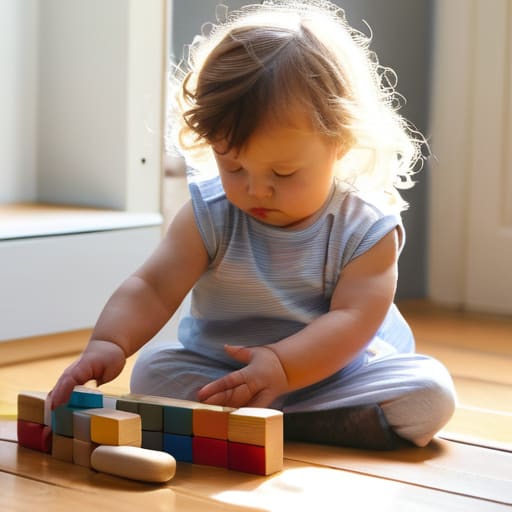
The Magic and Mess of Open Ended Play Materials.

The thing about those expensive, battery-operated plastic toys that sing and flash is that they are remarkably bad at teaching a child how to actually think. I remember my second, Leo, when he was about eighteen months old; he’d be mesmerized by a flashing light-up truck for ten minutes, but the moment the batteries died, the “play” was over. That’s the trap of closed-ended toys. They do the work for the child. If you want to see the real benefits of unstructured play, you have to look at the stuff that doesn’t do anything on its own.

I’m talking about the cardboard boxes, the wooden spoons, and the Tupperware containers that have migrated from the kitchen to the rug. When I was working the wards, I saw how much a simple set of blocks could change a child’s engagement compared to a complex gadget. Open-ended play materials are essentially a blank canvas. A block can be a phone at age two, a car at age three, or a structural pillar at age four. It requires the child to provide the imagination, which is where the real heavy lifting of cognitive growth happens. It’s messier, and it usually involves more sweeping up, but it’s where the magic actually lives.

Why Unstructured Play Beats a Perfectly Planned Afternoon

I remember my second child, Leo, when he was about eighteen months. I had spent a small fortune on those elaborate, battery-operated activity centres that promise to teach your child the alphabet or the concept of gravity. I’d set them up in the middle of the rug, feeling like a parenting pro, only to find him ten minutes later sitting in a corner, intensely focused on a discarded cardboard egg carton. It turns out, the benefits of unstructured play aren’t just a buzzword for academic journals; they are the reason your kid isn’t just a passive consumer of flashing lights.

When you provide a toy that only does one thing—press a button, hear a song—you’re actually doing the heavy lifting for them. But when you hand them a pile of wooden blocks or some old Tupperware, you’re forcing their brain to bridge the gap between “what is” and “what could be.” That’s the real role of play in cognitive growth. It’s not about following a curriculum; it’s about the messy, unscripted moments where they figure out that a spoon can be a microphone or a spaceship. It’s much harder to plan for, but it’s infinitely more effective.

Fostering Creativity in Children Without Losing Your Mind

The problem with most advice on fostering creativity in children is that it assumes you have a pristine, white-walled studio and a limitless budget for Montessori-style wooden toys. In reality, creativity usually looks like a three-year-old deciding that a cardboard cereal box is a high-speed racing car and that the hallway rug is a lava pit. When I was working the wards, I saw how much a bit of imaginative distraction could soothe a child; at home, I’ve learned that creativity is often just a very loud, very messy way of processing the world.

If you want to support the role of play in cognitive growth without ending up buried in glitter, my rule is to provide the “ingredients” rather than the “recipe.” Instead of buying a kit that only does one thing, give them a pile of mismatched Tupperware or some old fabric scraps. When my second child was about eighteen months, I stopped trying to “guide” her art projects and just gave her a chunky crayon and a large sheet of paper taped to the floor. It was chaotic, and I definitely stained the carpet, but watching her figure out how much pressure it took to make a dark line was more valuable than any structured activity I could have planned.

The Role of Play in Cognitive Growth and Real Life

In the clinical setting, we talk about the role of play in cognitive growth as if it’s a series of neat, measurable checkboxes. You’ll see charts showing how a child stacking blocks at eighteen months is actually “developing spatial awareness and fine motor coordination.” And technically, the charts are right. But when you’re sitting on the floor and your two-year-old decides that the most important cognitive task of the day is seeing how many Cheerios they can stick to the dog, the textbook feels a bit thin.

The truth is that child development through play isn’t a linear climb up a ladder; it’s a messy, repetitive, and often loud process of trial and error. When my eldest was three, he spent an entire week obsessed with a single cardboard box. To an outsider, it looked like he was doing nothing. To his brain, he was testing gravity, volume, and the physics of “can I fit my left foot in here?” That’s the real magic. It isn’t about the fancy wooden toys that look great on Instagram; it’s about the brain figuring out how the world works through the sheer, stubborn grit of experimentation.

Five Ways to Actually Get Them Playing (Without Losing Your Sanity)

  • Stop buying the “educational” toys with the flashing lights and the pre-recorded songs. When my second was about 18 months, I spent a small fortune on a plastic piano that played Mozart; he spent three weeks using it as a landing pad for his dinosaur figurines. The best play happens when the toy doesn’t do the work for them. Give them a cardboard box, some Tupperware, or a wooden spoon. If the toy has a “start” button, the child is just a spectator. If the toy is a pile of blocks, they’re the director.
  • Follow the “Low-Stakes Entry” rule. If you try to sit down and “engage in play” with a three-year-old, you’re setting yourself up for a power struggle. Instead, just sit on the floor near them and do something quiet yourself—sort some socks or look at a book. When my eldest was four, he wouldn’t join me if I invited him, but the second I started “building” a pretend garage out of some old cereal boxes, he was there in thirty seconds, demanding to know why the cars didn’t have garages yet.
  • Accept that “play” often looks like a disaster zone. The medical textbooks talk about “fine motor skill development through tactile exploration,” but in a real house, that looks like flour spread across the kitchen floor or glitter in the carpet that will still be there in 2027. If you are too worried about the cleanup to let them explore, you’ll end up stifling the very thing you’re trying to encourage. Set up a “yes zone”—a specific corner or tray where the mess is allowed—and let the rest of the house be your sanctuary.
  • Watch for the “Flow State” and back off. You’ll know it’s working when they stop hearing you call them for lunch. I remember with my third, around age two and a half, he once spent forty minutes trying to stack nothing but different sized yogurt pots. I wanted to interrupt to tell him we were going to the park, but I resisted. That focused, quiet intensity is where the real cognitive heavy lifting happens. If they are deep in it, don’t break the spell.
  • Use their current obsession as a bridge. If they are currently obsessed with nothing but something seemingly useless—like garbage trucks or a specific shade of blue—don’t fight it. Use it. When my fourth was obsessed with “sleeping” dolls, we didn’t try to move on to puzzles; we turned the living room into a hospital. It wasn’t “structured play” by any professional standard, but it was the only way he’d engage with anything for a month. Work with the obsession, not against it.

The Reality Check: What to Actually Take Away

Forget the expensive, flashing, battery-operated toys that promise “educational milestones”; your four-year-old will almost certainly find more cognitive value in a cardboard box and a wooden spoon than in anything you bought from a high-street catalogue.

Don’t aim for “structured play” when you’re exhausted; if the only play happening is a messy, chaotic sprawl on the living room floor while you try to drink a lukewarm coffee, you aren’t failing—you’re actually providing the exact kind of unstructured freedom they need.

Stop measuring their development against a rigid textbook checklist; play isn’t a performance for you to supervise, it’s a process for them to experience, and sometimes the most “productive” thing they can do is spend forty minutes trying to stack three pebbles on top of each other.

The Messy Reality of Getting It Right

If you’ve been following along, you’ll see that encouraging play isn’t about buying the expensive, battery-operated toy that promises to “stimulate cognitive growth” while it flashes neon lights. It’s about the cardboard box, the pile of mismatched socks, and the permission to let things get a bit chaotic. We’ve looked at why the textbook version of developmental milestones often fails when a toddler is mid-meltdown, and why the best kind of learning usually happens when you aren’t even in the room. Whether you are managing the high-stakes creativity of a four-year-old or the sudden, intense focus of a two-year-old, remember that the goal isn’t a perfectly curated play session; it is simply providing the space for them to figure out who they are.

I spent a decade in a hospital ward watching children play through fever and pain, and it taught me one thing: play is how they make sense of a world that often feels too big and too loud. You are going to get it wrong. You will occasionally find yourself choosing a nap over a game of pretend, or a quiet cup of tea over a messy sensory bin, and you need to know that it is okay. Being a good parent doesn’t mean being a constant playmate; it means being the safe harbor they return to when the playing is done. So, leave the plastic gadgets in the box, embrace the clutter, and just try to be present for the bits that actually matter.


How to answer questions you cannot answer.
Saying I Do Not Know, and Why It Helps

I remember sitting on a plastic chair in a dimly lit paediatric ward, a cup of lukewarm tea in my hand, staring at a father who looked like he hadn’t slept since the late nineties. He looked me dead in the eye and asked a question about his daughter’s prognosis that I simply didn’t have the clinical data to address. In those moments, the instinct is to grab a textbook or offer some polished, professional platitude, but that’s a lie. We spend so much time trying to perform “expertise” that we forget the most important part of the job. Learning how to answer questions you cannot answer isn’t about finding a clever way to dodge the query; it’s about navigating that terrifying gap between what you know and what a person desperately needs to hear.

I’m not going to give you a script from a management seminar or a list of “empowering” phrases that sound great in a workshop but fall apart when a toddler is screaming. Instead, I’m going to tell you what I learned from eleven years on the wards and four kids of my own: how to be honest without being dismissive. We’ll look at the practical, sometimes messy ways to hold space for uncertainty, because sometimes the only sincere answer is admitting you don’t have one yet.

Table of Contents

The Panic of the Blank Stare How to Answer Questions You Cannot Answer

The Panic of the Blank Stare How to Answer Questions You Cannot Answer

There is a specific kind of silence that happens when a toddler—or a teenager, for that matter—looks you dead in the eye and asks something that hits a nerve. Maybe it’s “Where do babies come from?” or “Why are we sad today?” In that moment, your internal monologue usually screams, I have no idea. My second child, when he was four, once asked me why the moon followed us in the car, and I felt that sudden, cold spike of inadequacy. You feel like you’re failing the test, but the truth is, trying to fake a confident answer is the quickest way to lose them.

Instead of scrambling for a lie, I’ve found that building trust through transparency is much more effective. When I was nursing on the wards, I learned that parents didn’t need me to be a walking encyclopedia; they needed me to be honest. If you don’t have the answer, try saying, “That is a really good question, and I want to make sure I give you the right answer, so let me think about it/look it up.” It’s one of those graceful responses to unknown questions that actually models how a grown-up handles not knowing something. It turns a moment of panic into a shared moment of curiosity.

Communicating Uncertainty Effectively Without Losing Your Absolute Grip

Communicating Uncertainty Effectively Without Losing Your Absolute Grip

When you’re sitting there and a toddler asks something that makes your brain stall—or worse, a teenager asks a question about something you’ve spent years trying to ignore—the instinct is to bluff. You feel this immense pressure to be the “expert,” the parent who has the manual memorized. But bluffing is a fast track to losing their respect. I learned this the hard way with my second, who was four at the time; I tried to wing a question about why the moon followed us, and the look of pure, unadulterated skepticism on his face was more devastating than any lecture I ever gave on a hospital ward.

Instead of panicking, focus on building trust through transparency. You don’t need a PhD to be a good parent; you just need to be a reliable one. If you can’t find the answer, tell them you’ll find it together. It’s one of those graceful responses to unknown questions that actually strengthens the bond. Saying, “I actually don’t know, let’s look it up,” isn’t a failure of authority; it’s a demonstration of how to handle life when things get complicated. It turns a moment of uncertainty into a shared project, rather than a test you’re destined to fail.

Professional Ways to Say I Dont Know Without Feeling Like a Fraud

Professional Ways to Say I Dont Know Without Feeling Like a Fraud

When I was on the ward, I learned that parents don’t actually need a walking encyclopedia; they need a person who isn’t going to lie to them. If a mother asked me about a specific drug interaction I hadn’t seen in years, the instinct was to nod and pretend I knew. But that’s how mistakes happen. Instead, I found that building trust through transparency was much more effective. You can say, “I don’t have that specific figure in front of me, but I am going to find out before we leave this room.” It turns a moment of perceived weakness into a promise of action.

When you are managing difficult conversations—whether it’s with a toddler asking why the moon follows the car or a teenager questioning your logic—the goal isn’t to have the answer, but to model how to handle the unknown. I used to tell my eldest, who was about five, “I’m not sure about that, let’s look it up together.” It worked because it turned a dead end into a shared mission. Using graceful responses to unknown questions isn’t about being a fraud; it’s about being a reliable human being.

Building Trust Through Transparency When the Real Answer Is Missing

In my nursing days, I saw parents’ eyes go wide when a doctor used a word they didn’t recognize, or worse, when the doctor gave an answer that sounded like they were making it up as they went along. We think that having all the answers is what makes us authority figures, but the truth is that building trust through transparency is far more powerful than pretending to be infallible. When you admit you don’t have the immediate solution, you aren’t showing weakness; you are showing them that you are a reliable narrator of their child’s reality.

I remember my second, when he was about eighteen months old and asked why the moon followed us in the car. I had no idea, and my instinct was to scramble for a “smart” explanation. Instead, I just said, “I actually don’t know, mate, let’s figure it out.” It felt messy, but it worked because it invited him into the discovery rather than shutting him out with a lie. Whether you are managing difficult conversations with a toddler or a worried parent, being honest about the gaps in your knowledge creates a foundation of truth that no textbook can replicate.

Graceful Responses to Unknown Questions During High Stakes Moments

There is a specific kind of terror that hits when a child—or a parent looking at you like you’re the oracle of all truth—drops a question that lands like a lead weight. I remember being on the ward with a four-year-old who asked me, with terrifyingly bright eyes, if his fever meant he was going to die. In that moment, my nursing training kicked in, but my human instinct wanted to bolt for the breakroom. When you are managing difficult conversations in these high-stakes windows, the temptation is to offer a hollow reassurance just to stop the tension. Don’t. A hollow “it’ll be fine” is a debt you’ll have to pay back later with interest when the reality doesn’t match your promise.

Instead, focus on graceful responses to unknown questions by pivoting from the “answer” to the “action.” When my eldest was six and demanded to know why the sky wasn’t blue like his toy car, I didn’t pretend to have a physics degree. I said, “I actually don’t know the exact reason, but let’s look at that book together.” In a medical setting, it’s the same. You aren’t a fraud for not knowing; you’re a professional for refusing to guess when the stakes are life and death.

Managing Difficult Conversations and Handling Unexpected Inquiries With Gra

When you’re in the thick of it—whether that’s a frantic parent in a hospital corridor or a toddler asking why the moon follows the car—the pressure to have an immediate, polished answer is immense. We feel like if we pause, we’ve lost the room. But managing difficult conversations isn’t about having a library of facts memorised; it’s about how you carry yourself while you’re searching for them. I remember a mother once asking me a specific question about a medication dosage at 3:00 AM; she wasn’t just asking for data, she was asking if she could trust me. If I had guessed, I would have broken that trust instantly.

The trick to handling unexpected inquiries with grace is to decouple your worth from your instant knowledge. You can be an expert and still be stumped. When a question catches you off guard, take a breath. It’s okay to say, “That is a really important question, and I want to make sure I give you the right information rather than just a quick guess.” That isn’t a failure of competence; it is an act of integrity.

Five Ways to Handle the Questions That Leave You Empty-Handed

  • Buy yourself ten seconds of breathing room. When a toddler asks “Why is the moon following us?” or a teenager asks something that hits you right in your deepest insecurity, your instinct is to fill the silence with noise. Don’t. Take a slow breath, or even a sip of water if you have it. It signals to the other person that you are actually processing what they said, rather than just reacting out of panic.
  • Use the “I’ll find out” bridge, but make it a promise, not a brush-off. If you tell a child you’ll look something up and then never do, you’ve just taught them that your word has an expiration date. When my second was four, she asked why certain animals slept during the day; I didn’t know, so I promised we’d look at the picture book together after bath time. I actually did it. It turns a moment of ignorance into a shared mission.
  • Validate the feeling behind the question. Often, when people ask things we can’t answer, they aren’t actually looking for a Wikipedia entry; they are looking for reassurance. If a parent asks me something medical that I can’t answer on the fly, I’ve learned to say, “I can see how much that’s worrying you, and I want to make sure we get the right answer.” You don’t need the fact to provide the empathy.
  • Be honest about the “why” of your ignorance. There is a massive difference between “I don’t know” and “I don’t know because this is complicated and I want to be careful.” If you’re dealing with something high-stakes, tell them that. “I don’t have the answer right now because I want to check the latest guidance first so I don’t give you the wrong information.” It transforms you from a person who is clueless into a person who is responsible.
  • Admit when the answer truly doesn’t exist. Sometimes, especially with the older kids, they’ll hit you with a “Why?” that has no logical endpoint. “Why do people die?” or “Why is life unfair?” In those moments, stop trying to be the wise philosopher. It is perfectly okay to say, “I’ve been thinking about that too, and honestly, I don’t have a good answer for you yet.” It’s much more honest than a platitude, and much more helpful in the long run.

The Essentials to Carry in Your Pocket

Honesty is better than a shaky guess. Whether you’re a nurse in a cubicle or a dad in a darkened hallway, telling a child (or a parent) “I don’t know, but I will find out” builds more long-term trust than any polished, made-up answer ever could.

Context is everything. When you’re giving advice or answering a question, always attach an age to it—because what worked for my two-year-old is a total disaster for my five-year-old, and knowing the difference helps everyone manage their expectations.

Distinguish between a crisis and a complication. Learn to tell the difference between a question that requires an immediate phone call to a professional and a question that is simply a symptom of a long, tiring day; most things can wait until the sun is up.

The Long Game of Not Knowing

If you take anything away from this, let it be that honesty isn’t a crack in your authority; it’s the foundation of it. We’ve looked at how to dodge the panic of the blank stare, how to use professional transparency to bridge the gap, and how to handle those high-stakes moments where the “right” answer simply hasn’t arrived yet. Whether you’re a nurse on a night shift or a parent staring at a toddler who has just asked why the moon follows the car, the goal isn’t to be an infallible encyclopedia. The goal is to show that you are reliable. When you admit you don’t know, but follow it up with a plan to find out, you aren’t failing—you are modeling how to navigate uncertainty without losing your head.

I remember sitting in a darkened cubicle when my eldest was two, feeling like a total fraud because I couldn’t explain why his fever wouldn’t break. I thought if I didn’t have the answer, I wasn’t doing the job. But I learned then, and I’ve learned four times over since, that people don’t actually need you to be a god; they just need you to be present. So, the next time you’re hit with a question that leaves you hollow, take a breath. You don’t need to have all the answers to be exactly the person they need. Sometimes, the most powerful thing you can offer is simply the truth, delivered with a bit of grace and a promise to keep looking.

Complete guide to childproofing a home.
The Complete Guide to Childproofing a Home

I remember sitting on the floor of my living room when my second was about ten months old, surrounded by a literal fortress of plastic corner guards and magnetic cabinet locks that I’d spent a small fortune on. I felt prepared, like I’d finally mastered the complete guide to childproofing by following every single checklist on the internet. Then, within twenty minutes, I watched him use a heavy, unanchored bookshelf as a literal ladder to reach a “secure” outlet. It was a humbling moment that taught me something no nursing textbook or glossy parenting magazine ever could: the gap between a theoretical safe house and a house inhabited by a determined human being is staggeringly wide.

In this guide, I’m not going to sell you on a specific brand of expensive gate or a complicated gadget that will inevitably break by Tuesday. Instead, I’m going to give you the messy, honest truth about what actually keeps a child safe and what is just expensive noise. We’ll look at the high-stakes hazards that actually land kids in the ER, versus the minor mishaps that are just part of growing up. I’ll tell you what to bolt to the wall, what to hide in a high cupboard, and—most importantly—when you can finally stop worrying and just let them explore.

Table of Contents

Understanding Complete Guide to Childproofing

Understanding Complete Guide to Childproofing checklist.

When you look up a baby proofing safety checklist online, you’ll see a neat, clinical list of tasks: anchor the heavy dresser, plug the sockets, gate the stairs. It looks manageable, like a project you can tick off on a Saturday morning with a coffee in hand. But as a former nurse, I can tell you that the “guide” part of childproofing is often the easy bit. The hard part isn’t knowing that you need childproof furniture anchors; it’s the realization that your eighteen-month-old has the structural engineering skills of a demolition expert and the persistence of a debt collector.

Realistically, childproofing isn’t a one-time event; it’s a moving target. What worked when my eldest was ten months—focusing on low-level reach and floor hazards—was completely useless when my second hit the “climbing” stage at fourteen months. You aren’t just preventing household accidents; you are playing a high-stakes game of chess against a tiny opponent who doesn’t follow the rules of physics. You’ll find yourself installing a gate, only to realize they’ve figured out how to use it as a stepping stone. It’s exhausting, it’s never quite finished, and it’s rarely as tidy as the manuals suggest.

Key Things to Know

Key Things to Know: Baby Proofing Checklist

First, let’s get one thing straight: a baby proofing safety checklist is a living document, not a one-and-done task. When my eldest was ten months, I thought I’d won. I had the gates up and the cabinets locked. Then he hit fourteen months, developed the grip strength of a rock climber, and suddenly those “secure” latches were just interesting puzzles for him to solve while I was making tea. You aren’t just protecting against a crawling baby; you are preparing for a mobile, increasingly clever tiny human who views your living room as an obstacle course.

Second, please, for the love of your sanity, do not skip the childproof furniture anchors. I remember a colleague from the ward telling me about a family where a heavy dresser tipped during a game of hide-and-seek. It’s one of those things that feels like overkill when you’re looking at a stationary chest of drawers, but gravity doesn’t care about your intentions. It’s not about being paranoid; it’s about recognizing that a toddler’s center of gravity is completely different from ours, and they will use every drawer as a step-ladder if you let them.

Practical Tips and Steps

Practical Tips and Steps for baby proofing.

First, you need to get down on the floor. I mean actually on your hands and knees. When I was nursing on the ward, we talked about environmental hazards, but nothing prepares you for the view from eighteen inches off the carpet. You’ll see the loose coin under the radiator or the dangling cord that looks perfectly innocent from a standing position. Start with your baby proofing safety checklist, but don’t just tick boxes; look for the physics of it. For example, when my second was ten months old, I realized that even the “sturdy” bookshelf was just waiting for a determined climber to turn it into a heavy, falling hazard. This is why childproof furniture anchors aren’t a suggestion—they are non-negotiable.

Next, tackle the “invisible” dangers. The official manuals focus heavily on gates and plugs, but they often gloss over poison prevention for kids. I’ve seen too many parents assume the cleaning cupboard is safe because it has a child lock, only to find a determined toddler has figured out the specific rhythmic tug needed to pop it open. If you’re looking at baby gate installation tips, remember that a gate is only as good as its weakest screw. If it’s a pressure-mounted gate, check it every single week; they will wiggle loose over time.

Common Mistakes to Avoid

The biggest mistake I see—and I saw it constantly on the ward—is the “eye-level fallacy.” You walk through your house standing up, seeing a tidy living room, but you aren’t seeing the world from forty centimetres off the floor. When I was parenting my second, I realised my baby proofing safety checklist was missing everything that actually mattered because I wasn’t crawling on my hands and knees. You’ll miss the loose coin wedged under the sofa or the heavy ceramic lamp that looks stable until a curious hand swipes at it. If you aren’t down there on the carpet, you aren’t actually childproofing; you’re just tidying up.

Another trap is relying on “temporary” fixes. I know the feeling—you buy a cheap plastic latch or a flimsy gate because you think, “They’ll be out of this stage in a month.” But toddlers are remarkably efficient at testing the structural integrity of your shortcuts. I’ve seen parents skip childproof furniture anchors because the dresser “felt heavy enough,” only to find that a climbing eighteen-month-old can tip a heavy unit in seconds. Don’t treat safety as a phase; treat it as a permanent installation until they’ve actually mastered the art of not being a human wrecking ball.

Final Thoughts

If you’ve followed this list, you’ve done more than most. You’ve gone through the baby proofing safety checklist, you’ve wrestled with the inevitable frustration of childproof furniture anchors, and you’ve likely realized that your house is significantly less “relaxing” than it was a month ago. But here is the truth I learned on the ward: you cannot engineer a child into being incapable of mischief. Even in a perfectly curated environment, a toddler will find that one singular, tiny gap you missed, usually right when you’ve finally sat down with a lukewarm cup of tea.

Don’t let the pursuit of perfection become its own kind of exhaustion. There is a massive difference between preventing household accidents—like securing heavy bookshelves or locking away cleaning supplies—and trying to create a sterile bubble. You will miss something. I did, with my second, and it resulted in a very loud, very unnecessary trip to A&E for a bruised forehead. Focus on the big stuff, trust your gut, and remember that the goal isn’t a house without risks, but a home where the risks are manageable. You’re doing fine.

The Reality Check: 5 Things the Safety Manual Won't Tell You

  • Get down on your hands and knees. I did this with my eldest, Leo, when he was about fourteen months, and it was a revelation. You don’t see the world from eighteen inches up. You see the loose screw under the coffee table, the dangling cord from the blind that looks like a climbing rope, and the sheer amount of dust bunnies that become choking hazards. If you aren’t looking at the floor from their level, you aren’t childproofing; you’re just decorating.
  • The “Cabinet Lock” Paradox. The official guidance says “install locks on all low cabinets.” What it doesn’t say is that a determined toddler—mine was particularly inventive at eighteen months—will treat a magnetic lock like a high-stakes puzzle box. They won’t stop; they’ll just get better at it. Don’t just install the locks; change what’s inside the cabinets. If it’s worth swallowing or breaking, it shouldn’t be in the “strike zone” regardless of the plastic latch.
  • Anchor everything that can tip. We talk about bookshelves, but people often forget the heavy TV or the dresser. My second, Maya, decided at nearly two years old that the top drawer of her dresser was a perfect step-ladder. It’s a terrifying moment when you realize how much weight a small human can shift. If it’s tall, heavy, and not bolted to the wall, it’s a hazard waiting for a curious hand.
  • Beware the “Safe” Cord. You’ll see warnings about blind cords, which is vital, but don’t overlook the charger cables. A toddler at ten months old doesn’t see a phone charger; they see a very interesting, very chewy string. They will pull on it, potentially dragging a heavy device onto their face, or worse, getting it caught in their mouth. Treat every loose wire like a potential tripwire or a strangulation risk.
  • The False Sense of Security. This is the big one. You can spend a whole Saturday installing every gadget from the baby aisle, but the moment you turn your back to stir a pot of pasta or answer a door, the “safety” evaporates. Childproofing is a way to buy yourself a few extra seconds of reaction time; it is not a substitute for your eyes. I learned that the hard way when my third decided a “secured” gate was merely a suggestion.

The Reality Check: Three Things to Carry With You

Safety manuals are written for a static, perfect world, but your house is a living thing. A cabinet lock that works for a ten-month-old is just a suggestion to a two-year-old who has discovered the lever principle. Re-evaluate your “secure” zones every few months as they hit new developmental milestones.

Distinguish between “dangerous” and “developmentally appropriate.” You can’t childproof away the fact that a toddler will eventually try to climb something or pull something down; you can only manage the fallout. Focus your energy on the high-stakes stuff—choking hazards and heavy furniture—rather than trying to turn your home into a padded cell.

Perfection is a myth that leads to burnout. You will miss something. You will realize a week too late that the corner of the coffee table is still a hazard. When that happens, don’t spiral into thinking you’ve failed; just fix it, learn the new “danger zone,” and keep going.

The Reality of the Safety Net

If you’ve followed this guide, you’ve likely realised that childproofing isn’t a one-and-done task you tick off a list like a grocery run. It is a moving target. You’ll secure the heavy dresser when they are ten months old, only to find that by eighteen months, they’ve figured out how to use a heavy plastic toy as a lever to bypass the very gate you installed. The clinical guidance tells you to anchor everything and cover every outlet, and you should absolutely do that—it’s the foundation. But my experience, and the experience of every parent I worked with on the ward, is that perfection is a myth. You can secure the cabinets and the stairs, but you can’t secure the sheer, unpredictable physics of a toddler in motion. The goal isn’t to build a padded cell; it’s to manage the most likely risks so that when they inevitably test a boundary, the consequences aren’t catastrophic.

Please, don’t let the endless checklists make you feel like you’re failing every time you find a new hazard. I remember my second, when he was about fourteen months, and I felt like a complete novice because I’d missed a single dangling cord that he’d managed to grab. I felt like I’d let him down. But here is the truth: you are doing the work. You are watching, you are adjusting, and you are learning. Childproofing is just one way we show up for them, but it isn’t the sum total of your parenting. Be kind to yourself in the middle of the chaos. You can’t predict every move, but you are providing the safest possible stage for them to grow, stumble, and eventually learn how to navigate the world on their own.

How to talk to children about difficult things.
Explaining Hard Things Without Frightening Them

I remember sitting on a plastic chair in a dimly lit paediatric ward, holding a four-year-old’s hand while his mum stared at a clinical pamphlet that promised “gentle, age-appropriate communication strategies.” The pamphlet was beautiful, printed on high-quality matte paper, but it was utterly useless in that moment. The boy wasn’t interested in “neutral language”; he wanted to know why the machines were beeping and why his tummy felt like it was full of angry bees. Most of the advice you find online about how to talk to children about difficult things feels like it was written by someone who has never actually had to deliver bad news while a toddler is mid-tantrum or while you’re trying to prevent a meltdown from spreading to the rest of the house.

I’m not here to give you a script to memorize or a list of hollow platitudes that only work in a quiet classroom. Instead, I want to give you the messy, practical reality of what actually works when the world gets heavy. I’ll tell you what the clinical evidence says, but more importantly, I’ll tell you what happens when you try it on a real, stubborn, grieving, or confused child. We’ll look at the specific ages where certain truths land differently, and I’ll promise you this: I will never suggest a method that requires you to be a perfect, calm saint to pull it off.

Table of Contents

The Textbook vs the Reality of How to Talk to Children About Difficult Thin

The Textbook vs the Reality of How to Talk to Children About Difficult Thin.

If you pick up a book on child psychology and difficult news, the chapters are beautifully structured. They talk about “creating a safe space,” “using age-appropriate vocabulary,” and “validating the child’s emotional experience.” It sounds lovely, doesn’t it? It sounds like something you could do while sitting in a sunlit living room with a cup of herbal tea. But the textbook version of parenting communication strategies assumes that the child is a willing participant in a calm, logical dialogue.

In reality, the conversation usually happens when you are both at your absolute wits’ end. When I was a nurse, I’d see parents trying to follow the “official” script while their four-year-old was having a full-scale meltdown because they didn’t understand why Grandma wasn’t coming home. You can’t exactly implement a structured lesson on building trust through honesty when you’re being kicked in the shin. The textbooks don’t account for the fact that the most important part of the conversation isn’t the words you choose, but your ability to stay steady when their world is tilting. Sometimes, the “correct” psychological approach is just sitting on the floor in the dark until the screaming stops.

Building Trust Through Honesty When the Script Goes Out the Window

Building Trust Through Honesty When the Script Goes Out the Window

The problem with most parenting communication strategies is that they assume you have the luxury of a prepared script and a quiet room. But when you’re actually in the thick of it—maybe you’re explaining loss to toddlers who don’t quite grasp the concept of “forever,” or you’re trying to navigate a sudden family change—the script usually vanishes. I learned this the hard way with my second, who was about three at the time. I had prepared this gentle, measured explanation about our move, but she just looked at me, screamed, and threw a sippy cup. In those moments, you realize that building trust through honesty isn’t about delivering a perfect monologue; it’s about being okay with the mess.

If you try to sanitize the truth to protect them, they can usually smell the omission. They don’t need the clinical details, but they do need to know that you aren’t hiding a secret world from them. When I was nursing, I saw how much it helped parents to simply say, “I don’t know the answer to that yet, but I’m going to find out.” It’s not a failure of authority; it’s an invitation into the truth. It shows them that being uncertain is part of being human, which is a far more valuable lesson than any polished lecture.

Child Psychology and Difficult News What the Research Misses

Child Psychology and Difficult News What the Research Misses

If you pick up a textbook on child psychology and difficult news, you’ll see a lot of talk about “developmental stages” and “cognitive readiness.” The theory suggests that once a child reaches a certain milestone, they can process complex information if you just frame it correctly. But theory doesn’t account for the fact that a child’s brain is a moving target. You might think you’ve mastered the art of explaining loss to toddlers because you used the “right” words, only to have them spiral three days later because they saw a similar-looking leaf fall from a tree.

The research often misses the cyclical nature of how kids process information. They don’t absorb a hard truth in one sitting like a sponge; they nibble at it in tiny, unpredictable increments. I remember with my second, when he was four, I thought we’d had “the talk” about our move, and he was fine for a week. Then, in the middle of a supermarket trip, he had a total meltdown because he couldn’t find the specific brand of cereal we were leaving behind. It wasn’t about the cereal; it was the sudden, sharp realization of change. Development isn’t a straight line, and neither is their understanding of the world.

Explaining Loss to Toddlers Without Losing Your Own Mind

When we talk about explaining loss to toddlers, the textbooks usually suggest using gentle, metaphorical language—something about “going to sleep” or “being in the stars.” Please, for the love of everything holy, don’t do that. I learned this the hard way with my second, who at eighteen months old took “going to sleep” quite literally and spent three days terrified to close his eyes. Toddlers are literalists; they don’t have the cognitive architecture for nuance. When you are handling sensitive topics with preschoolers, you need to use concrete, boring words. “Grandpa died. His body stopped working. He can’t come back.” It feels brutal, but it’s actually the kindest thing you can do because it prevents them from waiting for a person who isn’t coming.

The real challenge isn’t the explanation itself; it’s the emotional fallout that follows. You might think you’ve delivered the news perfectly, but then they’ll ask for a snack five minutes later, or scream because their toast is cut into triangles instead of squares. This isn’t them being “difficult”—it’s how they process grief. They don’t have the emotional intelligence in kids to sit in a corner and reflect; they process through their bodies and their immediate needs. Don’t expect a profound moment of shared mourning. Expect a mess, a lot of repetition, and a sudden, desperate need for you to hold them while you’re also trying not to fall apart.

Handling Sensitive Topics With Preschoolers During a Midnight Meltdown

The textbooks will tell you that when a preschooler is spiraling, you should use “low-arousal techniques” and “validated emotional responses.” That sounds lovely in a seminar, but it’s a lot harder to practice high-level parenting communication strategies when you’re being yelled at by a three-year-old who is terrified that a move to a new house means you’ve been kidnapped by aliens. At that age, their logic is non-existent and their emotions are a physical force. When the meltdown hits at midnight, they aren’t looking for a lecture on the logistics of relocation; they are looking for a safe place to land.

I learned this the hard way with my second. I tried to explain the “why” of a difficult situation with clinical precision, thinking I was being helpful. Instead, I just made them more confused and more upset. When you are handling sensitive topics with preschoolers in the middle of a crisis, you have to drop the script. Don’t aim for clarity; aim for presence. Sometimes the most effective tool isn’t a well-constructed sentence, but simply sitting on the floor in the dark and letting them be small, loud, and irrational until the storm passes.

Parenting Communication Strategies for Real Life Not Just Theory

The problem with most parenting communication strategies is that they assume a level of composure that simply doesn’t exist in a living room at 7:00 PM on a Tuesday. You’ll read books about fostering emotional intelligence in kids that suggest you should “model calm regulation,” which sounds lovely until your four-year-old is mid-tantrum because you cut their toast into triangles instead of squares. In those moments, the goal isn’t a lecture on feelings; it’s about short, predictable sentences. When things get heavy, don’t use a monologue. Use ten words or fewer. It keeps you from rambling and keeps them from tuning you out.

I remember with my second, when we were explaining loss to toddlers, I tried to give this long, beautifully reasoned explanation about how things change. He just looked at me, blinked, and asked for a juice box. It felt like a failure of empathy, but it wasn’t. Real-world communication is often about meeting them exactly where they are, even if “where they are” is a state of total distraction. Sometimes, the best way to handle sensitive topics with preschoolers is to wait for the quiet moment—the one that happens during a bath or right before sleep—rather than forcing a “big talk” that neither of you is actually ready for.

Five Ways to Keep Your Cool When the Conversation Goes Sideways

  • Match the truth to the age, not the intensity. When my eldest was four, I tried to explain the nuance of a family argument, and I could practically see his brain short-circuiting. At four, they don’t need the ‘why’ of the conflict; they need to know that the shouting isn’t their fault and that the house is still safe. Give them the facts they can actually digest, and save the complex sociology for when they’re twelve.
  • Stop trying to ‘fix’ the emotion immediately. In the ward, I used to see parents try to talk a child out of being scared—using logic to fight a physiological response. It never works. If they’re sobbing because of something heavy, don’t lead with a lecture on why things will be okay. Lead with, “This is really hard, isn’t it?” Let the emotion sit in the room for a minute before you try to solve it.
  • Watch for the ‘rebound question.’ Often, a child will ask something devastating, you’ll answer it, and then they’ll go back to playing with their Duplo like nothing happened. Don’t take that as a sign they didn’t hear you or that they don’t care. They’ve just processed a massive amount of data and their little nervous systems need a break. Check back in an hour, or even the next morning, rather than forcing a deep philosophical debate right then and there.
  • Admit when you don’t have the answer. There is a massive temptation to perform ‘competent parenting’ and pretend we have a roadmap for everything. But when a child asks a question about death or change that genuinely rattles you, saying, “I don’t know, but I’m thinking about it and we’ll figure it out together,” is infinitely more stabilizing than a scripted lie. It teaches them that uncertainty is survivable.
  • Use the ‘low-pressure’ approach. Some of the best conversations I’ve ever had with my kids didn’t happen sitting face-to-face across a table—that’s too much like an interrogation. They happened in the car, or while we were both staring at a Lego set, or during a walk. When you aren’t making direct eye contact, the pressure drops, and they are much more likely to let the real, messy questions slip out.

The Reality Check: Three Things to Carry With You

Stop looking for the perfect script. The research says “age-appropriate language,” but when a four-year-old is asking why the dog isn’t moving, they don’t need a lecture on biology; they need to see that you can hold their hand while you’re both a bit scared. Honesty, even if it’s messy, beats a polished lie every time.

Match your response to the clock, not just the child. If it’s 3:00 AM and everyone is exhausted, don’t try to have a profound, soul-searching conversation about death or divorce. Give them the “short version” to get them back to sleep, and save the deep dive for when you’ve both had a coffee and a decent night’s rest.

Watch for the “delayed reaction” trap. I learned this with my second child, who seemed perfectly fine for three days after a big change, only to have a total meltdown over a broken cracker on day four. Difficult news doesn’t always hit immediately; sometimes it waits until they feel safe enough to let it out.

The Long Game

If you’ve taken anything from this, let it be that there is no perfect script. We’ve looked at why the textbook advice often fails when a three-year-old is mid-tantrum, why honesty matters more than a polished explanation, and how to bridge that gap between developmental theory and the messy reality of a midnight meltdown. You can’t control how they react—sometimes they’ll process it through a quiet question, and sometimes they’ll just go back to playing with their Duplo as if nothing happened. The goal isn’t to deliver a flawless monologue; it’s about being the steady, predictable presence they can return to when the world feels a bit too heavy.

I remember a four-year-old on the ward who, after hearing some heavy news about a family member, simply gripped my hand and asked if I had any biscuits. It wasn’t a profound psychological breakthrough, but it was a moment of connection that mattered. Please, stop trying to get it “right” on the first attempt. You are going to stumble, you are going to say too much, and you will definitely say too little at the wrong time. But as long as you keep showing up, being honest, and treating them like the small humans they are, you are doing the work. The guidance might leave out the hard parts, but you are living them, and that is enough.

Complete guide to allergies in children book.
The Complete Guide to Childhood Allergies

I remember sitting in a dim corner of the paediatric ward, watching a mother stare at a textbook-style pamphlet that promised a “complete guide to allergies in children” as if it were a simple, linear journey. She looked like she hadn’t slept since the symptoms started, and that pamphlet wasn’t helping; it was just giving her a list of clinical terms for the panic she was already feeling. When my second child, who was just fourteen months old, broke out in hives after a single bite of a peanut, I realized that no glossy brochure can prepare you for the sheer, cold adrenaline of watching your child’s skin change color in real-time.

I’m not here to give you a medical lecture that ignores the chaos of real life. Instead, I’m going to give you the bridge between what the doctors tell you in the bright lights of the clinic and what you actually need to know when you’re staring at a suspicious rash at 3:00 AM. We’ll walk through the clinical signs, the essential safety steps, and the messy reality of managing food and environmental triggers. I’ll tell you what requires an immediate trip to A&E and what is just a stressful, but manageable, parenting moment.

Table of Contents

The Clinical Manual vs the Real World a Complete Guide to Allergies in Chil

The Clinical Manual vs the Real World a Complete Guide to Allergies in Chil

If you pick up a medical textbook, it will give you a tidy list of the common childhood food allergens—milk, egg, peanut, tree nut, wheat, soy, fish, and shellfish—and explain the biological mechanism of IgE antibodies. It’s precise, it’s accurate, and it’s completely sterile. But a textbook doesn’t account for the sheer, paralyzing panic of watching your two-year-old suddenly develop hives around their mouth after a single bite of a biscuit. In the clinic, we talk about “monitoring for symptoms,” but in your kitchen, you’re trying to decipher if that wheeze is just a stuffy nose or the start of something much more serious.

When I was nursing, I’d see parents who had memorized every protocol for managing pediatric allergy triggers, yet they still looked utterly defeated. There is a massive gap between knowing the theory and living the reality. The clinical manual tells you how to identify allergic reaction symptoms in toddlers, but it doesn’t tell you how to navigate a birthday party where every cupcake is a potential minefield, or how to explain to a four-year-old why they can’t have the “special” snack everyone else is eating. It’s not just about the science; it’s about the constant, exhausting mental load of being a detective in your own home.

Common Childhood Food Allergens What the Textbooks Miss

Common Childhood Food Allergens What the Textbooks Miss

The textbooks will give you a tidy list of the “Big Eight”—milk, eggs, peanuts, tree nuts, wheat, soy, fish, and shellfish. They’ll tell you these are the common childhood food allergens to watch for, and technically, they aren’t wrong. But when I was working the night shift on the ward, I saw plenty of kids whose reactions didn’t follow the neat little diagrams. I remember a three-year-old who had a mild, itchy reaction to strawberries that felt like nothing until it suddenly escalated into something much more serious during a nap.

The problem is that the “official” list doesn’t account for how unpredictable a toddler’s system can be. You can follow every rule for managing pediatric allergy triggers, but a child’s threshold for a reaction can shift in a single afternoon. One day a tiny crumb of peanut is fine; the next, it’s a crisis. It’s not just about what is on the list; it’s about the unpredictability of the threshold, which is the part that keeps you awake long after the kids are finally settled.

Spotting Allergic Reaction Symptoms in Toddlers Without Panicking

Spotting Allergic Reaction Symptoms in Toddlers Without Panicking

The textbook will give you a neat, bulleted list of symptoms, but in a real kitchen, it’s rarely that tidy. When you’re looking for allergic reaction symptoms in toddlers, you aren’t usually looking for a perfect clinical presentation; you’re looking for “something is wrong.” It might be a sudden, frantic scratching at the ears, a patch of angry red skin around the mouth, or a tummy that suddenly goes from fine to cramping and loud in the span of ten minutes. My second child, when he was about eighteen months, didn’t get the classic hives; he just became incredibly lethargic and “off,” which is arguably much scarier because it’s harder to pin down.

The real trick is knowing when to move from “observation mode” to “emergency mode.” If you see swelling of the lips or tongue, or if their breathing sounds even slightly wheezy—like they’re trying to breathe through a straw—stop reading blogs and start calling for help. Anaphylaxis prevention for parents really boils down to trusting that gut instinct. If your gut says the reaction is escalating, it usually is. Don’t worry about being “wrong” or “overreacting”; I’ve sat on the other side of the nursing station, and we would much rather see a parent who is slightly too anxious than one who waited too long because they were trying to be rational.

Decoding Pediatric Allergy Testing Methods Truth Over Hype

When you finally get that appointment with the specialist, you’re going to be handed a menu of pediatric allergy testing methods, and frankly, it feels like being asked to choose a dessert when you’re actually in the middle of a crisis. You’ll hear about skin prick tests—where they drop a tiny bit of allergen on the skin and wait for a wheal—and blood tests that look for specific IgE antibodies. On paper, the science is solid. In the room, however, it’s often confusing. I remember a mother of a three-year-old who was devastated when a skin prick test came back positive for milk, only to find out months later, through supervised feeding, that her son could actually handle dairy just fine.

The thing about these tests is that they aren’t always a crystal ball. A positive result tells you there is a sensitivity, but it doesn’t always tell you if that sensitivity will actually trigger allergic reaction symptoms in toddlers when they eat a biscuit. You can have a “positive” test and a perfectly fine child, or a “negative” test and a child who still reacts. It’s frustrating, but it’s why I always tell parents to look for the clinical picture—how the child actually behaves—rather than just obsessing over the numbers on a lab report.

Anaphylaxis Prevention for Parents Preparing for the Unpredictable

When I was on the ward, the most terrifying thing wasn’t the reaction itself; it was the hesitation. It was the parent standing there, frozen, trying to remember if they’d read the leaflet correctly while their child’s breathing changed. Anaphylaxis prevention for parents isn’t about memorizing a medical textbook; it’s about muscle memory. You need an adrenaline auto-injector (EpiPen) that is as much a part of your life as your car keys. I remember my second child, who was about eighteen months old at the time, and the sheer, paralyzing panic of realizing we hadn’t checked a label closely enough. You don’t want to be “testing” your knowledge during an emergency; you want to be operating on autopilot.

Real-world prevention is less about grand gestures and more about the boring, repetitive stuff. It’s about managing pediatric allergy triggers by becoming a detective in the supermarket aisle. It means accepting that “may contain” labels are your new best friend and that an allergy-friendly diet for kids isn’t a lifestyle choice—it’s a safety protocol. If you have a child with known sensitivities, your “plan” shouldn’t be a document in a drawer; it should be a practiced routine that even your babysitter or a grandparent can execute without blinking.

Managing Pediatric Allergy Triggers and Planning an Allergy Friendly Diet F

When you’re finally staring down the barrel of a diagnosis, the immediate instinct is to clear out the entire pantry. You want to scrub every surface and throw away every box that looks even remotely suspicious. But here is the thing I learned when my second child was diagnosed: a kitchen that feels like a sterile laboratory is a miserable place to live. Managing pediatric allergy triggers isn’t about creating a fortress; it’s about creating a system that doesn’t collapse when you’re exhausted. I spent years in the ward seeing parents who were so paralyzed by fear of cross-contamination that they stopped feeding their kids altogether. Instead, focus on the “big wins”—the obvious culprits like peanut butter or milk—and learn the art of the label read.

Creating an allergy-friendly diet for kids is also a massive logistical undertaking that no textbook prepares you for. You’ll find yourself standing in the middle of a supermarket aisle at 6:00 PM, staring at a pasta sauce, wondering if “natural flavors” is code for something that will send your toddler into anaphylaxis. My advice? Batch cook everything. When I was managing my own kids’ diets, I learned that if it isn’t in a labeled, frozen container, it’s a recipe for a mistake. Don’t aim for perfection; aim for predictability.

Five Things to Keep in Your Back Pocket (Because the Manual Won't Help You at Dinner Time)

  • Trust your gut, but verify with a thermometer. When my second child turned blotchy at age two, my instinct said “allergy,” but I learned the hard way that heat rashes and hives can look cousins to each other. If they look distressed and the skin is hot, check the temperature first; if they are breathing funny, stop checking and start acting.

  • The “First Time” rule for new foods. The clinical advice says introduce allergens early and often, which is true, but it doesn’t mention the mental toll. When I was doing this with my third, I made a rule: no new, high-risk foods (like peanut butter or shellfish) after 4:00 PM. You don’t want to be discovering a new reaction just as you’re trying to get everyone into pajamas.
  • Labels are a moving target. I once spent twenty minutes reading a label for a snack my four-year-old loved, only to find a “may contain” warning that wasn’t there the week before. The textbook says “read every label,” but the reality is that manufacturers change ingredients constantly. If you’re managing a serious allergy, you can’t rely on memory, no matter how many times you’ve bought that specific box.
  • Carry the kit, even when you don’t think you need it. I used to think I could manage a playdate at a friend’s house without the EpiPen, thinking I’d just be “careful.” That was a mistake born of misplaced confidence. If your child has a known severe allergy, the kit goes in the bag every single time, even for a ten-minute walk to the park.
  • Learn the “Slow Escalation” for testing. If you’re doing oral food challenges at home under medical guidance, don’t rush it. When my eldest was three, we tried to move too fast because we were desperate for him to eat “normally.” It ended in a frantic trip to the clinic. Slow, tiny, controlled increments are much easier on your nervous system than a sudden reaction.

The Bottom Line: What to Hold Onto When Things Get Messy

Trust your gut over the textbook. If you see your child behaving in a way that feels “off”—even if they don’t hit the classic textbook symptoms—trust that instinct. I’ve seen plenty of kids in the ward who didn’t look like a medical diagram but were clearly struggling, and I’ve seen plenty of parents who were right to worry when the “official” advice said to wait.

Preparation is about more than just an EpiPen. Having the kit is step one, but knowing how to use it while your four-year-old is mid-meltdown is step two. Practice the mechanics when everyone is calm and well-fed, because at 2:00 AM, your fine motor skills are going to be the first thing to go.

Don’t aim for a “perfectly safe” environment; aim for a managed one. You will never be able to scrub every trace of an allergen from your home or your life, and trying to do so will just burn you out. Focus on the big, predictable triggers and give yourself permission to breathe when the small, accidental exposures happen.

The Long Road Ahead

We’ve covered a lot of ground here, from the clinical definitions of anaphylaxis to the exhausting reality of reading every single label in the supermarket aisle. If you take anything away from this, let it be this: knowing the difference between a mild skin rash and a genuine emergency is your most important tool, but having a plan is what actually keeps you steady. You now know that testing isn’t always a straight line, that triggers can be sneaky, and that managing a diet isn’t just about what you take away, but what you safely add back in. It is a lot to carry, and it is okay to admit that navigating this feels heavy.

I remember sitting in a darkened hospital room with a mother of a two-year-old who had just had her first reaction; she felt like she had failed him because she hadn’t seen it coming. I wanted to tell her then what I’ll tell you now: you cannot predict every reaction, and a diagnosis is not a failure of your parenting. It is simply a new set of rules for a game you didn’t ask to play. You are going to learn the rhythms of your child’s body, you will find the shortcuts that work for your specific family, and eventually, the panic will turn into competence. Take a breath, trust your gut, and remember that you are doing a bloody good job.

How to know if speech is delayed.
When Late Talking Is Worth Getting Checked

I remember sitting on the floor of a dimly lit nursery at three in the morning with my second, watching him struggle to form a single, simple word while the official developmental charts sat untouched on the bedside table. You can buy all the expensive “talking kits” and subscribe to every milestone app on the market, but they won’t tell you the truth about the gut feeling that keeps you awake. Most of the advice out there is written for a textbook, not for a parent staring at a quiet toddler and wondering how to know if speech is delayed or if they’re just a late bloomer who prefers observing the world to narrating it.

In this post, I’m going to strip away the clinical jargon and the “expert” fluff to give you something actually useful. I’ll tell you what the medical guidelines say, but more importantly, I’ll tell you when to actually worry and when you can afford to give yourself a break. We’ll look at the specific ages where the math starts to matter, the red flags that warrant a phone call to the GP, and the messy, non-linear reality of how children actually find their voices.

Table of Contents

Understanding How to Know if Speech Is Delayed

Understanding How to Know if Speech Is Delayed

When you’re looking at those glossy developmental charts, they tend to present progress as a series of neat, predictable boxes. They’ll tell you that by eighteen months, a child should have a handful of words, or by two, they should be stringing two words together. But when you’re actually sitting on the rug, watching your toddler interact with a pile of blocks, it rarely feels that linear. The clinical way to look at it involves tracking child language development milestones, but in my experience—both on the ward and in my own living room—the real indicator isn’t just the word count. It’s the intent.

I remember my second, Leo, who was a silent observer for months. He wasn’t hitting the “official” numbers, but he was pointing, grabbing my hand to show me a bug, and making intense eye contact. He was communicating; he just wasn’t using vocalizations yet. That’s the distinction I want to make: there is a massive difference between a child who is quiet and a child who is struggling with social communication skills. If they are trying to connect with you, even without words, that’s a different conversation than if they seem to be in their own world entirely.

Key Things to Know

Key Things to Know: Child Development.

First, let’s look at the clinical side. If you look at the standard child language development milestones, you’ll see a list of ages and specific words. But here is the thing I learned on the ward: a child can hit every single checkbox and still struggle to connect with you. Don’t just count the words; look at their social communication skills. Are they pointing at the cat to show you? Are they looking at your eyes when you’re playing? When my second, Leo, was about 18 months, he had plenty of nouns, but he wasn’t using them to actually interact with us, and that was the red flag that mattered more than the vocabulary list.

Second, if you are genuinely worried, don’t waste weeks “waiting to see.” If you feel like something is off, ask your GP for a hearing test for speech issues first. It sounds basic, but I’ve seen so many parents spiral into anxiety about developmental delays when, in reality, the child just had a stubborn bit of fluid behind the eardrum from a summer cold. It’s much easier to fix a physical barrier than to navigate the mental exhaustion of wondering if you’re missing something vital.

Practical Tips and Steps

Practical Tips and Steps for child communication.

First, stop looking at the generic charts for a second and look at your child. When my second, Leo, was eighteen months, I was obsessed with the number of words he could say. I was checking off boxes like I was on a ward round, but I was missing the actual connection. Instead of counting nouns, watch how they use their hands, their eyes, and their gestures. Are they pointing at the dog to show you? Are they tugging your sleeve to get your attention? These social communication skills in children are often much more telling than a sudden burst of vocabulary. If they are communicating somehow, even without words, that’s a vital sign.

If you do feel that something is off, don’t wait for a “big” milestone to pass before you act. If you’re seeing persistent toddler expressive language delays, the most practical step is to rule out the physical stuff first. Get a hearing test for speech issues—I’ve seen so many parents spiral into worry only to find out the child just had fluid behind the ears from a common cold. Once you know they can hear you, then you can move toward a formal pediatric speech therapy evaluation. It’s better to have a professional tell you “they’re just being a toddler” than to spend six months lying awake wondering if you’ve missed something.

Common Mistakes to Avoid

The first mistake I see—and I fell into this one myself with my second—is the “wait and see” trap. We tell ourselves they’re just “late bloomers” or that their older sibling was a quiet one. But there is a massive difference between a child who is just slow to find their words and a child experiencing toddler expressive language delays. If you are sitting there watching them struggle to communicate their basic needs, you aren’t being patient; you’re just delaying the help they might actually need. By the time my third child was eighteen months, I stopped waiting for “natural progression” and started looking at the actual mechanics of how he was interacting.

Another trap is ignoring the non-verbal stuff. We get so hyper-focused on the sounds and the words that we forget about social communication skills in children. If they aren’t pointing, making eye contact, or responding to their name, the lack of speech is often just one piece of a larger puzzle. Don’t just wait for a word to drop out of their mouth; look at how they try to connect with you. If the connection isn’t there, it’s time to stop guessing and book that pediatric speech therapy evaluation.

Final Thoughts

If you are sitting there right now, scrolling through your phone while your little one finally sleeps, feeling that heavy knot of “am I missing something?”, please hear me: you are doing the work. There is a massive difference between noticing a lag in child language development milestones and being a parent who has completely tuned out. The former is a clinical observation; the latter is a myth. My second child, Leo, was a silent observer until he was nearly two, and I spent months convinced I was failing a test I didn’t even know I was taking.

If your gut tells you something is off, don’t let anyone—not a well-meaning relative or a dismissive GP—tell you to “just wait and see” if it’s making you lose sleep. While some children are just slow burners, getting a professional pediatric speech therapy evaluation isn’t a sign of failure; it’s just getting the right tools for the job. Whether it’s a simple hearing test or more specific support, catching things early is always better than waiting until you’re exhausted and overwhelmed. Trust your instinct, but don’t let it become your shadow.

Five things to watch for when the silence feels too loud

  • Look for the “intent” rather than the “word.” When my second child was 18 months, he couldn’t say “milk,” but he would drag me by the hand to the fridge and point with enough force to bruise a thumb. If they are communicating through gestures, eye contact, or pulling your hand toward things, the machinery of communication is working, even if the vocabulary is lagging.
  • Watch the “receptive” side—what they understand versus what they say. In the ward, we often saw kids who were silent but could follow a two-step instruction like “get your shoes and sit by the door.” If they understand the world around them, the delay is often just a bottleneck in output; if they don’t seem to grasp your instructions, that’s the conversation you need to have with a professional.
  • Track the “explosion” window. Most kids have a period around 18 to 24 months where it feels like they’ve suddenly downloaded a new language overnight. My youngest stayed stubbornly quiet until 23 months, and then suddenly it was a non-stop commentary on everything from pebbles to porridge. Don’t panic if you’re in the quiet lull before the explosion, but do keep a mental log of whether that explosion eventually happens.
  • Check for the “frustration threshold.” This is the most telling metric for a tired parent. If a child is struggling to communicate, they usually express it through temper tantrums or extreme physical frustration because they have the thoughts but not the tools. If the lack of speech is accompanied by a sudden spike in meltdown intensity, it’s worth investigating whether they are struggling to be heard.
  • Ditch the “comparison trap” at the playground. I’ve seen parents sit on park benches looking absolutely defeated because the kid next to them is reciting nursery rhymes while their own is still grunting. Comparison is a thief of sleep and sanity. Instead of comparing your child to the “superstar” toddler next door, compare them to their own progress from three months ago.

The bottom line

Trust the clinical milestones for the “when,” but trust your gut for the “what”—if you feel like something is missing, it usually is, even if they’re hitting every other marker on the chart.

Don’t wait for a “crisis” to seek help; getting a speech therapist in early (my second child was 18 months when we finally bit the bullet) is much easier than trying to catch up when they’ve already hit the preschool years.

Stop comparing your child’s progress to the “perfect” kids in the playgroup; every child has a different internal clock, and a delay in words doesn’t mean a delay in intelligence or connection.

The Bottom Line

If you’ve spent the last hour scrolling through milestones and comparing your child’s babbling to a clinical chart, take a breath. We’ve covered the heavy stuff: the difference between a child who is just finding their rhythm and one who genuinely needs a professional’s ear, the importance of watching for non-verbal cues, and why that “wait and see” approach often feels more like “worry and lose sleep.” My advice remains the same as it was when I was working the night shift on the ward: trust your gut, but verify with data. If you feel like something is off, don’t let a well-meaning relative convince you that they “just take after their father.” If the communication isn’t happening, get the assessment started. It is much easier to navigate a speech therapy session than it is to navigate the regret of waiting too long.

Finally, please remember that a delay in speech is not a reflection of your parenting, nor is it a definitive map of your child’s future intelligence. When my second child hit eighteen months and still wasn’t stringing two words together, I felt like I had failed a fundamental test. I hadn’t. We were just in the middle of a messy, unpredictable human process. Whether your child is a chatterbox or a silent observer, they are still learning how to navigate their world. Focus on the connection, keep the conversation flowing, and give yourself the same grace you would give any other parent sitting in a waiting room at 8:00 AM. You are doing the work, and that is enough.

How to prevent and treat nappy rash.
Nappy Rash: Prevention Beats Every Cream

I spent eleven years on a paediatric ward hearing parents describe the exact same thing: the panic that sets in when you see that first patch of angry, bright red skin. The marketing departments will try to sell you a twelve-step ritual involving organic bamboo wipes, pH-balanced foams, and a designer cream that costs more than my weekly grocery shop, but most of that is just expensive noise. When you are staring at a screaming six-month-old at 2:00 a.m., you don’t need a luxury skincare routine; you need to know how to prevent and treat nappy rash without losing your mind or your entire paycheck.

I’m not going to give you the polished version you find in a glossy parenting magazine. Instead, I’m going to give you the version that works when you’re exhausted and the baby won’t stop wailing. I’ll tell you which clinical recommendations actually hold water and which ones are completely useless in a real-world setting. We’ll look at the science of skin barriers, sure, but we’ll also talk about the practical, messy reality of managing it when you’ve only got one hand free.

Table of Contents

What the Textbooks Say vs the Redness You See

What the Textbooks Say vs the Redness You See

The clinical textbooks will give you a very tidy definition of diaper dermatitis symptoms: localized redness, inflammation, and perhaps some tiny bumps. They’ll tell you it’s a simple matter of moisture management and barrier creams. And look, that’s true—the science isn’t wrong. If you follow the manual, you’re doing the right things. But the textbooks don’t account for the sheer, frantic energy of a parent staring at a bright, angry patch of skin while a toddler is actively trying to escape the changing mat.

When I was on the ward, I saw the “perfect” cases, but when I brought my second home, the reality was much more chaotic. You’ll see skin that looks like it’s glowing under the nursery light, and you’ll start wondering if you’ve crossed the line from simple irritation into a nappy rash vs yeast infection territory. The clinical distinction is vital—one needs air and cream, the other often needs an antifungal—but in the heat of the moment, when your child is inconsolable, that distinction feels like a massive, terrifying gap to bridge.

Spotting Diaper Dermatitis Symptoms Before the Meltdown

Spotting Diaper Dermatitis Symptoms Before the Meltdown

In the ward, we used to look for the “angry” look—that specific shade of sunset pink that tells you the skin barrier is starting to give way. But at home, with a toddler who has decided that changing is a contact sport, you usually don’t notice the subtle shifts. You notice when the crying changes pitch. If you see a faint, blotchy redness that disappears after a fresh change and a bit of air time, you’re likely just dealing with standard diaper dermatitis symptoms. When my second, Leo, was about six months old, I thought a little redness was nothing, until it turned into a bright, angry crimson that made him wince every time his legs moved.

The real trick is distinguishing between simple irritation and something more stubborn. If the redness stays strictly within the folds of the skin, it’s usually just moisture and friction. However, if you see bright red spots spreading outside the nappy area or into the creases, you might be looking at nappy rash vs yeast infection. I learned that the hard way with my third; no amount of standard barrier cream was touching it because it wasn’t just irritation, it was a fungal takeover. If it looks shiny, bumpy, or just won’t budge after forty-eight hours of a strict routine, that’s when you stop guessing and call the GP.

Is It Just Redness or Nappy Rash vs Yeast Infection

Is It Just Redness or Nappy Rash vs Yeast Infection?

This is where the guesswork gets exhausting. You’re sitting there on the changing mat, squinting under a dim nursery light, trying to decide if this is just a standard flare-up or something that requires a trip to the GP. The clinical distinction between nappy rash vs yeast infection is actually quite specific, but when you haven’t slept since Tuesday, those distinctions feel incredibly blurry. Standard nappy rash—or diaper dermatitis—usually looks like a localized patch of red, angry skin that stays mostly in the areas where the nappy touches. It’s annoying and painful, but it usually responds to a change in your baby skin care routine and a heavy layer of barrier cream.

A yeast infection (candidiasis) is a different beast entirely. If you see bright red, “satellite” spots—tiny little red dots blooming just outside the main area of redness—that is a massive red flag. I remember with my second, the rash seemed to be spreading into the skin folds, which is something standard dermatitis rarely does. If the skin looks shiny, raw, or seems to be spreading despite you using every soothing diaper rash ointment in the cupboard, it’s time to stop DIY-ing it and call the professional. At that point, you don’t need more zinc oxide; you need an antifungal.

How to Prevent and Treat Nappy Rash Without Losing Sanity

The clinical advice is simple: keep it clean, keep it dry, and use a barrier cream. But when you’re dealing with a toddler who has the mobility of a caffeinated squirrel and the temperament of a thunderstorm, “keeping it dry” feels like a cruel joke. My second child, Leo, was four months old when I finally realized that a strict baby skin care routine isn’t about the products you buy, but the timing of the changes. If you wait for the diaper to be heavy, you’ve already lost the battle. You want to catch the moisture before it sits against the skin long enough to cause trouble.

When the redness does break out, don’t go hunting for a miracle cure in the pharmacy aisle at midnight. You need soothing diaper rash ointments that actually create a physical wall between the skin and the mess. I’m talking about the thick, zinc-based stuff that looks more like white paste than cream. It’s messy, and it’ll end up on your hands, but it works. If you can, give them a few minutes of air time on a waterproof mat—no diaper, no clothes, just skin. It feels counterintuitive when they’re fussing, but that airflow is often the only real way to get infant skin irritation relief that actually lasts through the night.

Soothing Diaper Rash Ointments That Actually Work at 200 Am

When you’re staring at that angry, bright red patch at 2:00 AM, the “natural” lifestyle blogs can feel a bit patronizing. They’ll suggest a gentle baby skin care routine involving organic oils and lukewarm water, which sounds lovely in theory, but when the skin is broken and the baby is wailing, you need a barrier, not a spa treatment. In my nursing days, we looked for something that stayed put. You want a thick, zinc-based paste—the kind that looks more like cake icing than actual cream. If it doesn’t stay on the skin despite the inevitable mess of a change, it isn’t doing its job.

I remember my second child, Leo, who was about four months old when we realized that “light application” was a total myth. We were trying to be careful, but the redness just kept coming back. The trick isn’t just the product; it’s the application. You need to layer those soothing diaper rash ointments thick enough that you can’t see the skin through it. Think of it as a physical shield against the moisture. It’s messy, and it’ll probably end up on your fingers, but it’s the only way to provide real infant skin irritation relief when the textbook advice fails.

A Realistic Baby Skin Care Routine for Infant Skin Irritation Relief

If you look at a clinical manual, they’ll suggest a precise, multi-step regimen involving pH-balanced cleansers and specific application techniques. But when you’re dealing with a toddler who has decided that diaper changes are a personal affront to their dignity, a “perfect” baby skin care routine goes out the window. My second child, Leo, was about ten months old when I realized that the more I scrubbed him with those fancy, expensive wipes to get the area clean, the more I was actually making the inflammation worse.

The reality of providing infant skin irritation relief is much more about subtraction than addition. The goal isn’t to add more products; it’s to get the irritants out. I learned the hard way that “cleaning” often means “disturbing.” Now, when I see the first signs of redness, I skip the wipes entirely. I use plain, lukewarm water and a soft cloth—or better yet, just let them go naked on a towel for ten minutes if the house isn’t freezing. Air is the best medicine you have, and it’s free. Once the skin is bone-dry—and I mean patted dry, never rubbed—that’s when you apply a thick, sacrificial layer of barrier cream. You aren’t rubbing it in like moisturizer; you are painting it on like a thick coat of plaster to protect the skin from the next inevitable mess.

Five Hard-Won Lessons from the Changing Mat

  • Stop aiming for “perfectly dry” and aim for “briefly air-dried.” The textbooks love the idea of meticulous cleaning, but by the time my second child, Leo, was six months old, I realised that scrubbing a red patch with a wipe—even a “sensitive” one—is just adding insult to injury. If you can, let them go naked on a towel for ten minutes. It’s the only way to actually get the skin dry before the next layer of moisture hits it.
  • The “Barrier Method” isn’t a suggestion; it’s a requirement. I used to think a thin layer of cream was enough, but when you’re dealing with an active flare-up, you need to think of it like painting a wall. You aren’t rubbing it in until it disappears; you are applying a thick, visible layer of zinc oxide that acts as a physical shield. If you can still see the skin, you haven’t put enough on.
  • Watch the “flush” of a new diaper. When my eldest was four months, I learned that a sudden, angry redness right after a diaper change usually means the wipes are the culprit. If you see that immediate reaction, ditch the wipes entirely for forty-eight hours and use plain, lukewarm water and a soft cotton cloth. It’s more work at 3:00 AM, but it stops the cycle of irritation.
  • Don’t get trapped in the “tight fit” fallacy. We often think a snug diaper keeps everything contained, but if it’s too tight around the leg gathers, you’re creating a micro-climate of heat and friction. When my third child was teething and his stools changed consistency—which, as any parent knows, is a recipe for disaster—I had to move him up a size just to give his skin some breathing room.
  • Know when to stop DIY-ing and call the professional. If the rash is blistering, if there’s any broken skin that looks weeping, or if your baby is inconsolable despite your best efforts with cream, that is your cue. I spent years on the ward seeing parents try to “wait it out” with home remedies when what they actually needed was a simple antifungal prescription. If it looks like it’s spreading despite the zinc, pick up the phone.

The Quick Version (For When You’re Too Tired to Read)

If it looks like bright red, angry patches that don’t budge with regular cream, stop guessing and call your GP—it’s likely a yeast infection, and you’ll waste three days of sleep trying to treat it with standard barrier creams.

Prevention isn’t about following a rigid schedule; it’s about “air time.” When I was nursing, we called it letting the skin breathe, and with my second child, I learned that five minutes of naked time on a towel beats a dozen expensive wipes every single time.

Don’t aim for perfection. You aren’t going to prevent every single instance of redness, and that doesn’t mean you’re doing it wrong; some skin is just more reactive than others, and sometimes a flare-up is just the price of being a parent.

The Long Game and the Small Wins

If you’ve taken anything from this, let it be this: nappy rash is rarely a sign that you are doing something wrong, but it is almost always a sign that your current routine needs a tweak. Whether it’s switching to a thicker barrier cream, increasing the “air time” during changes, or finally deciding that the fancy organic wipes are actually making the irritation worse, the goal is simply to get that skin back to being calm and dry. Remember, if the redness looks like bright red satellite spots, it might be yeast and needs a doctor’s visit, but if it’s just general irritation, consistency is your best friend. Don’t try to overhaul everything in one night; just pick one thing, like more frequent changes or a different ointment, and give it forty-eight hours to work.

I know how it feels when you’re sitting on the edge of the bed, looking at a tiny, red, screaming human and feeling like you’ve failed a basic test of parenthood. I’ve been there, both as a nurse watching a parent’s shoulders drop in defeat and as a dad with two toddlers who seemed determined to turn every nappy change into a battle of wills. But please, hear me: this is a temporary skin issue, not a parenting failure. You are doing the work, you are noticing the changes, and you are fixing it. The redness will fade, the sleep will eventually return, and you will get through this one change at a time.

Tips on how to plan family holidays.
Family Holidays: Plan for the Youngest Child

I remember sitting on a sun-bleached balcony in Mallorca three years ago, watching my middle child stage a full-scale protest because his toast was “too pointy,” while my youngest tried to eat a handful of sand. I had spent six months meticulously researching the “perfect” itinerary, convinced that if I just mastered how to plan family holidays with enough spreadsheets and pre-booked excursions, we would all emerge from the week feeling refreshed and bonded. Instead, I just felt like a highly stressed project manager who had failed her team. The travel brochures promise seamless magic, but they never mention the sheer logistical exhaustion of trying to coordinate nap times with museum openings or finding a decent bathroom when you’re halfway through a rental car journey.

I’m not here to sell you on the dream of the effortless getaway. What I am going to do is give you the unvarnished truth about what actually works when you’re tired, outnumbered, and operating on four hours of sleep. We’re going to look at the difference between a sensible itinerary and a recipe for disaster, focusing on realistic timescales and the specific failure modes that hit different ages at different moments. I’ll tell you which parts of the planning are worth your precious energy and which parts you should just let go of entirely.

Table of Contents

The Textbook Guide vs How to Plan Family Holidays When Everything Breaks

The Textbook Guide vs How to Plan Family Holidays When Everything Breaks

If you look at any travel blog or agency brochure, they’ll tell you that a successful trip relies on a stress-free travel itinerary. They suggest booking your flights, mapping out your excursions, and ensuring every transition is seamless. On paper, it looks logical. In practice, when you are traveling with toddlers and teens simultaneously, logic is usually the first casualty. You can plan for a museum visit at 10:00 AM, but if your three-year-old decides that the concept of “walking” is an affront to their dignity, that itinerary becomes nothing more than a very expensive piece of scrap paper.

The textbook approach assumes everyone is a willing participant in the plan. It doesn’t account for the fact that a ten-year-old might find a historic landmark “boring,” or that a teenager might decide their bedroom in a hotel is the only place on earth they can exist. When I was working the wards, I saw how much “the plan” matters until a child gets sick or a parent hits their limit. Real planning isn’t about the schedule; it’s about building in enough buffer room so that when the inevitable meltdown happens, you aren’t fighting the clock as well as you’re fighting the tantrum.

Managing Group Travel Logistics Without Losing Your Absolute Sanity

Managing Group Travel Logistics Without Losing Your Absolute Sanity

When I was on the ward, I saw how quickly a controlled environment turns into chaos when one variable changes. Travel is exactly the same. You can spend weeks managing group travel logistics—booking the flights, syncing the calendars, and mapping out the transfers—but the moment you’re standing in a crowded terminal with a four-year-old who has suddenly decided they can no longer walk, the spreadsheet becomes useless. My second child, when he was three, once staged a full-scale protest in the middle of an airport because his socks felt “too loud.” You don’t plan for that in a formal itinerary; you just plan for the inevitable moment you have to sit on a cold floor and negotiate with a tiny human.

The secret isn’t a more perfect plan; it’s building in buffer zones. If you’re traveling with toddlers and teens, you are essentially managing two entirely different species with opposing needs. I’ve learned that if you try to stick to a rigid, stress-free travel itinerary, you’ll end up more frustrated than if you’d just embraced the mess. Aim for one “anchor” activity a day—something solid, like a museum or a specific park—and let the rest of the time be fluid. If you try to force a schedule onto a tired child, you aren’t planning a holiday; you’re just managing a series of escalating crises.

Kid Friendly Destination Ideas That Actually Work in Real Life

Kid Friendly Destination Ideas That Actually Work in Real Life.

When you’re looking for kid-friendly destination ideas, the brochures always show a pristine beach where a child sits quietly building a sandcastle for three hours. In my experience—and by my second child, who was two and possessed the energy of a small sun—that doesn’t happen. If you want to actually enjoy yourself, look for “hub” destinations. I’m talking about places where the accommodation is the anchor. A villa with a gated pool or a resort where the dining hall is a five-minute walk means you aren’t performing a tactical extraction every time a toddler has a meltdown because they wanted a specific type of cracker.

The strategy changes drastically when you are traveling with toddlers and teens simultaneously. For the little ones, you need proximity to basic amenities; for the teenagers, you need high-speed Wi-Fi and enough autonomy that they don’t feel like they’re being escorted through a zoo. I found that choosing a coastal town with a decent town centre worked for my eldest at age fourteen, whereas a remote mountain cabin was a disaster once the kids hit the “I’m bored” phase. Aim for variety over perfection. You want a place where a “failed” afternoon of sightseeing can be easily pivoted into a low-stakes afternoon at a local park or a playground.

The Stress Free Travel Itinerary That Accounts for the 2am Meltdown

The mistake most people make when building a stress-free travel itinerary is treating it like a military operation. You see a beautiful spreadsheet with museum visits at 10:00 AM and lunch at 1:00 PM, and you think, this is it, we’ve mastered life. But I’ve seen how that looks when you’re actually there. When you have a three-year-old who has decided that shoes are an instrument of torture, or a fourteen-year-old who has entered a state of permanent, silent protest, that spreadsheet becomes a weapon used against you.

My rule of thumb—which I learned the hard way with my second child, who was about two and a half at the time—is to plan for one anchor event per day. Pick one thing that actually matters, like a boat trip or a specific park, and let everything else be fluid. If you try to overschedule, you aren’t planning a holiday; you’re managing a crisis. When you are traveling with toddlers and teens, the goal isn’t to see everything; it’s to see enough that you don’t end up sitting in a hotel room at 8:00 PM, staring at a wall and wondering where it all went wrong.

Family Vacation Budgeting Tips for When the Unexpected Happens

When I was working on the ward, I saw parents who had saved for years only to have their entire trip derailed by a single ear infection or a lost suitcase. The spreadsheets you find online for family vacation budgeting tips usually assume a world where everything goes according to plan, but a real holiday is a series of expensive pivots. My rule of thumb, which I started using when my second was about eighteen months old, is to build a “chaos fund” into your initial estimate. This isn’t just for souvenirs; it’s for the inevitable moment you realize the “kid-friendly” hotel is actually a concrete block with no pool, or you need to pay a premium for a taxi because your four-year-old has decided they can no longer walk more than ten feet.

I’ve learned that trying to be too frugal with packing essentials for families often backfires and costs you double in the long run. You can try to skip the extra snacks or the specific comfort toy to save a few pounds, but the cost of a mid-transit meltdown—in terms of stress, missed connections, or overpriced airport food—is much higher. Budget for the friction, not just the flights. It’s better to arrive with a slightly heavier suitcase and a bit of extra cash than to spend your holiday staring at a bank balance while trying to manage a hungry toddler.

Packing Essentials for Families From Toddlers to Grumpy Teens

When I was on the ward, I saw parents arrive at the hospital with a suitcase full of everything except what the child actually needed. Packing for a trip is much the same; you prepare for the grand tour, but you survive because of the small stuff. For the little ones, forget the “outfit of the day” concept. When you are traveling with toddlers and teens simultaneously, your kit needs to be split into two distinct philosophies. For the toddler, it is about sensory management and biological predictability: spare socks (always more than you think), a familiar scent from home, and those specific, non-negotiable snacks that prevent a total system collapse.

For the teens, the strategy shifts from physical needs to psychological ones. They don’t need extra nappies, but they do need autonomy and a power outlet. If you try to manage their entire day via a rigid stress-free travel itinerary, you’ll meet resistance. Instead, pack them a high-quality pair of noise-canceling headphones and a portable charger. It is the modern equivalent of a security blanket. If they have the tools to retreat into their own world when the group logistics get too loud, they are much more likely to rejoin the family for dinner without a fight.

Five Things the Travel Brochures Leave Out (But Your Sanity Needs)

  • The “One Big Thing” Rule: When I was nursing, I saw how much a child’s temperament can shift when they are overstimulated. In practice, this means planning exactly one “official” activity per day. If you try to do a museum at 10:00 AM and a landmark at 2:00 PM, you aren’t making memories; you’re just managing a series of escalating tantrums. If you do the one thing and everyone is happy, the rest of the day is a bonus.
  • The Buffer Zone Strategy: I learned with my second child, who was about eighteen months old, that transitions are where the wheels fall off. Never schedule a flight or a car rental immediately after a nap or a meal. You need a sixty-minute “nothing” window. If you try to move a hungry, tired toddler from a hotel room to a taxi in five minutes, you will spend the entire journey apologizing to strangers.
  • The “Emergency Kit” is Not Just First Aid: As a nurse, I know a thermometer and plasters are vital, but for a holiday, your real emergency kit is sensory regulation. This means the specific, slightly battered soft toy that smells like home, or the noise-canceling headphones that worked for my eldest when he was six. When the environment becomes too much, these aren’t luxuries; they are the tools that prevent a total meltdown.
  • Accept the “Zero Day”: There will be a day—usually day three or four, when the novelty has worn off and the heat or the jet lag has set in—where nothing goes right. My advice? Call it. Don’t fight the tide. If the kids are melting down in a rental apartment, order pizza, turn on the cartoons, and stay in your pyjamas. The guidebook says you’re “missing out,” but the reality is that you’re preserving your mental health for tomorrow.
  • The Age-Appropriate Expectation Check: Advice that doesn’t account for age is just noise. A four-year-old doesn’t care about the history of a cathedral; they care that their legs ache and they want a snack. If you are travelling with toddlers, your “sightseeing” should be proximity to a playground. If you’re with teens, your “planning” should involve giving them a budget and a destination and then stepping back. Plan for the child you actually have, not the one you wish you had.

The Survival Summary

Plan for the “Pivot”: The textbook says you’ll visit the museum at 10 AM, but reality says you’ll be eating lukewarm nuggets in a hotel room at 10 AM because someone had a meltdown; build your itinerary with enough empty space that a change of plans doesn’t feel like a failure.

Pack for the “Worst Case,” not the “Best Case”: I learned with my second child, who was about eighteen months old, that a bag full of “fun activities” is useless if you haven’t packed the boring, heavy-duty stuff like extra changes of clothes and the specific brand of snacks that stops a tantrum in its tracks.

Protect your own sanity as fiercely as theirs: You cannot regulate a screaming toddler if you are running on empty and vibrating with stress, so if the “perfect” afternoon is making everyone miserable, scrap it, find a café, and let the guilt go—the destination isn’t going anywhere.

The View from the Other Side of the Meltdown

If you’ve taken anything from this, let it be this: you cannot plan your way out of being a parent. You can pack the extra nappies, map out the most kid-friendly museums, and budget for every unexpected gelato, but you still cannot schedule around a sudden fever or a toddler’s existential crisis over a broken biscuit. The goal of planning isn’t to create a seamless, cinematic experience where everyone smiles in front of the Colosseum; it is about building enough structural wiggle room so that when the inevitable chaos hits, you aren’t already at your breaking point. Aim for a plan that is sturdy enough to hold the basics, but flexible enough to bend when the reality of travel inevitably collides with your expectations.

I remember my first big trip with my eldest when he was just eighteen months old. I had everything timed to the minute, and when he missed his nap because of a flight delay, I felt like I had personally failed at the entire concept of a holiday. But looking back, those messy, exhausted moments—the ones where we were eating lukewarm chips on a hotel floor because no one could face a restaurant—are often the ones that stick. Don’t let the pursuit of the “perfect” holiday rob you of the actual one. Give yourself permission to fail at the itinerary, because at the end of the day, your kids won’t remember the museum tour; they’ll remember that you stayed calm when things went wrong.

How to support speech development naturally.
Supporting Speech Without Turning It Into a Test

If you’ve spent more than ten minutes on Instagram lately, you’ve probably seen a “language expert” in a beige linen shirt telling you that you need to buy a specific set of wooden blocks or a subscription-based flashcard app to help your toddler find their words. It’s exhausting, it’s expensive, and frankly, it’s nonsense. When I was working the night shifts on the paediatric ward, I saw plenty of bright, capable kids who didn’t own a single “educational” gadget, and I saw plenty of kids whose parents were following every rule in the book but still struggling to communicate. Learning how to support speech development isn’t about curated toy boxes; it’s about the messy, unscripted, and often loud reality of living with a small human.

I’m not going to give you a list of clinical milestones that feel like a ticking clock, nor will I pretend that narrating your grocery shopping is going to magically fix a toddler meltdown. Instead, I want to talk about what actually moves the needle—the stuff that works when you’re running on three hours of sleep and your two-year-old is pointing at a juice box with more intensity than a heat-seeking missile. I’ll give you the science, sure, but I’ll also give you the real-world shortcuts that actually stick when life gets in the way.

Table of Contents

The Gap Between Milestones for Toddler Language and Real Life

The Gap Between Milestones for Toddler Language and Real Life.

The problem with those colourful charts showing milestones for toddler language is that they assume every child is a predictable little machine. They show a neat line moving upward, but in my house, that line looks more like a jagged mountain range. My second child, Leo, was a quiet observer until he was nearly two, at which point he suddenly exploded into a torrent of single words. My third, Maya, was the opposite; she had the vocabulary of a poet by eighteen months but couldn’t actually use it to tell me she needed a nappy change.

When you’re staring at a developmental checklist, it’s easy to panic if your little one isn’t hitting every mark on schedule. You start searching for signs of speech delay in children at every mealtime, wondering if that silence is a red flag. But here is what the textbooks won’t tell you: development isn’t linear. There are plateaus, there are regressions when they’re teething or stressed, and there are days when they simply choose not to engage. If you’re looking for progress, don’t just look for new words; look for the way they’re trying to connect with you.

Spotting Signs of Speech Delay in Children Without Panicking

Spotting Signs of Speech Delay in Children Without Panicking

When I was on the ward, I saw parents do the “clinical scan”—that frantic, wide-eyed look where they’re trying to cross-reference their child’s every grunt against a glossy pamphlet. It’s exhausting. If you’re looking for signs of speech delay in children, the first thing to remember is that development isn’t a straight line; it’s a messy, jagged scribble. My second, who didn’t hit his word count until he was nearly two, was a master of pointing and screaming. By the textbook, he was “behind,” but by the reality of his world, he was communicating perfectly well—he just wasn’t using vowels to do it.

The trick is to look at the intent rather than the inventory of words. Is he using gestures? Does he look at you when you call his name? Is he trying to get a point across, even if it’s just by dragging you toward the fridge? If the connection is there, you usually have time to breathe. If you feel like you’re hitting a wall where there is zero engagement, that’s when you call the GP. Don’t wait for a “perfect” milestone to pass; just trust that gut feeling of disconnect if it keeps you up at night.

How to Support Speech Development When Youre Running on Empty

How to Support Speech Development When Youre Running on Empty

The textbooks will tell you that you need to be a constant narrator, describing every mundane detail of your day to boost early childhood communication skills. They make it sound like a full-time job of verbalizing the contents of the fridge or the mechanics of a laundry cycle. But let’s be honest: when you are staring at a pile of dishes and your youngest has just wiped jam on the curtains, you don’t have the mental bandwidth for a lecture. When I was dealing with my second, a particularly stubborn toddler, I realized that quality beats quantity every single time. You don’t need to talk for three hours; you just need to be present for the three minutes when they actually look you in the eye.

If you are looking for speech therapy activities at home, stop looking for expensive kits or complex games. The most effective thing you can do is simply wait. When your child points at something, don’t just give it to them; pause for a beat to see if they attempt a sound. It’s about creating those tiny gaps of silence where they feel they have permission to step in. Even if you’re just sitting on the floor together, low-pressure connection is more powerful than any structured lesson plan.

Speech Therapy Activities at Home That Dont Feel Like Work

Look, if you try to turn your living room into a formal classroom, your toddler will spot the “work” vibe a mile off and immediately decide that staring at a baseboard is more interesting. When I was working the wards, I saw parents try to force-feed these structured exercises, and it usually ended in tears for everyone. The secret to speech therapy activities at home isn’t sitting them down with flashcards; it’s hijacking the stuff they’re already doing. If they’re playing with cars, don’t just watch. Narrate the crash. “Oh no, the red car bumped the blue one!” It sounds silly, but you’re modeling the rhythm of language without making it a chore.

The same goes for interactive reading for language growth. When my second child was about eighteen months, I stopped trying to read the words on the page—which is what the books tell you to do—and started just pointing at the pictures and waiting. If you pause after saying, “Where is the…?”, and give them five whole seconds of silence, you’re giving their brain a chance to catch up. It’s about those tiny, low-pressure gaps in conversation that actually help in improving verbal expression in kids.

Improving Verbal Expression in Kids Through Messy Unscripted Play

The textbooks will tell you that you need structured drills to work on improving verbal expression in kids, but if you try to sit a three-year-old down for a formal “lesson” while they’re elbow-deep in playdough, you’re going to lose them in about thirty seconds. Real language happens when the brain is too busy being distracted by something interesting to worry about being “correct.” When my second child was about two and a half, we stopped trying to name every single toy and started just narrating the chaos of the sensory bin. If they’re pouring water or squishing mud, don’t quiz them; just describe the texture and the movement.

This is where you find the real magic of early childhood communication skills. It’s not about the flashcards; it’s about the “messy” moments where they actually have something to say. When they’re building a tower that’s about to topple, that’s a high-stakes linguistic opportunity. You aren’t just playing; you’re providing the scaffolding they need to attach words to very big, very real emotions. It’s less about being a teacher and more about being a commentator on the wonderful, unscripted disaster unfolding on your kitchen floor.

Interactive Reading for Language Growth vs Just Finishing the Book

The textbooks love to talk about “shared reading experiences,” but let’s be honest: most of us are just trying to get through the book so we can finally get the kid into bed. There is a massive difference between reading a story to a child and actually engaging in interactive reading for language growth. When I was working on the ward, I saw how much a child’s engagement changed when the adult stopped performing a monologue and started looking for a reaction. If you are just reading the words on the page, you’re essentially just a human audiobook.

To actually move the needle on improving verbal expression in kids, you have to be willing to let the book be “ruined.” When my second child was about eighteen months, he didn’t care about the plot of the story; he just wanted to point at the cow and make a “moo” sound. That’s the sweet spot. Instead of rushing to the next page to finish the sentence, stop. Wait for them to point, wait for the grunt, or ask a silly question like, “Where did the blue hat go?” It’s less efficient, and it’s certainly slower, but that’s where the real magic happens.

Five Ways to Build Language Without Losing Your Mind

  • Narrate the mundane, not the monumental. The textbooks say you should engage in “rich linguistic exchanges,” but when you’re halfway through a mountain of laundry at 4:00 PM, that feels impossible. Instead, just narrate what you’re actually doing. “I’m folding the blue towel,” or “The water is warm.” My second child, who was about 18 months old, didn’t need a lecture on nouns; he just needed to hear me naming the things that were currently touching his hands.
  • Embrace the “wait time” rule. This is the hardest one for us adults because we hate silence, especially when we’re trying to get out the door. When you ask a toddler a question, they need about five to ten seconds to process the sounds and find the words. I used to rush in and answer for them—a habit from my nursing days where efficiency was king—but with my third, I learned that if I just sat there and counted to ten in my head, they’d often find the word themselves.
  • Stop correcting, start expanding. If your three-year-old points at a dog and says, “Doggy run!”, don’t say, “No, say ‘The dog is running’.” That just shuts them down. Instead, just add one more piece to the puzzle: “Yes, the big dog is running!” You’re giving them the correct grammar without making them feel like they’ve failed a test.
  • Use “forced choices” when the meltdown is brewing. When a child is too frustrated to speak, the “What do you want?” question is a nightmare—it’s too broad. Instead, give them two concrete options: “Do you want the red cup or the blue cup?” My fourth, when he was two, would have been in tears trying to answer an open question, but he could point to a color every single time. It lowers the cognitive load when they’re tired.
  • Accept that screens are a tool, not a teacher. You’ll hear a lot of “expert” advice about how screens are the enemy of speech. While it’s true that a toddler won’t learn to converse with a tablet, if you’re using a twenty-minute show as a tactical reset so you can make dinner, don’t let the guilt eat you. The trick is to watch with them for five minutes and comment on what’s happening. “Look, the bird is flying!” turns a passive screen into a shared language moment.

The Short Version (For When You’ve Only Got Two Minutes)

Milestones are a compass, not a countdown; if your two-year-old isn’t stringing sentences together yet, it doesn’t mean they’re broken, it just means they’re on their own timeline.

Connection beats instruction every single time—you will do more for their language by simply narrating your chaotic breakfast routine than you will by forcing them into a formal “learning session” when they’re clearly overstimulated.

Trust your gut, but check the facts; if your instinct says something is off, call the professional, but don’t let a slightly delayed word turn into a midnight spiral of guilt that keeps you both awake.

One Step at a Time

If you take anything away from this, let it be that speech development isn’t a checklist you complete by a certain Tuesday; it’s a slow, often messy process of connection. We’ve talked about the gap between clinical milestones and the reality of a chaotic household, the importance of spotting genuine delays without letting anxiety hijack your life, and how even the simplest, unscripted play can do more for a child’s vocabulary than any structured lesson plan. You don’t need to be a speech therapist to help them find their voice, and you certainly don’t need to be a perfect parent to do it. Just remember that consistency beats intensity every single time. Whether it’s narrating the laundry or reading a book for the fourteenth time in a row, you are doing the work.

There will be days when you feel like you’re failing because the words aren’t coming as fast as the parenting books promised they would. I remember sitting in the paediatric ward with a mother of a two-year-old who was convinced she’d missed every single developmental window; she was exhausted, terrified, and judging herself by a standard that didn’t account for her reality. Please, give yourself the same grace you would give a stranger in a hospital waiting room. Your child doesn’t need a tutor; they need a parent who is present, even if that presence is just sitting on the floor in silence while they play. You are enough, and they are learning, even when it feels like they aren’t.

How to care for the umbilical cord.
Cord Care and What Infection Looks Like

I remember sitting in the dim light of a neonatal ward at three in the morning, holding a newborn while a terrified father stared, wide-eyed, at that tiny, drying nub of flesh. He was convinced he needed specialized antiseptic wipes, a temperature-controlled environment, and a degree in microbiology just to figure out how to care for the umbilical cord without “breaking” the baby. The truth is, the medical textbooks make it sound like you’re handling live explosives, when in reality, your baby’s body is already doing most of the heavy lifting.

I’m not here to sell you on expensive cord care kits or give you a lecture that sounds like a sterile hospital pamphlet. Instead, I’m going to give you the actual breakdown: what the clinical guidelines say, what I saw work on the ward, and what you really need to know when you’re staring at a slightly crusty stump at midnight. We’ll talk about the difference between a normal, slightly odd-looking cord and the red flags that actually warrant a phone call to the doctor, so you can stop overthinking the small stuff and finally get some sleep.

Table of Contents

What the Manual Says About How to Care for the Umbilical Cord

What the Manual Says About How to Care for the Umbilical Cord

If you open a standard NHS leaflet or a glossy parenting book, the instructions are remarkably tidy. They’ll tell you that the goal of cleaning the newborn umbilical cord is simply to keep it dry and clean. The clinical consensus is straightforward: avoid using alcohol or antiseptic wipes, as they can actually interfere with the natural process. Instead, you’re advised to let it air dry and only use plain water if there’s visible debris. It sounds incredibly simple when it’s printed in 12-point font on a clean piece of paper.

The medical literature focuses heavily on the umbilical cord drying process, emphasizing that moisture is the enemy. You’ll read that you should fold the nappy down to keep the area exposed to the air and avoid any irritation from the elastic band. According to the textbooks, the stump should naturally shrivel and detach within one to three weeks. It’s a very logical, linear progression that assumes every baby follows the same biological timetable, leaving very little room for the messy, unpredictable reality of a newborn who seems to have other plans.

The Newborn Umbilical Cord Stump Expecting the Unexpected

The Newborn Umbilical Cord Stump Expecting the Unexpected

Here is the reality that the discharge papers don’t quite prepare you for: the umbilical cord drying process is rarely a clean, clinical affair. It’s often a bit crusty, a bit odd-looking, and—to be perfectly honest—it can smell a little bit like something that has gone off. When my eldest was three days old, I spent twenty minutes staring at that tiny nub of tissue, convinced I was witnessing a medical emergency because it looked slightly damp. I learned quickly that a bit of dried discharge is usually just part of the package.

The real trick is knowing when “weird” becomes “worrying.” You aren’t looking for perfection; you’re looking for changes. I tell parents to watch for umbilical cord redness and swelling that spreads toward the baby’s tummy, or a persistent, foul odor that doesn’t go away after a gentle clean. Most importantly, if the skin around the base looks angry and bright red, that’s your cue to call the pediatrician. Otherwise, you’re mostly just waiting for the inevitable, which is usually somewhere between one and three weeks.

Understanding the Umbilical Cord Drying Process Without the Panic

Understanding the Umbilical Cord Drying Process Without the Panic

Here is the reality of the umbilical cord drying process: it is messy, it is unpredictable, and it rarely follows a neat little timeline. Most textbooks will tell you that the stump should fall off within one to three weeks, but I’ve seen babies where it took nearly a month, and others where it was gone by day ten. When you are staring at that little nub, it’s easy to forget that it’s essentially a piece of dead tissue doing its job. It’s going to turn black, it’s going to get a bit shrivelled, and it might even smell slightly—not a “hospital infection” smell, just a “this is decomposing” smell.

The key is knowing what is normal biological decay and what is actually a problem. You aren’t looking for perfection; you are looking for stability. If you notice significant umbilical cord redness and swelling spreading toward the baby’s tummy, or if the area is oozing liquid rather than just looking dry, that is when you stop guessing and start calling. But if it’s just a dark, crusty bit of cord sitting there, take a breath. It is doing exactly what it is supposed to do.

Cleaning Newborn Umbilical Cord What Actually Works at 2 Am

The clinical manual will tell you to keep the area clean and dry, and technically, that’s the golden rule. But when you’re mid-way through a sleep deprivation fog and you notice a bit of dried blood or a tiny bit of crust on the newborn umbilical cord stump, your instinct is to grab the antiseptic wipes and start scrubbing. Don’t. In my eleven years on the ward, I saw more irritation caused by over-cleaning than by actual dirt. Unless your midwife has specifically given you a different protocol, the best way of cleaning newborn umbilical cord areas is usually just a gentle dab with plain water if it’s actually soiled, and then—this is the hard part—leaving it alone.

The real struggle isn’t the cleaning; it’s the vigilance. You’ll find yourself hovering over the nappies, looking for umbilical cord redness and swelling every time you change them. When my eldest was three days old, I spent twenty minutes staring at a tiny bit of discoloration that turned out to be nothing. If the skin around the base is getting angry, hot, or smelling quite strongly, that’s when you call the GP. Otherwise, let the air do the heavy lifting.

How Long Does Umbilical Cord Take to Fall Off

The clinical textbooks will tell you that the stump typically falls off within one to three weeks. If you’re reading that in a hospital ward, it sounds like a neat, tidy window of time. But in a house with a crying infant, “one to three weeks” feels like an eternity of hovering and worrying. In my experience—and I’m looking at my oldest, who took a full twenty-four days to finally let that bit go—the timeline is rarely a straight line. It’s more of a slow, messy fade.

You’ll see the umbilical cord drying process in stages: it turns from a fleshy, moist bit of anatomy into something dark, shriveled, and frankly, a bit grim-looking. That’s normal. However, the real anxiety hits when you start wondering, how long does umbilical cord take to fall off if it looks like it’s stuck? Most of the time, it’s just waiting for that final bit of moisture to evaporate. Just keep an eye out for umbilical cord redness and swelling around the base; if the skin looks angry and bright rather than just dry, that’s when you stop waiting and start calling the midwife.

Redness Swelling and Real Signs of Umbilical Cord Infection

This is the part where the nursing degree and the “parent of four” brain start to fight. The textbook is very clear: if you see spreading redness, heat, or a foul smell, that is a clinical red flag. When I was on the ward, we looked for the classic signs of umbilical cord infection—the kind where the skin around the base looks angry, shiny, and tight. If the area looks like it’s expanding outward from the stump, you don’t wait for morning; you call the doctor.

But I also know the 2:00 AM panic. You’ll be staring at a bit of umbilical cord redness and swelling and wondering if you’ve missed something catastrophic. Here is the reality: a tiny bit of pinkness right at the very edge where the stump meets the skin is often just irritation from a heavy diaper or the natural part of the umbilical cord drying process. My second child was three weeks old when I spent an hour convinced he had sepsis because the skin looked slightly flushed. It turned out to be nothing more than a bit of friction. If the baby is feeding well and isn’t lethargic, take a breath. But if the redness is moving, trust your gut and call.

Five Things to Remember When You’re Staring at That Little Stump

  • Keep the diaper low. The textbooks say “keep the area clean and dry,” but what that actually means in practice is folding the front of the nappy down so it sits below the stump. If you let the nappy cover it, you’re just creating a warm, damp incubator for bacteria, and trust me, you don’t want to be dealing with a soggy, irritated cord at three in the morning.
  • Leave the “crust” alone. It’s going to look a bit gnarly, a bit dark, and maybe even a little bit scary as it dries out. My second child, when he was about four days old, had a stump that looked like a piece of dried leather; I spent an hour wondering if I’d broken him. Don’t pick at it. Let the body do the work of detaching it; if you intervene, you’re just increasing the risk of bleeding or infection.
  • Forget the fancy wipes. You don’t need “cord care kits” or specialized antiseptic solutions. Water and a bit of patience are your best friends. If it gets a bit of something on it, a quick dab with plain water and then patting it bone-dry with a clean cloth is more than enough. Over-cleaning is a one-way ticket to irritation.
  • Watch for the “smell test.” A little bit of a different scent is normal as the tissue dries, but if you lean in and it smells genuinely foul—like something has gone off in the kitchen—that’s your signal. When my eldest was ten days old, I noticed a distinct, unpleasant odour that didn’t go away with a quick clean; that was the moment I knew it was time to call the midwife.
  • Don’t panic when it bleeds a tiny bit. When the stump finally decides to let go—which, for my third, happened at about the two-week mark—you might see a tiny drop or two of blood. It looks like a lot when you’re exhausted and hyper-vigilant, but a tiny bit of spotting during the detachment is usually normal. If it’s a steady flow that won’t stop with gentle pressure, then you call the professionals.

The Short Version for When You’re Exhausted

Keep it dry and leave it alone; the goal isn’t to “clean” it so much as it is to get out of its way while it does its job.

If the area looks angry, smells bad, or your baby seems genuinely unwell, call the professional; if it’s just a bit crusty or looks a little weird, it’s usually just biology being messy.

There is no magic timeline, so stop checking the clock—whether it falls off in five days or three weeks, as long as it stays clean, you’re doing fine.

When the Stump Finally Goes

If you take anything away from this, let it be this: the cord is a self-limiting process. You don’t need to be a surgical expert; you just need to keep it dry, keep it clean, and keep the nappies folded down so you aren’t accidentally rubbing it every time they kick. We’ve talked about the difference between a bit of crusty discharge—which is perfectly normal—and the actual, scary signs of infection like spreading redness or a fever. My second child, who was about ten days old at the time, had a stump that looked particularly angry and red for about six hours before it suddenly decided to dry up and vanish. It felt like a crisis in the moment, but it was just the body doing its job. If you see the real red flags, call the professionals, but otherwise, trust the process and trust yourself.

I know that staring at a tiny, drying piece of anatomy can make you feel like you’re one wrong move away from a disaster. But please, remember that you are doing a much better job than you think you are. The manuals are great for the science, but they don’t account for the sheer exhaustion that makes every little thing feel monumental. You aren’t failing because you’re worried; you’re just being a parent. Once that little stump falls off and the skin heals, this will be a tiny, distant memory in the long, messy, beautiful history of your child growing up. You’ve got this, even if it feels like you’re just making it up as you go along.