The Complete Guide to Childproofing a Home
I remember sitting on the floor of my living room when my second was about ten months old, surrounded by a literal fortress of plastic corner guards and magnetic cabinet locks that I’d spent a small fortune on. I felt prepared, like I’d finally mastered the complete guide to childproofing by following every single checklist on the internet. Then, within twenty minutes, I watched him use a heavy, unanchored bookshelf as a literal ladder to reach a “secure” outlet. It was a humbling moment that taught me something no nursing textbook or glossy parenting magazine ever could: the gap between a theoretical safe house and a house inhabited by a determined human being is staggeringly wide.
In this guide, I’m not going to sell you on a specific brand of expensive gate or a complicated gadget that will inevitably break by Tuesday. Instead, I’m going to give you the messy, honest truth about what actually keeps a child safe and what is just expensive noise. We’ll look at the high-stakes hazards that actually land kids in the ER, versus the minor mishaps that are just part of growing up. I’ll tell you what to bolt to the wall, what to hide in a high cupboard, and—most importantly—when you can finally stop worrying and just let them explore.
Table of Contents
Understanding Complete Guide to Childproofing
When you look up a baby proofing safety checklist online, you’ll see a neat, clinical list of tasks: anchor the heavy dresser, plug the sockets, gate the stairs. It looks manageable, like a project you can tick off on a Saturday morning with a coffee in hand. But as a former nurse, I can tell you that the “guide” part of childproofing is often the easy bit. The hard part isn’t knowing that you need childproof furniture anchors; it’s the realization that your eighteen-month-old has the structural engineering skills of a demolition expert and the persistence of a debt collector.
Realistically, childproofing isn’t a one-time event; it’s a moving target. What worked when my eldest was ten months—focusing on low-level reach and floor hazards—was completely useless when my second hit the “climbing” stage at fourteen months. You aren’t just preventing household accidents; you are playing a high-stakes game of chess against a tiny opponent who doesn’t follow the rules of physics. You’ll find yourself installing a gate, only to realize they’ve figured out how to use it as a stepping stone. It’s exhausting, it’s never quite finished, and it’s rarely as tidy as the manuals suggest.
Key Things to Know
First, let’s get one thing straight: a baby proofing safety checklist is a living document, not a one-and-done task. When my eldest was ten months, I thought I’d won. I had the gates up and the cabinets locked. Then he hit fourteen months, developed the grip strength of a rock climber, and suddenly those “secure” latches were just interesting puzzles for him to solve while I was making tea. You aren’t just protecting against a crawling baby; you are preparing for a mobile, increasingly clever tiny human who views your living room as an obstacle course.
Second, please, for the love of your sanity, do not skip the childproof furniture anchors. I remember a colleague from the ward telling me about a family where a heavy dresser tipped during a game of hide-and-seek. It’s one of those things that feels like overkill when you’re looking at a stationary chest of drawers, but gravity doesn’t care about your intentions. It’s not about being paranoid; it’s about recognizing that a toddler’s center of gravity is completely different from ours, and they will use every drawer as a step-ladder if you let them.
Practical Tips and Steps
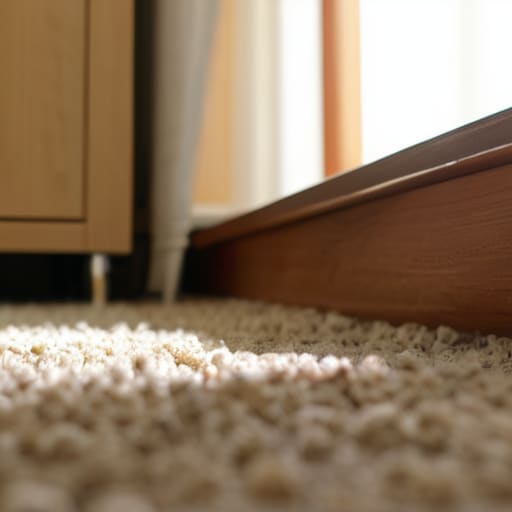
First, you need to get down on the floor. I mean actually on your hands and knees. When I was nursing on the ward, we talked about environmental hazards, but nothing prepares you for the view from eighteen inches off the carpet. You’ll see the loose coin under the radiator or the dangling cord that looks perfectly innocent from a standing position. Start with your baby proofing safety checklist, but don’t just tick boxes; look for the physics of it. For example, when my second was ten months old, I realized that even the “sturdy” bookshelf was just waiting for a determined climber to turn it into a heavy, falling hazard. This is why childproof furniture anchors aren’t a suggestion—they are non-negotiable.
Next, tackle the “invisible” dangers. The official manuals focus heavily on gates and plugs, but they often gloss over poison prevention for kids. I’ve seen too many parents assume the cleaning cupboard is safe because it has a child lock, only to find a determined toddler has figured out the specific rhythmic tug needed to pop it open. If you’re looking at baby gate installation tips, remember that a gate is only as good as its weakest screw. If it’s a pressure-mounted gate, check it every single week; they will wiggle loose over time.
Common Mistakes to Avoid
The biggest mistake I see—and I saw it constantly on the ward—is the “eye-level fallacy.” You walk through your house standing up, seeing a tidy living room, but you aren’t seeing the world from forty centimetres off the floor. When I was parenting my second, I realised my baby proofing safety checklist was missing everything that actually mattered because I wasn’t crawling on my hands and knees. You’ll miss the loose coin wedged under the sofa or the heavy ceramic lamp that looks stable until a curious hand swipes at it. If you aren’t down there on the carpet, you aren’t actually childproofing; you’re just tidying up.
Another trap is relying on “temporary” fixes. I know the feeling—you buy a cheap plastic latch or a flimsy gate because you think, “They’ll be out of this stage in a month.” But toddlers are remarkably efficient at testing the structural integrity of your shortcuts. I’ve seen parents skip childproof furniture anchors because the dresser “felt heavy enough,” only to find that a climbing eighteen-month-old can tip a heavy unit in seconds. Don’t treat safety as a phase; treat it as a permanent installation until they’ve actually mastered the art of not being a human wrecking ball.
Final Thoughts
If you’ve followed this list, you’ve done more than most. You’ve gone through the baby proofing safety checklist, you’ve wrestled with the inevitable frustration of childproof furniture anchors, and you’ve likely realized that your house is significantly less “relaxing” than it was a month ago. But here is the truth I learned on the ward: you cannot engineer a child into being incapable of mischief. Even in a perfectly curated environment, a toddler will find that one singular, tiny gap you missed, usually right when you’ve finally sat down with a lukewarm cup of tea.
Don’t let the pursuit of perfection become its own kind of exhaustion. There is a massive difference between preventing household accidents—like securing heavy bookshelves or locking away cleaning supplies—and trying to create a sterile bubble. You will miss something. I did, with my second, and it resulted in a very loud, very unnecessary trip to A&E for a bruised forehead. Focus on the big stuff, trust your gut, and remember that the goal isn’t a house without risks, but a home where the risks are manageable. You’re doing fine.
The Reality Check: 5 Things the Safety Manual Won't Tell You
- Get down on your hands and knees. I did this with my eldest, Leo, when he was about fourteen months, and it was a revelation. You don’t see the world from eighteen inches up. You see the loose screw under the coffee table, the dangling cord from the blind that looks like a climbing rope, and the sheer amount of dust bunnies that become choking hazards. If you aren’t looking at the floor from their level, you aren’t childproofing; you’re just decorating.
- The “Cabinet Lock” Paradox. The official guidance says “install locks on all low cabinets.” What it doesn’t say is that a determined toddler—mine was particularly inventive at eighteen months—will treat a magnetic lock like a high-stakes puzzle box. They won’t stop; they’ll just get better at it. Don’t just install the locks; change what’s inside the cabinets. If it’s worth swallowing or breaking, it shouldn’t be in the “strike zone” regardless of the plastic latch.
- Anchor everything that can tip. We talk about bookshelves, but people often forget the heavy TV or the dresser. My second, Maya, decided at nearly two years old that the top drawer of her dresser was a perfect step-ladder. It’s a terrifying moment when you realize how much weight a small human can shift. If it’s tall, heavy, and not bolted to the wall, it’s a hazard waiting for a curious hand.
- Beware the “Safe” Cord. You’ll see warnings about blind cords, which is vital, but don’t overlook the charger cables. A toddler at ten months old doesn’t see a phone charger; they see a very interesting, very chewy string. They will pull on it, potentially dragging a heavy device onto their face, or worse, getting it caught in their mouth. Treat every loose wire like a potential tripwire or a strangulation risk.
- The False Sense of Security. This is the big one. You can spend a whole Saturday installing every gadget from the baby aisle, but the moment you turn your back to stir a pot of pasta or answer a door, the “safety” evaporates. Childproofing is a way to buy yourself a few extra seconds of reaction time; it is not a substitute for your eyes. I learned that the hard way when my third decided a “secured” gate was merely a suggestion.
The Reality Check: Three Things to Carry With You
Safety manuals are written for a static, perfect world, but your house is a living thing. A cabinet lock that works for a ten-month-old is just a suggestion to a two-year-old who has discovered the lever principle. Re-evaluate your “secure” zones every few months as they hit new developmental milestones.
Distinguish between “dangerous” and “developmentally appropriate.” You can’t childproof away the fact that a toddler will eventually try to climb something or pull something down; you can only manage the fallout. Focus your energy on the high-stakes stuff—choking hazards and heavy furniture—rather than trying to turn your home into a padded cell.
Perfection is a myth that leads to burnout. You will miss something. You will realize a week too late that the corner of the coffee table is still a hazard. When that happens, don’t spiral into thinking you’ve failed; just fix it, learn the new “danger zone,” and keep going.
The Reality of the Safety Net
If you’ve followed this guide, you’ve likely realised that childproofing isn’t a one-and-done task you tick off a list like a grocery run. It is a moving target. You’ll secure the heavy dresser when they are ten months old, only to find that by eighteen months, they’ve figured out how to use a heavy plastic toy as a lever to bypass the very gate you installed. The clinical guidance tells you to anchor everything and cover every outlet, and you should absolutely do that—it’s the foundation. But my experience, and the experience of every parent I worked with on the ward, is that perfection is a myth. You can secure the cabinets and the stairs, but you can’t secure the sheer, unpredictable physics of a toddler in motion. The goal isn’t to build a padded cell; it’s to manage the most likely risks so that when they inevitably test a boundary, the consequences aren’t catastrophic.
Please, don’t let the endless checklists make you feel like you’re failing every time you find a new hazard. I remember my second, when he was about fourteen months, and I felt like a complete novice because I’d missed a single dangling cord that he’d managed to grab. I felt like I’d let him down. But here is the truth: you are doing the work. You are watching, you are adjusting, and you are learning. Childproofing is just one way we show up for them, but it isn’t the sum total of your parenting. Be kind to yourself in the middle of the chaos. You can’t predict every move, but you are providing the safest possible stage for them to grow, stumble, and eventually learn how to navigate the world on their own.