Supporting Speech Without Turning It Into a Test
If you’ve spent more than ten minutes on Instagram lately, you’ve probably seen a “language expert” in a beige linen shirt telling you that you need to buy a specific set of wooden blocks or a subscription-based flashcard app to help your toddler find their words. It’s exhausting, it’s expensive, and frankly, it’s nonsense. When I was working the night shifts on the paediatric ward, I saw plenty of bright, capable kids who didn’t own a single “educational” gadget, and I saw plenty of kids whose parents were following every rule in the book but still struggling to communicate. Learning how to support speech development isn’t about curated toy boxes; it’s about the messy, unscripted, and often loud reality of living with a small human.
I’m not going to give you a list of clinical milestones that feel like a ticking clock, nor will I pretend that narrating your grocery shopping is going to magically fix a toddler meltdown. Instead, I want to talk about what actually moves the needle—the stuff that works when you’re running on three hours of sleep and your two-year-old is pointing at a juice box with more intensity than a heat-seeking missile. I’ll give you the science, sure, but I’ll also give you the real-world shortcuts that actually stick when life gets in the way.
Table of Contents
- The Gap Between Milestones for Toddler Language and Real Life
- Spotting Signs of Speech Delay in Children Without Panicking
- How to Support Speech Development When Youre Running on Empty
- Speech Therapy Activities at Home That Dont Feel Like Work
- Improving Verbal Expression in Kids Through Messy Unscripted Play
- Interactive Reading for Language Growth vs Just Finishing the Book
- Five Ways to Build Language Without Losing Your Mind
- The Short Version (For When You’ve Only Got Two Minutes)
- One Step at a Time
The Gap Between Milestones for Toddler Language and Real Life
The problem with those colourful charts showing milestones for toddler language is that they assume every child is a predictable little machine. They show a neat line moving upward, but in my house, that line looks more like a jagged mountain range. My second child, Leo, was a quiet observer until he was nearly two, at which point he suddenly exploded into a torrent of single words. My third, Maya, was the opposite; she had the vocabulary of a poet by eighteen months but couldn’t actually use it to tell me she needed a nappy change.
When you’re staring at a developmental checklist, it’s easy to panic if your little one isn’t hitting every mark on schedule. You start searching for signs of speech delay in children at every mealtime, wondering if that silence is a red flag. But here is what the textbooks won’t tell you: development isn’t linear. There are plateaus, there are regressions when they’re teething or stressed, and there are days when they simply choose not to engage. If you’re looking for progress, don’t just look for new words; look for the way they’re trying to connect with you.
Spotting Signs of Speech Delay in Children Without Panicking
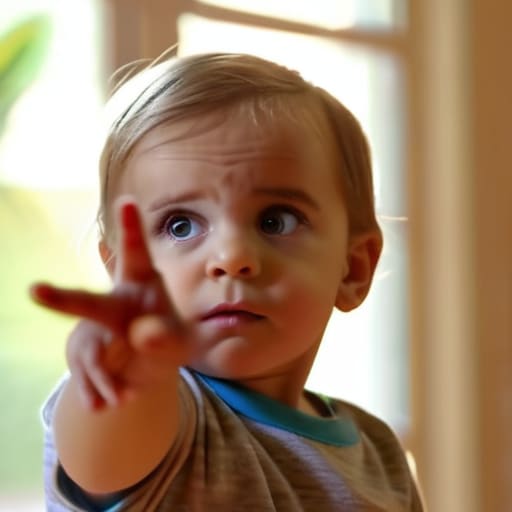
When I was on the ward, I saw parents do the “clinical scan”—that frantic, wide-eyed look where they’re trying to cross-reference their child’s every grunt against a glossy pamphlet. It’s exhausting. If you’re looking for signs of speech delay in children, the first thing to remember is that development isn’t a straight line; it’s a messy, jagged scribble. My second, who didn’t hit his word count until he was nearly two, was a master of pointing and screaming. By the textbook, he was “behind,” but by the reality of his world, he was communicating perfectly well—he just wasn’t using vowels to do it.
The trick is to look at the intent rather than the inventory of words. Is he using gestures? Does he look at you when you call his name? Is he trying to get a point across, even if it’s just by dragging you toward the fridge? If the connection is there, you usually have time to breathe. If you feel like you’re hitting a wall where there is zero engagement, that’s when you call the GP. Don’t wait for a “perfect” milestone to pass; just trust that gut feeling of disconnect if it keeps you up at night.
How to Support Speech Development When Youre Running on Empty

The textbooks will tell you that you need to be a constant narrator, describing every mundane detail of your day to boost early childhood communication skills. They make it sound like a full-time job of verbalizing the contents of the fridge or the mechanics of a laundry cycle. But let’s be honest: when you are staring at a pile of dishes and your youngest has just wiped jam on the curtains, you don’t have the mental bandwidth for a lecture. When I was dealing with my second, a particularly stubborn toddler, I realized that quality beats quantity every single time. You don’t need to talk for three hours; you just need to be present for the three minutes when they actually look you in the eye.
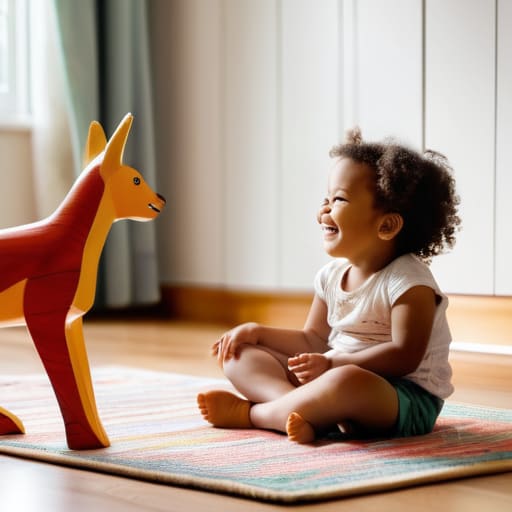
If you are looking for speech therapy activities at home, stop looking for expensive kits or complex games. The most effective thing you can do is simply wait. When your child points at something, don’t just give it to them; pause for a beat to see if they attempt a sound. It’s about creating those tiny gaps of silence where they feel they have permission to step in. Even if you’re just sitting on the floor together, low-pressure connection is more powerful than any structured lesson plan.
Speech Therapy Activities at Home That Dont Feel Like Work
Look, if you try to turn your living room into a formal classroom, your toddler will spot the “work” vibe a mile off and immediately decide that staring at a baseboard is more interesting. When I was working the wards, I saw parents try to force-feed these structured exercises, and it usually ended in tears for everyone. The secret to speech therapy activities at home isn’t sitting them down with flashcards; it’s hijacking the stuff they’re already doing. If they’re playing with cars, don’t just watch. Narrate the crash. “Oh no, the red car bumped the blue one!” It sounds silly, but you’re modeling the rhythm of language without making it a chore.
The same goes for interactive reading for language growth. When my second child was about eighteen months, I stopped trying to read the words on the page—which is what the books tell you to do—and started just pointing at the pictures and waiting. If you pause after saying, “Where is the…?”, and give them five whole seconds of silence, you’re giving their brain a chance to catch up. It’s about those tiny, low-pressure gaps in conversation that actually help in improving verbal expression in kids.
Improving Verbal Expression in Kids Through Messy Unscripted Play
The textbooks will tell you that you need structured drills to work on improving verbal expression in kids, but if you try to sit a three-year-old down for a formal “lesson” while they’re elbow-deep in playdough, you’re going to lose them in about thirty seconds. Real language happens when the brain is too busy being distracted by something interesting to worry about being “correct.” When my second child was about two and a half, we stopped trying to name every single toy and started just narrating the chaos of the sensory bin. If they’re pouring water or squishing mud, don’t quiz them; just describe the texture and the movement.
This is where you find the real magic of early childhood communication skills. It’s not about the flashcards; it’s about the “messy” moments where they actually have something to say. When they’re building a tower that’s about to topple, that’s a high-stakes linguistic opportunity. You aren’t just playing; you’re providing the scaffolding they need to attach words to very big, very real emotions. It’s less about being a teacher and more about being a commentator on the wonderful, unscripted disaster unfolding on your kitchen floor.
Interactive Reading for Language Growth vs Just Finishing the Book
The textbooks love to talk about “shared reading experiences,” but let’s be honest: most of us are just trying to get through the book so we can finally get the kid into bed. There is a massive difference between reading a story to a child and actually engaging in interactive reading for language growth. When I was working on the ward, I saw how much a child’s engagement changed when the adult stopped performing a monologue and started looking for a reaction. If you are just reading the words on the page, you’re essentially just a human audiobook.
To actually move the needle on improving verbal expression in kids, you have to be willing to let the book be “ruined.” When my second child was about eighteen months, he didn’t care about the plot of the story; he just wanted to point at the cow and make a “moo” sound. That’s the sweet spot. Instead of rushing to the next page to finish the sentence, stop. Wait for them to point, wait for the grunt, or ask a silly question like, “Where did the blue hat go?” It’s less efficient, and it’s certainly slower, but that’s where the real magic happens.
Five Ways to Build Language Without Losing Your Mind
- Narrate the mundane, not the monumental. The textbooks say you should engage in “rich linguistic exchanges,” but when you’re halfway through a mountain of laundry at 4:00 PM, that feels impossible. Instead, just narrate what you’re actually doing. “I’m folding the blue towel,” or “The water is warm.” My second child, who was about 18 months old, didn’t need a lecture on nouns; he just needed to hear me naming the things that were currently touching his hands.
- Embrace the “wait time” rule. This is the hardest one for us adults because we hate silence, especially when we’re trying to get out the door. When you ask a toddler a question, they need about five to ten seconds to process the sounds and find the words. I used to rush in and answer for them—a habit from my nursing days where efficiency was king—but with my third, I learned that if I just sat there and counted to ten in my head, they’d often find the word themselves.
- Stop correcting, start expanding. If your three-year-old points at a dog and says, “Doggy run!”, don’t say, “No, say ‘The dog is running’.” That just shuts them down. Instead, just add one more piece to the puzzle: “Yes, the big dog is running!” You’re giving them the correct grammar without making them feel like they’ve failed a test.
- Use “forced choices” when the meltdown is brewing. When a child is too frustrated to speak, the “What do you want?” question is a nightmare—it’s too broad. Instead, give them two concrete options: “Do you want the red cup or the blue cup?” My fourth, when he was two, would have been in tears trying to answer an open question, but he could point to a color every single time. It lowers the cognitive load when they’re tired.
- Accept that screens are a tool, not a teacher. You’ll hear a lot of “expert” advice about how screens are the enemy of speech. While it’s true that a toddler won’t learn to converse with a tablet, if you’re using a twenty-minute show as a tactical reset so you can make dinner, don’t let the guilt eat you. The trick is to watch with them for five minutes and comment on what’s happening. “Look, the bird is flying!” turns a passive screen into a shared language moment.
The Short Version (For When You’ve Only Got Two Minutes)
Milestones are a compass, not a countdown; if your two-year-old isn’t stringing sentences together yet, it doesn’t mean they’re broken, it just means they’re on their own timeline.
Connection beats instruction every single time—you will do more for their language by simply narrating your chaotic breakfast routine than you will by forcing them into a formal “learning session” when they’re clearly overstimulated.
Trust your gut, but check the facts; if your instinct says something is off, call the professional, but don’t let a slightly delayed word turn into a midnight spiral of guilt that keeps you both awake.
One Step at a Time
If you take anything away from this, let it be that speech development isn’t a checklist you complete by a certain Tuesday; it’s a slow, often messy process of connection. We’ve talked about the gap between clinical milestones and the reality of a chaotic household, the importance of spotting genuine delays without letting anxiety hijack your life, and how even the simplest, unscripted play can do more for a child’s vocabulary than any structured lesson plan. You don’t need to be a speech therapist to help them find their voice, and you certainly don’t need to be a perfect parent to do it. Just remember that consistency beats intensity every single time. Whether it’s narrating the laundry or reading a book for the fourteenth time in a row, you are doing the work.
There will be days when you feel like you’re failing because the words aren’t coming as fast as the parenting books promised they would. I remember sitting in the paediatric ward with a mother of a two-year-old who was convinced she’d missed every single developmental window; she was exhausted, terrified, and judging herself by a standard that didn’t account for her reality. Please, give yourself the same grace you would give a stranger in a hospital waiting room. Your child doesn’t need a tutor; they need a parent who is present, even if that presence is just sitting on the floor in silence while they play. You are enough, and they are learning, even when it feels like they aren’t.