
Praise the Effort, Name the Specifics
I’ve sat in enough hospital breakrooms to know that when a professional tells you to “utilize process-oriented praise to foster a growth mindset,” they are usually someone who hasn’t had to deal with a toddler who has just decided that their shoes are an enemy of the state. You can read every academic paper on the planet about how to praise effectively, but those papers don’t account for the sheer, bone-deep exhaustion of a Tuesday evening when you’re just trying to get through dinner without a meltdown. Most of the advice out there is written for a vacuum, assuming you have the mental bandwidth to be a linguistic architect when, in reality, you’re just trying to survive the next ten minutes.
I’m not here to give you a polished manual that works perfectly in a laboratory setting. Instead, I want to talk about what actually sticks when you’re in the thick of it. I’ll tell you what I learned from my eldest when he was four, what failed miserably with my middle two, and where the clinical guidance actually meets the messy reality of a living, breathing child. We’re going to look at the difference between words that actually build confidence and the kind of empty chatter that just becomes background noise to a kid.
Table of Contents
- The Manual Says Good Job but Your Kid Doesnt Care
- The Psychology of Positive Affirmation and Why It Often Misses
- How to Praise Effectively Without Creating a Performance Addict
- Praising Process vs Outcome Lessons From a Very Long Tuesday
- Growth Mindset Praise Examples That Actually Work at 2 Am
- Positive Reinforcement Strategies That Survive Real World Chaos
- Five Ways to Say It Without Making It Weird
- The Reality Check: What Actually Sticks
- The Reality Check
The Manual Says Good Job but Your Kid Doesnt Care

If you pick up any textbook on child psychology, they’ll tell you that “Good job!” is a hollow phrase. They’ll explain that it’s what we call “person-oriented praise,” and that it can actually backfire by making a child crave external validation rather than internal satisfaction. On paper, it makes perfect sense. In practice, when my middle child finally managed to put his shoes on the right feet at age three, “Good job” felt like a reflex—a verbal placeholder while I was trying to prevent the entire living room from becoming a disaster zone.
The theory suggests we should be using praising process vs outcome to build resilience, but that requires a level of linguistic precision that is hard to maintain when you’re exhausted. The manual wants you to notice the effort, the strategy, or the persistence. It wants you to say, “I saw how hard you worked to balance those blocks.” That’s great for a calm Tuesday afternoon. But when you’re in the thick of it, trying to implement positive reinforcement strategies while someone is pulling your hair or spilling milk, those nuanced observations feel like a mountain you aren’t equipped to climb.
The Psychology of Positive Affirmation and Why It Often Misses
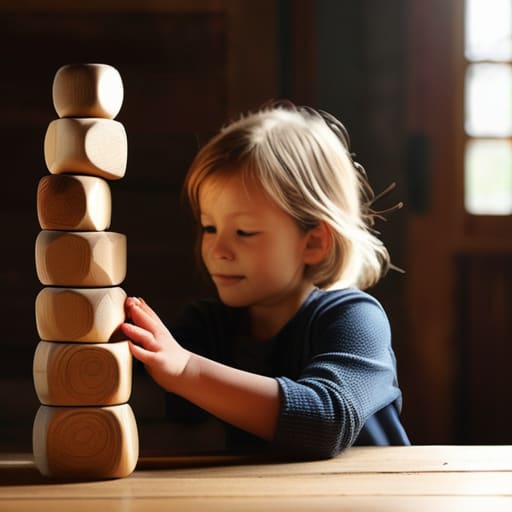
In the textbooks, the psychology of positive affirmation is presented as a clean, linear equation: you provide the right stimulus, and you get the desired behavioral response. They talk about it like you’re programming a very small, very irrational computer. In a clinical setting, or even in a well-lit classroom, the theory of praising process vs outcome makes perfect sense. You tell a child, “I saw how hard you worked to balance those blocks,” instead of just saying “Good job,” and the theory suggests they’ll develop a resilient internal drive.
But the theory assumes a level of cognitive processing that most kids simply haven’t unlocked yet. When my second child was about eighteen months old, I tried to use these sophisticated positive reinforcement strategies during a particularly messy art session. I was narrating his efforts like a sports commentator, trying to foster that precious growth mindset. He didn’t care about the “process”; he just wanted to see if the blue paint tasted like blueberries. The gap between the academic ideal and the messy, sensory-driven reality of a toddler is where most of us lose our minds.
How to Praise Effectively Without Creating a Performance Addict

The danger of the “Gold Star” approach is that you accidentally train your child to become a performer rather than a person. When we focus solely on the end result—the perfect drawing, the straight A, the tidy room—we are inadvertently teaching them that their value is tied to the finish line. I saw this constantly on the ward; kids who were so terrified of “failing” a task that they wouldn’t even try something new if they weren’t certain they’d nail it. If you want to avoid raising a kid who is constantly looking over their shoulder for your approval, you have to pivot toward praising process vs outcome.
Instead of “You’re so smart,” try something that actually describes the work they did. When my second child was four, he spent twenty minutes trying to build a Lego tower that kept toppling. Instead of saying “Great job, it’s beautiful,” I said, “I saw how you kept changing the base every time it wobbled.” That is a real growth mindset praise example. You are highlighting the mechanics of their effort. It feels clunkier and less satisfying in the moment, but it builds a foundation that doesn’t crumble the second they face a setback.
Praising Process vs Outcome Lessons From a Very Long Tuesday
I remember a Tuesday—it felt like a year, but it was actually just a Tuesday—when my second, Leo, was four. He had spent forty minutes trying to build a tower out of those wooden blocks, only for it to succumb to gravity and shatter across the floor. I saw the immediate, stinging onset of a meltdown, and my instinct, the one honed by years of clinical training, was to jump in with a hollow, “It’s okay, you’ll get it next time!”
But that’s not what he needed. He didn’t need a consolation prize; he needed to know that the forty minutes of intense focus actually mattered. This is the core of praising process vs outcome. Instead of focusing on the collapsed tower, I sat on the floor and said, “I saw how you kept trying a different base every time it wobbled.” That shift—moving from the result to the effort—is one of the most vital parenting techniques for encouragement I’ve ever used. It’s the difference between teaching a child that they are only valuable when they succeed, and teaching them that the struggle itself is where the actual learning happens.
Growth Mindset Praise Examples That Actually Work at 2 Am
When you’re exhausted and the house is finally quiet, the last thing you want to do is perform a psychological deep dive. You just want them to go to sleep. But when you are actually in the thick of it—say, trying to encourage a four-year-old who is currently sobbing because their Lego tower collapsed—the textbook growth mindset praise examples often feel too clinical to use. You don’t want to sound like a HR manual. Instead of the hollow “you’re so smart,” try something that acknowledges the actual friction of the moment. Try, “I saw how hard you kept trying even when those bricks wouldn’t stay put.” It sounds small, but it shifts the focus from the failed tower to the kid’s stubbornness, which is exactly what you want to build.
The trick with these parenting techniques for encouragement is to be a narrator rather than a judge. When my second child was about five, I stopped trying to “reward” success and started just describing the effort I saw. Instead of “Great drawing!”, I’d say, “You used a lot of different colors for that sky.” It’s less about the psychology of positive affirmation and more about witnessing their work. It takes the pressure off them to be perfect and puts the value on the fact that they actually showed up and tried.
Positive Reinforcement Strategies That Survive Real World Chaos
The problem with most lists of positive reinforcement strategies is that they assume you are sitting in a quiet, sunlit room with a calm child and a clipboard. In reality, you’re usually trying to navigate a hallway filled with stray Lego, a toddler who has decided that socks are the enemy, and the overwhelming urge to just finish one thing. When the chaos hits, you don’t have the mental bandwidth to construct a perfectly nuanced sentence about their cognitive development. You need something that works when your brain is running on forty percent battery.
I’ve found that the most resilient approach is to pivot from “evaluating” to “noticing.” Instead of trying to engineer a grand moment of encouragement, just narrate what you see. When my second child was three, I stopped trying to find the “perfect” thing to say and started just calling out the small wins: “I saw how you put that block back in the box even though you wanted to keep playing.” It’s not a lecture; it’s just a witness. It turns praising process vs outcome from a theoretical concept into a way of simply being present, even when the house is falling apart around you.
Five Ways to Say It Without Making It Weird
- Be a narrator, not a judge. When my second child was about three, I realised that “Good job!” sounded a bit like I was awarding a trophy for something they’d already finished. Instead, I started just describing what I saw: “You used the blue crayon for the whole sky.” It’s harder to mess up, it requires less emotional energy when you’re exhausted, and it actually tells them what they did right.
- Watch out for the “Praise Hangover.” If you shower a child with constant, high-octane praise every time they breathe, the words lose their value. By the time they actually do something difficult—like sharing a toy at age four—your “Great job!” sounds like white noise. Save the big stuff for the big stuff, and keep the everyday stuff quiet and observant.
- The “Specifics over Superlatives” rule. “You’re so smart” is a dangerous phrase; it sets a bar that’s impossible to maintain once things get hard. “I saw how you kept trying to fit those blocks together even when they kept falling” is much better. It’s a mouthful, sure, but it gives them a tool to use when they inevitably fail at something else later.
- Don’t forget the pause. Sometimes, especially with toddlers around age two or three, the best way to “praise” is to just give them a nod and a smile and let them sit in the achievement for a second. You don’t always have to fill the silence with a verbal gold star. Sometimes, letting them feel the pride themselves is more powerful than you handing it to them.
- Accept that it will fail. You can have the most psychologically sound, process-oriented praise strategy in the world, and your five-year-old will still look at you like you’ve just spoken in ancient Greek while they’re mid-tantrum. That doesn’t mean you’re doing it wrong; it just means they’re five. Don’t let a failed interaction make you scrap the whole approach.
The Reality Check: What Actually Sticks
Stop looking for the “perfect” phrase and start looking at the effort; when my second child was four, I realized that saying “I saw how hard you worked on that tower” landed much better than a generic “good job” because it actually acknowledged the struggle, not just the result.
Praise isn’t a transaction where you trade a compliment for good behavior, so don’t be surprised when it fails during a meltdown; at 2:00 AM, your goal isn’t “effective reinforcement,” it’s just getting through the hour, and that is perfectly okay.
Watch out for the “performance trap” where kids only feel valued when they win; I’ve seen kids as young as five start to shut down if they feel every word out of your mouth is a performance review, so aim for noticing the small, quiet things they do when they think no one is watching.
The Reality Check
Look, if you’ve spent the last ten minutes trying to mentally rehearse how to praise your child’s “process” instead of their “result,” please take a breath. You aren’t going to get it perfect every single time. There will be days—usually the ones involving spilled milk or missed nap windows—where you’ll default back to a mindless “good boy” or “well done” just to get through the next ten minutes. That’s okay. The goal isn’t to become a clinical practitioner of positive reinforcement; the goal is to slowly shift the focus from the trophy to the effort. Whether they are four years old learning to tie laces or ten and tackling a difficult math problem, they need to know you see the sweat and the frustration, not just the finished product.
At the end of the day, your child isn’t going to remember the specific phrasing of your growth-mindset affirmations. They won’t sit in their teenage years thinking, “I really appreciated how Dad noticed my persistence during that Lego build in 2024.” What they will carry is the underlying sense that they are seen and valued for who they are, even when they fail. Parenting is a long game of building a foundation, and sometimes that foundation is built in the messy, unscripted moments between the “perfect” techniques. Just keep showing up, keep noticing the small wins, and give yourself some grace when the textbook goes out the window.