Getting Outside in All Weathers as a Habit
I’ve seen the glossy brochures and the “forest school” influencers who make it look like a serene, woodland meditation session. They’ll tell you that if you just invest in the right waterproof gear and a curated selection of wooden toys, you’ll magically master how to get children outdoors regularly. But they aren’t the ones standing in a sodden field at 4:00 PM, trying to convince a three-year-old that a pile of damp leaves is more interesting than an iPad, while your own socks are completely soaked through. I spent a decade on a paediatric ward seeing the benefits of fresh air, but I’ve also spent the last few years discovering that “nature” often looks a lot more like mud, tantrums, and a desperate search for a lost shoe.
I’m not here to sell you a lifestyle or a brand of expensive raincoats. What I want to do is bridge the gap between the clinical advice that says outdoor play is vital for development and the exhausting reality of actually making it happen when you’re tired and the weather is rubbish. I’ll give you the practical, age-specific tactics that actually worked for my four kids—from the toddler years to the pre-teen stage—and I’ll tell you exactly when it’s okay to just stay inside and call it a day.
Table of Contents
- The Theory of Nature Play vs the Reality of Muddy Meltdowns
- Why the Benefits of Nature Play for Kids Feel Impossible Today
- How to Get Children Outdoors Regularly Without Losing Your Sanity
- Building Outdoor Routines for Families When Life Gets Messy
- Overcoming Bad Weather for Outdoor Play and Other Parenting Lies
- Sensory Play in Nature and the Screen Time vs Outdoor Time War
- Five Ways to Actually Get Out the Door (Without a Fight)
- The Bare Essentials for Surviving the Great Outdoors
- The View from the Muddy Trenches
The Theory of Nature Play vs the Reality of Muddy Meltdowns
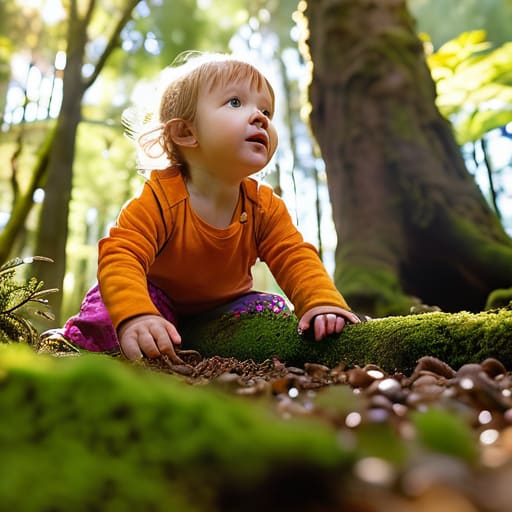
The textbooks make it sound so seamless. They’ll talk about the developmental benefits of nature play for kids—how it builds fine motor skills, spatial awareness, and emotional regulation—as if you’re just going to walk into a meadow and watch your child blossom like a well-watered fern. In my nursing days, I’d see the theory: nature is a calming, restorative environment. But the theory doesn’t account for the fact that a three-year-old doesn’t care about “sensory play in nature” when they’ve just discovered that a specific patch of damp moss feels wrong on their toes.
The reality is usually a frantic negotiation between a parent and a child who has suddenly decided that the concept of “outside” is a personal affront. You go out intending to build a beautiful new routine, but instead, you’re managing a crisis because the wind is too loud or the grass is too tickly. I remember with my second, Leo, we tried to embrace the “wildness” of a local park; ten minutes in, he was a sobbing heap because a ladybird landed on his hand. The gap between the clinical ideal and the actual, muddy chaos is where most parents lose their nerve.
Why the Benefits of Nature Play for Kids Feel Impossible Today
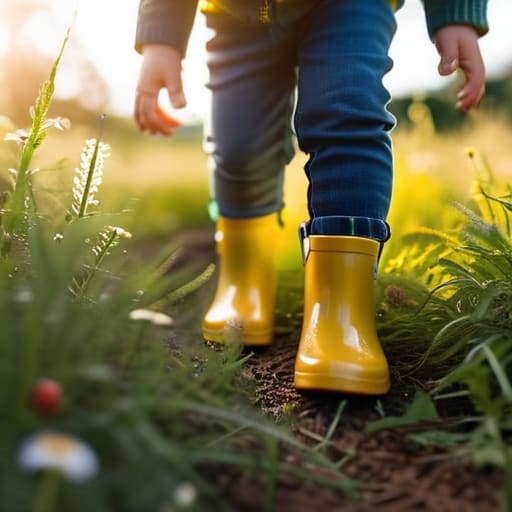
The problem isn’t that we don’t believe in the science. We’ve all read the papers on the benefits of nature play for kids—the way it regulates cortisol, helps with motor skills, and acts as a natural reset for a brain fried by too much stimulation. But there is a massive, exhausting gap between reading a study and actually getting a three-year-old into a pair of wellies when you haven’t had a full night’s sleep in months.
In the professional world, we talk about “facilitating sensory play in nature” as if it’s as simple as setting out a tray of pinecones. In reality, it feels like a logistical nightmare involving lost shoes, damp socks, and the constant, nagging guilt of the screen time vs outdoor time debate. When you’re staring at a grey, drizzly Tuesday, the idea of “connecting with the earth” feels less like a developmental milestone and more like a recipe for a cold and a very grumpy toddler. We aren’t just fighting the weather; we are fighting the sheer friction of modern life.
How to Get Children Outdoors Regularly Without Losing Your Sanity
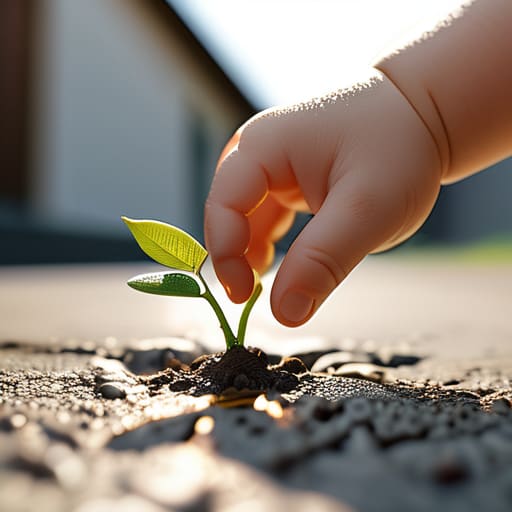
The secret, which I learned the hard way with my second child (who was about eighteen months old and possessed the temperament of a cornered badger), is to stop aiming for “nature walks” and start aiming for “controlled exposure.” The clinical literature talks about the benefits of nature play for kids as if it’s a serene, meditative experience, but in reality, it’s often just a series of logistical hurdles. Don’t try to plan a grand expedition to a forest when you’re already running low on patience. Instead, focus on micro-moments. A patch of weeds in a crack in the pavement or a single puddle in the driveway counts. If you try to force a two-hour hike when the toddler is already hitting that mid-afternoon slump, you aren’t getting nature; you’re just getting a very public, very damp meltdown.
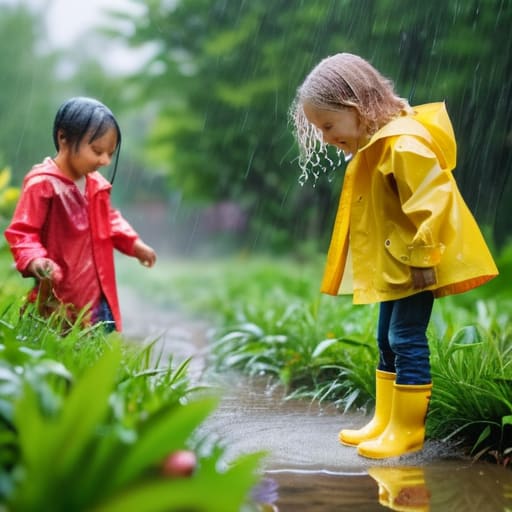
When it comes to building outdoor routines for families, the biggest mistake is waiting for the “perfect” weather window. I used to think we needed a clear, sunny day for a successful outing, but that’s a recipe for staying indoors and defaulting to the tablets. My third child, at age three, actually became much more engaged when we stopped fighting the drizzle and leaned into it. Get the wellies on, embrace the damp, and realize that sensory play in nature is often better when it’s a bit messy. If you wait for the sun, you’ll spend more time staring at the weather app than actually breathing the air.
Building Outdoor Routines for Families When Life Gets Messy
The mistake I see most often—and I made it with my second, who was about eighteen months old and possessed the structural integrity of a wet noodle—is trying to schedule “nature time” like it’s a dentist appointment. You decide Tuesday at 10:00 AM is the window for a grand woodland adventure, only to find the toddler has decided that putting on socks is an act of war. Instead of aiming for a grand excursion, I’ve learned to aim for micro-moments. If you can’t get to the forest, a ten-minute walk to the end of the street to look at a particularly interesting beetle counts. When you stop treating it as a high-stakes event, you actually start building outdoor routines for families that survive the chaos of real life.
It also means accepting that your gear will be ruined. When my eldest was three, I spent an entire summer trying to keep his clothes “clean” for the park, which resulted in us staying home more than we went out. Once I embraced the idea that sensory play in nature is inherently messy, everything changed. Whether it’s splashing in a puddle or digging in the dirt, the goal isn’t a tidy child; it’s a child who isn’t staring at a tablet because they’ve finally found something more interesting than a screen.
Overcoming Bad Weather for Outdoor Play and Other Parenting Lies
The parenting books will tell you that “there is no such thing as bad weather, only bad clothing,” which is a lovely sentiment until you’re standing in a sideways gale with a three-year-old who has decided, quite firmly, that their waterproof trousers are an instrument of torture. I remember when my second was eighteen months old; I had read all about the benefits of nature play for kids and was determined to be that “outdoorsy” parent. Instead, I spent forty minutes trying to wrestle a damp toddler into a snowsuit while the wind whipped my hair into my eyes, only to turn around and find he’d already managed to smear mud across his forehead.
The lie is that overcoming bad weather requires a grand, tactical mission. It doesn’t. It’s actually about lowering your standards for what “outdoors” looks like. Sometimes, overcoming bad weather for outdoor play just means sitting on the doorstep for ten minutes with a thermos of tea, or letting them splash in a single puddle in the driveway. You don’t need a hike; you just need to break the cycle of screen time vs outdoor time by proving to them that even a grey, drizzly Tuesday isn’t a reason to stay glued to the sofa.
Sensory Play in Nature and the Screen Time vs Outdoor Time War
The digital world is designed to be frictionless. A tablet offers bright colors, instant feedback, and zero mud. When you’re staring down the barrel of a rainy Tuesday, the battle of screen time vs outdoor time feels rigged against you. The problem is that a screen is a closed loop; it gives the child exactly what they want, every single time. Nature, however, is messy and unpredictable. It doesn’t have a “skip” button, and it certainly doesn’t offer the dopamine hit of a level-up.
But here is what I learned with my second, when he was about two and a half: a screen might quiet a child, but it doesn’t engage them. True sensory play in nature does something a touchscreen never will. It’s the shock of cold river water on small hands, the grit of sand between toes, or the specific, earthy smell of crushed mint in the garden. These aren’t just distractions; they are the building blocks of a developing brain. You aren’t just “getting them outside”—you are letting them feel the world in high definition, even if it means they come back inside needing a bath and a nap.
Five Ways to Actually Get Out the Door (Without a Fight)
- Lower your definition of ‘outdoors’ to the absolute floor. The textbooks love talking about forest schools and sprawling meadows, but when you’re exhausted, a twenty-minute walk to the end of the street to look at a specific, particularly interesting puddle counts. My second child, when he was three, once spent forty minutes staring at a beetle on a concrete driveway. That was his ‘nature fix’ for the day, and it was plenty.
- Pack the ‘Emergency Kit’ so you aren’t constantly retreating. The biggest killer of outdoor momentum is the mid-adventure crisis: a sudden chill, a hungry toddler, or a damp bottom. I learned the hard way with my eldest that if you don’t have spare socks and a high-calorie snack in a waterproof bag, you aren’t ‘exploring,’ you’re just managing a disaster in a damp park.
- Stop trying to make it an ‘event.’ If you wait for the perfect sunny Saturday to go on a ‘big family hike,’ you’ll end up doing it once a month and feeling like a failure the other twenty-nine days. Instead, aim for the boring, repetitive stuff. A ten-minute loop around the block after lunch is better for a child’s regulation than one massive, exhausting trek every fortnight.
- Embrace the ‘Transition Buffer.’ You cannot go from a high-stimulation indoor activity—like a cartoon or a Lego build—straight to the front door without a meltdown. It’s a physiological impossibility for most kids. I started giving my three-year-old a five-minute ‘warning’ that involves actually sitting on the floor with them, rather than shouting from the hallway. It doesn’t work every time, but it reduces the friction of the departure.
- Let them be messy, even if it means more laundry. The experts will tell you that tactile, sensory play is vital for development, which is true, but they don’t mention the hour of scrubbing mud out of fingernails afterwards. My rule now is: if they’re going to get dirty, they’re wearing the ‘garden clothes’ that I don’t mind ruining. If you’re constantly worried about the stains, you’ll spend the whole time hovering and preventing the very play that makes being outside worthwhile.
The Bare Essentials for Surviving the Great Outdoors
Forget the “perfect” nature excursion; if you manage ten minutes of actual fresh air without a sensory meltdown or a lost shoe, you’ve won the day.
Pack for the worst-case scenario, not the forecast—I learned with my second, when he was two, that a spare set of clothes in the car is worth more than any weather app.
Lower your expectations of what “nature play” looks like; sometimes it isn’t a profound connection with the earth, it’s just your kid staring at a beetle in the driveway while you finally drink a lukewarm coffee.
The View from the Muddy Trenches
If you try to follow every piece of advice in those glossy parenting magazines, you’ll end up exhausted, wet, and feeling like a failure before you’ve even reached the park gates. We’ve talked about the theory of sensory play and the battle against screen time, but the reality is much messier. It’s about accepting that some days the “nature walk” is just a frantic ten minutes in the back garden while you’re trying to boil pasta, and that’s perfectly fine. You don’t need a curated forest experience or expensive hiking boots to get the benefits; you just need to stop aiming for the perfectly scheduled outdoor adventure and start looking for the small, imperfect gaps in the day where a bit of dirt can happen.
I remember when my eldest was three, I used to stress about “proper” outdoor time, thinking if we weren’t exploring a trail, we were failing. Now, with four kids, I know that a child staring at a beetle on a pavement for five minutes is just as much “nature play” as a trip to the mountains. Please, give yourself some grace. Some days you will win the battle against the weather, and some days you will be huddled under a raincoat, wishing you were on the sofa. Just remember that connection matters more than perfection, and even the smallest bit of fresh air is a victory when you’re doing your best.