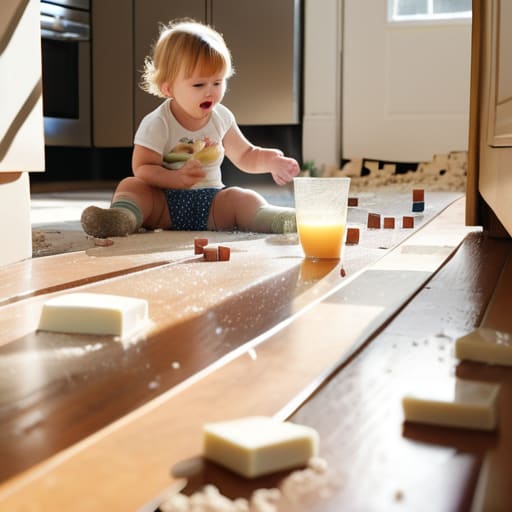
Search for:
Tips on how to prevent tantrums.
Most Tantrums Are Hunger, Tiredness or a Transition

I’ve spent enough time in paediatric wards to know that the “experts” love a tidy solution, but I’ve also spent enough time in my own hallway at 4:00 PM to know that most of them are rubbish. You’ll see books promising a foolproof system for how to prevent tantrums through “positive reinforcement” or “sensory regulation,” as if a toddler is a malfunctioning piece of software you can just patch with the right vocabulary. They don’t account for the fact that your two-year-old has decided that the blue bowl is an affront to his very existence, or that you’re currently running on three hours of sleep and a lukewarm cup of tea.

I’m not here to sell you a miracle or a way to control your child; I’m here to tell you what actually works when the biological reality of a developing brain hits the brick wall of your patience. I’ll give you the clinical truth about why these meltdowns happen, but I’ll also share the unfiltered reality of what I did with my own four kids to keep the chaos manageable. We’re going to look at the science, the failures, and the small, practical shifts that might actually save your sanity.

Table of Contents

The Manual Says One Thing but Reality Says Another

The Manual Says One Thing but Reality Says Another.

The textbooks and the nursing manuals are beautifully consistent. They’ll talk to you about identifying triggers for toddler outbursts—hunger, fatigue, or perhaps a sudden change in routine—as if you’re observing a controlled experiment in a lab. They suggest that if you simply map out the patterns, you can stay one step ahead. But when I was dealing with my second, a particularly spirited boy who was nearly two, the “triggers” weren’t a neat list; they were a chaotic, unpredictable storm. You can read all the clinical literature you want on toddler emotional regulation techniques, but no manual prepares you for the way a child’s meltdown can feel like a personal assault on your sanity when you’re already running on four hours of sleep.

In the ward, I’d see parents trying to apply these perfect, logical strategies, only to watch them crumble when the child’s screaming hit a certain frequency. The theory says to remain a calm, neutral anchor, but reality is much more visceral. When you are in the thick of managing child meltdowns, you aren’t thinking about long-term developmental milestones; you’re just trying to survive the next ten minutes without losing your temper yourself.

Identifying Triggers for Toddler Outbursts Before the Storm Hits

Identifying Triggers for Toddler Outbursts Before the Storm Hits

In the ward, we used to look for the “pre-ictal” signs—those tiny, subtle shifts before a seizure. With toddlers, it’s remarkably similar. You aren’t looking for the scream; you’re looking for the quiet withdrawal or the sudden, frantic rubbing of an eye. When my second child was eighteen months, I learned that the “storm” didn’t start when he hit the floor; it started twenty minutes earlier when he became unusually clingy or stopped engaging with his toys. Identifying triggers for toddler outbursts isn’t about spotting the tantrum itself, but about catching the physiological slide toward it.

Often, the culprit isn’t a lack of discipline, but a sudden spike in sensory overload in children. A bright supermarket aisle or a loud playgroup can drain their battery faster than you realize. I’ve learned that if I see that glazed-over look—the one where they’re staring into space while the world carries on around them—it’s time to exit the situation immediately. Don’t wait for the meltdown to start. If you try to use redirection once they’ve already hit the red zone, you’re just fighting a losing battle against a nervous system that has already gone offline.

The Real Science of How to Prevent Tantrums

The Real Science of How to Prevent Tantrums.

When I was on the ward, we used to talk about the “window of tolerance.” It’s a clinical way of saying that every child has a certain amount of stress they can soak up before the dam breaks. The science tells us that a toddler’s prefrontal cortex—the part of the brain responsible for logic and impulse control—is essentially under construction. It’s a building site with no foreman on duty. This means that most toddler emotional regulation techniques you read about in glossy magazines are asking a child to do something their biology literally isn’t capable of yet. They aren’t “being difficult”; they are experiencing a neurological system that has simply gone offline.

In practice, prevention isn’t about stopping the emotion; it’s about managing the physiological load. I learned with my second, Leo, that sensory overload in children is often the silent architect of a meltdown. It’s rarely just the broken cracker or the wrong coloured cup; it’s the broken cracker combined with the loud television, the itchy sock, and the fact that they haven’t eaten in three hours. If you can spot that cumulative build-up, you can often intervene before the brain enters full “fight or flight” mode.

Managing Child Meltdowns When the Guidance Fails You

When the storm actually breaks, all the clever toddler emotional regulation techniques you read about in a glossy magazine tend to evaporate. You’re standing in a supermarket aisle, or perhaps just the middle of your kitchen, while your two-year-old performs a feat of vocal gymnastics that would make an opera singer blush. The textbook says to “validate their feelings” and “remain a calm anchor,” but it doesn’t account for the fact that your own nervous system is currently screaming at you to just make it stop. When you are in the thick of managing child meltdowns, you aren’t a clinical professional; you are a person trying to maintain dignity while a tiny human treats your shins like a percussion instrument.

In these moments, I’ve learned that survival is a valid strategy. When my middle child was eighteen months old, I stopped trying to “teach a lesson” mid-scream and instead focused on simply being a safe, quiet presence nearby. Sometimes, the most effective way to handle the chaos is to stop fighting the noise and just wait for the adrenaline to pass. It isn’t pretty, and it certainly doesn’t feel like “effective parenting,” but lowering the stakes is often the only way to get through to them once the dust settles.

Toddler Emotional Regulation Techniques That Actually Work at 200 Am

When you’re staring at a screaming two-year-old in a darkened room, the textbook advice about “naming the emotion” feels about as useful as a chocolate teapot. You can tell them, “I see you are feeling frustrated,” all you want, but when they are in the middle of a full-blown neurological storm, they aren’t listening to your vocabulary lessons. At that hour, the most effective toddler emotional regulation techniques aren’t linguistic; they are physical. I learned this with my second, who was eighteen months old and prone to what I call “the windmill”—spinning and screaming until they hit the floor. What worked wasn’t a lecture, but lowering the sensory input. I learned to turn off the hallway light, stop talking entirely, and just sit on the floor near them. Sometimes, a heavy blanket or a firm (but not crushing) hug provides the proprioceptive input their nervous system is screaming for.

The goal in these moments isn’t to “fix” the behavior so you can get back to sleep; it’s about co-regulation. You are the anchor. If you are vibrating with tension, they will pick up on it like a radio signal. Instead of trying to force a calm, I found that matching their energy slightly and then slowly bringing it down worked best. If they are loud, I’d hum a low, steady note. It sounds ridiculous, but it works. It’s not about being a perfect parent; it’s about being a steady presence while the storm passes.

Beyond Positive Reinforcement Navigating Sensory Overload in Children

We talk a lot about positive reinforcement for behavior—the stickers, the high-fives, the “good job” when they share the wooden blocks. And don’t get me wrong, that stuff has its place. But when you’re staring at a two-year-old who has suddenly collapsed into a heap because the supermarket lights are too bright or the vacuum cleaner is too loud, a sticker chart isn’t going to save you. At that moment, you aren’t dealing with a “behavioral issue”; you are dealing with sensory overload in children. Their nervous system has essentially pulled the fire alarm, and no amount of gentle encouragement is going to shut it off.

I remember with my second, Leo, he was about eighteen months old when I realized that his “naughty” outbursts in the park weren’t defiance—he was just overwhelmed by the wind, the dogs barking, and the sheer amount of visual information hitting him at once. When you are managing child meltdowns triggered by the environment, your job shifts from “teacher” to “buffer.” You have to become the person who lowers the volume, dims the lights, or provides the quiet corner. Sometimes, the most effective parenting strategy isn’t teaching them how to behave, but simply helping them find a way to feel safe again.

Five Things I’ve Learned from the Ward and the Living Room

  • Watch the “HALT” signs, but add a dose of reality. The textbooks love the acronym—Hungry, Angry, Lonely, Tired. It’s solid science. But when my second child was eighteen months old, “Hungry” didn’t look like a request for a snack; it looked like a nuclear meltdown because I’d cut his toast into triangles instead of squares. Don’t just look for the big triggers; look for the tiny, specific ones that signal the tank is running low.
  • Master the “Transition Warning” before you actually have to move. In the hospital, we never just snatched a child out of a play area; it’s too jarring. I found that with my three-year-old, giving a five-minute warning worked about half the time, but a “one more minute” warning followed by a physical touch on the shoulder—not from across the room—was what actually bridged the gap between what they were doing and what they had to do.
  • Stop the “Decision Fatigue” spiral. By the time a toddler reaches age two and a half, they are often overwhelmed by too many choices. If you ask, “Do you want the blue shirt or the red shirt?” you’re opening a door to a negotiation you probably don’t have the energy for. Give them one choice that is actually a win for you: “Do you want to put your shoes on in the kitchen or by the front door?” It gives them the illusion of control without the chaos of a real decision.
  • Routine is your shield, but don’t let it become a straitjacket. The clinical advice is to keep schedules rigid to provide security, and for my eldest, a strict nap schedule at age one was a lifesaver. However, I learned the hard way that when life hits—a teething bout, a cold, or a late night—trying to force the “perfect” routine can actually trigger the very tantrum you’re trying to avoid. Sometimes, the best way to prevent a meltdown is to scrap the schedule and pivot.
  • Monitor the “Sensory Ceiling.” We talk a lot about sensory overload, but we rarely talk about the build-up. If you’ve been at a loud, brightly lit birthday party for two hours, your two-year-old isn’t “being bad” when they scream in the car on the way home; they have hit their sensory ceiling. Prevention here means recognizing the glazed look in their eyes or the sudden irritability and getting them into a quiet, low-stimulus environment before the dam breaks.

The Survival Summary

Forget the “perfect” response; when a meltdown is happening, your only real job is to stay safe and stay present, even if you’re doing it while feeling like you’re losing your mind.

Prevention isn’t about magic tricks, it’s about the boring stuff—watching for the subtle signs of hunger, tiredness, or sensory overload before they turn into a full-scale crisis.

Give yourself the same grace you’d give a parent on my old ward; if you fall short of the “expert” advice, it doesn’t mean you’re failing, it just means you’re parenting a real human being.

Finding Your Feet in the Chaos

We’ve covered a lot of ground, from the physiological triggers that turn a quiet afternoon into a battlefield, to the sensory overload that makes even the simplest task feel impossible. If you take nothing else away, remember that prevention isn’t about being a perfect, hyper-vigilant parent who predicts every single mood swing; it’s about building a foundation of predictable routines and recognizing when your child’s nervous system is simply maxed out. There is no magic wand to stop every meltdown, and no amount of “positive reinforcement” will fix a toddler who is genuinely overstimulated or exhausted. Sometimes, the most effective strategy isn’t a clever technique from a textbook, but simply lowering your own expectations and surviving the storm until the sun comes up.

I remember sitting in the nursing station at 3:00 AM, watching a mother cry quietly because her eighteen-month-old wouldn’t stop screaming, despite her following every single piece of advice we gave her. I wanted to tell her then what I’ll tell you now: you are not failing. These outbursts are not a reflection of your parenting; they are the messy, loud, and often exhausting evidence of a child learning how to exist in a very big world. You will have days where you lose your cool, and you will have nights where the guidance feels like a cruel joke. That’s okay. Hold on, breathe through the noise, and remember that this phase is temporary, even when it feels like it’s never going to end.


How to meal plan for a family.
Meal Planning That Survives a Bad Week

If you spend ten minutes on Pinterest, you’ll be convinced that learning how to meal plan for a family requires a color-coded chalkboard, organic heirloom vegetables, and enough Tupperware to stock a small hospital ward. I used to believe that, too—back when my eldest was two and I thought I could “systematize” our way out of chaos. But the truth is, a perfectly curated Sunday prep session means absolutely nothing when you’re staring at a pile of wilted spinach at 5:00 PM and your toddler has just decided that broccoli is a personal insult.

I’m not here to sell you on a lifestyle you can’t maintain once the school run starts. Instead, I want to talk about what actually works when you’re exhausted, short on time, and trying to feed four growing humans without losing your mind. I’ll give you the strategies that survived my own kitchen trials—the ones that account for the inevitable meltdown and the fact that some nights, a tray of frozen nuggets is a tactical victory. This isn’t about perfection; it’s about finding a rhythm that doesn’t leave you staring blankly into an empty fridge at half-past six.

Table of Contents

The Theory of How to Meal Plan for a Family

The Theory of How to Meal Plan for a Family.

If you look at any professional nutrition guide or a lifestyle blog, the theory is always the same: you sit down on a Sunday, map out a weekly meal prep schedule, and suddenly, chaos is conquered. The textbook approach suggests that by mastering grocery list organization, you create a seamless loop of nutrition and efficiency. It’s a beautiful, logical system where ingredients are used exactly once, nothing rots in the crisper drawer, and every evening ends with a calm, seated family dinner.

In my nursing days, I saw the biological necessity of this: consistent, balanced fuel for growing bodies. And in theory, it’s sound. The science says that planning ahead is the most effective way to ensure you’re actually serving kid-friendly nutritious meals rather than whatever is easiest to grab while you’re running on four hours of sleep. But theory assumes a level of control that rarely survives contact with a toddler having a meltdown over the wrong shaped pasta. The “theory” treats your kitchen like a laboratory; the reality is more like a battlefield where the primary goal is often just getting something edible into a human mouth before everyone collapses.

Building a Weekly Meal Prep Schedule That Actually Works

Building a Weekly Meal Prep Schedule That Actually Works

If you try to build a rigid, hour-by-hour schedule, you’ll fail. I learned that the hard way when my second child was eighteen months old and decided that “Tuesday is Taco Night” was a personal insult. A real weekly meal prep schedule needs to be more like a weather forecast than a military operation; it should account for the inevitable storms. I suggest picking one afternoon—usually Sunday, though mine is often a chaotic Saturday after football practice—to do the heavy lifting. This isn’t about cooking five full meals; it’s about prepping the components. Chop the onions, brown the mince, or boil the eggs. If you do the prep when the house is relatively quiet, you aren’t fighting a toddler for kitchen space when the hunger-induced meltdowns inevitably start at 5:30 PM.

The second part of making this stick is mastering grocery list organization. I used to walk into the supermarket with a vague idea of “healthy stuff,” only to emerge with expensive ingredients that ended up rotting in the crisper drawer. Now, I shop by category and strictly by the list. This is the most effective way of minimizing food waste, which, if you’ve ever looked at your bank balance after a week of failed meal plans, is a massive win for your sanity and your wallet. Keep it simple: if it isn’t on the list, it doesn’t go in the trolley.

Grocery List Organization vs the Chaos of the Aisles

Grocery List Organization vs the Chaos of the Aisles

On paper, grocery list organization is a logical, linear process. You sit down with your meal plan, cross-reference your cupboards, and produce a beautiful, categorized list that looks like it was written by someone who actually has their life together. It’s a soothing ritual. But then you actually step into the supermarket. Suddenly, you aren’t a person with a plan; you are a person being hunted by a toddler who has just discovered the sensory delights of the cereal aisle, all while you’re trying to remember if you actually need more milk or if that was just a fever dream from last Tuesday.

The gap between the list and the trolley is where most plans go to die. I learned this the hard way with my second child, who was about eighteen months old and possessed a singular, terrifying focus on knocking displays of pasta sauce onto the floor. You start with the intention of minimizing food waste by buying exactly what you need, but you end up pivoting mid-aisle because the spinach looks like it’s seen better days or you see a box of dinosaur nuggets on sale. Real-world shopping isn’t about following a script; it’s about managing the chaos so you don’t leave the store with three bags of snacks and nothing that can actually be served as a proper dinner.

Kid Friendly Nutritious Meals When They Refuse to Eat

This is where the theory of a perfect weekly meal prep schedule usually meets the brick wall of a three-year-old’s sudden, inexplicable hatred for anything green. In my nursing days, I saw kids who wouldn’t eat a thing because they were unwell; at home, I’ve seen kids refuse a nutritious stew simply because a piece of carrot looked “too pointy.” When you are aiming for kid-friendly nutritious meals, the goal isn’t a Michelin star; it’s preventing a total household meltdown. I learned with my second child, who was about two and a half, that “deconstructed” is your best friend. Instead of a mixed pasta bake, serve the components separately. It feels like more work, but it avoids the tears.

The trick to minimizing food waste while navigating these picky phases is to build meals around “safe” bases. If you know they’ll eat plain pasta or rice, keep those as your fallback. I keep a stash of frozen peas and mild cheese in the freezer for exactly these moments. It’s not the “balanced diet” the brochures promise, but it keeps everyone fed without you ending up with a mountain of half-eaten, expensive leftovers.

Time Saving Kitchen Hacks and Minimizing Food Waste

The theory of “prepping” often looks like those aesthetic videos where someone spends six hours on a Sunday slicing perfectly uniform cubes of bell pepper. In my house, that’s a fantasy. When I was dealing with my second, a particularly picky toddler, I learned that the best time-saving kitchen hacks aren’t about perfection; they’re about reducing the number of decisions you have to make when you’re exhausted. I started “component prepping”—roasting a massive tray of vegetables and boiling a giant pot of grains—rather than making full meals. It meant that on a Tuesday, when the school run went sideways, I wasn’t “cooking,” I was just assembling.

Then there is the reality of the “crisper drawer graveyard.” We talk about minimizing food waste like it’s a moral imperative, but it’s actually a massive drain on your sanity and your wallet. I’ve learned to embrace the “fridge forage.” If that bag of spinach is looking a bit limp, it’s not rubbish; it’s an omelette or a smoothie. When my eldest was four, we started a “leftover buffet” night every Thursday. It stopped us from throwing away half-eaten portions and saved us from the 5:00 PM panic of realizing we had nothing edible ready to go.

Seasonal Ingredient Shopping and Surviving the Tuesday Meltdown

The theory of seasonal ingredient shopping suggests it’s better for the planet, cheaper for your wallet, and tastes better. In a textbook, this is a win-win. In reality, it usually means you’ve bought a beautiful, expensive crate of fennel or a bag of kale because it was on offer, only to realize your four-year-old treats anything green as a personal insult. I learned this the hard way with my second child, who decided at age three that “vegetables” were a concept he no longer subscribed to. You can have the most organized grocery list organization in the world, but if the seasonal produce doesn’t survive the gauntlet of a toddler’s changing whims, it’s just expensive compost.

Then there is the Tuesday Meltdown. Tuesday is rarely the day of grand culinary ambitions; it’s usually the day the school run went sideways, the laundry is piling up, and everyone is unreasonably tired. This is when you stop trying to be a Michelin-starred chef and start focusing on minimizing food waste by using those half-empty jars of pesto or the slightly soft peppers. Don’t aim for perfection when the chaos hits; aim for something edible that keeps the peace.

Five Ways to Stop the Kitchen From Becoming a War Zone

  • Build in a ‘Buffer Meal’ for the days that go sideways. In my nursing days, things rarely went to plan, and my house is no different. I call it the Emergency Pasta Night. It’s the meal you have for when the toddler has had a meltdown over a broken cracker, the teenager has forgotten about football practice, and you physically cannot face a recipe. It’s not nutritious, it’s not gourmet, but it prevents the 6:00 PM panic that leads to expensive, exhausted takeout.
  • Stop trying to win a Michelin star every Tuesday. When my eldest was four, I used to think a ‘successful’ meal meant something with three different vegetables and a complex sauce. By the time I had my third, I realised that if the food is edible and everyone is fed, it’s a win. Plan for ‘low-effort’ nights—tacos, jacket potatoes, or even just breakfast for dinner. If you aim for perfection every night, you’ll burn out by Wednesday.
  • Batch-cook for the version of you that exists in the future. I spend a significant portion of my Sundays making massive quantities of bolognese and lentil dahl. When I was a nurse, I learned that you can’t rely on your future self to be energetic; you have to assume your future self will be tired, distracted, and potentially covered in something sticky. If you can freeze half of what you make now, you’re buying yourself peace of mind for next week.
  • Use the ‘Component Method’ instead of rigid recipes. Instead of planning “Chicken Stir Fry,” plan “Protein, Carb, Veg.” This was a lifesaver when my second child hit the age of three and decided, quite suddenly, that green things were an affront to their existence. If you have components ready—pre-cooked rice, roasted chicken strips, steamed carrots—you can pivot the meal in thirty seconds based on whatever mood the kids are in.
  • Accept that ‘The Great Refusal’ is part of the process. I’ve seen many a perfectly planned meal end with a child staring at a broccoli floret like it’s a live grenade. My rule is: you provide the food, they decide how much of it enters their bodies. Don’t let a single rejected meal derail your entire week or make you feel like a failure. Plan the food, but leave a massive amount of space for the inevitable, stubborn reality of being a parent.

The Reality Check: What to Carry Forward

Forget the “perfect” menu. When I was nursing, I saw how quickly a plan can go sideways, and parenting is no different. Your goal isn’t a Pinterest-perfect spread; it’s having a backup plan (like those frozen sausages I keep in the back of the freezer) for the nights when the toddler has had a meltdown and your brain is too fried to chop an onion.

Build for the age you actually have, not the age you wish you had. A meal plan that works for a seven-year-old will fail miserably with a two-year-old who has decided, quite suddenly, that anything green is a personal insult. Always keep the components separate if you can; it takes thirty seconds more effort but saves twenty minutes of negotiating at the table.

Perfection is the enemy of being fed. There will be days when the “structured schedule” we talked about falls apart because someone has a fever or the school run went wrong. On those days, the “win” isn’t a nutritious, home-cooked meal—the win is everyone being fed and you getting to sit down for ten minutes before the next chaos cycle begins.

The Goal Isn't Perfection

We’ve covered a lot of ground, from the clinical theory of nutritional balance to the messy, loud reality of a Tuesday evening where the only thing anyone wants is something beige and edible. We’ve talked about organizing lists, prepping in batches, and trying to navigate the supermarket without a toddler having a crisis in the cereal aisle. But if you walk away with nothing else, remember this: meal planning is a tool, not a law. It’s meant to serve your family, not the other way around. When the plan falls apart—and it will, whether it’s because of a sudden fever, a late meeting, or just a collective mood shift—the goal isn’t to have a perfectly executed menu. The goal is simply to have a little more breathing room when the chaos hits.

I remember when my eldest was four, I used to think a “successful” week meant every meal looked exactly like the picture in my planner. I was exhausted, and my kids were frustrated because I was more focused on the prep than the people. Now, with four kids, I know that a successful meal is often just one that gets eaten without a fight, even if it’s just toast and sliced apples. Don’t let the pursuit of the “ideal” schedule rob you of your patience. Give yourself permission to fail. Some weeks you’ll be a culinary mastermind, and some weeks you’ll be surviving on cereal and sheer willpower. Both are okay.

How to respond to a tantrum in public.
A Tantrum in a Supermarket: the Practical Version

I was standing in the middle of a crowded supermarket aisle—the kind where the fluorescent lights feel a little too bright and the air smells faintly of floor cleaner and damp coats—when my two-year-old decided that the specific brand of organic crackers I’d chosen was a personal affront to his entire existence. As he went down, limbs flailing against the linoleum in a full-scale meltdown, I could feel the weight of twenty pairs of eyes boring into my back. Every parenting blog on the internet tells you there is a perfect, zen-like way to handle these moments, but when you are actually figuring out how to respond to a tantrum in public, the theory of “emotional regulation” feels about as useful as a chocolate teapot.

In this post, I’m not going to give you any of that polished, clinical nonsense that assumes you’re a robot with infinite patience. Instead, I’m going to give you the unfiltered truth of what actually works when the shame starts to set in. I’ll draw on my years of nursing experience to tell you when a meltdown is a genuine medical concern and when it’s just a developmental milestone, and I’ll share the specific, messy tactics I used with my own four kids to get through the grocery store without losing my mind.

Table of Contents

The Theory of Calm vs the Grocery Store Chaos

The Theory of Calm vs the Grocery Store Chaos.

If you look at any textbook on toddler emotional regulation techniques, the advice is remarkably tidy. It tells you to get down on their level, use a soft voice, and validate their feelings. In a quiet living room with a cup of tea nearby, that sounds doable. But the theory completely ignores the physiological reality of a supermarket aisle. When you’re standing there, surrounded by fluorescent lights and the aggressive hum of the freezer section, your own nervous system is screaming. You aren’t just a parent; you are a person experiencing a massive spike in cortisol, trying to manage sensory overload in children while simultaneously feeling every eye in the shop boring into the back of your head.

The gap between “gentle parenting” and a child turning purple because you picked the wrong brand of yogurt is massive. The theory assumes you have a reservoir of patience that is infinitely renewable. In reality, coping with parental embarrassment is often harder than the actual de-escalation. You find yourself performing a frantic mental math: If I pick them up now, am I rewarding the behavior, or am I just trying to survive until the checkout? Most of the time, the “correct” clinical response feels physically impossible when you’re just trying to get through the weekly shop.

What the Manual Misses About De Escalating Child Meltdowns

What the Manual Misses About De Escalating Child Meltdowns

The manual—and I mean the glossy, pedagogical ones you see in pediatric clinics—tells you that de-escalating child meltdowns is a matter of “validating feelings” and “offering choices.” It sounds lovely on paper. But the manual forgets that a three-year-old in the middle of a supermarket aisle isn’t just having a “moment of big feelings”; they are often experiencing a total system failure. When a child hits that level of sensory overload, the bright fluorescent lights and the hum of the refrigerators aren’t just background noise; they are physical blows. You can’t “validate” someone out of a neurological storm when they can’t even hear your voice through the static.

Furthermore, the textbooks are remarkably silent on the sheer, grinding exhaustion of coping with parental embarrassment. They don’t mention the heat that rises in your neck when you feel twenty pairs of eyes judging your competence. I remember with my second, when he hit the floor in a pharmacy, I spent more energy trying to look like a person who had it under control than I did actually helping him. The manual gives you the science, but it leaves out the part where you feel like you’re failing in front of a live audience.

How to Respond to a Tantrum in Public Without Cracking

How to Respond to a Tantrum in Public Without Cracking.

When the screaming starts, your first instinct isn’t actually to “parent”—it’s to disappear. You feel that heat rising in your neck, that sudden, frantic urge to apologize to every stranger in the vicinity. But here is the truth I learned on the ward and reinforced with my second child: the people watching you are almost certainly more worried about their own lives than they are about your parenting. Coping with parental embarrassment is actually the first step in the process, because if you are spiraling, you can’t help them.

Once you’ve breathed through the initial shame, you have to decide on your move. If it’s a sensory overload situation—maybe the supermarket lights are too bright or the music is too loud—the best move isn’t a lecture; it’s an exit. I remember when my middle one was two; we tried the “gentle parenting in public” approach of talking through feelings while she was mid-shriek in a pharmacy. It failed miserably. We ended up in the car, quiet and dim. Sometimes, the most effective way to de-escalate a meltdown is simply to change the scenery before anyone’s dignity (or sanity) is completely lost.

Gentle Parenting in Public When the Theory Fails You

If you’ve spent any time on social media lately, you’ve seen the gospel of gentle parenting. It sounds beautiful in a quiet living room with a cup of tea: validate their feelings, name the emotion, and hold space for their big, scary world. But when you are standing in a crowded pharmacy and your two-year-old is having a full-scale physical rejection of reality, that “space” feels incredibly small. The theory suggests that by modeling gentle parenting in public, you are teaching them how to navigate their internal storm. And scientifically, you are. But the theory conveniently forgets to mention the physiological spike in your own cortisol when forty strangers suddenly become an audience for your perceived failure.

The truth is, there is a massive gap between teaching toddler emotional regulation techniques and actually implementing them while your heart is hammering against your ribs. When a child is experiencing sensory overload in children—the harsh fluorescent lights, the hum of the refrigerators, the sudden noise—they aren’t being “naughty”; they are overstimulated. But when you’re caught in the middle of it, you aren’t a calm educator; you’re a parent trying to survive. Sometimes, the most “gentle” thing you can do isn’t a deep breathing exercise; it’s just getting them out of the aisle and into the car.

Sensory Overload in Children and Your Own Breaking Point

There is a specific kind of physiological hijack that happens when you’re standing in a brightly lit, echoing supermarket aisle. It isn’t just that your child is screaming; it’s the way the fluorescent lights seem to hum louder, the way the cart rattles too much, and the sheer, overwhelming volume of the environment. For a child, this is a recipe for sensory overload in children, where their nervous system simply hits the “emergency” button because the world has become too much to process. When they lose their ability to regulate, you lose your ability to think.

I remember with my second, a two-year-old who would absolutely melt down if the shop music was even slightly too upbeat. I’d be trying all the toddler emotional regulation techniques I’d read about—deep breaths, soft tones, validating their feelings—but my own heart would be hammering against my ribs. You aren’t just managing their crisis; you are managing your own nervous system while trying to navigate coping with parental embarrassment as people stare. The reality is that when their senses are fried, your “calm” is often just a thin veneer held together by sheer willpower and a desperate need to reach the car.

Coping With Parental Embarrassment and the Judgmental Glare

Here is the thing about the “judgmental glare” from the lady in the next aisle: she is usually projecting her own anxieties onto your perceived failure. When you are in the thick of it, trying to manage sensory overload in children while your own adrenaline is spiking, you feel like there is a spotlight on you. You feel like every eye in the shop is a judge passing sentence on your competence. I remember when my second was two, he decided the floor of a pharmacy was the only place he truly belonged, and I felt certain that every person in that building thought I was a disaster.

The truth is, most people are either too wrapped up in their own lives to notice, or they are secretly sympathising because they’ve been there. The most effective way of coping with parental embarrassment isn’t to try and look more “in control”—because a parent struggling with a screaming child never looks in control—it’s to accept that this is just a loud, messy part of the job. If you can stop performing for the strangers, you can actually focus on the child. Don’t try to win the audience; just focus on the kid.

Five things that actually work when the world is watching

  • The “Get Out” Exit Strategy. The textbooks tell you to “stay present and validate their feelings,” which sounds lovely until you’re being stared at by a woman who looks like she’s judging your entire lineage. When the meltdown hits a certain decibel, the most professional thing you can do—both as a former nurse and a tired dad—is to physically move. Grab the kid, get to the car, or find a quiet corner by the pharmacy. You aren’t “giving in”; you are changing the environment. When my second child was two, I tried to “work through it” in the middle of a busy aisle. It was a disaster. We both ended up more dysregulated, and I felt like a failure. Move first, talk later.
  • The Low-Voice Reset. When a child is screaming, our instinct is to match their volume to try and “command” attention. It never works. It just adds more noise to the sensory soup they’re already drowning in. I learned this the hard way with my eldest at age three. Instead of shouting “Stop it!”, I started dropping my voice to a near-whisper. It forces them to quiet down just to hear what you’re saying, and more importantly, it keeps your own nervous system from hitting the red zone. It’s harder to lose your cool when you’re forced to speak softly.
  • Check the “HALT” Basics. Before you decide this is a character flaw or a disciplinary crisis, run the mental checklist: Are they Hungry, Angry, Lonely, or Tired? In my nursing days, we’d look for physiological triggers first. In the real world, a public tantrum is often just a toddler’s way of saying their blood sugar has bottomed out or they’ve hit their limit for stimulation. If they’re two and it’s 11:00 AM, they probably just need a snack and a dark place to sit. Don’t try to teach a moral lesson to a child who is physically incapable of processing one.
  • Ignore the Audience, Not the Child. There will always be a “Judgmental Glare” person. They are part of the landscape, like a faulty escalator or a spilled drink. My trick is to treat them like background noise. If you spend your energy trying to look like a “good parent” for the strangers watching, you are taking your focus away from the child who is actually in distress. Focus on the kid’s breathing and your own hands. If you can manage the child, the crowd becomes irrelevant.
  • The Post-Game Grace Period. This isn’t a tip for the tantrum itself, but for the ten minutes after. Once the storm has passed, don’t immediately pivot to “Now, why did we do that?” A child who has just had a massive neurological meltdown is exhausted. They need a win. A juice box, a quiet cuddle, or just a moment of silence. I found that with my third child, trying to lecture them at age three and a half immediately after a meltdown just triggered a second wave. Wait until they are calm, fed, and perhaps even asleep, before you try to make sense of the chaos.

The Survival Kit for the Next Meltdown

Forget the “perfect” response; when the screaming starts in public, your only real job is to keep the child safe and keep yourself from joining them in the meltdown.

If you feel the urge to fix the tantrum immediately to stop the stares, remember that most of those judgmental onlookers are either projecting their own anxieties or have simply forgotten what it’s like to be in the trenches.

Always have an exit strategy—knowing that you can simply pick the child up, walk to the car, or leave the shop entirely is often more effective than any breathing technique you’ll find in a parenting book.

The View from the Other Side of the Meltdown

If you’ve made it through the grocery aisle or the quiet museum corridor without losing your head entirely, you’ve done the hard work. We’ve talked about the gap between the clinical advice and the sensory reality of a screaming three-year-old, and we’ve acknowledged that sometimes, the only “correct” response is simply staying present while the storm passes. Remember that de-escalation isn’t about winning a negotiation with a tiny human who has zero impulse control; it’s about managing your own nervous system so you can be the anchor they need. Whether you used a sensory distraction, a firm boundary, or just sat on the floor and waited for the oxygen to return to the room, you navigated a high-stress moment. You didn’t fail because they melted down; you succeeded because you stayed.

I remember a shift on the paediatric ward when a parent was absolutely mortified because their toddler was shrieking in the waiting room. I sat down next to them—not to lecture, but just to be there—and told them that the tantrum wasn’t a reflection of their parenting, but a reflection of the child’s developing brain. It’s a hard truth to swallow when you’re in the thick of it, but please, be kind to yourself. These moments are loud, they are exhausting, and they are incredibly lonely when you feel the eyes of the world on you. But they are also temporary. One day, the tantrums will be a memory, and you’ll realize that the strength you built in those chaotic aisles is exactly what made you the parent you are today.

Tips on how to put a baby down safely.
Safe Sleep Rules and Why Each One Exists

I remember standing in a dimly lit nursery during a night shift on the ward, watching a mother stare at a plastic, $200 “smart” bassinet like it was a holy relic that would finally grant her peace. She thought the gadget was the secret to how to put a baby down safely, but I’ve seen a thousand of those expensive contraptions fail the moment a real, breathing human baby decides they aren’t finished being awake. The truth is, the medical guidelines are vital—and I’ll give them to you straight—but they don’t account for the sheer, bone-deep exhaustion of trying to follow them when your fourth child is screaming and your eyes are burning.

In this post, I’m going to strip away the marketing fluff and the “perfect parent” Instagram filters. I’ll give you the clinical facts on sleep environments that keep them breathing, but I’ll also tell you how it actually feels when the theory meets the reality of a restless toddler. We’re going to talk about what the evidence says, what I learned from eleven years of nursing, and what I had to figure out for myself when nothing was working at 3:00 a.m.

Table of Contents

Understanding How to Put a Baby Down Safely

Understanding How to Put a Baby Down Safely

If you look at the official baby sleep safety guidelines, the instructions are incredibly clear: flat surface, back to sleep, nothing else in the cot. It’s a clean, clinical list that makes perfect sense when you’re reading it in a well-lit room with a cup of coffee. But when I was working the night shift on the paediatric ward, I saw the gap between those rules and the reality of a tired parent. You aren’t just following a checklist; you are trying to manage a tiny, living human who seems to have a personal vendetta against lying still.

To build a truly safe sleep environment for infants, you have to strip the crib back to the basics. This means no bumpers, no heavy blankets, and—this is the one that trips people up—no “sleep aids” that look cute but are actually hazards. When my eldest was four months old, I thought a little knitted blanket would be fine; I was wrong, and I spent a week worrying about it. Stick to a firm mattress and a fitted sheet. It feels a bit sparse, maybe even a little cold, but simplicity is your best defense against the variables that keep you awake at night.

Key Things to Know

Key Things to Know: Baby Sleep Safety

First, let’s talk about the physical setup. The clinical version of baby sleep safety guidelines is pretty straightforward: flat, firm, and empty. No bumpers, no wedges, no heavy duvets that look cozy but act like hazards. When my eldest was four months old, I thought I was being helpful by adding a little rolled-up towel to “shape” the mattress. I was wrong. The goal is a safe sleep environment for infants that is as boring as possible. If there is nothing in the cot for them to grab, roll onto, or breathe in, you’ve already won half the battle.

Second, you need to be mindful of infant sleep positioning. The gold standard is always on their back. I know, I know—when you’re exhausted and they finally drift off on your chest, the last thing you want to do is move them. But once they are down, they need to be on that flat surface. It’s one of those things that feels like an extra chore when you’re running on three hours of sleep, but it’s the single most effective way to manage the risks we all worry about.

Practical Tips and Steps

Practical Tips and Steps for safe sleep.

When I was working the night shifts on the paediatric ward, the most common thing I saw wasn’t just a failure to follow the rules, but a failure of the environment to be simple enough. To set up a proper safe sleep environment for infants, you have to be ruthless. Clear the cot of everything. I’m talking about the knitted blankets, the soft bumpers, and those “breathable” mesh pillows that look lovely in catalogue photos but serve no clinical purpose. When my second child was four months old, I learned the hard way that even a stray muslin cloth can become a problem if it’s positioned wrong. Stick to a firm, flat mattress and a fitted sheet, and let the baby be the only thing in that space.

As for the actual movement, the physics of it matter more than you’d think. When you’re following baby sleep safety guidelines, the goal is to minimize any chance of the baby rolling into something or shifting their airway. I usually found that lowering the mattress to its lowest setting by the time they hit six months made the transition much smoother. When you finally lay them down, always place them on their back. It feels counterintuitive when they are finally drifting off and you want to tuck them in snugly, but that’s the gold standard for a reason.

Common Mistakes to Avoid

The biggest mistake I see—and I saw it constantly on the ward—is the “convenience trap.” It starts with a soft, plush duvet or a beautiful, bumper-lined cot that looks perfect in a catalogue. But when you’re exhausted, those soft surfaces are a hazard. We tend to gravitate toward anything that looks “cozy,” but a safe sleep environment for infants is actually quite boring. It’s flat, it’s firm, and it’s empty. My second child, when he was four months old, had a nursery that looked like a boutique hotel, and I spent half the night terrified because there were too many pillows in the way.

Another pitfall is the “sleep position creep.” You might start out following the baby sleep safety guidelines by placing them on their back, but then you find yourself flipping them onto their side because they seem more comfortable, or perhaps because you’re too tired to do the full ritual. Don’t fall into that trap. Once you start deviating from the back-sleeping rule, it becomes much harder to be consistent. Stick to the basics, even when you’re running on two hours of sleep and a cold cup of tea.

Final Thoughts

If there is one thing I learned from eleven years on a paediatric ward and four years of being a sleep-deprived parent, it’s this: you cannot parent your way out of every fear. You can follow every single baby sleep safety guideline to the letter, check your nursery sleep safety checklist ten times before you even think about closing your eyes, and still find yourself staring at the monitor with your heart in your throat. That isn’t a failure of your parenting; it is just the weight of loving something so much that it feels fragile.

When I was dealing with my second, a particularly wiggly boy, I used to obsess over every single infant sleep positioning detail, convinced that if I wasn’t perfect, I was failing. But the truth is, once you have established a safe sleep environment for infants, you have done the heavy lifting. The rest is about learning to trust that you’ve provided the best possible foundation. You’ve done the work, you’ve followed the SIDS prevention tips, and now, if you can manage it, you need to let yourself sleep too.

Five things the manuals miss (but your sleep schedule won't)

  • The “Flat on the Back” rule is non-negotiable, even when they’re fighting you. When my second child was four months old, I found myself tempted to prop him up on a pillow because he seemed “more comfortable” that way, but the clinical reality is that a flat, firm surface is the only way to keep those airways clear. If they’re wiggling, let them wiggle, just keep them on their backs.
  • Watch out for the “nesting” trap. It’s tempting to surround a sleeping baby with soft bumpers or those beautiful knitted blankets to make the cot look cozy, but those are just hazards in disguise. I remember trying to make a “snug” environment for my eldest when he was two months old, only to realize I’d basically created a soft-walled trap. Keep it empty: just the baby and a firm mattress.
  • The temperature check is better done on the chest or the back of the neck than on their hands. I used to check my kids’ hands and think they were freezing, which led to me over-layering them in middle-of-the-night panic. By the time my third was six months old, I learned that if their chest feels warm and not sweaty, they are exactly where they need to be.
  • Beware of the “sleep association” meltdown. The guidance says babies should ideally fall asleep independently, but when you’re at the three-month mark and your baby won’t close their eyes unless they’re being rocked, “independent sleep” feels like a cruel joke. It’s okay to use a gentle pat or a rhythmic sway to get them down, as long as you aren’t adding loose toys or heavy bedding to the cot to do it.
  • Trust your gut on the “sudden” changes. If your baby is sleeping safely but suddenly starts breathing differently or seems unusually lethargic when they wake up, stop reading the blogs and call the professional line. I learned this during my nursing years: a safe sleep environment is the foundation, but it doesn’t replace your intuition when something just feels off.

The Short Version (For When You’re Too Tired to Read)

Stick to the clinical basics—flat, firm, and empty—because while the “sleep sacks and white noise” debate is endless, the safety rules are non-negotiable. When my second was six months old, I learned that the safest sleep space is the one where you aren’t constantly worrying about a stray duvet.

Trust your gut, but verify it with a thermometer. Most of the “he’s too hot” panics I saw on the ward came from parents over-layering; if his chest feels warm and his breathing is regular, he’s likely fine, even if the official advice makes you feel like you should be dressing him for the Arctic.

Forgive yourself for the gap between the manual and the reality. The guidelines are designed for a perfect, sterile environment, but life happens—sometimes you’re exhausted, sometimes the baby won’t settle, and sometimes you just need to survive the night. That doesn’t make you a bad parent; it makes you a human one.

The Reality of the Night

If you take nothing else from this, remember that safe sleep is about the basics: a flat, firm surface, no loose bedding, and keeping that sleep space clear of anything that could become a hazard. It sounds incredibly simple when you read it in a clinical pamphlet, but I know that when you are exhausted and your baby is fussing, it feels like a mountain of rules to manage. You might find yourself worrying about every single movement or every stray blanket, but the goal isn’t to achieve clinical perfection; it is to create a consistent, predictable environment that reduces risk while you try to find your own rhythm. Stick to the core principles—back to sleep, clear cot, no pillows—and you are already doing the most important work.

Finally, please try to be kind to yourself. I remember my second child, who was about four months old when we finally mastered a somewhat predictable sleep routine, and I spent most of those early months feeling like I was failing because I couldn’t follow the “ideal” schedule. The truth is, there is a massive gap between the medical guidelines and the messy, sleep-deprived reality of living with an infant. You are not a bad parent because you’re tired, and you aren’t failing because the “perfect” setup feels difficult to maintain. Just keep doing your best, focus on the safety essentials, and remember that this phase is temporary, even on the nights when it feels like it will last forever.

Complete guide to newborn care book cover.
The Complete Guide to Caring for a Newborn

If you search for a “complete guide to newborn care” online, you’ll mostly find two things: expensive, color-coded checklists that assume you have a personal assistant, and clinical manuals that treat a human infant like a delicate piece of laboratory equipment. I spent eleven years on a paediatric ward seeing exactly how those manuals fail when a baby is screaming at 3:00 AM and you’re too tired to remember your own middle name. The truth is, the glossy brochures don’t account for the sheer, unadulterated chaos of a living, breathing person who has no interest in your carefully curated sleep schedule or your organic, hand-woven swaddles.

I’m not here to sell you a lifestyle or a sense of perfection. What I am offering is the messy middle ground between the medical evidence and the reality of raising four children. I will give you the clinical facts you need to know to keep them safe, but I’ll also tell you which “essential” gadgets are a total waste of money and when a crying fit is actually just a learning curve in disguise. We’re going to look at what works, what fails, and how to tell the difference between a genuine medical concern and just another long night.

Table of Contents

The Manual vs the Mess a Complete Guide to Newborn Care

The Manual vs the Mess a Complete Guide to Newborn Care

The textbooks make it sound like a sequence of predictable, rhythmic events. They’ll give you a neat breakdown of infant feeding schedules, suggesting you feed every two to three hours like you’re clocking into a shift. But when you’re staring at a tiny, red-faced human at 3:00 AM, and they haven’t touched a bottle or a breast in four hours, that schedule feels less like a guide and more like a personal insult. I remember my second, Leo, who decided that “on-demand” feeding actually meant “whenever I feel like screaming,” regardless of what the clock said.

Then there is the matter of safe sleep environments. The medical guidance is crystal clear: flat surface, no loose bedding, no toys, no nothing. It is vital, and I will defend it to the death because I’ve seen the clinical side of what happens when those rules are ignored. However, the manual won’t tell you about the sheer, desperate urge to scoop that baby up and hold them against your chest just to stop the sound of their distress. It won’t tell you how hard it is to maintain a sterile, perfect environment when you are running on two hours of broken sleep and a lukewarm cup of tea.

Infant Feeding Schedules When Biology Meets the 3 Am Reality

Infant Feeding Schedules When Biology Meets the 3 Am Reality

The textbooks are very tidy about this. They’ll show you neat little charts with two-to-three-hour intervals, suggesting that if you just stick to a rhythm, you’ll master infant feeding schedules and find your flow. But when I was working the night shift on the ward, I saw how much the clinical reality differs from the home reality. Biology doesn’t care about your desire for a consistent routine. A newborn doesn’t operate on a clock; they operate on a biological drive that is often loud, insistent, and entirely indifferent to whether you’ve had more than ninety minutes of consecutive rest.

My second child, Leo, was a “cluster feeder.” Around the six-week mark, he decided that every two hours was too generous and demanded a constant supply from sunset until sunrise. The medical literature calls this a developmental phase, but when you’re staring at a lukewarm bottle at 3:15 AM, it feels more like a test of human endurance. You will be tempted to try and stretch the gaps to get some sleep, but unless a pediatrician has told you otherwise, follow the hunger cues. The goal isn’t to achieve a perfect schedule; it’s simply to keep them growing while you try to keep yourself upright.

Predicting Newborn Sleep Patterns Without Losing Your Mind

Predicting Newborn Sleep Patterns Without Losing Your Mind

If you look at a clinical chart, newborn sleep patterns look like a predictable cycle of REM sleep and quiet wakefulness. In reality, they look like a series of frantic, uncoordinated interruptions that happen to coincide exactly with your own attempt to close your eyes. When I was nursing on the ward, I’d see parents staring at the monitors, trying to find a logic that wasn’t there. The truth is, your baby isn’t “sleeping poorly”; they are simply existing in a world where they have no concept of a Tuesday or a midnight.

The medical literature will emphasize creating safe sleep environments—flat surfaces, no loose blankets, the whole nine yards—and they are absolutely right to do so. But the books won’t tell you that even in a perfect environment, a three-week-old will often wake up because they’ve simply realized they are a person and they are hungry. My second child, Leo, was a master of the “false start,” where he’d drift for ten minutes only to scream as if he’d been dropped from a height. Don’t try to engineer a schedule yet. At this stage, you aren’t managing sleep; you are just managing the survival of the household.

Safe Sleep Environments and the Truth About Infant Soothing Techniques

The medical posters in the ward are always very clear: flat, firm surface, no loose bedding, no bumpers, no toys. They are 100% correct about safe sleep environments, and I will back that up every single time. But those posters don’t account for the fact that a newborn’s cry can feel like a physical blow to the chest. When you are staring at a six-week-old who won’t stop screaming, the distance between a “safe, empty cot” and the desperate urge to scoop them up and hold them against your skin feels like a canyon. I remember with my second, I spent twenty minutes staring at the monitor, paralyzed by the fear that I was doing something wrong because the cot felt too lonely for him.

When it comes to infant soothing techniques, the “experts” often suggest white noise or rhythmic movement. That works, but it requires you to have the energy to perform a choreographed dance at midnight. Sometimes, the only thing that works is the unfiltered chaos of skin-to-skin contact or the repetitive, dull hum of a parent’s voice. There is no shame in the “unscientific” methods if they keep your baby calm and you sane. Just remember: the goal isn’t a perfect sleep environment; it’s a safe one that allows you to breathe.

Baby Hygiene and Bathing Lessons Learned From Wet Diapers

The clinical manuals will tell you that a sponge bath is sufficient until the umbilical cord falls off, and they aren’t wrong. From a medical standpoint, keeping that stump dry is the priority to avoid infection. But the manuals don’t mention the specific, frantic brand of panic that sets in when you’re trying to perform baby hygiene and bathing for the first time while your newborn is doing that rhythmic, high-pitched wailing that makes you wonder if you’ve broken something. When my eldest was three days old, I treated every diaper change like a surgical procedure, terrified of a single stray drop of water.

In reality, once that cord is gone, the “perfect” routine usually collapses. You’ll find that a lukewarm bath can be a brilliant tool for infant soothing techniques, helping a fussy baby settle before bed, or it can be a total disaster that results in a wide-awake, screaming infant who has completely lost their rhythm. I learned with my second that a bath at 7:00 PM was a calm ritual, but by the time the third arrived, I realized that for some babies, water is just a sensory overload that ruins any hope of predictable newborn sleep patterns.

Newborn Health Milestones and Real Postpartum Recovery Tips

When you look at a chart of newborn health milestones, it looks incredibly neat. It tells you that by week six, they should be smiling, or by month two, they should be making eye contact. But when I was working the night shift on the ward, I saw plenty of babies who were perfectly healthy but just… different. My second, Leo, didn’t give me that first social smile until he was nearly ten weeks old. I spent three nights straight convinced he was broken, only to realize he was just busy processing the world. Milestones are a compass, not a stopwatch; if they are hitting them within a reasonable window, you are doing fine.

The same goes for your own body. The medical literature is great at listing postpartum recovery tips—eat iron, stay hydrated, pelvic floor exercises—but it rarely mentions the sheer, bone-deep mental fog that makes remembering to drink a glass of water feel like a Herculean task. When my eldest was four days old, I tried to follow the “perfect” recovery plan and ended up crying because I couldn’t find my hair tie. Give yourself permission to be messy. If you are bleeding too much or the pain is unmanageable, call the doctor. Otherwise, if you’re just tired and feeling a bit lost, you aren’t failing; you’re just healing.

Five Things the Nursing Manual Leaves Out

  • Trust the “gut feeling” for red flags, but learn to distinguish it from exhaustion. When my second was four days old, I spent an hour convinced his breathing was off, only to realize I was just staring at him through a haze of sleep deprivation. If they are lethargic, not wetting enough nappies, or have a fever that won’t budge, call the professional. If you’re just convinced you’re doing it wrong, take a breath and check again in twenty minutes.
  • Stop trying to master the “perfect” feeding technique in the first week. The textbooks talk about latching and positioning like it’s a choreographed dance, but for most of us, the first ten days feel more like a wrestling match in a dark room. By the time my eldest was two weeks old, we stopped worrying about the “ideal” angle and just focused on making sure everyone was fed and relatively calm.
  • The “witching hour” is a real, physiological phenomenon, not a failure of your parenting. Between six weeks and three months, many babies decide that evening is the time to scream for no discernible reason. I learned this the hard way with my third; I thought I was missing a symptom, but it was just a developmental phase. It feels endless when you’re in it, but it is a season, not a permanent state.
  • Don’t aim for a schedule; aim for a rhythm. The advice to “establish a routine” is great for a six-month-old, but for a newborn, it’s mostly guesswork. Instead of trying to force a 7:00 PM bedtime that won’t happen, look for the patterns—the way they rub their eyes or get that specific glassy look. My fourth child didn’t settle into a predictable rhythm until she was nearly four months old, and trying to force it sooner only led to more crying for everyone.
  • Accept that your house will be a disaster, and that’s okay. There is a specific kind of guilt that hits when you’re staring at a mountain of laundry while a baby sleeps. I used to try to keep on top of it, but once I had the second, I realized that a clean kitchen doesn’t help a tired parent, but a twenty-minute nap might. Prioritize the baby, prioritize your recovery, and let the dishes wait.

The Three Things You Actually Need to Carry With You

Distinguish between “clinical” worries and “parenting” worries. If your baby has a fever that won’t budge or isn’t wetting nappies, call the professional; if they are crying because they’ve realized they are a separate entity from you for the first time, that’s just the job.

Ditch the rigid schedule in favour of the rhythm. The manuals love a strict feeding window, but by the time my second child was three weeks old, I realised that trying to force a newborn into a clock-based routine is a fast track to everyone in the house feeling like they’ve failed.

Accept that “perfect” is a myth sold by people who aren’t currently covered in spit-up. The evidence-based guidelines are your safety net, but they aren’t a roadmap for happiness—give yourself permission to ignore the “ideal” when you’re just trying to survive until sunrise.

The Long View from the Nursery Door

If you take anything away from this, let it be this: there is a massive, yawning gap between the clinical perfection of a newborn care manual and the actual, sticky, sleep-deprived reality of living with one. We’ve talked about the feeding windows, the safety protocols, and the milestones that keep you checking their breathing every twenty minutes, but none of those things account for the sheer emotional exhaustion of the first few weeks. You can follow every piece of evidence-based advice to the letter and still find yourself sitting on the kitchen floor at 4:00 AM wondering why nothing is working. That doesn’t mean you’re doing it wrong; it just means you’re doing it for real. The guidance is a map, but it isn’t the terrain.

When my eldest was six weeks old, I thought I had mastered the art of the “perfect” routine, only to have my second child treat that same routine like a personal insult. I learned then that the most important metric isn’t how many hours of continuous sleep you got, or whether you hit every developmental marker on the dot. The metric is that you are showing up, even when you are running on fumes. Please, be kind to yourself in the process. You are learning a brand new job while simultaneously being a human being with needs of your own. It’s messy, it’s unpredictable, and it’s often exhausting, but you are doing much better than you think you are.

How to share the load between parents.
Dividing the Work Before Resentment Divides You

I remember sitting in a brightly lit staff room during a night shift, listening to a consultant explain the “ideal” way to balance domestic roles using a beautifully color-coded spreadsheet. It sounded logical, clinical, and entirely useless. You can read every productivity blog on the internet about how to share the load between parents, but none of those authors have ever had to negotiate a diaper change while one person is running on three hours of sleep and the other is trying to finish a work presentation. The “fair split” theory works fine in a vacuum, but it usually collapses spectacularly the moment a toddler decides that 3:00 AM is the perfect time to practice their climbing skills.

I’m not here to give you a new system to manage or a way to turn your marriage into a corporate merger. Instead, I want to talk about the messy, unglamorous reality of actual teamwork. I’ll tell you what worked for my eldest at age two, why it failed miserably with my third, and how we finally found a rhythm that doesn’t involve constant resentment. We’re going to look at the difference between what looks fair on paper and what actually keeps your sanity intact when life gets loud.

Table of Contents

The Theory of Equal Parenting vs the 2 Am Reality

The Theory of Equal Parenting vs the 2 Am Reality.

On paper, the plan is always elegant. You sit down with a coffee—a real one, not the lukewarm sludge you’ll be drinking in three hours—and you map out a system for equitable household management. You divide the laundry, the meal planning, and the school runs like a well-oiled machine. You talk about co-parenting communication strategies as if you’re preparing for a corporate merger rather than a life with a toddler who has just discovered the joy of throwing pasta.

Then the clock hits 2:00 AM. The “system” evaporates. There is no grand division of labor when a child is teething or terrified of a shadow; there is only the person who is awake and the person who is trying desperately to stay asleep. This is where the mental load in parenting becomes a heavy, invisible weight. It’s not just about who changes the nappy; it’s about who remembered that the nappy bag needs more wipes, or who noticed the toddler’s cough sounded slightly different during the last nap. When you’re operating on broken sleep, the theoretical “split” feels less like a partnership and more like a survival exercise.

Why the Mental Load in Parenting Isnt a to Do List

Why the Mental Load in Parenting Isnt a to Do List

The mistake most people make is thinking that sharing the load is just about splitting the physical tasks—who does the laundry, who cooks the dinner, who takes the bins out. If that were true, a simple spreadsheet would solve everything. But the mental load in parenting isn’t the act of doing the laundry; it’s the invisible, heavy lifting of knowing that the toddler has outgrown their pajamas, noticing the milk is running low before the carton is empty, and remembering that Tuesday is library book day. It is the constant, background hum of anticipation.

When one person becomes the “manager” who delegates tasks to the other, they haven’t actually shared the burden; they’ve just added “supervisor” to their already overflowing plate. I saw this constantly on the ward—parents who were physically present but mentally drowning because they were the only ones tracking the subtle shifts in a child’s temperament. True equitable household management isn’t about asking for permission to do a chore; it’s about owning the entire lifecycle of that chore, from the moment you realize it needs doing to the moment it’s finished.

How to Share the Load Between Parents Without the Bitterness

How to Share the Load Between Parents Without the Bitterness

The problem with most advice on equitable household management is that it assumes you’re both operating with a full battery and a clear head. In reality, you’re usually running on caffeine and sheer willpower. When the bitterness starts to seep in—that low-level resentment that you’re the one noticing the milk is low or the one who knows the toddler needs a fresh change of clothes before the rash sets in—you have to stop treating chores like a scoreboard. If you start counting every diaper change or every load of laundry, you aren’t a team; you’re two accountants auditing a failing business.

Instead of trying to split every single task down the middle, I’ve found that owning the entire lifecycle of a job works much better. When my eldest was three, we stopped saying “can you help with dinner?” and started saying “you are in charge of dinner.” That means you check the fridge, you cook it, and you clear the table. It removes the constant need for one person to act as the manager, which is the fastest way to preventing parental burnout. You aren’t just sharing tasks; you’re sharing the cognitive weight that comes with them.

Co Parenting Communication Strategies for When Youre Both Exhausted

When you’re operating on four hours of broken sleep, your ability to negotiate like a diplomat is non-existent. Most co-parenting communication strategies you read online assume you have the emotional bandwidth of a Zen monk, but when the toddler has just wiped jam on the curtains, you’re more likely to snap than to “collaborate.” I learned this the hard way with my second child, who was about eighteen months old and possessed the stamina of a marathon runner. We tried to have these deep, scheduled “state of the union” talks about equitable household management, only to end up arguing about whose turn it was to find the clean socks.

The trick isn’t to find more time for talking—it’s to change what you’re saying when you do. Stop asking “Can you help with…?” because that phrase implies the job belongs to one person and the other is just a volunteer. Instead, try “I am hitting a wall; can you take over the bath routine?” It’s about preventing parental burnout by being brutally honest about your capacity. When you’re both drowning, you don’t need a strategy meeting; you just need to know who is holding the life jacket.

Equitable Household Management Beyond Just Splitting the Dishes

We often fall into the trap of thinking that if we’ve split the chores 50/50, we’ve achieved equitable household management. It looks great on a spreadsheet: I do the laundry, you do the vacuuming, and the dishes are a rotating duty. But that’s just surface-level math. The real friction comes from the invisible scaffolding required to keep a house from collapsing. It’s the difference between actually washing the school uniforms and being the one who has to notice they’re dirty, find the detergent, and remember that it’s Tuesday so they need to be dry by morning.

When one person becomes the default “manager” of the household, even if they aren’t doing all the physical labor, the sheer weight of that constant scanning leads straight to preventing parental burnout from becoming a secondary, impossible task. I learned this with my second child, who was about eighteen months old and had a knack for finding every hidden crumb in the house. I realized then that I wasn’t just “helping” with the housework; I was the one tracking the depletion of milk, wipes, and patience. True equity isn’t about splitting the tasks; it’s about sharing the responsibility of noticing what needs to be done before it becomes a crisis.

Preventing Parental Burnout When Balancing Work and Family Life

The medical textbooks talk about burnout like it’s a clinical diagnosis you can just treat with a week of holiday, but when you’re halfway through a Tuesday and the toddler has just smeared porridge into the carpet, it feels more like a slow-motion collision. When you are balancing work and family life, the danger isn’t usually one big catastrophic event; it’s the thousand tiny subtractions of your patience every single day. I learned this on the wards, watching parents who were physically present but mentally hollowed out, and I learned it again when my second child was eighteen months old and I realized I hadn’t had a thought that wasn’t related to nappies or spreadsheets in six months.

To actually succeed at preventing parental burnout, you have to stop treating “self-care” like a luxury spa day and start seeing it as a tactical necessity. It’s not about a bubble bath; it’s about the ruthless prioritization of what actually matters. Sometimes that means letting the laundry sit in the basket for three days so you can sit in silence for twenty minutes. It means recognizing that if you try to be the perfect employee and the perfect parent simultaneously, you will eventually break, and a broken parent is no use to anyone.

Five ways to stop the resentment before it starts

  • Stop asking “How can I help?” and start owning a domain. When I was nursing, I saw how much stress was added when one parent was the ‘manager’ and the other was just a ‘helper’ waiting for instructions. It’s exhausting to be the one who has to delegate. Instead, take full ownership of a specific area—like the school run or the laundry—from start to finish. If you own the laundry, you don’t ask where the detergent is; you just know. When my second child was eighteen months old, we finally split things this way, and the mental noise in our house dropped significantly.
  • Build in a “low-battery” protocol. There will be days when one of you is running on nothing—maybe a rough day at work or a night where the toddler decided sleep was optional. You need a pre-agreed signal that means: I am at capacity and cannot make decisions right now. It’s not about being lazy; it’s about triage. When my eldest was three, we had a rule that if one of us used the “low battery” phrase, the other took over the immediate crisis, no questions asked, no lectures about “fairness” delivered in the heat of the moment.
  • Schedule a “state of the union” that isn’t during a meltdown. Trying to discuss household logistics while a toddler is screaming because their toast was cut into triangles is a recipe for a fight you’ll both regret. Pick a time—Sunday morning over coffee or a quiet twenty minutes after the kids are down—to look at the week ahead. It’s about looking at the calendar, not the grievances.
  • Accept that “good enough” is a legitimate parenting strategy. The textbooks say you should have a structured routine and a balanced diet and a clean house. But when you’re juggling a career and four kids, the “perfectly shared load” often looks like a pile of clean laundry sitting on a chair for three days because you both decided to sit on the sofa and stare at a wall for twenty minutes instead. That is a win, not a failure.
  • Divide the invisible tasks, not just the visible ones. It’s easy to see who washed the dishes, but it’s much harder to see who noticed the nappies were running low or who remembered it was library book day. Sit down and actually list the things that happen in your heads every day. Once you see them written down, you realize why one person feels like they’re carrying a backpack full of stones while the other feels like they’re just doing the odd chore.

The Reality Check

Stop aiming for a perfect 50/50 split on paper; aim for a partnership that can survive a Tuesday night when one of you is running on three hours of sleep and the other is hit with a sudden fever.

Shared parenting isn’t just about who does the dishes, it’s about who remembers that the toddler needs new shoes because they’ve grown two sizes in a month—the “mental load” is the invisible work that actually keeps the house running.

Forgive yourself and your partner when the system breaks; even with the best communication strategies in the world, there will be days when the only way to survive is to lower the bar and just focus on getting everyone to bedtime.

Finding Your Own Rhythm

If you’ve followed this far, you probably already know that there is no magic spreadsheet that will perfectly divide the mental load or the midnight feedings. We’ve talked about the gap between the textbook theory of “equal parenting” and the messy, sleep-deprived reality of actually living it. You can try to split the chores, communicate better, and manage the burnout, but some days the system is going to break. That is not a sign of failure; it is just a sign that you are actually parenting. When you’re staring at a pile of laundry at 10 PM or arguing over who forgot the nappies, remember that the goal isn’t a perfectly balanced ledger—it’s about staying on the same team when the chaos hits.

I learned this the hard way with my second child, who decided that sleep was entirely optional for about six months. I spent those months trying to be the “perfect” partner and the “perfect” parent, only to realize that I was just becoming a very tired, very resentful ghost of myself. What actually worked wasn’t a new scheduling app; it was the decision to lower the bar and forgive each other for the messy bits. You are going to drop the ball. You are going to miscommunicate. But as long as you keep showing up for each other in the small, quiet moments between the tantrums, you’re doing better than any parenting manual could ever tell you.

How to run a household with children.
Running a House With Children Without Drowning

I once read a beautifully formatted guide that suggested the secret to a peaceful home was “curated zones” and “rhythmic morning flows.” It was written by someone who clearly hasn’t had to navigate a kitchen floor covered in spilled milk while simultaneously hunting for a missing left shoe. If you follow that kind of polished, aesthetic nonsense, you’ll end up feeling like a failure by 8:15 AM. The truth is, learning how to run a household with children isn’t about achieving some Pinterest-perfect equilibrium; it’s about damage control and knowing which fires are worth putting out and which ones you can just let smolder for an hour.

I’m not here to sell you on a lifestyle brand or a rigid schedule that collapses the moment a toddler decides they no longer believe in trousers. Instead, I’m going to give you the messy, unvarnished reality of what actually works when you’re running on four hours of sleep and a lukewarm coffee. I’ll share the systems that held up when my second child was two, and the ones that failed miserably when my fourth arrived. You’ll get the evidence-based basics alongside the survival tactics that no textbook would ever dare to print.

Table of Contents

The Manual vs the Mess How to Run a Household With Children

The Manual vs the Mess How to Run a Household With Children

The textbooks and the professional development seminars will talk to you about family routine management as if it’s a mathematical equation. They suggest color-coded bins, strict meal times, and a seamless flow from breakfast to bedtime. But when I was working the night shift on the pediatric ward, I saw what happens when “systems” meet reality: they break. In my own house, I’ve learned that a perfectly designed home organization system for families is only as good as the person running it—and usually, that person is running on four hours of sleep and a lukewarm cup of tea.

The truth is, most of those polished schedules fail the moment a toddler decides that 6:00 AM is the ideal time to practice their jumping skills. Instead of chasing perfection, I’ve found it’s better to focus on managing the household mental load by accepting that things will be messy. When my eldest was four, I tried to implement a rigid chore chart; it lasted exactly three days before it became a source of tears. Now, we focus on small, age-appropriate wins rather than a flawless execution of the manual.

Family Routine Management When Everything Goes Wrong at 6 Am

Family Routine Management When Everything Goes Wrong at 6 Am

The textbooks talk about “effective parenting schedules” as if they are set in stone, but they don’t account for the toddler who decides 6:00 AM is the optimal time for a high-octane interpretive dance recital in your face. When that happens, your carefully curated family routine management plan doesn’t just bend; it snaps. I remember when my second was two; I had a color-coded system for everything, only to watch it dissolve the moment a teething fever hit. In those moments, the goal isn’t “efficiency”—it’s survival. You stop trying to follow the plan and start practicing triage.

Instead of chasing a perfect standard, I’ve learned to lean into flexible home organization systems for families that allow for chaos. This means having a “reset” pile for the living room floor and accepting that the laundry might live in the basket for three days while we deal with a stomach bug. When things go sideways, stop looking at the master list. Focus on the next ten minutes. Sometimes, the most productive thing you can do for your household is to lower the bar until it’s low enough to step over.

Effective Parenting Schedules That Actually Survive a Toddler Tantrum

Effective Parenting Schedules That Actually Survive a Toddler Tantrum

The textbooks love to talk about effective parenting schedules as if they are clockwork mechanisms, but they never account for the sheer, unadulterated chaos of a three-year-old deciding that putting on shoes is a personal affront to their dignity. When I was nursing, the charts were precise; when I’m at home with my own, the charts are usually covered in spilled milk. The trick isn’t building a schedule that is rigid, but building one that has built-in failure points. If you plan your entire day around a 1:00 PM nap, and the toddler decides to stage a protest at 12:45 PM, your entire system collapses. I learned with my second child that you don’t schedule tasks; you schedule windows of possibility.

Instead of trying to force a perfect flow, focus on small, manageable chunks of family routine management that can be paused and resumed. For instance, don’t aim for a “clean house”; aim for a “ten-minute reset” after lunch. If you try to implement complex home organization systems for families while a toddler is actively trying to dismantle the sofa, you’ll just end up crying in the pantry. It’s about finding the rhythm that survives the tantrum, not the one that requires a quiet house to function.

Managing Household Mental Load Without Losing Your Mind

The problem with “managing household mental load” isn’t the doing; it’s the remembering. It’s the invisible tally running in the back of your brain: who needs new school shoes because the old ones are pinching, whose library book is overdue, and whether we actually have enough milk for tomorrow’s cereal. When I was nursing, I saw parents who were physically exhausted but mentally shattered because they were carrying the entire family’s logistics alone. Even with a partner, the “mental load” often defaults to one person, turning them into a walking, breathing project manager rather than a parent.

You can try to implement fancy home organization systems for families, but they usually fail the moment a child gets a fever or a teenager decides they’ve suddenly forgotten how to use a laundry basket. My advice? Stop trying to automate everything. Instead, focus on delegating the thinking, not just the tasks. When my second child was five, I realized I couldn’t just ask him to “help”; I had to give him a specific, repeatable job, like checking if the snack bin was empty. It’s not about perfection; it’s about offloading the constant mental chatter so you can actually sit down for five minutes.

Age Appropriate Chores for Kids Real Help Not Just More Work

The clinical approach to chores is often a disaster. In nursing, we have protocols; in a house with four kids, you have a moving target. The mistake most people make—and I made it with my first, when he was barely two—is treating chores like a checklist of completed tasks. If you approach age-appropriate chores for kids with the mindset of “is it done perfectly?”, you will spend your entire life re-cleaning after them. Instead, I’ve learned to view it as training for competence, which takes much longer than just doing it yourself.

By age four, my second could match socks; by six, my third was actually useful at clearing the table. The key to family routine management isn’t finding a kid who can vacuum like a professional, but finding tasks that don’t require you to supervise every single movement. If you try to implement complex cleaning routines for busy parents before a child has the fine motor skills, you aren’t helping them; you’re just adding to your own mental load. Aim for low-stakes contributions that build a sense of belonging, rather than a second job for them and a headache for you.

Home Organization Systems for Families and Realistic Cleaning Routines

The mistake most people make with home organization systems for families is designing them for a museum rather than a living space. You see those Pinterest-perfect bins where every toy has a designated, color-coded home, and you think, I can do that. Then you actually try it with a three-year-old who views “tidying up” as an act of war. I learned this the hard way with my second child; I bought a complex filing system for school papers and sensory toys, only to have it dismantled and scattered across the hallway within forty-eight hours. Real organization isn’t about perfection; it’s about reducing the friction of daily life. If a system requires more than thirty seconds of effort to maintain, it’s going to fail you the moment you’re sleep-deprived.

When it comes to cleaning routines for busy parents, stop aiming for “clean” and start aiming for “functional.” I stopped trying to deep-clean the house on Saturdays—which usually just resulted in me crying over a pile of unfolded laundry—and moved to a “reset” model. We do a ten-minute sweep before bed just to clear the surfaces. It doesn’t make the house spotless, but it means that when I stumble into the kitchen at 6:00 AM, I’m not immediately greeted by a mountain of crusty cereal bowls. It’s about surviving the chaos rather than conquering it.

Five Survival Tactics for When the Plan Hits the Fan

  • Build “Buffer Zones” into every transition. The textbooks love to suggest moving from lunch to nap time at exactly 1:00 PM, but when you have a three-year-old who has just discovered they can scream louder than a siren, that transition will take forty minutes, not five. I learned this with my second, Leo; we stopped scheduling activities and started scheduling “windows.” If something is meant to happen between 2:00 and 3:00, I stop expecting it to actually start until 2:15. It saves you the immediate spike of cortisol when the clock doesn’t match the reality.
  • The “One-Handed Rule” for household prep. When I was nursing, I learned how to do a lot with one hand; as a parent of four, I had to master it to survive. If your kitchen organization or your meal prep requires two hands and a clear counter to function, it is going to fail you the moment a toddler decides to use your leg as a climbing frame. I keep my most-used items (the coffee pods, the toddler snacks, the wipes) in places I can reach while holding a crying infant or a heavy laundry basket. If it requires a “system” to access, it’s too complicated for a real house.
  • Stop aiming for “Clean” and start aiming for “Sanitary and Sane.” There is a massive difference between a house that looks like a showroom and a house that functions. In my nursing days, we focused on what was clinically necessary; at home, I apply a similar logic. If the floor is sticky, wipe it. If the dishes are piled up but the counters are clear enough to prep a meal, leave the dishes. Don’t waste your limited energy on aesthetic tidying when you’re already running on four hours of broken sleep.
  • Use “Low-Stakes Choice” to bypass power struggles. Around age two, my daughter became a professional negotiator, and every morning was a battle of wills. The trick isn’t to command; it’s to give two options that both lead to the same result. “Do you want the blue bowl or the red bowl?” “Do you want to put your shoes on in the hallway or by the door?” It gives them a sense of agency, which satisfies that developmental urge, but it keeps your household schedule from grinding to a halt because they’re fighting over the concept of gravity.
  • The “Emergency Reset” protocol. Every household needs a pre-planned way to stop the bleeding when a meltdown (yours or theirs) goes sideways. For us, it’s the “Floor Time” rule. When the chaos reaches a certain decibel, we stop trying to “fix” the situation or finish the task. We sit on the floor. We stop moving. It sounds counterintuitive when you have a mountain of laundry and a sink of dishes, but trying to parent through a crisis while standing up and rushing only escalates the tension. You can’t tidy a room while you’re both drowning in it.

The Survival Kit: Three Things to Carry When the Plan Falls Apart

Forget the “perfect” schedule you printed out on Sunday; aim for a rhythm instead. A schedule is a rigid thing that breaks the moment a teething toddler decides 4:00 AM is the new lunchtime, but a rhythm—knowing that bath follows dinner, even if dinner happens at 8:00 PM—is what actually keeps the house from feeling like it’s spinning off its axis.

Stop trying to outsource the “mental load” and start actually delegating the “doing.” I learned this the hard way with my second child: telling a partner to “help more” is just giving them another task to manage, whereas giving a five-year-old the specific job of putting all the plastic cups in the dishwasher (and accepting they’ll be slightly damp) actually lightens the load for everyone.

Build in “buffer zones” for the inevitable failures. If you plan your morning down to the minute, you’ve already lost by 7:15 AM when someone spills milk or refuses to put on socks; if you build in twenty minutes of “chaos time” between the school run and your first actual task, you’ll find you’re much less likely to feel like you’re failing when the morning inevitably goes sideways.

The Survival Guide for the Long Haul

We’ve covered a lot of ground, from the theoretical perfection of a color-coded chore chart to the messy reality of a 6:00 AM meltdown that renders every organizational system useless. If there is one thing I want you to take away from this, it’s that a well-run household isn’t one that stays spotless or follows a rigid schedule to the letter; it’s one where you have built enough flexibility to absorb the inevitable chaos. You can manage the mental load and delegate age-appropriate tasks, but you cannot schedule away the unpredictability of a teething toddler or a sick preschooler. The goal isn’t to achieve a frictionless existence, but to build a system that doesn’t completely shatter when life gets loud.

If you feel like you are failing because your house is a disaster or your routine collapsed by Tuesday afternoon, please listen to me: you aren’t. I’ve spent a decade in clinical settings seeing parents at their absolute breaking points, and the ones who survive the long haul aren’t the ones with the most perfect homes, but the ones who know when to let the laundry sit so they can just breathe. Be kind to yourself. The house will eventually get clean, the schedules will eventually stabilize, and your children will eventually grow up. For now, just focus on getting through the next hour—and if that involves a bit of chaos, well, that’s just part of the job description.

Complete guide to the first year book.
The Complete Guide to a Baby’s First Year

If you spend any time browsing for a complete guide to the first year, you’ll quickly realize you’re being sold two very different things: a glossy, expensive collection of milestones that assume your baby is a predictable little machine, or a frantic, “do-this-now” list of products you don’t actually need. I remember sitting in a darkened nursery with my second child, staring at a textbook that insisted sleep training should be a “seamless transition,” while my actual reality was a total, unmitigated meltdown at 3:15 AM. The manual said one thing, but the tiny, screaming human in my arms was doing something entirely different, and the gap between that clinical theory and my exhausted reality felt like a canyon.

I’m not here to give you the sanitized version. What I’m offering is a bridge between the clinical evidence I learned during my eleven years on the paediatric ward and the messy, unpredictable truth of living it four times over. I will tell you what the science actually says about feeding, sleeping, and development, but I’ll also tell you exactly when that advice falls apart in the middle of a teething crisis. This isn’t a manual for perfection; it’s a roadmap for survival.

Table of Contents

The Complete Guide to the First Year Manuals vs Reality

The Complete Guide to the First Year Manuals vs Reality.

The manuals make it sound like a linear progression—a series of neat boxes you tick off as you go. They’ll show you a graph of baby developmental milestones that looks as predictable as a train timetable: at six months they sit, at eight they crawl, at twelve they walk. But when I was working the night shift on the ward, I saw how much those charts ignore the chaos of individuality. My second child, Leo, hit every single milestone on time, while my third, Maya, decided that sitting up was a secondary concern to mastering the art of the tactical scream.

Then there’s the stuff about newborn sleep patterns. The books suggest that once you establish a routine, you’ve won the battle. In reality, you’re often just negotiating a temporary ceasefire. I remember sitting in the dark with my eldest, thinking I’d finally cracked the code, only for a sudden growth spurt to turn our “perfect” schedule into a fragmented mess by 3:00 AM. The manual tells you what should happen; I’m here to tell you that regression is actually the norm.

Newborn Sleep Patterns When the Evidence Meets 300 Am

Newborn Sleep Patterns When the Evidence Meets 300 Am

The medical textbooks will tell you that newborn sleep patterns are essentially non-existent and that your baby is driven by a circadian rhythm that hasn’t quite wired itself up yet. Technically, they aren’t wrong. From a clinical perspective, those first few weeks are a blur of polyphasic sleep and biological necessity. But the textbooks don’t mention the specific, soul-crushing exhaustion of the “witching hour”—that period around 6:00 PM when your six-week-old decides that the only way to exist is through a continuous, high-pitched siren wail.

When I was on the ward, I’d see parents looking at those first-year growth charts and feeling a sense of dread because their baby wasn’t sleeping in four-hour increments like the pamphlets suggested. I’d sit down and tell them the same thing I tell my own lot: the science is a baseline, not a rule. When my eldest was three weeks old, I tried every “sleep hygiene” trick in the book, only to realize that sometimes, the only thing that works is a rhythmic bounce and a heavy blanket. You aren’t failing the milestones; you’re just navigating the gap between theory and reality.

Baby Developmental Milestones Beyond the Perfect Growth Charts

Baby Developmental Milestones Beyond the Perfect Growth Charts

The textbooks will present you with those tidy, ascending lines on the first year growth charts, suggesting a predictable march toward sitting up, crawling, and waving. They make it look like a choreographed dance. But after eleven years on a ward and four kids of my own, I can tell you that development isn’t a straight line; it’s a series of leaps followed by long, frustrating plateaus. My second, Leo, didn’t even attempt to roll until he was nearly seven months, which sent my wife into a spiral of checking every manual we owned. In reality, he was just busy mastering infant sensory development, obsessed with the way the light hit the floorboards rather than moving his limbs.

You’ll see lists of baby developmental milestones that make you feel like you’re failing if your child isn’t hitting a specific mark by Tuesday of week twenty. Please, take a breath. Some kids are “movers” and some are “observers.” I’ve seen infants who were physical superstars but struggled with social cues, and others who were little geniuses but wouldn’t sit up to save their lives. The timing is rarely as neat as the graphs suggest.

Infant Sensory Development What the Books Always Leave Out

The textbooks will tell you that infant sensory development is a linear progression of “seeing further” or “tracking objects.” They make it sound like a series of controlled laboratory tests. But when you’re sitting on a living room floor at six months old, it’s less about clinical tracking and more about the sudden, chaotic realization that the world is loud, bright, and incredibly intense. My second child, Leo, hit his visual milestones exactly when the charts said he would, but he didn’t truly “engage” with his surroundings until he was closer to eight months. He went from a passive observer to a tiny, frantic scientist who wanted to taste every texture in the house.

The manuals often overlook the sensory overload that accompanies these shifts. You’ll see the first year growth charts and think everything is on track because the weight is there, but they don’t account for the sensory meltdown that can happen when a baby suddenly becomes hyper-aware of a buzzing fridge or a flickering light. It’s not a failure of care; it’s just their nervous system trying to map a massive new territory. Sometimes, the best thing you can do isn’t providing more stimulation, but simply offering a quiet, dim room and a calm presence.

Infant Nutrition and Weaning Navigating the Messy Truth

The manuals will tell you that weaning is a logical progression: single-ingredient purees, moving from smooth to textured, following a strict schedule of nutritional requirements. They make it sound like a science experiment. In reality, infant nutrition and weaning is often less like a lab and more like a battle of wills played out in a high chair. I remember with my second, who was six months old, trying to follow the “perfect” introduction of avocado, only to realize he didn’t want the nutrients—he just wanted to smear it into his hair and use it as tactical camouflage.

You’ll see those first year growth charts and worry if they aren’t hitting every specific micro-nutrient target by week forty. But here is the truth: babies are remarkably good at self-regulating, provided you aren’t hovering so closely that they feel the pressure. There will be days when they eat like champions and days when they treat a spoonful of porridge like a personal insult. It’s messy, it’s loud, and it’s rarely as tidy as the glossy brochures suggest, but it is not a reflection of your competence.

Baby Care Essentials What You Need and Whats Waste

If you walk into a baby shop, you’ll be met with a wall of gadgets designed to solve problems you didn’t even know you had. The marketing makes it feel like you need a specialized device for every micro-second of infant sensory development or a high-tech monitor to track every breath. I remember my first, standing in an aisle feeling like I needed a PhD and a small loan just to prepare for the arrival. But after four kids and a decade in paediatrics, I can tell you that most of those “must-have” items are just expensive clutter.

The reality is that your baby care essentials list should be remarkably short. You need a safe place to sleep, a way to keep them clean, and enough clothes to account for the inevitable blowout. You do not need the $200 wipe warmer or the designer sensory gym that they’ll ignore by the time they’re six months old. My second child, who was a total minimalist, proved that a simple cotton muslin and a sturdy carrier are worth more than any gadget. Buy for utility, not for the aesthetic, and save that extra money for when they inevitably decide they only want to eat mashed peas at 4:00 AM.

Five Things I Wish I’d Known Before the Manuals Failed Me

  • Trust the “red flags” but ignore the “milestone anxiety.” In the ward, I saw kids hit rolling milestones at six months and others at nine months, both perfectly healthy. If your baby is meeting their specific trajectory, stop checking the charts every twenty minutes. If they aren’t reacting to loud noises or aren’t tracking your eyes by four months, that’s a phone call. Everything else is just noise.
  • The “sleep training” myth. The books love to talk about scheduled sleep windows, but when my second child was four months old, those windows vanished into a black hole of teething and growth spurts. Don’t feel like a failure when a “proven method” collapses because your baby is having a human experience. Sometimes, you just have to ride the wave until it passes.
  • Buy the second-hand gear, but buy the new car seat. I spent a fortune on high-end prams that my third child eventually used as a climbing frame, and honestly, the cheap ones worked just as well. But when it comes to safety gear, don’t gamble. You want the peace of mind that comes with knowing the plastic hasn’t been stressed by a previous owner’s toddler tantrum.
  • Weaning is a sensory experiment, not a nutritional math problem. The guidance focuses heavily on iron levels and calorie counts—which are important—but it misses the part where your kitchen becomes a disaster zone. When my eldest was seven months, I tried to be “precise” with spoon-feeding and ended up exhausted and frustrated. Once we embraced the mess, the actual eating improved.
  • Protect your own sanity by choosing your battles. There will be days when the house is a wreck, you’re eating cold toast for dinner, and the baby is crying for no discernible reason. In those moments, the “optimal parenting” advice is useless. If the baby is fed, clean, and safe, you have succeeded for the day. Everything else can wait until tomorrow.

The Hard Truths to Carry With You

Trust the clinical red flags but ignore the “milestone anxiety”—if your baby is hitting their marks in their own way, but you’re losing your mind because they aren’t doing it by the exact Tuesday the manual promised, you aren’t failing; you’re just parenting a person, not a textbook.

Most of the “essential” gear is just expensive noise designed to make you feel like you’re prepared, whereas the real essentials are the things that actually function at 3:00 AM: a reliable way to feed them, a way for you to get five minutes of peace, and the realization that a clean house is a secondary priority.

There is no “perfect” way to navigate the first year because every child is a different variable, so stop looking for the one method that works for everyone and start looking for the one that works for your specific, messy, sleep-deprived reality.

One Year Later: Looking Back Without the Manual

We’ve covered a lot of ground, from the clinical milestones that look so tidy on a chart to the absolute, unmitigated chaos of weaning a ten-month-old who has decided that mashed peas are a personal insult. If there is one thing I want you to take away from this long-winded trek through the first twelve months, it is this: the gap between the textbook and your living room is not a sign that you are doing something wrong. Whether it was the sleep deprivation that felt permanent at four months, or the sensory overwhelm that hit your toddler at nine, please remember that the evidence is a baseline, not a rulebook. The manuals tell you what a baby should do, but they rarely tell you how to manage the exhaustion and uncertainty that comes when your specific child chooses a different path.

As you approach that first birthday, try to look past the milestone checklists and the “perfect” social media feeds. When my eldest turned one, I spent more time worrying about his tummy time than actually enjoying the fact that he could finally sit up and laugh at the dog. Don’t let the pursuit of a “perfect” first year rob you of the actual year you are living. You are doing a massive, difficult, and often thankless job, and you are doing it with a level of intuition that no nursing degree can truly teach. Trust your gut as much as you trust the charts, because when the sun comes up and the 3:00 AM fog clears, you’re the one who knows your baby best.

Understanding how newborn sleep actually works.
Newborn Sleep: What Is Normal Versus What Is Advertised

I spent eleven years on a paediatric ward listening to doctors explain the circadian rhythms of a neonate, but I spent the next decade in my own living room realizing that none of those charts prepared me for the reality of how newborn sleep actually works. You can buy all the expensive white noise machines, the organic muslin swaddles, and the “sleep training” books you want, but they won’t tell you why your six-week-old is screaming at 3:15 AM despite having a perfectly “optimized” environment. The textbooks treat sleep like a predictable biological machine, but when you’re standing in a dark hallway, shivering in a cold kitchen, it feels more like negotiating with a tiny, irrational dictator.

I’m not here to sell you a miracle schedule or pretend that there is a magic window of time that will fix everything. My promise to you is much simpler: I’m going to bridge the gap between the clinical evidence and the exhausting reality of the fourth trimester. I’ll tell you what the science says about sleep cycles, but I’ll also tell you which of those rules are actually worth following and which ones are just a recipe for parental burnout.

Table of Contents

What the Manual Says vs How Newborn Sleep Actually Works

What the Manual Says vs How Newborn Sleep Actually Works

The textbooks are very tidy. They’ll explain the sleep architecture of newborns with clean, clinical diagrams, showing how they cycle through stages of light and deep sleep. They’ll tell you that because their melatonin production hasn’t kicked in yet, they don’t have a sense of day or night. This is scientifically accurate, but it’s a sterile way of describing the chaos. In the ward, I saw it constantly: a baby who was technically “sleeping” but actually in a state of high-alert REM sleep in babies, twitching and rooting, making it impossible for the parents to tell if they were actually resting or just hovering on the edge of a breakdown.

The manual treats sleep like a predictable biological clock, but in a real house, it feels more like a negotiation with a tiny, unpredictable landlord. You’ll read about infant circadian rhythm development as if it’s a steady upward climb, but my second child, Leo, taught me that development often looks like a sudden, violent regression at six weeks. The science says they are physically incapable of long stretches, but the manual fails to mention the emotional toll of watching a perfectly healthy baby refuse to settle despite every “correct” technique you’ve memorized.

The Chaos of Rem Sleep in Babies and Why Its Exhausting

The Chaos of Rem Sleep in Babies and Why Its Exhausting

If you’ve ever sat in a darkened nursery, watching your six-week-old twitch, grimace, or even let out a tiny, sudden whimper while they are technically “asleep,” you haven’t witnessed a nightmare; you’ve witnessed the strange, frenetic reality of REM sleep in babies. In adults, REM is that restorative stage we dream in, but in a newborn, it’s much more active. Their sleep architecture of newborns is heavily weighted toward this lighter, more active state—sometimes up to 50% of their total sleep time. They aren’t just resting; their brains are working overtime, processing every new sensation and building those vital neural connections.

The problem is that this stage is incredibly easy to misinterpret. When I was on the ward, I’d see parents hovering, terrified that a little facial twitch meant the baby was waking up or in pain. In reality, they are often just deep in a neurological construction zone. It is exhausting for you because it feels like they are constantly on the verge of waking, making it nearly impossible for you to settle into your own sleep cycle. You’re essentially waiting for a bomb to go off that isn’t actually there.

Deciphering the Sleep Architecture of Newborns When Youre Drowsy

Deciphering the Sleep Architecture of Newborns When Youre Drowsy

When you’re hovering in that half-awake state, trying to figure out if the crying is a genuine hunger pang or just a restless twitch, the technical term for what you’re witnessing is the sleep architecture of newborns. In a clinical setting, I’d explain that their brains are essentially running a high-speed diagnostic every time they drift off. They aren’t just “sleeping”; they are processing a massive influx of sensory data. To a tired parent, this looks like a baby who can’t stay still, twitching, grimacing, or making odd little noises. It feels like they are fighting sleep, but they are actually just navigating a very complex internal landscape.

The reality is that infant circadian rhythm development is a slow, messy process that doesn’t care about your need for a consistent bedtime. Unlike adults, who have a predictable rhythm, a newborn’s internal clock is essentially a blank slate. They don’t know the difference between a sunny Tuesday afternoon and a pitch-black midnight. When I was nursing on the ward, I saw parents panic because their six-week-old was wide awake at 3:00 AM. I had to remind them that this isn’t a “broken” sleep pattern; it’s just the biological reality of a brain that hasn’t yet learned how to tell day from night.

Infant Circadian Rhythm Development the Myth of the Perfect Schedule

If you look at a medical diagram of infant circadian rhythm development, it looks like a tidy, predictable wave. It suggests that by a certain week, the baby’s internal clock will simply click into place, distinguishing day from night. But if you’ve ever sat in a darkened nursery at 3:15 AM, watching a three-week-old stare intensely at the ceiling fan as if it holds the secrets of the universe, you know that “click” is more of a slow, agonizingly messy crawl. The biological sleep needs of infants aren’t a switch; they are a negotiation.

The myth of the “perfect schedule” is perhaps the most damaging thing we do to new parents. We see influencers posting about rhythmic nap windows, but they rarely show the reality of a child who refuses to sleep despite meeting every single physiological requirement. My second child, Leo, was a master of this—he would follow every textbook cue perfectly, only to have his entire internal clock reset by a sudden developmental leap. You can plan for the rhythm, but you cannot control it. Expecting a newborn to adhere to a clock is like expecting a storm to follow a timetable.

Reading Newborn Sleep Cues and Patterns Without Losing Your Mind

When I was working the night shifts on the paediatric ward, I’d see parents staring at their babies with a kind of wide-eyed, panicked intensity, trying to solve the mystery of a crying infant like it was a complex calculus equation. They were looking for a sign, a signal, anything. The problem is that newborn sleep cues and patterns aren’t always as obvious as a yawn or a rub of the eyes. Sometimes, a baby is so overtired that they stop showing the “early” signs and go straight into a frantic, inconsolable state. I remember my second, Leo, when he was about three weeks old; he wouldn’t yawn, he’d just start arching his back and turning a shade of red that looked genuinely alarming.

The trick—and I say this after failing at it repeatedly myself—is to look for the subtle shifts before the meltdown hits. We’re talking about a glazed look in the eyes, a slight slowing of movement, or even just a sudden, quiet stillness. If you wait for the full-blown scream, you’ve already missed the window. You aren’t just managing a baby; you are trying to interpret a biological language that hasn’t quite found its vocabulary yet. It is exhausting, it is confusing, and most of the time, you will get it wrong, and that is perfectly okay.

Managing Sleep Regressions and Honoring Biological Sleep Needs of Infants

When you hit the four-month mark, the textbooks call it a “sleep regression,” but to a parent standing in a dark nursery at 3:00 AM, it feels more like a personal vendetta. In my nursing days, we talked about this as a massive shift in the sleep architecture of newborns—their brains are essentially rewiring themselves to become more aware of the world. But when my second child hit this stage, the “science” didn’t help me much when he decided that sleep was an optional concept. The reality is that their brains are maturing, and that growth comes with a price tag paid in your sanity.

Instead of fighting it with rigid schedules, I’ve learned that the best approach is honoring the biological sleep needs of infants rather than trying to force them back into an old rhythm that no longer fits. When their brains are upgrading, they need more comfort and more frequent check-ins. It’s not a failure of your parenting or a breakdown of your routine; it’s just biology doing its heavy lifting. You can’t outsmart a developing brain, so sometimes you just have to ride out the storm until the new pattern settles.

Five Things to Hold Onto When the Sleep Manual Fails You

  • Stop hunting for the “perfect” window. The textbooks talk about sleep windows like they’re precise, predictable slots of time, but with a newborn, those windows are more like moving targets. I learned this with my second, who was four days old and would be yawning one minute and then wide awake and screaming the next because she’d missed her tiny, fleeting chance. If you see the yawn, move. Don’t wait for the ‘scheduled’ time.
  • Accept that “sleep hygiene” is a luxury you don’t have yet. You’ll read about white noise machines, blackout curtains, and temperature-controlled rooms, and while they help, they aren’t magic. When my eldest was six weeks old, all the blackout curtains in the world didn’t stop him from waking up every time a car drove past. Focus on the basics—safety and comfort—and let the fancy gear be a secondary thought rather than a source of guilt.
  • Distinguish between “fussy” and “distressed.” This is the hardest part when you’re sleep-deprived. A baby who is just overstimulated might need a dark, quiet room and a calm presence; a baby who is genuinely unwell or in pain needs a different kind of attention. When I was nursing, I learned to look for the subtle signs—the way their breathing changes or the specific pitch of the cry—because trying to “sleep train” a baby who is actually in discomfort is a recipe for a very long, very angry night.
  • The “Day-Night Confusion” isn’t a personal failure of your parenting. It’s biology. Around the three-to-six-week mark, most newborns decide that 2:00 PM is for partying and 2:00 AM is for staring at the ceiling. It’s frustrating, but it’s a physiological phase. I used to try and force the daylight sleep to be quiet, but once I realized it was just a developmental hurdle, I stopped fighting the clock and started just trying to survive the shift.
  • Trust your gut over the “expert” advice. There is a massive difference between a clinical guideline and the reality of the child in your arms. If a piece of advice says “the baby should be sleeping X hours” but your baby is thriving, growing, and happy despite sleeping Y hours, trust the baby. I’ve seen plenty of parents drive themselves mad trying to hit milestones that don’t actually apply to their specific human being.

The Real-World Summary: What to Carry in Your Pocket

Forget the concept of a “schedule” for the first few months; newborns operate on biological rhythms, not clock time, and trying to force a structured routine before they are developmentally ready is a fast track to burnout for you and frustration for them.

Distinguish between “developmental noise” and actual medical concern—most of the frantic waking and erratic sleep cycles you see at 3:00 AM are just the brain doing its heavy lifting, not a sign that something is fundamentally broken.

Trust your gut but temper it with clinical reality; if your baby is meeting their milestones and feeding well, the sleep chaos is likely a phase that will pass, even if it feels like a permanent state of being right now.

The Long View from the Nursery

If you’ve followed along this far, you’ve likely realised that newborn sleep isn’t a puzzle to be “solved,” but a biological process to be managed. We’ve looked at the chaotic REM cycles, the lack of a circadian rhythm, and why those sleep cues often feel like a foreign language when you’re running on three hours of broken rest. The medical reality is that their brains are hardwired for frequent waking to ensure survival and growth. You can try to force a schedule, but as I learned with my second child, who was a particularly fierce negotiator of sleep, the biology will always win over the spreadsheet. Understanding the science doesn’t make the nights easier, but it should hopefully make them feel less like a personal failure.

There will be nights when the textbooks feel like they were written for a different species entirely. On those nights, please remember that the exhaustion you feel is not a sign that you are doing something wrong; it is simply the price of admission for this particular stage of life. You are currently navigating the most unpredictable, high-stakes period of human development, and you are doing it while half-asleep. Hold onto the fact that this is a season, not a permanent state. Eventually, the rhythms will steady, the cues will become second nature, and you will sleep through the night again. Until then, just keep breathing, keep feeding, and be kind to yourself.

How to survive the first six weeks.
The First Six Weeks: Lower the Bar and Keep It There

I remember standing in a dimly lit hospital corridor during a night shift, watching a new father stare at a “Sleep Hygiene for Infants” pamphlet with a look of pure, unadulterated betrayal. The brochure promised gentle rhythms and scheduled feedings, but the tiny, red-faced human in his arms was currently performing a high-pitched solo that defied every law of pediatric science. That is the great lie of the newborn phase: the idea that there is a manual for how to survive the first six weeks. The reality isn’t found in a glossy booklet or a $200 ergonomic swaddle; it’s found in the messy, sleep-deprived gap between what the doctors tell you and what actually happens when you’re staring at a leaking nappy at 3:15 AM.

I’m not here to sell you on a lifestyle or a perfect routine, because I have four children who have each systematically dismantled every “expert” tip I ever tried to implement. Instead, I want to give you the truth from both sides of the desk. I’ll tell you what the clinical evidence actually supports, and I’ll tell you which “essential” milestones are actually just noise that you can safely ignore while you try to catch twenty minutes of shut-eye.

Table of Contents

Understanding How to Survive the First Six Weeks

Understanding How to Survive the First Six Weeks

If you look at the clinical charts, the first six weeks are defined by physiological milestones and the gradual stabilization of newborn sleep patterns explained in every glossy parenting book. But when you are actually in it, survival isn’t about hitting milestones; it’s about managing the sheer, relentless unpredictability of a tiny human who hasn’t yet learned that they are a separate entity from you. When my eldest was three weeks old, I thought I could master the art of managing newborn feeding schedules by following a strict clock. I was wrong. The reality is that your schedule will be dictated by a hungry, crying organism, and your only job is to keep both of you hydrated and breathing.

You also have to account for the physical toll. The medical literature talks about the postpartum healing timeline as if it’s a neat, linear progression, but it feels more like a jagged mountain range. Between the hormonal shifts and the physical recovery, finding actual self-care for new parents feels like a cruel joke. I learned with my second, who was about five weeks old, that true survival means lowering your standards until they are practically underground. If the house is a mess but you managed to eat a piece of toast while sitting on the floor, you are winning.

Key Things to Know

Key Things to Know: postpartum healing timeline.

First, let’s talk about the physical reality. In the ward, we used to talk about the postpartum healing timeline as if it were a neat, predictable line on a chart. It isn’t. For my second child, I thought I’d be back on my feet by day ten; instead, I spent a week feeling like I’d been hit by a slow-moving freight train. Whether you’ve had a surgical birth or a natural one, your body is essentially rebuilding itself from the ground up while simultaneously trying to produce milk and manage a tiny, demanding human. It is messy, it is exhausting, and it is not a sign of weakness when you can’t do the laundry.

Then there is the mental load. You’ll see plenty of generic postpartum mental health tips online—eat kale, take a bath, meditate—but when you haven’t slept more than ninety minutes at a time for five days straight, a bath feels like a fantasy. The real trick isn’t “self-care” in the way Instagram defines it; it’s about radical prioritization. If the dishes stay in the sink so you can close your eyes for twenty minutes, you have won the day. That is the only metric that matters right now.

Practical Tips and Steps

Practical Tips and Steps for postpartum recovery.

First, let’s talk about the physical reality. The medical literature gives you a neat postpartum healing timeline, but it doesn’t mention that your body will feel like it’s been through a car crash even when the scans say you’re “fine.” My second child was four days old when I realized that trying to be “productive” was a trap. If you want to actually make it through this, your only job is the basics: hydration, calories, and rest. If the baby is sleeping and you aren’t, you are failing the assignment. Don’t try to fold laundry; just sit there and exist.

When it comes to the baby, stop trying to master managing newborn feeding schedules with military precision. At three weeks old, my middle son decided that “every three hours” was merely a suggestion, and he spent most of the night proving it. Instead of fighting the clock, focus on the cues. You’ll learn to see the difference between a hungry cry and a tired one, but it takes time. Most importantly, remember that sleep is not a linear process right now; it’s a series of chaotic, fragmented naps that will eventually, hopefully, settle into something resembling a pattern.

Common Mistakes to Avoid

The biggest mistake I see—and I saw it constantly on the ward—is the attempt to “optimize” everything too early. People come in with spreadsheets for managing newborn feeding schedules as if they’re preparing for a corporate merger rather than a biological whirlwind. When my eldest was three weeks old, I tried to time everything to the minute; it resulted in me staring at a clock in a state of near-panic every time a feed ran five minutes late. You cannot schedule a newborn. They don’t care about your rhythm, and trying to force one usually just leads to burnout.

Another trap is the “comparison spiral.” You’ll see influencers or even well-meaning relatives claiming their baby slept through the night at four weeks. That is the exception, not the rule. When you start measuring your baby’s progress against a curated version of reality, you lose sight of your own postpartum healing timeline. My second child was a nightmare sleeper, and I spent weeks convinced I was doing something fundamentally wrong, when in reality, we were just navigating a standard, albeit exhausting, developmental phase. Stop looking at the highlight reels and just focus on getting through the next hour.

Final Thoughts

If you’re currently sitting in a dark kitchen, nursing a lukewarm tea and wondering when your life will feel like yours again, please hear me: you are doing it. The textbooks focus heavily on newborn sleep patterns explained through cycles and cues, but they rarely mention the sheer, bone-deep exhaustion of just existing in that space. You aren’t failing because you haven’t mastered the art of the perfect routine; you’re just navigating the messy, unpredictable reality of the fourth trimester.

As you move through this period, try to remember that your own recovery is just as vital as the baby’s growth. While everyone is focused on the infant, don’t ignore the postpartum healing timeline happening in your own body. It is easy to let self-care slide into “surviving on caffeine and sheer willpower,” but that is a recipe for burnout. Be kind to yourself. Some days, success is just making sure everyone is fed and hydrated. Other days, success is finally getting a twenty-minute nap. Both are enough.

Five things that actually matter when you’re in the thick of it

  • Lower your standards for everything that isn’t breathing. When my eldest was three weeks old, I felt like a failure because there were unwashed dishes in the sink and I was eating toast for dinner. In the clinical world, we talk about ‘self-care,’ but in the real world, self-care is just making sure you’ve had a glass of water and haven’t stayed in the same pyjamas for forty-eight hours. If the house is a mess, let it be a mess. The dust isn’t going anywhere, and neither is your sanity if you try to fight it.
  • Learn the difference between ‘newborn noise’ and ‘call the doctor’ noise. I spent eleven years on a ward hearing every possible variation of a cry, and I can tell you that most of them are just babies being tiny, loud, slightly confused humans. If they are feeding well, wetting nappies, and the colour is right, you can usually ignore the frantic screaming. However, if the cry sounds ‘different’—hollow, breathless, or like they’re in genuine physical distress—trust your gut. If you’re staring at the baby at 3:00 AM wondering if this is a medical emergency, it’s worth a phone call to the triage line just so you can get some sleep.
  • Accept that ‘sleep when the baby sleeps’ is a lie most of the time. People love to say that, but they forget that when the baby finally settles at 10:00 AM, that is exactly when you finally have the mental capacity to shower, eat, or even just sit in silence. My advice? Don’t aim for sleep; aim for ‘horizontal rest.’ If you can’t sleep, just lie down. Even if you’re just staring at the ceiling, it’s a break from the physical demand of holding a human.
  • Build a ‘support menu’ before you actually need it. When my second was born, my partner and I were so exhausted we couldn’t even decide what we wanted for lunch, let alone how to ask for help. Don’t wait until you’re crying to decide who to call. Make a list now: who can drop off a bag of frozen lasagne? Who is the person you can text at midnight just to vent? Who can come over for twenty minutes just to hold the baby so you can step into the garden for some air? Having the names ready stops the decision-fatigue from paralyzing you.
  • Stop looking for the ‘perfect’ routine. The textbooks will talk about establishing circadian rhythms and predictable feeding schedules, but at four weeks old, your baby has the internal clock of a goldfish. My third child didn’t settle into a ‘routine’ until she was nearly four months old. For these first six weeks, don’t try to force a schedule. Just aim for survival and responsiveness. The routine will come later; right now, you’re just trying to figure out which cry means hunger and which one means they just don’t like the way their left foot feels.

The Three Things to Carry in Your Pocket

Distinguish between clinical worry and sleep deprivation; if your baby is feeding, wetting nappies, and has a normal colour, the 3:00 AM panic is almost certainly the exhaustion talking, not a medical emergency.

Abandon the idea of a “perfect” routine; in these first six weeks, your only real job is survival and synchronising your feeding, and if that means eating toast over the sink while your newborn sleeps on your chest, you are doing it right.

Lower your expectations for everything else; the house will be a mess, the laundry will pile up, and you will feel like you’re failing at life, but by the time they hit six weeks, you’ll realise you weren’t failing, you were just busy keeping a human alive.

The View from the Other Side

If you take anything away from this, let it be that survival in these first six weeks isn’t about mastering the perfect sleep training technique or hitting every nutritional milestone with clinical precision. It’s about managing the chaos. It’s knowing when to trust your gut and when to call the professional, recognizing that a crying baby isn’t a sign of your failure, but a sign that they are doing exactly what they were designed to do. We’ve talked about the practicalities—the food, the sleep, the avoiding of unnecessary guilt—but the most important thing to remember is that the manual is a suggestion, not a law. When the 2:00 AM reality doesn’t match the glossy pamphlet, stop trying to fix the baby and start trying to fix your own immediate environment.

I remember sitting in the nurses’ station during a night shift, watching a new father stare blankly at a monitor, looking like he’d forgotten how to breathe. He wasn’t failing; he was just in the thick of it. You are in the thick of it right now. There will be days where you feel like you are merely treading water, but please believe me: this is a season, not a permanent state. One day, very soon, you will wake up and realize you haven’t thought about the “survival” aspect for a whole hour. You are doing a much better job than your exhausted brain is currently letting you believe.