
Meal Planning That Survives a Bad Week
If you spend ten minutes on Pinterest, you’ll be convinced that learning how to meal plan for a family requires a color-coded chalkboard, organic heirloom vegetables, and enough Tupperware to stock a small hospital ward. I used to believe that, too—back when my eldest was two and I thought I could “systematize” our way out of chaos. But the truth is, a perfectly curated Sunday prep session means absolutely nothing when you’re staring at a pile of wilted spinach at 5:00 PM and your toddler has just decided that broccoli is a personal insult.
I’m not here to sell you on a lifestyle you can’t maintain once the school run starts. Instead, I want to talk about what actually works when you’re exhausted, short on time, and trying to feed four growing humans without losing your mind. I’ll give you the strategies that survived my own kitchen trials—the ones that account for the inevitable meltdown and the fact that some nights, a tray of frozen nuggets is a tactical victory. This isn’t about perfection; it’s about finding a rhythm that doesn’t leave you staring blankly into an empty fridge at half-past six.
Table of Contents
- The Theory of How to Meal Plan for a Family
- Building a Weekly Meal Prep Schedule That Actually Works
- Grocery List Organization vs the Chaos of the Aisles
- Kid Friendly Nutritious Meals When They Refuse to Eat
- Time Saving Kitchen Hacks and Minimizing Food Waste
- Seasonal Ingredient Shopping and Surviving the Tuesday Meltdown
- Five Ways to Stop the Kitchen From Becoming a War Zone
- The Reality Check: What to Carry Forward
- The Goal Isn't Perfection
The Theory of How to Meal Plan for a Family
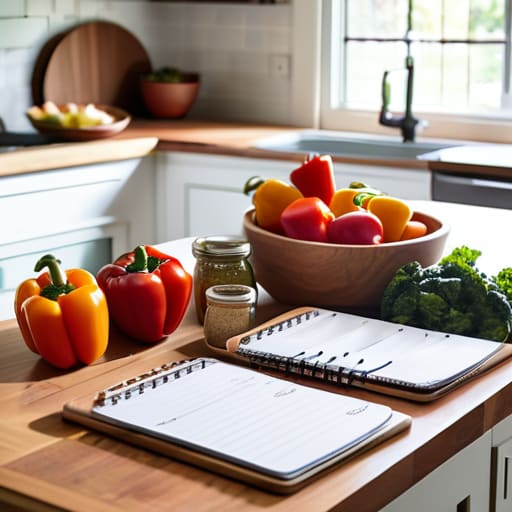
If you look at any professional nutrition guide or a lifestyle blog, the theory is always the same: you sit down on a Sunday, map out a weekly meal prep schedule, and suddenly, chaos is conquered. The textbook approach suggests that by mastering grocery list organization, you create a seamless loop of nutrition and efficiency. It’s a beautiful, logical system where ingredients are used exactly once, nothing rots in the crisper drawer, and every evening ends with a calm, seated family dinner.
In my nursing days, I saw the biological necessity of this: consistent, balanced fuel for growing bodies. And in theory, it’s sound. The science says that planning ahead is the most effective way to ensure you’re actually serving kid-friendly nutritious meals rather than whatever is easiest to grab while you’re running on four hours of sleep. But theory assumes a level of control that rarely survives contact with a toddler having a meltdown over the wrong shaped pasta. The “theory” treats your kitchen like a laboratory; the reality is more like a battlefield where the primary goal is often just getting something edible into a human mouth before everyone collapses.
Building a Weekly Meal Prep Schedule That Actually Works
If you try to build a rigid, hour-by-hour schedule, you’ll fail. I learned that the hard way when my second child was eighteen months old and decided that “Tuesday is Taco Night” was a personal insult. A real weekly meal prep schedule needs to be more like a weather forecast than a military operation; it should account for the inevitable storms. I suggest picking one afternoon—usually Sunday, though mine is often a chaotic Saturday after football practice—to do the heavy lifting. This isn’t about cooking five full meals; it’s about prepping the components. Chop the onions, brown the mince, or boil the eggs. If you do the prep when the house is relatively quiet, you aren’t fighting a toddler for kitchen space when the hunger-induced meltdowns inevitably start at 5:30 PM.
The second part of making this stick is mastering grocery list organization. I used to walk into the supermarket with a vague idea of “healthy stuff,” only to emerge with expensive ingredients that ended up rotting in the crisper drawer. Now, I shop by category and strictly by the list. This is the most effective way of minimizing food waste, which, if you’ve ever looked at your bank balance after a week of failed meal plans, is a massive win for your sanity and your wallet. Keep it simple: if it isn’t on the list, it doesn’t go in the trolley.
Grocery List Organization vs the Chaos of the Aisles

On paper, grocery list organization is a logical, linear process. You sit down with your meal plan, cross-reference your cupboards, and produce a beautiful, categorized list that looks like it was written by someone who actually has their life together. It’s a soothing ritual. But then you actually step into the supermarket. Suddenly, you aren’t a person with a plan; you are a person being hunted by a toddler who has just discovered the sensory delights of the cereal aisle, all while you’re trying to remember if you actually need more milk or if that was just a fever dream from last Tuesday.
The gap between the list and the trolley is where most plans go to die. I learned this the hard way with my second child, who was about eighteen months old and possessed a singular, terrifying focus on knocking displays of pasta sauce onto the floor. You start with the intention of minimizing food waste by buying exactly what you need, but you end up pivoting mid-aisle because the spinach looks like it’s seen better days or you see a box of dinosaur nuggets on sale. Real-world shopping isn’t about following a script; it’s about managing the chaos so you don’t leave the store with three bags of snacks and nothing that can actually be served as a proper dinner.
Kid Friendly Nutritious Meals When They Refuse to Eat
This is where the theory of a perfect weekly meal prep schedule usually meets the brick wall of a three-year-old’s sudden, inexplicable hatred for anything green. In my nursing days, I saw kids who wouldn’t eat a thing because they were unwell; at home, I’ve seen kids refuse a nutritious stew simply because a piece of carrot looked “too pointy.” When you are aiming for kid-friendly nutritious meals, the goal isn’t a Michelin star; it’s preventing a total household meltdown. I learned with my second child, who was about two and a half, that “deconstructed” is your best friend. Instead of a mixed pasta bake, serve the components separately. It feels like more work, but it avoids the tears.
The trick to minimizing food waste while navigating these picky phases is to build meals around “safe” bases. If you know they’ll eat plain pasta or rice, keep those as your fallback. I keep a stash of frozen peas and mild cheese in the freezer for exactly these moments. It’s not the “balanced diet” the brochures promise, but it keeps everyone fed without you ending up with a mountain of half-eaten, expensive leftovers.
Time Saving Kitchen Hacks and Minimizing Food Waste
The theory of “prepping” often looks like those aesthetic videos where someone spends six hours on a Sunday slicing perfectly uniform cubes of bell pepper. In my house, that’s a fantasy. When I was dealing with my second, a particularly picky toddler, I learned that the best time-saving kitchen hacks aren’t about perfection; they’re about reducing the number of decisions you have to make when you’re exhausted. I started “component prepping”—roasting a massive tray of vegetables and boiling a giant pot of grains—rather than making full meals. It meant that on a Tuesday, when the school run went sideways, I wasn’t “cooking,” I was just assembling.
Then there is the reality of the “crisper drawer graveyard.” We talk about minimizing food waste like it’s a moral imperative, but it’s actually a massive drain on your sanity and your wallet. I’ve learned to embrace the “fridge forage.” If that bag of spinach is looking a bit limp, it’s not rubbish; it’s an omelette or a smoothie. When my eldest was four, we started a “leftover buffet” night every Thursday. It stopped us from throwing away half-eaten portions and saved us from the 5:00 PM panic of realizing we had nothing edible ready to go.
Seasonal Ingredient Shopping and Surviving the Tuesday Meltdown
The theory of seasonal ingredient shopping suggests it’s better for the planet, cheaper for your wallet, and tastes better. In a textbook, this is a win-win. In reality, it usually means you’ve bought a beautiful, expensive crate of fennel or a bag of kale because it was on offer, only to realize your four-year-old treats anything green as a personal insult. I learned this the hard way with my second child, who decided at age three that “vegetables” were a concept he no longer subscribed to. You can have the most organized grocery list organization in the world, but if the seasonal produce doesn’t survive the gauntlet of a toddler’s changing whims, it’s just expensive compost.
Then there is the Tuesday Meltdown. Tuesday is rarely the day of grand culinary ambitions; it’s usually the day the school run went sideways, the laundry is piling up, and everyone is unreasonably tired. This is when you stop trying to be a Michelin-starred chef and start focusing on minimizing food waste by using those half-empty jars of pesto or the slightly soft peppers. Don’t aim for perfection when the chaos hits; aim for something edible that keeps the peace.
Five Ways to Stop the Kitchen From Becoming a War Zone
- Build in a ‘Buffer Meal’ for the days that go sideways. In my nursing days, things rarely went to plan, and my house is no different. I call it the Emergency Pasta Night. It’s the meal you have for when the toddler has had a meltdown over a broken cracker, the teenager has forgotten about football practice, and you physically cannot face a recipe. It’s not nutritious, it’s not gourmet, but it prevents the 6:00 PM panic that leads to expensive, exhausted takeout.
- Stop trying to win a Michelin star every Tuesday. When my eldest was four, I used to think a ‘successful’ meal meant something with three different vegetables and a complex sauce. By the time I had my third, I realised that if the food is edible and everyone is fed, it’s a win. Plan for ‘low-effort’ nights—tacos, jacket potatoes, or even just breakfast for dinner. If you aim for perfection every night, you’ll burn out by Wednesday.
- Batch-cook for the version of you that exists in the future. I spend a significant portion of my Sundays making massive quantities of bolognese and lentil dahl. When I was a nurse, I learned that you can’t rely on your future self to be energetic; you have to assume your future self will be tired, distracted, and potentially covered in something sticky. If you can freeze half of what you make now, you’re buying yourself peace of mind for next week.
- Use the ‘Component Method’ instead of rigid recipes. Instead of planning “Chicken Stir Fry,” plan “Protein, Carb, Veg.” This was a lifesaver when my second child hit the age of three and decided, quite suddenly, that green things were an affront to their existence. If you have components ready—pre-cooked rice, roasted chicken strips, steamed carrots—you can pivot the meal in thirty seconds based on whatever mood the kids are in.
- Accept that ‘The Great Refusal’ is part of the process. I’ve seen many a perfectly planned meal end with a child staring at a broccoli floret like it’s a live grenade. My rule is: you provide the food, they decide how much of it enters their bodies. Don’t let a single rejected meal derail your entire week or make you feel like a failure. Plan the food, but leave a massive amount of space for the inevitable, stubborn reality of being a parent.
The Reality Check: What to Carry Forward
Forget the “perfect” menu. When I was nursing, I saw how quickly a plan can go sideways, and parenting is no different. Your goal isn’t a Pinterest-perfect spread; it’s having a backup plan (like those frozen sausages I keep in the back of the freezer) for the nights when the toddler has had a meltdown and your brain is too fried to chop an onion.
Build for the age you actually have, not the age you wish you had. A meal plan that works for a seven-year-old will fail miserably with a two-year-old who has decided, quite suddenly, that anything green is a personal insult. Always keep the components separate if you can; it takes thirty seconds more effort but saves twenty minutes of negotiating at the table.
Perfection is the enemy of being fed. There will be days when the “structured schedule” we talked about falls apart because someone has a fever or the school run went wrong. On those days, the “win” isn’t a nutritious, home-cooked meal—the win is everyone being fed and you getting to sit down for ten minutes before the next chaos cycle begins.
The Goal Isn't Perfection
We’ve covered a lot of ground, from the clinical theory of nutritional balance to the messy, loud reality of a Tuesday evening where the only thing anyone wants is something beige and edible. We’ve talked about organizing lists, prepping in batches, and trying to navigate the supermarket without a toddler having a crisis in the cereal aisle. But if you walk away with nothing else, remember this: meal planning is a tool, not a law. It’s meant to serve your family, not the other way around. When the plan falls apart—and it will, whether it’s because of a sudden fever, a late meeting, or just a collective mood shift—the goal isn’t to have a perfectly executed menu. The goal is simply to have a little more breathing room when the chaos hits.
I remember when my eldest was four, I used to think a “successful” week meant every meal looked exactly like the picture in my planner. I was exhausted, and my kids were frustrated because I was more focused on the prep than the people. Now, with four kids, I know that a successful meal is often just one that gets eaten without a fight, even if it’s just toast and sliced apples. Don’t let the pursuit of the “ideal” schedule rob you of your patience. Give yourself permission to fail. Some weeks you’ll be a culinary mastermind, and some weeks you’ll be surviving on cereal and sheer willpower. Both are okay.