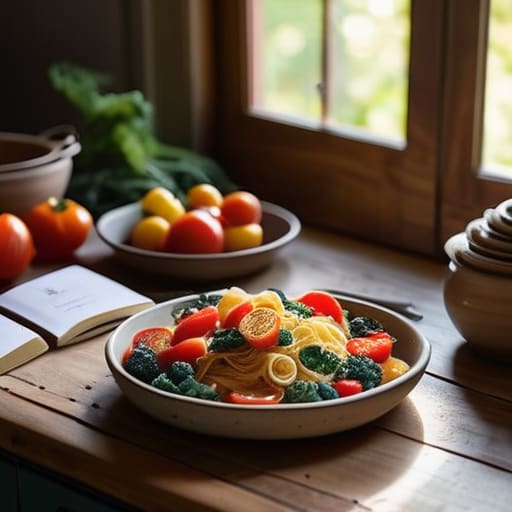
The Complete Guide to Family Meal Planning
If you search online for a “complete guide to family meal planning,” you’ll mostly find polished influencers in sun-drenched kitchens, showing off color-coded glass containers and perfectly portioned organic quinoa. They make it look like a calm, meditative Sunday ritual, but let’s be honest: that is a lie. When you’re staring at a pile of laundry, a teething two-year-old, and a literal mountain of school forms, the idea of spending four hours prepping artisanal grain bowls feels less like “wellness” and more like a slow descent into madness. I’ve tried the aesthetic version, and I’ve tried the version where we eat toast for dinner three nights running because the mental load finally broke me.
I’m not here to sell you on a lifestyle you can’t maintain; I’m here to give you the version that actually survives contact with a real family. This isn’t a lecture on nutritional perfection, but a practical breakdown of what works when you have zero bandwidth left. I’ll share the strategies that kept my four kids fed without me losing my mind, from the batch-cooking wins that saved my sanity to the moments where a frozen pizza was the only sensible choice. We’re going to focus on systems that actually stick, even when everything else is falling apart.
Table of Contents
- The Myth of the Perfect Dinner and My Complete Guide to Family Meal Plannin
- The Evidence Based Weekly Meal Prep Schedule vs Reality
- Mastering Grocery List Organization Without Losing Your Mind
- Kid Friendly Nutritious Recipes That Might Actually Get Eaten
- Time Saving Kitchen Hacks for When Youre Running on Empty
- Minimizing Food Waste and Seasonal Ingredient Shopping for Real Life
- Five ways to plan meals without losing your sanity (or your temper)
- The Reality Check: Three Things to Remember When the Kitchen Gets Chaotic
- The Reality of the Dinner Table
The Myth of the Perfect Dinner and My Complete Guide to Family Meal Plannin
The textbooks will tell you that a successful system relies on a rigid weekly meal prep schedule, where every vegetable is chopped by Sunday evening and every calorie is accounted for. I used to believe that. Back when I was working the night shifts on the ward, I had this idea that if I just organized my life with enough precision, the chaos of four children wouldn’t touch me. I was wrong. In reality, the “perfect” plan usually survives about forty-eight hours before a teething toddler decides they hate everything green, or a school project runs late, or you simply realize you don’t have the mental bandwidth to follow a twelve-step recipe.
My approach is less about perfection and more about strategic survival. Instead of aiming for a Pinterest-worthy spread every night, I focus on minimizing food waste and building a repertoire of meals that can be adapted on the fly. This means having a solid grocery list organization in place so you aren’t making three frantic trips to the shops in one week, but it also means accepting that some nights, the “plan” is just pasta and whatever veg is currently hiding in the bottom of the crisper drawer.
The Evidence Based Weekly Meal Prep Schedule vs Reality
If you look at any productivity blog, they’ll tell you that a successful weekly meal prep schedule requires a Sunday spent in a sterile kitchen, chopping precisely sixteen different vegetables into uniform cubes. The clinical version of this is beautiful: you have your grocery list organization sorted, your containers are labeled, and you’ve accounted for every macro. It’s efficient, it’s logical, and it’s exactly how I used to think when I was still just a nurse with a predictable shift pattern and a clean countertop.
Then you actually try it with four kids. You’ll spend three hours on a Sunday prepping kid-friendly nutritious recipes, only for your four-year-old to decide on Tuesday that anything green is a personal insult. The “evidence-based” plan falls apart the moment someone has a meltdown or a school project runs late. I’ve learned that the real goal isn’t perfection; it’s about minimizing the friction between being hungry and being exhausted. If your prep involves making one giant batch of something that freezes well rather than twenty individual portions, you’re actually winning.
Mastering Grocery List Organization Without Losing Your Mind

The textbook way to handle grocery list organization is to sort everything by aisle—produce, dairy, grains—so you move through the shop like a surgical strike. It’s efficient, it works, and it’s exactly what I used to tell my nursing colleagues to do when they were trying to reclaim their weekends. But let’s be honest: that plan assumes you aren’t being intercepted three times by a four-year-old who has suddenly decided that the cereal aisle is a high-stakes obstacle course. When you’re shopping with a crowd, the “perfect” list often ends up crumpled in the bottom of a basket, half-forgotten because you were too busy negotiating who gets the blue yogurt.
Instead of aiming for clinical precision, I’ve learned to lean into minimizing food waste by focusing on “bridge ingredients”—the stuff that works across three different meals. If you’re buying a bag of spinach, make sure it’s in the plan for a smoothie on Tuesday and a pasta dish on Thursday. I started doing this when my eldest was three, and it stopped the ritual of throwing out half-used bags of greens every Sunday night. Don’t aim for a masterpiece; aim for a list that survives the car ride home.
Kid Friendly Nutritious Recipes That Might Actually Get Eaten
When I was working the paediatric ward, I saw plenty of kids who were “picky eaters,” but most of the time, they were just kids who had found a way to exert control in a world that felt very big and unpredictable. The medical textbooks love to talk about “balanced macronutrients,” but they don’t tell you that a balanced meal is useless if it ends up in the bin. My approach to kid-friendly nutritious recipes is built on the principle of “deconstructed” dining. When my second child was three, I stopped trying to make a cohesive shepherd’s pie and started serving the components separately: meat, mash, and peas in little piles. It sounds like a regression, but it actually reduced the battleground at the table.
The goal isn’t a gourmet spread; it’s about minimizing food waste while keeping the peace. I’ve found that “bridge foods”—things that are slightly new but share a texture with something they already love—work best. For example, if they like plain pasta, try a mild pesto or a hidden-veg sauce. It isn’t magic, and it won’t work every single night, but it keeps the kitchen from becoming a zone of high-stakes negotiation.
Time Saving Kitchen Hacks for When Youre Running on Empty
When I was on the paediatric ward, I saw parents at their most exhausted, and looking at my own four kids, I realize that “exhaustion” is a polite understatement. When you’re running on empty, the last thing you need is a complex culinary project. One of my most effective time-saving kitchen hacks is the “double-batch rule.” If you are making something that actually works—like a mild lentil dahl or a basic tomato pasta—make twice as much as you need. My eldest was three when I realized that having a frozen portion of yesterday’s success is the only thing standing between me and a meltdown at 6:00 PM.
Another thing the textbooks won’t tell you is that perfection is the enemy of a fed child. If your weekly meal prep schedule falls apart because someone caught a bug or you simply couldn’t face the kitchen, lean on the “assembly method.” This means keeping pre-washed salad bags, rotisserie chickens, or frozen veg on hand so you can build a meal in five minutes rather than cooking from scratch. It isn’t gourmet, but it keeps everyone nourished without you needing to become a Michelin-starred chef while sleep-deprived.
Minimizing Food Waste and Seasonal Ingredient Shopping for Real Life
The textbook approach to minimizing food waste is to buy exactly what your recipes demand, down to the single sprig of parsley. But when you have four kids, the reality is more like a game of culinary Tetris. I’ve learned that the best way to avoid throwing money in the bin is to shop with “flexible ingredients” in mind. If you buy a large bag of spinach for a Monday pasta dish, don’t let it turn into a science experiment in the crisper drawer by Thursday; use the leftovers in a smoothie or a quick omelette. My second child, who was about three at the time, refused anything green unless it was “hidden,” so I learned to pivot rather than perish.
I also swear by seasonal ingredient shopping, not because I’m a gourmet, but because it’s cheaper and the food actually tastes like something. When berries are in season, they’re cheap enough to survive a toddler’s scrutiny; when they aren’t, you’re paying a premium for something that’s mostly mush. It’s about working with what’s available rather than fighting a losing battle against the supermarket’s out-of-season imports.
Five ways to plan meals without losing your sanity (or your temper)
- Build in a “Safety Net” meal. This is a meal that requires zero actual cooking—think jarred pasta sauce, frozen dumplings, or even just grilled cheese. When my second child was teething and the third was caught in a cycle of afternoon naps that lasted until 7:00 PM, the “planned” meal was always the first thing to go. Having a designated emergency meal means you aren’t staring into the fridge at 6:00 PM feeling like a failure because you couldn’t manage a risotto.
- Stop trying to make every child eat the same texture. In the nursing world, we talk a lot about sensory processing, and in my house, that translates to “why is the broccoli touching the pasta?” When I was planning for my eldest, I learned that serving components separately—a pile of plain pasta, a pile of meat, a pile of veg—saves about twenty minutes of negotiation and three mental breakdowns. It’s not “fussy” eating; it’s strategic plating.
- The “Double Batch” rule is your best friend. If you are making something that actually tastes good—like a Bolognese or a mild lentil dahl—make twice as much as you need. My four-year-old won’t touch a new recipe, but they will eat the same shepherd’s pie for the third time this month. If you have a freezer full of those extra portions, you’ve already won half the battle of a Tuesday night.
- Don’t plan for the “Best Version” of your family. When I was a nurse, I saw how much stress people carried when they tried to maintain a perfect domestic image. When you sit down to plan your week, don’t plan for the version of your family that sits quietly and eats their greens. Plan for the version of your family that is tired, loud, and prone to sudden tantrums. If the plan is too rigid, it will snap.
- Use the “Age-Appropriate Complexity” scale. A meal plan for a single person or a couple is a different beast entirely than one for a household with a toddler and a school-aged child. By the time my middle two were five and seven, I stopped trying to introduce “complex flavors” on weeknights. We saved the interesting stuff for Sunday lunches when we actually had the bandwidth to deal with the inevitable “I don’t like that” protests.
The Reality Check: Three Things to Remember When the Kitchen Gets Chaotic
Aim for a baseline, not a masterpiece; when I was dealing with a teething ten-month-old and a preschooler who had decided pasta was “too pointy,” I learned that a successful meal is simply one where everyone is fed and nobody is crying—even if that means more frozen veg and less gourmet presentation.
Build your plan around your worst days, not your best ones; the textbook says to prep everything on Sunday, but real life means having a “break glass in case of emergency” cupboard stocked with things that require zero brainpower and five minutes of effort.
Forgive the failures and the wasted leftovers; I’ve seen perfectly good broccoli end up in the bin more times than I care to admit, but beating yourself up over a messy kitchen or a rejected meal is a much harder way to live than just pivoting and trying again tomorrow.
The Reality of the Dinner Table
We’ve covered a lot of ground here, from the clinical efficiency of organized grocery lists to the messy, unpredictable reality of trying to serve something nutritious to a three-year-old who has decided, quite suddenly, that broccoli is the enemy. You can use the hacks, you can prep the components on a Sunday, and you can certainly try to minimize waste, but please remember that none of these systems are foolproof. There will be nights when the plan falls apart because a teething toddler needs an extra hour of rocking, or because you simply ran out of steam at 6:00 PM. The goal of meal planning isn’t to achieve a seamless, Pinterest-perfect kitchen; it’s about building a little bit of breathing room so that when life inevitably gets chaotic, you aren’t staring into an empty fridge with zero options.
If you find yourself standing in the kitchen at the end of a long day, staring at a pile of unwashed vegetables and a child who refuses to eat anything but plain pasta, give yourself some grace. I learned this the hard way with my second child, who was four when I finally realized that a “failed” meal plan is just a part of the process. You are doing a difficult job, and you are doing it while navigating a thousand tiny crises every single week. Focus on the small wins—even if that win is just having a frozen pizza ready to go instead of ordering expensive takeout. You aren’t failing; you’re just parenting in real time, and that is more than enough.