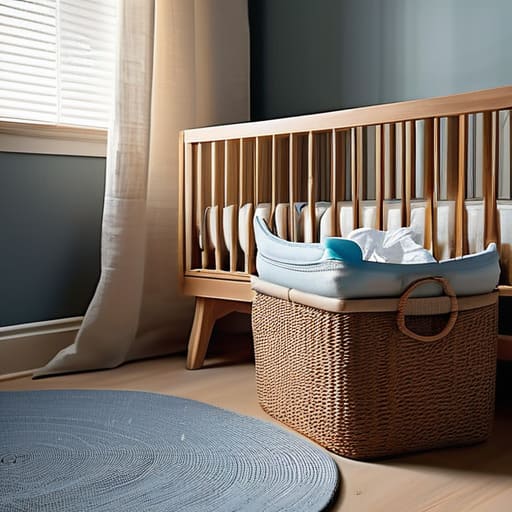
Forget the Aesthetic Checklists: How to Prepare a Nursery for a Newborn That Actually Works When You’re Sleep-deprived and Desperate.
You can spend three months scouring Pinterest for the perfect sage-green aesthetic and another fortune on designer wooden mobiles that look lovely until they become a dust-gathering hazard, but let’s be honest: nobody is thinking about the color palette when they’re stumbling through a dark room at 3:15 AM. I’ve seen parents spend a small fortune on “essential” nursery gadgets that end up being nothing more than expensive clutter, and I’ve seen the sheer panic in a parent’s eyes when they realize they’ve built a beautiful room but forgot to put a drawer liner in the changing station. When you are actually figuring out how to prepare a nursery for a newborn, the goal shouldn’t be a showroom; it should be functional survival.
In this guide, I’m going to skip the fluff and tell you what actually matters when the sleep deprivation hits. I’ll give you the clinical perspective on what’s safe and necessary, balanced with the reality of what I learned when my first child decided that “organized” was a foreign concept. We are going to focus on frictionless movement and practical setups that work for a tired human, not a lifestyle influencer.
What the Manual Says About Preparing Babys Room Before Birth

If you pick up any standard book on pregnancy, you’ll find a very tidy, very linear version of what this process should look like. They’ll give you a pristine essential newborn nursery checklist that suggests you should have the crib assembled, the mobile tested, and the changing station stocked with organic cotton wipes by week thirty. The literature focuses heavily on the technicalities: meeting specific nursery furniture safety standards, ensuring the crib mattress is firm, and keeping the room at a precise, regulated temperature. It’s all very logical, very sterile, and very much designed for a person who isn’t currently dealing with third-trimester heartburn.
The manuals are excellent at telling you how to create a safe sleep environment for infants, and they are right to do so. From a clinical perspective, the rules about clear cots and no loose blankets are non-negotiable; I spent a decade on the ward seeing why those rules exist. But the manuals tend to skip over the logistical friction. They tell you what to buy, but they don’t tell you that a beautifully curated, minimalist aesthetic is remarkably difficult to maintain when you are trying to find a clean onesie in a dark room while your own brain is fogged by sleep deprivation.
Why Most Nursery Organization Tips Fail When Youre Exhausted
The problem with most nursery organization tips for parents is that they are designed for people who have had a full night’s sleep and a hot cup of coffee. You’ll see those Pinterest boards filled with beautiful, clear acrylic bins and perfectly labeled baskets for everything from organic cotton onesies to bamboo wipes. They look stunning in a daylight photo, but they fail the “3:00 AM test.” When you are operating on two hours of broken sleep, your brain isn’t looking for a curated aesthetic; it’s looking for the wipes. If you’ve tucked the essentials into a decorative wicker basket that requires two hands and a bit of a struggle to open, you’ve just created a new way to feel frustrated when you’re already at your breaking point.
I learned this the hard way with my second. I had spent weeks preparing baby’s room before birth, obsessed with every detail of the essential newborn nursery checklist. I had everything categorized by color and fabric type. But when the reality hit—the middle-of-the-night diaper blowouts and the sudden, frantic need for a clean sleep sack—the system collapsed. I realized that true organization isn’t about how it looks; it’s about how little you have to think to find what you need. If you have to turn on a bright overhead light to find a pacifier, your organization system has failed you.
The "Two in the Morning" Audit: Five Things That Actually Matter
- The Lighting Strategy: The manual will tell you to get a cute, dimmable nightlight. The reality is that you need a very specific, very low-wattage red light or a dim lamp that doesn’t trigger “daytime” brain. When my second was three weeks old, I realized that every time I turned on the “nursery ambiance” light to change a diaper, I was accidentally waking the baby up for a full play session. Keep the light low, keep the light warm, and keep it away from their direct line of sight.
- The Diaper Station Proximity Rule: You don’t need a decorative wicker basket for everything; you need a “landing zone.” I learned this with my first, who was a surprisingly heavy sleeper, but by the third child, I realized that if I had to walk more than two steps to reach a fresh onesie or a wipe, I was going to fail. Put the wipes, the cream, and a spare change of clothes within arm’s reach of the changing mat. If you have to stand up to find a clean sock, you’ve already lost the battle.
- The “One-Handed” Test: Look at everything you’ve bought—the containers, the wipes, the diaper bins—and ask yourself: “Can I operate this while holding a squirming, slightly leaking human with my other hand?” If the answer is no, it’s a bad design for a nursery. I once bought a beautiful, heavy wooden box for nappies that required two hands to lift the lid; it stayed in the corner, unused, because at 3:00 AM, I didn’t have the dexterity of a surgeon.
- The Soundscape Reality Check: People talk about white noise machines like they are magic. They are helpful, but they aren’t a cure-all. When I was nursing, I found that the “perfect” white noise machine actually made it harder to hear if the baby was just stirring or actually distressed. Set it up, yes, but don’t rely on it to mask a crying baby—and make sure it’s on a timer or a low volume so it doesn’t become a sensory trigger itself.
- The Clothing “Stage” System: Don’t just dump all the tiny clothes in one drawer. When the baby is zero to three months, you are going to be searching for specific things in the dark. I found that grouping things by “sleep” (sleepsuits) and “day” (onesies/layers) saved me from digging through piles of cotton at dawn. My fourth child was a master of the “middle of the night wake-up,” and having those clothes pre-sorted meant I wasn’t standing over a dresser like a confused detective while they screamed.
The Bottom Line (Or, Why the Crib Isn't the Most Important Thing)
If you’ve followed the checklists, you’ll likely have a perfectly curated corner with aesthetic baskets and a changing station that looks like it belongs in a magazine. You’ve got the dimmable lights, the organized swaddles, and the white noise machine ready to go. But remember: a nursery is just a room, and no amount of clever shelving is going to stop a newborn from crying at 3:00 AM. The goal isn’t to create a museum; it’s to create a space where you can function on autopilot when your brain has effectively checked out for the night. Focus on the things that reduce friction—the easy-reach wipes, the clear path to the bassinet, and the single lamp that doesn’t blind you—and let the rest go.
I remember when my first arrived, I had spent weeks obsessing over the exact shade of sage green for the walls, thinking it would somehow make the sleep training easier. It didn’t. What actually helped was having a comfortable chair and a clear sense of where my essentials were. Please, don’t let the preparation become another item on your mounting to-do list that makes you feel like you’re falling behind. You are going to be tired, you are going to be overwhelmed, and you are going to realize that the most important part of the nursery isn’t the gear—it’s the fact that you are there. You’ve got this, even when it feels like you don’t.
One thing I didn’t learn in nursing school—and certainly didn’t learn from my first child—is that the isolation of the newborn phase is often much heavier than the sleep deprivation itself. You can have the most perfectly curated nursery in the county, but if you’re sitting in that dim light feeling like you’re on a deserted island, the decor won’t matter much. When my second was born, I realized that having a local network of people who actually get it was more important than any specific brand of crib sheet. If you’re feeling that particular brand of lonely, I’ve found that meeting people in UK communities or local parent groups can be a total lifeline; sometimes, just knowing that someone else’s toddler is also refusing to sleep through the night is the only thing that keeps you sane during those long weeks.