
Safe Sleep Rules and Why Each One Exists
I remember standing in a dimly lit nursery during a night shift on the ward, watching a mother stare at a plastic, $200 “smart” bassinet like it was a holy relic that would finally grant her peace. She thought the gadget was the secret to how to put a baby down safely, but I’ve seen a thousand of those expensive contraptions fail the moment a real, breathing human baby decides they aren’t finished being awake. The truth is, the medical guidelines are vital—and I’ll give them to you straight—but they don’t account for the sheer, bone-deep exhaustion of trying to follow them when your fourth child is screaming and your eyes are burning.
In this post, I’m going to strip away the marketing fluff and the “perfect parent” Instagram filters. I’ll give you the clinical facts on sleep environments that keep them breathing, but I’ll also tell you how it actually feels when the theory meets the reality of a restless toddler. We’re going to talk about what the evidence says, what I learned from eleven years of nursing, and what I had to figure out for myself when nothing was working at 3:00 a.m.
Table of Contents
Understanding How to Put a Baby Down Safely
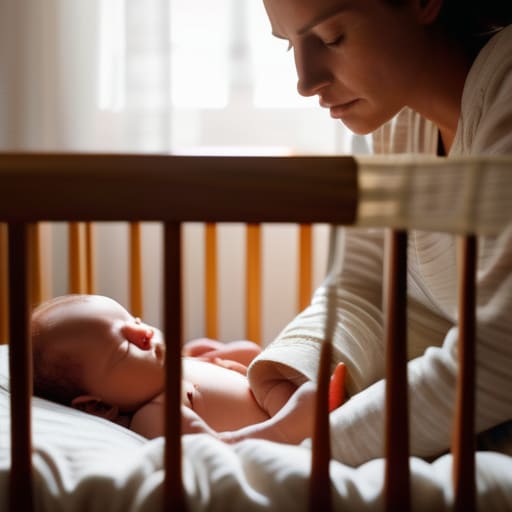
If you look at the official baby sleep safety guidelines, the instructions are incredibly clear: flat surface, back to sleep, nothing else in the cot. It’s a clean, clinical list that makes perfect sense when you’re reading it in a well-lit room with a cup of coffee. But when I was working the night shift on the paediatric ward, I saw the gap between those rules and the reality of a tired parent. You aren’t just following a checklist; you are trying to manage a tiny, living human who seems to have a personal vendetta against lying still.
To build a truly safe sleep environment for infants, you have to strip the crib back to the basics. This means no bumpers, no heavy blankets, and—this is the one that trips people up—no “sleep aids” that look cute but are actually hazards. When my eldest was four months old, I thought a little knitted blanket would be fine; I was wrong, and I spent a week worrying about it. Stick to a firm mattress and a fitted sheet. It feels a bit sparse, maybe even a little cold, but simplicity is your best defense against the variables that keep you awake at night.
Key Things to Know

First, let’s talk about the physical setup. The clinical version of baby sleep safety guidelines is pretty straightforward: flat, firm, and empty. No bumpers, no wedges, no heavy duvets that look cozy but act like hazards. When my eldest was four months old, I thought I was being helpful by adding a little rolled-up towel to “shape” the mattress. I was wrong. The goal is a safe sleep environment for infants that is as boring as possible. If there is nothing in the cot for them to grab, roll onto, or breathe in, you’ve already won half the battle.
Second, you need to be mindful of infant sleep positioning. The gold standard is always on their back. I know, I know—when you’re exhausted and they finally drift off on your chest, the last thing you want to do is move them. But once they are down, they need to be on that flat surface. It’s one of those things that feels like an extra chore when you’re running on three hours of sleep, but it’s the single most effective way to manage the risks we all worry about.
Practical Tips and Steps

When I was working the night shifts on the paediatric ward, the most common thing I saw wasn’t just a failure to follow the rules, but a failure of the environment to be simple enough. To set up a proper safe sleep environment for infants, you have to be ruthless. Clear the cot of everything. I’m talking about the knitted blankets, the soft bumpers, and those “breathable” mesh pillows that look lovely in catalogue photos but serve no clinical purpose. When my second child was four months old, I learned the hard way that even a stray muslin cloth can become a problem if it’s positioned wrong. Stick to a firm, flat mattress and a fitted sheet, and let the baby be the only thing in that space.
As for the actual movement, the physics of it matter more than you’d think. When you’re following baby sleep safety guidelines, the goal is to minimize any chance of the baby rolling into something or shifting their airway. I usually found that lowering the mattress to its lowest setting by the time they hit six months made the transition much smoother. When you finally lay them down, always place them on their back. It feels counterintuitive when they are finally drifting off and you want to tuck them in snugly, but that’s the gold standard for a reason.
Common Mistakes to Avoid
The biggest mistake I see—and I saw it constantly on the ward—is the “convenience trap.” It starts with a soft, plush duvet or a beautiful, bumper-lined cot that looks perfect in a catalogue. But when you’re exhausted, those soft surfaces are a hazard. We tend to gravitate toward anything that looks “cozy,” but a safe sleep environment for infants is actually quite boring. It’s flat, it’s firm, and it’s empty. My second child, when he was four months old, had a nursery that looked like a boutique hotel, and I spent half the night terrified because there were too many pillows in the way.
Another pitfall is the “sleep position creep.” You might start out following the baby sleep safety guidelines by placing them on their back, but then you find yourself flipping them onto their side because they seem more comfortable, or perhaps because you’re too tired to do the full ritual. Don’t fall into that trap. Once you start deviating from the back-sleeping rule, it becomes much harder to be consistent. Stick to the basics, even when you’re running on two hours of sleep and a cold cup of tea.
Final Thoughts
If there is one thing I learned from eleven years on a paediatric ward and four years of being a sleep-deprived parent, it’s this: you cannot parent your way out of every fear. You can follow every single baby sleep safety guideline to the letter, check your nursery sleep safety checklist ten times before you even think about closing your eyes, and still find yourself staring at the monitor with your heart in your throat. That isn’t a failure of your parenting; it is just the weight of loving something so much that it feels fragile.
When I was dealing with my second, a particularly wiggly boy, I used to obsess over every single infant sleep positioning detail, convinced that if I wasn’t perfect, I was failing. But the truth is, once you have established a safe sleep environment for infants, you have done the heavy lifting. The rest is about learning to trust that you’ve provided the best possible foundation. You’ve done the work, you’ve followed the SIDS prevention tips, and now, if you can manage it, you need to let yourself sleep too.
Five things the manuals miss (but your sleep schedule won't)
- The “Flat on the Back” rule is non-negotiable, even when they’re fighting you. When my second child was four months old, I found myself tempted to prop him up on a pillow because he seemed “more comfortable” that way, but the clinical reality is that a flat, firm surface is the only way to keep those airways clear. If they’re wiggling, let them wiggle, just keep them on their backs.
- Watch out for the “nesting” trap. It’s tempting to surround a sleeping baby with soft bumpers or those beautiful knitted blankets to make the cot look cozy, but those are just hazards in disguise. I remember trying to make a “snug” environment for my eldest when he was two months old, only to realize I’d basically created a soft-walled trap. Keep it empty: just the baby and a firm mattress.
- The temperature check is better done on the chest or the back of the neck than on their hands. I used to check my kids’ hands and think they were freezing, which led to me over-layering them in middle-of-the-night panic. By the time my third was six months old, I learned that if their chest feels warm and not sweaty, they are exactly where they need to be.
- Beware of the “sleep association” meltdown. The guidance says babies should ideally fall asleep independently, but when you’re at the three-month mark and your baby won’t close their eyes unless they’re being rocked, “independent sleep” feels like a cruel joke. It’s okay to use a gentle pat or a rhythmic sway to get them down, as long as you aren’t adding loose toys or heavy bedding to the cot to do it.
- Trust your gut on the “sudden” changes. If your baby is sleeping safely but suddenly starts breathing differently or seems unusually lethargic when they wake up, stop reading the blogs and call the professional line. I learned this during my nursing years: a safe sleep environment is the foundation, but it doesn’t replace your intuition when something just feels off.
The Short Version (For When You’re Too Tired to Read)
Stick to the clinical basics—flat, firm, and empty—because while the “sleep sacks and white noise” debate is endless, the safety rules are non-negotiable. When my second was six months old, I learned that the safest sleep space is the one where you aren’t constantly worrying about a stray duvet.
Trust your gut, but verify it with a thermometer. Most of the “he’s too hot” panics I saw on the ward came from parents over-layering; if his chest feels warm and his breathing is regular, he’s likely fine, even if the official advice makes you feel like you should be dressing him for the Arctic.
Forgive yourself for the gap between the manual and the reality. The guidelines are designed for a perfect, sterile environment, but life happens—sometimes you’re exhausted, sometimes the baby won’t settle, and sometimes you just need to survive the night. That doesn’t make you a bad parent; it makes you a human one.
The Reality of the Night
If you take nothing else from this, remember that safe sleep is about the basics: a flat, firm surface, no loose bedding, and keeping that sleep space clear of anything that could become a hazard. It sounds incredibly simple when you read it in a clinical pamphlet, but I know that when you are exhausted and your baby is fussing, it feels like a mountain of rules to manage. You might find yourself worrying about every single movement or every stray blanket, but the goal isn’t to achieve clinical perfection; it is to create a consistent, predictable environment that reduces risk while you try to find your own rhythm. Stick to the core principles—back to sleep, clear cot, no pillows—and you are already doing the most important work.
Finally, please try to be kind to yourself. I remember my second child, who was about four months old when we finally mastered a somewhat predictable sleep routine, and I spent most of those early months feeling like I was failing because I couldn’t follow the “ideal” schedule. The truth is, there is a massive gap between the medical guidelines and the messy, sleep-deprived reality of living with an infant. You are not a bad parent because you’re tired, and you aren’t failing because the “perfect” setup feels difficult to maintain. Just keep doing your best, focus on the safety essentials, and remember that this phase is temporary, even on the nights when it feels like it will last forever.