The Complete Guide to Weaning
If you spend more than ten minutes on Instagram, you’ll be convinced that a “complete guide to weaning” requires a silicone high chair, a set of aesthetically pleasing bamboo bowls, and a collection of organic purées that cost more than my first car. The internet wants you to believe that introducing solids is a choreographed performance of nutritional precision, but they never mention the part where your six-month-old decides that a single piece of steamed broccoli is a personal insult. I spent eleven years on a paediatric ward seeing what actually happens when nutrition goes wrong, and then I spent four years at home discovering that the “perfect” transition often ends with more floor-cleaning than actual eating.
I’m not here to sell you a lifestyle or a specific brand of suction plate. Instead, I’m going to give you the actual mechanics of how this works: what the clinical guidelines say, and what happens when reality hits at 6:00 PM on a Tuesday. I’ll tell you which textures are safe for a ten-month-old, which “milestones” you can safely ignore, and how to navigate the mess without losing your mind. This is about functional feeding, not perfection.
Table of Contents
- The Complete Guide to Weaning What Science Says and Reality Teaches
- Spotting the Real Signs of Baby Readiness for Solids
- Baby Led Weaning vs Purees Choosing Your Battle Plan
- Picking First Foods for Infants Without Losing Your Mind
- Navigating Safe Textures for Baby Food and Nutritional Requirements
- Introducing Common Food Allergens When to Worry and When to Sleep
- Five Things the Manual Forgets to Mention
- The Survival Summary
- The Messy, Beautiful Reality of the High Chair
The Complete Guide to Weaning What Science Says and Reality Teaches

The clinical guidelines are remarkably tidy. They’ll tell you to look for specific signs of baby readiness for solids—the sitting up, the reaching for your fork, the interest in your sandwich—and they’ll provide a neat timeline for when to start. From a nursing perspective, the goal is clear: meeting the nutritional requirements for weaning babies as they transition from a milk-only diet. It sounds manageable when you’re reading it in a brightly lit clinic.
Then you get home, and reality hits. You might find yourself caught in the endless debate of baby-led weaning vs purees, weighing the developmental benefits of self-feeding against the sheer, exhausting chaos of a kitchen floor covered in smashed avocado. I remember with my second, who was about six months old, I followed the “textbook” approach to introducing common food allergens, thinking I was being incredibly methodical. In reality, I was just a tired parent staring at a child who decided that broccoli was an enemy of the state. The science gives you the map, but it doesn’t tell you how to navigate the mud.
Spotting the Real Signs of Baby Readiness for Solids

The textbooks will give you a neat checklist of signs of baby readiness for solids: sitting up, good head control, and that specific look of intense interest when you’re eating a sandwich. In the ward, we looked for those clinical milestones. But in my own kitchen, with my eldest, those signs were often buried under a layer of sheer, stubborn refusal. You might see them reaching for your fork, but remember that reaching for a spoon doesn’t always mean they’re ready to swallow it.
The real litmus test isn’t just physical; it’s about that bridge between curiosity and competence. When I was working nights, I saw parents panic because their six-month-old wasn’t “eating” anything. The truth is, the first few weeks are less about meeting nutritional requirements for weaning babies and more about the mechanics of the mouth. They are learning how to move food around, how to not choke, and how to manage a texture that isn’t liquid. If they are sitting up reasonably well and seem more interested in your plate than their bottle, you’re likely in the right ballpark, even if the actual “eating” part feels more like a messy experiment than a meal.
Baby Led Weaning vs Purees Choosing Your Battle Plan
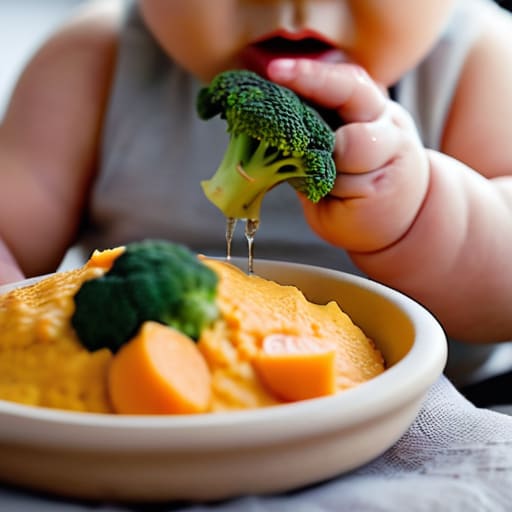
This is the part where the internet starts a war. You’ll see two camps: the purists who swear by the controlled, spoon-fed precision of purees, and the advocates for baby-led weaning who believe your child should be wrestling with a whole steamed broccoli floret from day one. If you ask a nutritionist, they’ll talk about nutritional requirements for weaning babies and how easy it is to track intake with a spoon. And they aren’t wrong. Purees are efficient; they ensure the calories go in without the chaos.
But then you have the reality of a living room floor. When my eldest was seven months, we tried the “orderly” puree route, and it was a disaster of smeared faces and a child who treated every spoonful like a personal affront. We switched to baby-led weaning, and while the mess was astronomical, the engagement was what mattered. He learned what a carrot actually felt like before he learned what it tasted like. My advice? Don’t pick a side based on an ideology. If you’re exhausted, use the jar. If your baby is a tiny, determined explorer, give them the finger foods. You can mix both, and honestly, nobody is judging you for choosing the path that lets you keep your sanity.
Picking First Foods for Infants Without Losing Your Mind
The textbooks will give you a neat list of first foods for infants—avocado, sweet potato, steamed broccoli—and suggest they all fit into a tidy, nutritional jigsaw. In theory, you’re just meeting the nutritional requirements for weaning babies. In practice, you’re standing in a kitchen at 6:00 PM, staring at a pile of mush, wondering why your child is currently treating a piece of soft pear like it’s a personal insult. My second child, who was about seven months old when we started, decided that anything with a hint of green was strictly forbidden. It’s a reminder that while the science says “variety is key,” the reality is often a very narrow, very stubborn window of acceptable textures.
When you start introducing common food allergens like peanut or egg, the anxiety tends to spike. I remember sitting there with my third, heart hammering, waiting for a reaction that never came, only to spend the next hour cleaning up a literal sea of porridge. Don’t aim for perfection; aim for exposure. If they reject the broccoli today, try it again in three days. It’s a marathon, not a sprint, and most of the time, the “failure” is just a messy floor and a tired parent.
Navigating Safe Textures for Baby Food and Nutritional Requirements
The textbooks will give you a neat little progression: smooth purees, then lumpy, then soft solids, then finger foods. It looks logical on a chart. But when you’re sitting on the kitchen floor with a ten-month-old who has suddenly decided that anything with a texture more complex than a yogurt is a personal insult, that chart feels a bit hollow. The goal isn’t just hitting nutritional requirements for weaning babies; it’s about building the confidence to handle different mouthfeels. I remember my second, when he was about eight months, absolutely losing his mind over a slightly textured mash. I panicked, thinking I’d moved too fast, but he wasn’t rejecting the food—he was just learning how to use his tongue to move it around.
When you’re moving through the safe textures for baby food, remember that “safe” doesn’t mean “boring.” You want to move toward things they can actually grasp and chew, like steamed carrot sticks or very soft pieces of avocado. The real trick is watching their reaction: if they gag, don’t panic—that’s often just the gag reflex doing its job as they learn to manage bulk. If they spit it out repeatedly, they might just not be ready for that specific consistency yet. There is no shame in retreating to a smoother texture for a few days; consistency is a marathon, not a sprint.
Introducing Common Food Allergens When to Worry and When to Sleep
This is the part where the internet will try to scare you into a state of permanent hyper-vigilance. You’ll see threads of parents swearing that a single peanut crumb sent their child into anaphylaxis, and suddenly, the simple task of introducing common food allergens feels like diffusing a bomb in a dark room. My nursing brain tells you the clinical reality: the current consensus is to introduce these foods early—around six months—to actually reduce the risk of developing allergies. But my “four kids in a house” brain remembers the sheer, paralyzing terror of watching my second child’s face for any sign of a hive while I held my breath.
When you start, don’t do it all at once. If you’re doing baby-led weaning vs purees, the approach changes slightly because a chunk of egg is harder to track than a smear of yolk, but the rule remains: one new high-allergy food at a time, in the morning, when you are actually awake and capable of reacting. If they get a bit of a rash or a tummy ache, it’s stressful, but if they are struggling to breathe or their lips are swelling, that is your phone call to the emergency room. If it’s just a few spots or a bit of indigestion, take a breath. Most of the time, it’s just a learning curve for their tiny, unpracticed immune systems.
Five Things the Manual Forgets to Mention
- Don’t mistake a “hunger cue” for a “hunger strike.” The clinical guidelines say to follow their lead, but when my second child was six months old, he would scream for food for forty minutes only to reject a spoonful of sweet potato like it was poison. Sometimes they are just tired, or teething, or testing the boundaries of their new world. If they refuse, don’t turn the kitchen into a battlefield; just try again in an hour or wait until tomorrow.
- The “mess” is actually a developmental milestone, not a failure of your cleaning skills. When I was on the ward, we saw kids who were ready for textures, but at home, I spent most of my time staring at mashed avocado embedded in the carpet. If you are doing baby-led weaning, accept now that your floor is a casualty. If you try to keep the area pristine, you’ll end up hovering, and they’ll sense that tension and stop eating altogether.
- Watch the clock, not just the calorie count. The textbooks focus on nutritional density, but in the real world, weaning is about timing. When my third was seven months, I tried to force a “proper meal” at 5:00 PM, only to realize they were far too overstimulated from the day to focus on anything but a spoon. If they are hitting a wall, stop. A missed meal is better than a traumatic one.
- Learn the difference between a “gag” and a “choke.” This is the one that keeps parents awake at 3:00 AM. Gagging is loud, messy, and actually quite effective—it’s the body’s way of moving food forward. Choking is silent and scary. I’ve seen more terrified parents in my nursing days than I care to count, but once you understand the mechanics of a gag reflex, you can breathe a little easier.
- Forget the “perfect” food schedule. You will see influencers posting beautifully curated trays of organic steamed broccoli and salmon, but by the time my fourth child reached eight months, we were often just seeing if they’d tolerate a bit of plain pasta because I was too exhausted to prep anything else. That is okay. Nutrition is a long game played over months, not a single high-stakes performance at lunchtime.
The Survival Summary
Trust the developmental signs over the calendar; if your six-month-old is still sitting like a sack of potatoes and has zero interest in your sandwich, don’t force the spoon just because a textbook says they’re “due” for solids.
Don’t let the “Puree vs. Baby-Led” debate turn into a household war; I tried the strict puree route with my second, and it was a disaster, but by the time my fourth was twelve months old, we were doing a bit of both and everyone was much happier.
When introducing allergens, do it during the day when you actually have the energy to watch them; trying to manage a first reaction to peanut butter at 11:00 PM while you’re half-asleep is a specific kind of stress that no one needs.
The Messy, Beautiful Reality of the High Chair
If you try to follow every single piece of clinical advice to the letter, you’ll likely end up exhausted and frustrated. We’ve covered the science—the importance of iron, the timing of allergens, and the textures that keep airways clear—but the reality is that weaning is rarely a straight line. You will have days where they eat like a champion and days where they treat a spoonful of sweet potato like it’s radioactive waste. When that happens, remember that progress isn’t a perfect chart; it’s a series of small, often messy, wins. Whether you’ve chosen purees or baby-led weaning, the goal isn’t to produce a gourmet critic by six months, but to build a functional, healthy relationship with food that lasts a lifetime.
I remember my eldest, who was about seven months old, when he decided that mashed banana was his mortal enemy. I felt like I was failing the “nutrition” part of the job, but looking back, he was just being a person. Please, give yourself the same grace you would give a parent sitting in one of my hospital wards. You are doing a massive, complicated job while sleep-deprived and perpetually covered in something sticky. Trust your instincts, watch your baby, and remember that this phase is temporary, even when the cleanup feels eternal. You’ve got this.