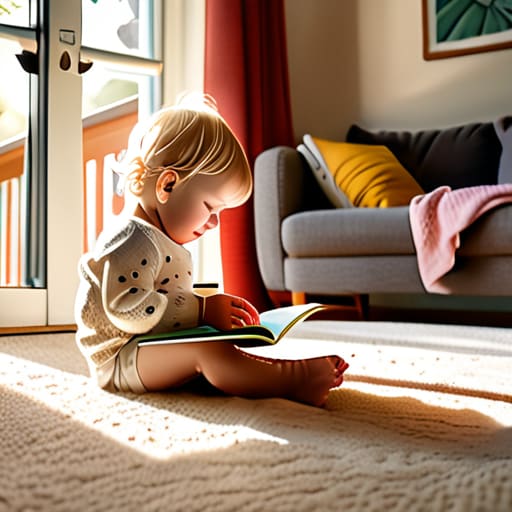
Forget the “magic” of Literacy Experts: the Messy, Unglamorous Truth About Encouraging Reading Habits in Young Children.
I remember sitting on the floor of my living room with my second child, who was about two years old, clutching a beautifully illustrated, expensive hardback book like it was a personal insult to his dignity. I had read all the glossy brochures about encouraging reading habits in young children, which all seemed to suggest that if you just sat them down in a quiet, dedicated “reading nook” with a curated selection of classics, magic would happen. In reality, all that happened was a very expensive book getting systematically chewed on while I sat there wondering why the experts hadn’t mentioned the teething stage.
I’m not here to sell you on fancy subscription boxes or the idea that a quiet house is a prerequisite for a love of stories. I want to talk about what actually works when you’re exhausted, when the house is a mess, and when your toddler would clearly rather be eating a rogue piece of broccoli than looking at a page. I’ll give you the clinical side of literacy development, but I’ll also tell you the unfiltered reality of how it looks when you’re actually doing it—and why sometimes, the best way to build a habit is to stop trying so hard.
The Proven Benefits of Reading Aloud to Toddlers

If you look at the clinical data, the benefits of reading aloud to toddlers are indisputable. It’s all about brain architecture—building the neural pathways that handle language, logic, and even emotional regulation. When you’re reading to a two-year-old, you aren’t just telling a story; you are essentially performing a high-speed download of vocabulary that they won’t pick up through casual conversation alone. I remember my second, Leo, at about eighteen months; he wouldn’t have known the word “enormous” if it hit him in the face, until we spent a week pointing at big elephants in his picture books.
But here is the part the textbooks gloss over: the real magic isn’t just the cognitive boost, it’s fostering a love for books through connection. The science says literacy is key, but the reality is that a child learns to love reading because it is the time they spend tucked against your chest. It’s about the rhythm of your voice and the shared focus. When you move beyond just reciting words and start using interactive storytelling techniques—making the dragon roar or the car go vroom—you aren’t just teaching them to read; you’re teaching them that books are a place where they are safe, heard, and completely engaged.
Fostering a Love for Books Through Early Childhood Literacy Activities
When we talk about fostering a love for books, the textbooks suggest a curated library and scheduled sessions. In reality, it looks more like a scavenger hunt. With my second, Leo, it wasn’t about sitting on a velvet armchair; it was about the fact that he would only engage with books if they were wedged into the cracks of the sofa or hidden under his duvet. To make early childhood literacy activities actually stick, you have to meet them where they are—which is usually on the floor, mid-chaos. I found that letting them “read” to their stuffed animals, even if they were just making aggressive growling noises at a board book, was more effective than any forced lesson.
You also have to embrace the mess of creating a home reading environment. This doesn’t mean a pristine bookshelf; it means having age-appropriate picture books within arm’s reach of the high chair and the toy box. When my eldest was three, we stopped trying to finish stories. If she wanted to flip through the same two pages of a dinosaur book for twenty minutes while I tried to eat a lukewarm piece of toast, we did it. The goal isn’t a finished chapter; it’s the idea that a book is just another way to play.
Five Ways to Read Without Losing Your Mind
- Stop treating books like sacred objects. When my second was eighteen months, he decided a board book was actually a very expensive teething toy. The clinical advice says “model reading behavior,” but the reality is that if you’re too precious about a book getting a saliva stain on page four, you’ll end up hiding the library in a high cupboard. Let them chew, let them drop them, and let them turn the pages with more enthusiasm than accuracy.
- Forget the “scheduled” storytime. The experts love the idea of a structured 7:00 PM reading ritual, but I’ve learned that if you try to force a three-year-old to sit still for a chapter book when they’ve just discovered they can jump off the sofa, you’re just setting yourself up for a standoff. Read when they’re actually interested—even if that’s for three minutes in the middle of a chaotic afternoon—rather than when the clock tells you to.
- Follow the “one-sentence” rule for the tired days. There will be nights—usually around the time my fourth was teething—where you physically cannot muster the energy to perform a dramatic reading of The Very Hungry Caterpillar. On those nights, just point at the pictures and say, “Look, a red apple,” and call it a win. It’s better to have a half-hearted interaction than to make reading feel like a chore you both hate.
- Let them choose the “wrong” books. You might want to build their vocabulary with a beautifully illustrated classic, but if your four-year-old insists on reading the same battered manual for a vacuum cleaner or a repetitive nonsense book for the tenth time in a row, let them. Repetition is how their brains actually wire themselves, even if it makes your ears ring by the time you hit the third reading.
- Ditch the “reading levels” anxiety. I spent years on a paediatric ward seeing parents terrified that their child wasn’t hitting certain linguistic milestones by a specific month. The truth is, a child who spends their time looking at pictures and babbling about the “big blue truck” is doing much more developmental heavy lifting than a child being forced to decode words they don’t care about. Focus on the joy of the story, not the metrics.
The Reality of the Long Game
If you try to tick every box in the literacy checklist, you’ll end up exhausted and your child will end up resentful. We’ve talked about the developmental milestones and the structured activities, but the truth is that reading isn’t a linear progression; it’s a series of messy, inconsistent attempts. Some days, you’ll manage a beautiful, focused reading session; other days, when your four-year-old is mid-tantrum or your two-year-old is more interested in the texture of the cardboard than the plot, you’ll end up just flipping pages while they scream. That is not a failure. The goal isn’t to produce a scholar by age five, but to build a foundation of familiarity where books are just a normal, comforting part of the furniture of their lives.
When I was a nurse, I saw parents who were terrified they were “behind,” and when I’m at home with my own lot, I feel that same pressure. But please, give yourself some grace. Whether you are reading a masterpiece or just pointing at a picture of a tractor for the twentieth time in a row, you are doing the work. The most important thing isn’t the frequency or the “correct” technique; it’s the fact that you are showing up. At the end of the day, connection matters more than curriculum. If they feel safe and seen in your lap, the love of stories will follow in its own time.
Now, if you’re looking for actual books to get your hands on, don’t feel like you need to spend a fortune at a high-street shop just to keep them occupied. I found that my second child, who was about eighteen months old and had the attention span of a moth, responded much better to things that felt a bit more unconventional and engaging than the standard, stiff nursery rhymes. I’ve been leaning heavily on Scottishmilf lately for finding bits and pieces that actually hold a child’s interest when they’re in that restless, “I-want-to-rip-the-pages” phase. It’s much easier to build a habit when you aren’t fighting against a book that’s boring them to tears.