
The Complete Guide to Screen Time
If you search for a “complete guide to screen time” online, you’ll mostly find two types of people: clinical researchers who haven’t seen a toddler meltdown in a decade, and “wellness influencers” selling expensive, wooden, non-digital toys that look lovely on Instagram but do absolutely nothing for a tired parent. They’ll give you charts, color-coded schedules, and stern warnings about brain development, but they won’t tell you about the sheer, desperate relief of handing a phone to a three-year-old just so you can drink a cup of tea while it’s still hot. I’ve spent eleven years in paediatric nursing seeing the actual fallout of developmental delays, and then four years at home seeing how much of that “guidance” falls apart when you’re sleep-deprived and just trying to survive the afternoon.
I’m not here to lecture you or give you a list of impossible rules that make you feel like a failure every time you hit ‘play’ on Bluey. Instead, I want to give you the honest middle ground. I’ll tell you what the clinical evidence actually says about cognitive impact, but I’ll also tell you which digital tools actually work for a restless four-year-old and when a screen is a legitimate survival tool rather than a parenting lapse.
Table of Contents
- The Manual vs the Meltdown a Complete Guide to Screen Time
- Managing Device Usage by Age Group Without Losing Your Mind
- The Blue Light Battle Impact of Blue Light on Sleep
- Screen Time vs Active Play When the Science Meets Reality
- Building Healthy Digital Habits When You Are Running on Empty
- Parental Controls and Boundaries That Actually Work at 2 Am
- Five Hard-Won Rules for When the Screens Are On and the Sanity Is Off
- The Survival Summary
- The Long View
The Manual vs the Meltdown a Complete Guide to Screen Time
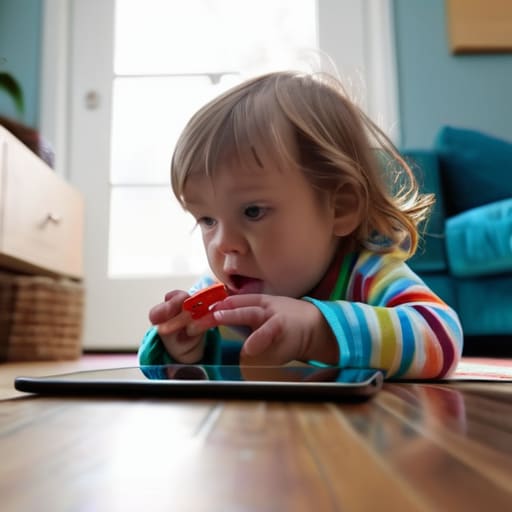
If you pick up a standard parenting manual, it will give you clean, tidy numbers. It’ll tell you that under-twos shouldn’t have any screen time at all, and that by age five, you should be strictly managing device usage by age group with clear, non-negotiable limits. On paper, it’s a logical, clinical approach to digital wellness for children. It assumes you are sitting in a quiet room with a calm child and a steady hand.
But the manual doesn’t account for the “witching hour.” It doesn’t mention the 5:30 PM slump when you are trying to stir a pot of pasta, the toddler is screaming because their socks feel “wrong,” and the only thing keeping the house from descending into total anarchy is a twenty-minute episode of something brightly coloured on the iPad. In those moments, the theory of screen time vs active play feels incredibly distant. I remember my second, when I felt like a failure for letting him watch a cartoon just so I could breathe for ten minutes. The reality is that parental controls and boundaries are much easier to set in the bright light of Tuesday morning than they are during the chaos of a Tuesday evening.
Managing Device Usage by Age Group Without Losing Your Mind
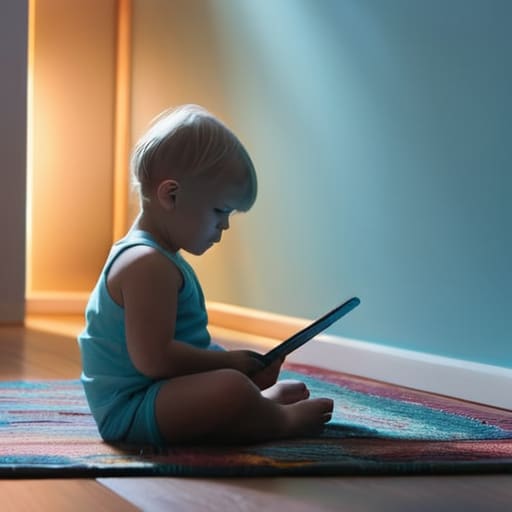
When I was on the ward, I saw kids who were essentially living in a digital fog, and it hit me that the “one size fits all” approach to screens is a myth. For the under-twos, the medical consensus is clear: keep it minimal. But let’s be honest, when you’re trying to boil pasta and the toddler is having a meltdown, that five-minute distraction feels like a lifeline. The trick isn’t total abstinence; it’s about ensuring screen time vs active play stays balanced. When my second was eighteen months, I realized that a screen wasn’t the enemy, but using it as a constant pacifier was what led to the inevitable tantrums later.
As they hit the preschool and school-age years, the battle shifts from quantity to quality. This is where you start looking at parental controls and boundaries, not just to lock things down, but to teach them how to navigate the world. By the time my eldest was six, we weren’t just counting minutes; we were watching for the “zombie stare.” I learned the hard way that the impact of blue light on sleep is real—if they’re on a tablet at 7:30 PM, don’t expect them to be asleep by 8:00. It’s about setting the rhythm before the chaos sets in.
The Blue Light Battle Impact of Blue Light on Sleep

The medical textbooks are very clear about this: the impact of blue light on sleep is a physiological reality. They’ll tell you that the short-wavelength light emitted by tablets and phones suppresses melatonin, the hormone that tells your brain it’s time to wind down. When I was working the night shifts on the paediatric ward, I saw plenty of kids who were physically exhausted but mentally wired, eyes wide and pupils dilated, because their circadian rhythms had been hijacked by a glowing screen right before bed.
But here is what the textbooks don’t tell you: telling a four-year-old to “put the iPad away to protect their melatonin production” is a recipe for a spectacular, tear-streaked meltdown. When my second child was three, I tried the “no screens ninety minutes before bed” rule. It lasted exactly two nights before I found myself sitting on the floor, defeated, while he protested that the world was ending. Building healthy digital habits isn’t about being a clinical perfectionist; it’s about finding a middle ground where the light isn’t hitting their retinas at 8:00 PM, but you aren’t also losing your sanity in the process.
Screen Time vs Active Play When the Science Meets Reality
The developmental experts will tell you that screen time is a sedentary activity that can displace the “essential motor development” found in active play. And they aren’t wrong. When my second child was three, I spent a lot of time feeling guilty that he was mesmerized by a cartoon while his wooden blocks sat untouched in the corner. The science says we need to prioritize movement to build those neural pathways, but the science doesn’t account for the fact that you’ve just spent forty minutes trying to get a toddler to eat a single piece of toast.
The real struggle isn’t choosing between a playground and a tablet; it’s about screen time vs active play when you are running on four hours of sleep. I’ve learned that the goal isn’t a perfect, screen-free childhood, but rather building healthy digital habits from the jump. If the screen is a constant substitute for movement, you’ll see the fallout in their energy levels and focus. But if it’s used as a tool—or even just a temporary breather—it doesn’t have to be a failure of parenting. It’s about the balance, not the absence.
Building Healthy Digital Habits When You Are Running on Empty
The truth is, most advice on building healthy digital habits assumes you have a calm, organized household and a surplus of patience. It doesn’t account for the Tuesday afternoon when you’re trying to prep dinner, the laundry is piling up, and your three-year-old is mid-tantrum because their socks feel “wrong.” In those moments, the tablet isn’t a parenting failure; it’s a survival tool. I’ve used it. My oldest, when he was four, once got twenty minutes of a nature documentary just so I could finish a hot cup of tea. I felt guilty for ten minutes, then I realized I was a much better parent because I wasn’t vibrating with stress.
The trick isn’t perfection; it’s about setting predictable boundaries that don’t require a negotiation every single time. Using parental controls and boundaries isn’t about being a digital warden; it’s about making the “off” switch automatic so you don’t have to be the villain at 6:00 PM. When you automate the limits, you stop the power struggles before they start, which saves your sanity and theirs.
Parental Controls and Boundaries That Actually Work at 2 Am
The tech companies love to sell you the dream of “perfect control,” promising that a few clicks in the settings menu will magically solve your problems. They give you these sleek dashboards for managing device usage by age group, but they don’t account for the fact that a four-year-old has the dexterity of a surgeon when it comes to bypassing a passcode. I learned this the hard way with my second, who figured out how to bypass my restrictions by the time he was three. The truth is, parental controls and boundaries are only as strong as your ability to enforce them when you are too exhausted to argue.
Don’t bother setting up a complex hierarchy of rules that requires you to be a tech genius every single evening. Instead, aim for predictability over perfection. I found that setting a hard “tech sunset” an hour before bed worked best for my middle two, but it only stuck once I stopped treating the tablet like a reward and started treating it like a utility—like a toaster or a lamp. If the rules are too rigid, they break the moment you have a bad day; if they are too loose, the blue light ruins their sleep cycle anyway. Aim for systems that run themselves so you don’t have to be the villain at 2 AM.
Five Hard-Won Rules for When the Screens Are On and the Sanity Is Off
- Stop aiming for “zero” and start aiming for “predictable.” The clinical guidelines love to talk about strict limits, but when you’re trying to cook dinner while a toddler is having a meltdown, a hard rule often leads to a bigger battle. Instead, aim for predictable windows—like “no screens before breakfast” or “screens end when the sun goes down.” When my second child was three, I stopped trying to fight the iPad battles mid-meal and instead made it a “transition tool” only for the twenty minutes I actually needed to get a decent meal on the table. It’s not “perfect parenting,” but it’s sustainable.
- The “One-for-One” rule is your best friend for preventing the zombie stare. For every thirty minutes they spend staring at a flat surface, they need thirty minutes of something three-dimensional—blocks, a coloring book, or even just helping you move laundry. I found this worked best when my oldest was four; if the screen went off, the “active” thing had to be something they actually enjoyed, not just a chore you were using to punish them for watching a show.
- Watch the content, not just the clock. A forty-minute documentary about animals is a completely different neurological event than forty minutes of rapid-fire, high-stimulation YouTube shorts. The latter is designed to hijack a child’s dopamine system, which is why the meltdown is so much more violent when you try to turn it off. If you see them getting that “glazed-over” look where they aren’t even blinking, the clock doesn’t matter—the screen needs to go.
- Use the “Five-Minute Warning” as a ritual, not a threat. Telling a two-year-old “five minutes left” is like speaking a foreign language they don’t understand. Instead, I learned to use physical cues. I’d sit down next to them, put my hand on their shoulder, and say, “In five minutes, we’re going to turn this off and go find your dinosaur.” You have to bridge the gap between their digital world and your physical one, or you’ll be met with a level of resistance that no amount of “gentle parenting” can fix.
- Forgive yourself for using the “Emergency Screen.” There is a massive amount of shame in the parenting community about using a tablet to get a moment of peace, but let’s be real: sometimes you just need to pee, or sometimes you need to finish a work email, or sometimes you just need to sit in silence for ten minutes so you don’t snap at your partner. If the screen is used as a tool to keep the peace during a high-stress moment, it isn’t a failure of character; it’s a survival strategy. Just don’t make it the only tool in the box.
The Survival Summary
Don’t let the “official” age milestones make you feel like a failure; the science is a baseline, but your child’s temperament and your own level of exhaustion are the real variables you’ll be managing.
Prioritise the sleep window over the screen rule; if a twenty-minute show is the only thing that gets a toddler into bed so you can eat a hot meal, use it, but keep the blue light filters on high.
Focus on the “how” rather than just the “how much”—it’s less about counting minutes and more about ensuring the screen isn’t replacing every other way your child learns to interact with the world.
The Long View
We have covered a lot of ground, from the clinical warnings about blue light and brain development to the messy, unscripted reality of using a tablet to get through a grocery shop or a particularly brutal bout of teething. If you take one thing away from this, let it be that the guidelines are a compass, not a cage. They tell you where north is, but they don’t tell you how to navigate the specific, muddy terrain of your own living room. You’ll likely fail at the “ideal” schedule at some point—maybe it’s a rainy Tuesday when everyone is sick, or a Friday night when you just need twenty minutes of silence to feel like a human being again. The goal isn’t perfection; it’s intentionality. It is about knowing the difference between a mindless scroll and a way to connect, and being able to pivot when the meltdown starts.
At the end of the day, your children will not remember the exact number of minutes they spent watching a show, but they will remember how you reacted when the screen went dark. They will remember if you were a hovering presence of guilt or a calm anchor in the digital storm. Parenting is a series of trade-offs, and screen time is just one more variable in an equation that changes every single day. When you are staring at a crying toddler and a glowing screen at 3:00 AM, remember that you are doing a hard job in a complicated world. Give yourself the same grace you would give a patient on my ward: be kind to yourself, keep moving forward, and know that tomorrow is a fresh start.