
Whining: Why It Works and How to Make It Stop Working
I once sat in a clinical seminar, listening to a specialist explain how to handle whining through “positive reinforcement schedules” and “consistent boundary setting.” It sounded lovely, clinical, and entirely disconnected from the reality of my second child, who, at eighteen months old, discovered that a high-pitched, rhythmic screech could effectively halt my ability to even think, let alone implement a reinforcement schedule. The textbooks treat whining like a math problem to be solved, but when you’re standing in a supermarket aisle and that sound starts piercing your skull, it feels more like a sensory assault.
I’m not here to give you a list of polished psychological theories that only work when everyone is well-rested and calm. Instead, I’m going to tell you what actually works—and what doesn’t—based on eleven years of nursing and four children who have tested my sanity at every possible hour. I’ll give you the clinical reality of why they do it, but more importantly, I’ll give you the unfiltered truth about how to survive the noise without losing your mind or your dignity.
Table of Contents
- What the Manual Misses About How to Handle Whining
- Toddler Emotional Regulation When You Are Losing Your Mind
- Setting Boundaries With Children Without the Midnight Meltdown
- Effective Communication With Kids When They Wont Stop
- Managing Childhood Tantrums Beyond the Textbook Promises
- Positive Reinforcement Techniques That Actually Work at 200 Am
- Five Things That Actually Help When the Whining Won't Quit
- The Reality Check: What to Carry With You
- The Reality of the Long Game
What the Manual Misses About How to Handle Whining

The manuals will tell you that whining is a deficit in toddler emotional regulation, a signal that the child lacks the linguistic tools to express a need. They’ll suggest you use “positive reinforcement techniques“—basically, praise them when they use their “big kid voice”—as if a three-year-old has the impulse control of a neurosurgeon. But the manuals don’t account for the sheer, grating frequency of the sound. It’s a specific, nasal pitch designed by evolution to bypass your logic and go straight for your nervous system. When you’re on your fourth cup of lukewarm coffee, “modeling calm behavior” feels less like a parenting strategy and more like a physical impossibility.
In the ward, we talked about the science of it; at home, I learned about the exhaustion of it. The books focus on setting boundaries with children, but they rarely mention that those boundaries often feel like they’re being tested by a tiny, relentless lawyer. You can follow every rule in the book, yet still find yourself staring at a wall at 4:00 PM, wondering why the “evidence-based approach” isn’t stopping the siren-like wail coming from the playroom.
Toddler Emotional Regulation When You Are Losing Your Mind
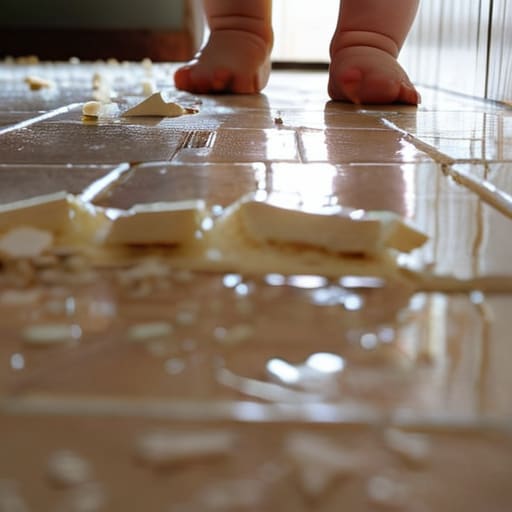
When you’re in the thick of it, the clinical term “toddler emotional regulation” feels like a personal insult. It sounds so tidy, doesn’t it? Like you can just sit them down, explain the mechanics of a meltdown, and they’ll suddenly gain the neurological capacity of a much older child. But when you are standing in a hallway that smells like spilled milk and wet wipes, and your two-year-old is vibrating with a rage that seems disproportionate to the crime of a broken cracker, you aren’t thinking about brain development. You are thinking about survival.
The reality of managing childhood tantrums is that your own nervous system usually goes haywire before theirs does. I remember with my second, around eighteen months, I tried every textbook method of staying calm, only to find myself whispering curses under my breath while they screamed. The trick isn’t being a perfect, zen-like pillar of strength; it’s about realizing that you cannot teach them to regulate if you are currently drowning. Sometimes, the most effective strategy is simply lowering the temperature in the room—not just the volume, but your own internal heat—before you even attempt to set a single boundary.
Setting Boundaries With Children Without the Midnight Meltdown

The textbook approach to setting boundaries with children usually involves a calm, measured tone and a consistent consequence. It sounds lovely in a seminar, but it’s incredibly hard to maintain that composure when you’re being screamed at for the third time in twenty minutes. I learned this the hard way with my second child, who was about eighteen months old; I tried the “calm voice” method, but it only seemed to act as fuel for the fire. The trick isn’t being a robot; it’s realizing that a boundary isn’t a negotiation. You can be kind, but you have to be immovable.
When you’re managing childhood tantrums, the goal isn’t to win the argument—because you can’t argue with a brain that has effectively gone offline. Instead of getting caught in a loop of explaining why they can’t have the cookie, I started using what I call “the short circuit.” Give the boundary, acknowledge the big feeling, and then move on. My oldest, now seven, still has the occasional meltdown, but we found that brief, predictable responses work better than long-winded lectures. It saves your energy and prevents the situation from spiraling into a midnight standoff.
Effective Communication With Kids When They Wont Stop
The textbooks will tell you that effective communication with kids is all about “active listening” and “validating feelings.” In a clinical setting, that sounds lovely. In a living room where a three-year-old is currently vibrating with rage because you turned off the TV, it feels like trying to perform surgery during an earthquake. When the whining reaches that high-pitched, glass-shattering frequency, your brain’s logical centers shut down. You aren’t thinking about linguistic mirroring; you’re thinking about how much you want to hide in the pantry with a bag of biscuits.
The trick I learned with my second—who was about three and a half—was to stop trying to talk them out of the noise. You cannot reason with a brain that is currently offline. Instead, I started using what I call “low-frequency responses.” I’d drop my voice to a near-whisper and get down on their level, not to lecture, but to provide a calm anchor. It isn’t a magic fix for managing childhood tantrums, but it shifts the energy. You aren’t fighting the sound; you’re simply refusing to join the orchestra.
Managing Childhood Tantrums Beyond the Textbook Promises
The textbooks will tell you that managing childhood tantrums is a linear process of identifying triggers and applying consistent parenting discipline strategies. They make it sound like a math equation: Input A + Technique B = Calm Child C. But when you’re standing in the middle of a supermarket aisle with a three-year-old who is currently trying to melt into the linoleum because you wouldn’t buy the blue yogurt, the math fails. I remember my second, Leo, having a meltdown in a pharmacy that lasted so long I actually considered leaving him there and starting a new life in a different county.
The reality of toddler emotional regulation is that it is messy, loud, and rarely follows a schedule. You can use all the positive reinforcement techniques in the world, but they often feel useless when a child is in the throes of a full-blown neurological storm. At that moment, you aren’t “teaching”; you are just surviving. I’ve learned that the most effective thing you can do isn’t to lecture them mid-scream, but to simply be the calmest person in the room, even if your own heart is racing. Sometimes, the best strategy is just waiting for the storm to pass.
Positive Reinforcement Techniques That Actually Work at 200 Am
The textbooks love to talk about “positive reinforcement techniques” as if you’re training a golden retriever with a handful of treats. They suggest you catch them being good, which sounds lovely in a sunlit living room at 10:00 AM. But when you’re staring at a sobbing three-year-old at 2:00 AM because they’ve decided the concept of “sleep” is a personal affront, “catching them being good” feels like a cruel joke. At that hour, there is no “good” to catch.
What actually works—and what I learned when my second child was about eighteen months old—is shifting the focus from rewarding the big wins to noticing the tiny, microscopic pivots. Instead of waiting for a perfect moment of calm, look for the three seconds where they stop screaming to take a single, shaky breath. That’s your opening. You don’t need a trophy; you just need to whisper, “I saw you take a breath, that was really brave.” It’s a small piece of effective communication with kids that acknowledges the struggle rather than just the behavior. It’s about validating the effort of trying to regulate, even when they’re failing miserably at it.
Five Things That Actually Help When the Whining Won't Quit
- The “Volume Check” trick. When my second child was about two, I realized that responding to a whine with a loud, authoritative “Stop that!” was just adding more noise to a room that was already too loud. Instead, I started dropping my own volume. I’d crouch down so I was at eye level—which is much harder when your back hurts—and speak in a near-whisper. It forces them to stop the nasal drone just to hear what you’re saying. It doesn’t work every time, especially at 4:00 PM when everyone is hungry, but it breaks the cycle of escalating noise.
- Differentiate between “I need something” and “I’m having a hard time.” In the ward, we called it clinical assessment; at home, I call it survival. If the whining is because they actually need a nappy change or a snack, fix it. If the whining is because they’re tired and frustrated that the world isn’t bending to their will, fixing the “problem” won’t work. My third child, at eighteen months, would whine for a specific blue cup that was in the dishwasher. No amount of logic helps there. You have to acknowledge the feeling—”You’re really cross about that cup”—before you even attempt to solve the logistics.
- Use the “Wait for the Gap” method. The textbooks suggest “active listening,” but when you’re in the thick of it, that feels impossible. What I’ve learned is to wait for the tiny, microscopic pause between the whines. That’s your window. Don’t try to lecture them mid-wail. Wait for that half-second of breath, say one calm sentence, and then wait again. It’s about teaching them that the “signal” (the whining) doesn’t actually get them the “result” (your undivided attention) any faster than a calm voice does.
- Check your own “Internal Temperature.” This is the hardest one. When I was a nurse, I could stay calm because I was on the clock. At home, when I’m trying to cook dinner and the whining starts, it feels personal. If you feel that heat rising in your chest, you’ve already lost the battle. I have a rule now: if I feel like I’m about to snap, I step into the pantry or the bathroom for sixty seconds. It’s not “ignoring” the child; it’s preventing a meltdown from both sides of the equation.
- Stop the “Why” interrogation. Asking a toddler “Why are you whining?” is like asking a cat to explain the theory of relativity. They don’t know why. They just are. When my eldest was three, I spent months asking why he was being difficult, only to realize he was just overstimulated by the TV. Instead of “Why?”, try “I can see you’re upset.” It moves the conversation from a trial where they are the defendant to a moment where you are a team.
The Reality Check: What to Carry With You
Stop looking for the “perfect” technique in a manual; when the whining hits its peak, your primary job isn’t to fix the behavior, but to keep your own nervous system from redlining so you can actually be the adult in the room.
Context is everything—a three-year-old whining because they’re tired is a developmental milestone, but a child who is suddenly inconsolable and won’t stop despite your best efforts might actually be unwell, so trust your nursing gut over your parenting guilt.
Forgive the failed attempts; I remember trying to use “gentle redirection” with my second child at age two, only to end up sitting on the floor crying right alongside him, and the truth is that some nights you won’t win, and that doesn’t mean you’re failing.
The Reality of the Long Game
We’ve covered a lot of ground here, from the clinical theory of emotional regulation to the messy, unscripted reality of trying to set a boundary while your ears are ringing from a repetitive, high-pitched whine. If you take anything away from this, let it be that there is a massive gap between what the textbooks promise and what actually happens when you are standing in a kitchen at 2:00 AM. You cannot simply “implement strategies” when you are running on three hours of sleep and a lukewarm cup of tea. The goal isn’t to achieve a house of perfect, silent children; it’s about finding those small, sustainable ways to hold the line without losing your own sense of calm. It’s about recognizing that whining is often just a loud, clumsy way of communicating a need, even if that need is something as trivial as the wrong coloured cup.
If you feel like you’re failing because today was a series of eye-rolls and ear-splitting protests, please hear me: you aren’t. I spent a decade in paediatrics watching parents navigate the same chaos, and the ones who survived with their sanity intact weren’t the ones who followed every rule to the letter; they were the ones who were kind to themselves when things fell apart. Parenting is a long game, and the ability to reset after a particularly loud afternoon is more important than being perfect in the moment. You are doing a hard job, often with very little real-world practice, and the fact that you care enough to worry about it means you are already doing better than you think.