Car Journeys With a Baby Who Screams
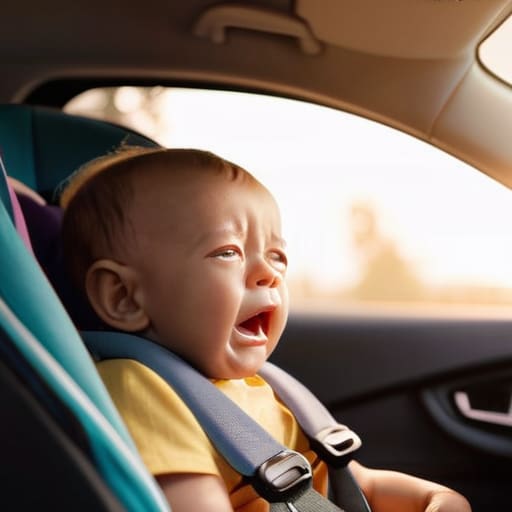
I remember sitting in a supermarket car park three years ago, my second child screaming with such rhythmic, glass-shattering intensity that I actually considered just leaving the car there and walking home. The “experts” on the parenting blogs would tell you that you just need a more expensive, ergonomic seat or perhaps a specialized sensory toy to distract them, but they aren’t the ones sitting in a humid hatchback while your knuckles turn white on the steering wheel. If you are currently Googling how to handle a baby who hates the car while trying to keep your own tears from falling, you don’t need a lecture on developmental milestones; you need to know why the car seat has become a battlefield.
I’m not going to give you a list of expensive gadgets that promise a miracle. Instead, I’m going to give you the unfiltered reality of what worked for me—from the physiological reasons why they’re actually panicking, to the specific, messy tactics I used when my own kids were six months and eighteen months old. We’ll look at what the medical guidelines say, and then we’ll talk about what actually happens when you’re exhausted and out of options.
Table of Contents
- The Car Seat Battle What the Manual Says vs Reality
- Understanding Car Seat Anxiety in Infants and Why It Hurts
- How to Handle a Baby Who Hates the Car Without Spiraling
- Soothing a Crying Baby in Car Rides When Youre Exhausted
- Real World Distraction Techniques for Car Rides That Actually Work
- Managing Sensory Issues and Preventing Motion Sickness in Babies
- Five Things to Try Before You Lose Your Mind (and Your Sanity)
- The Hard Truths to Carry With You
- The Long Road Ahead
The Car Seat Battle What the Manual Says vs Reality

The manual—and every well-meaning auntie on Facebook—will tell you that the key is “engagement.” They’ll suggest a repertoire of distraction techniques for car rides, like a new musical toy or a bright, high-contrast book. They make it sound like a simple matter of stimulating the senses to pivot the baby’s mood. But the manual doesn’t account for the fact that when you’re stuck in gridlock on the M25, a squeaky rubber duck is about as effective as a polite request to a hurricane.
In my nursing days, I saw how sensory input worked on a ward, but at home, I learned that sometimes the “stimulus” is actually the problem. For my second, who was about seven months old, the sheer amount of visual movement through the window was actually triggering car travel sensory issues. He wasn’t just being difficult; his brain was trying to process a world that was moving too fast while he was strapped into a static bucket. The textbook says “distract,” but the reality is that sometimes you just have to stop the input entirely—darker shades, a muslin cloth, or just a heavy, quiet silence—and accept that the journey is going to be a slow, exhausting slog.
Understanding Car Seat Anxiety in Infants and Why It Hurts
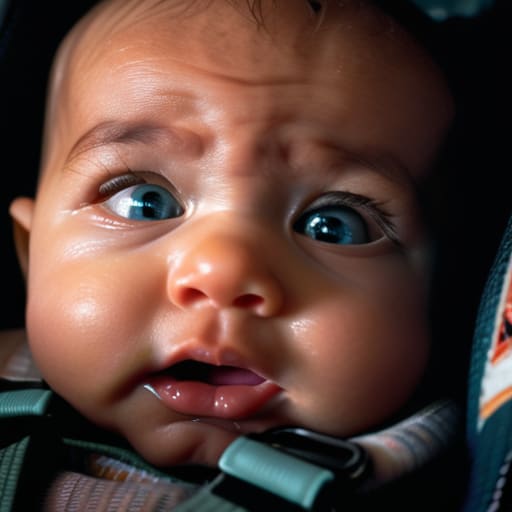
When I was on the ward, we used to talk about “sensory overload,” but that’s a clinical way of saying a baby feels like the world is spinning out of control. For a tiny human, a car seat isn’t just a chair; it’s a restrictive, upright cocoon that limits their ability to move or even see clearly. This is often the root of car seat anxiety in infants. They can feel the vibration of the engine and the sudden shifts in momentum, but they lack the cognitive tools to understand that they are safe. To them, it just feels like being trapped in a moving, noisy box.
It also helps to remember that their vestibular system—the part of the inner ear that handles balance—is still very much under construction. While some babies find the rhythm of the road hypnotic, others experience a genuine sense of physical disorientation. This can lead to significant car travel sensory issues where the very motion meant to soothe them actually triggers a fight-or-flight response. I remember my second, when he was about seven months old, he would scream the moment the seatbelt clicked. It wasn’t a tantrum; it was a genuine physiological protest against a sensory experience he couldn’t name.
How to Handle a Baby Who Hates the Car Without Spiraling
First, you have to accept that you cannot “fix” the crying, you can only manage your reaction to it. When the screaming starts, your cortisol levels spike, and suddenly you’re white-knuckling the steering wheel, which only makes the atmosphere in the car more frantic. I learned this with my second, who was about seven months old; the more I tried to perform “calmness,” the more he sensed my tension. Instead of fighting the noise, try to focus on soothing a crying baby in the car through predictable sensory inputs rather than sudden changes. A white noise machine or a specific, low-tempo playlist can act as a constant, rather than something that keeps switching on and off.
If the distress is physical, look for the subtle cues. Sometimes it isn’t just fear; it’s a genuine sensory overload or even a touch of tummy discomfort. I found that baby car seat comfort tips like a small, rolled-up muslin cloth tucked near their hips—not blocking the harness, mind you—could help them feel more “held.” If they are older, say around eighteen months, distraction techniques for car rides like a new, “special” toy kept strictly for travel can work, but don’t expect miracles if they are already in a full-blown meltdown. Sometimes, the best way to handle it is to pull over, breathe, and wait for the storm to pass.
Soothing a Crying Baby in Car Rides When Youre Exhausted
When you are five minutes into a forty-minute drive and the screaming starts, your brain doesn’t function like a medical textbook. You aren’t thinking about developmental milestones; you are thinking about how much your head hurts and whether you can just pull over and cry with them. The clinical advice for soothing a crying baby in car settings usually involves “lowering the sensory input,” which sounds lovely in a quiet nursery. In reality, it means trying to find a way to dampen the noise without turning the car into a sensory deprivation tank, which often just makes them more agitated.
I remember with my second, who was about eight months old, I tried every “expert” distraction technique for car rides imaginable—shakers, singing, even a portable white noise machine. Nothing worked because the engine hum and the vibration felt like a threat to them. What actually worked, though it felt like a defeat, was simply acknowledging the chaos. Sometimes, the best thing you can do is find a safe place to pull over, let the meltdown happen in the driveway, and try again when the cortisol levels have actually dropped. It’s not efficient, and it’s definitely not what the manual suggests, but it is how you survive the trip.
Real World Distraction Techniques for Car Rides That Actually Work
The textbooks will tell you to use a soothing lullaby or a new toy, but they won’t tell you what to do when your baby is screaming their lungs out in a parking lot at 2:00 AM and you’re about five minutes away from a breakdown yourself. When it comes to actual distraction techniques for car rides, the “novelty” factor wears off incredibly fast. I learned this the hard way with my second, who would look at a new rattle for exactly forty-five seconds before deciding the entire concept of being strapped into a seat was a personal affront.
What actually worked for us—and what I saw work on the ward with restless toddlers—was shifting from visual toys to sensory shifts. If they are mid-meltdown, a sudden change in the auditory environment can break the cycle. I’m talking about a white noise machine or even just a low, rhythmic humming from your own throat. For my oldest, who was about ten months when we finally cracked it, we started using “the mirror trick.” Taping a small, shatterproof mirror to the back of the passenger seat gave them something to focus on that wasn’t just the back of my head. It’s not a magic fix, but it can provide those few vital minutes of calm you need to actually pull over and breathe.
Managing Sensory Issues and Preventing Motion Sickness in Babies
The clinical textbooks will tell you that babies don’t get motion sickness because their vestibular systems aren’t fully developed, but anyone who has sat in a stationary car listening to a rhythmic, retching scream knows that’s nonsense. While true nausea is rarer in the very young, preventing motion sickness in babies often comes down to managing the visual-sensory mismatch. If they are staring fixedly at a bright, moving pattern on a toy while their inner ear feels the sway of a corner, the brain gets confused. I found with my second, who was about seven months old, that keeping the view “soft”—either looking out a window at the horizon or having the car seat angled slightly away from intense, flickering lights—made a massive difference in preventing that glazed, unsettled look that precedes a meltdown.
Then there is the sensory overload of the car itself. It’s loud, it’s vibrating, and it’s cramped. For some babies, car travel sensory issues aren’t about the movement, but the sheer input of it all. My youngest, at ten months, was a sensory sponge; the hum of the engine felt like a personal affront. I learned that adding a layer of white noise or a soft, familiar muslin cloth draped slightly over the side of the seat can act as a sensory buffer. It’s not about following a perfect protocol; it’s about reducing the “noise” so their nervous system doesn’t feel under attack.
Five Things to Try Before You Lose Your Mind (and Your Sanity)
- The “Short Hop” Method: Don’t plan a forty-minute drive to the pediatrician when you’re in the thick of a car-seat war. When my second child was ten months old, we started by just sitting in the parked car with the engine on for five minutes, then driving to the end of the street and back. You have to build the association that the car seat isn’t a trap, but a temporary seat that eventually lets them go.
- The Sensory Buffer: The manual says “ensure visibility,” but if your baby is screaming because the world is moving too fast outside the window, try the opposite. I found that a lightweight muslin cloth draped partially over the side of the seat—not covering their face, obviously, but just softening the strobe effect of passing trees and streetlights—calmed my three-year-old immensely. It turns a chaotic visual assault into a dim, predictable cocoon.
- Audio Anchors: If you’re using white noise, use it before the car starts. I learned the hard way with my third that if you wait until they are already mid-meltdown to turn on the machine, you’re just adding more noise to the chaos. Start the white noise or the familiar lullaby in the house, then transition them into the car while the sound is already a constant. It gives them a familiar sonic thread to hold onto while the engine hums.
- The “New Toy” Deception: This isn’t about a drawer full of gadgets; it’s about one specific, high-value item that only exists in the car. For my fourth, it was a crinkly fabric book that made a very specific sound. If they only see it when they are strapped in, it becomes a tool for negotiation rather than just another piece of clutter. It’s a tactical distraction, not a long-term solution.
- Check the Physicality: Before you assume it’s psychological, check the harness. When my eldest was about a year old, I realized he wasn’t “hating the car,” he was hating the way the straps pinched his hips because he’d had a growth spurt. If the harness is too tight or the angle of the seat is causing his chin to drop toward his chest, he’s going to fight you every single time. A little bit of padding or a slight adjustment to the recline can be the difference between a meltdown and a nap.
The Hard Truths to Carry With You
Distinguish between a “medical” cry and a “frustration” cry; if they aren’t turning blue, vomiting, or showing signs of physical distress, you aren’t failing—you’re just navigating a developmental hurdle that usually peaks around 6 to 9 months.
Abandon the “perfect” routine the moment you hit the driveway; if the manual says they need a calm environment but your 8-month-old is screaming, it is better to use the loud, silly, or distracting methods that work than to sit in silent, mounting resentment.
Accept that some car rides will simply be lost causes; when you’re three weeks into a sleep regression and the car seat becomes a battlefield, sometimes the best “parenting move” is to pull over, breathe, and accept that you aren’t going to make it to the supermarket on time today.
The Long Road Ahead
If you’ve taken anything from this, let it be that there is no magic switch to flip. You can check the harness tension, try the sensory distractions, and manage the motion sickness, but some days the car is just going to be a battleground. When my second child was fourteen months old, every trip to the supermarket felt like a hostage negotiation, and no amount of “expert-approved” soothing techniques changed the fact that we were both exhausted and tearful. You have to balance the clinical reality—the need for safety and routine—with the messy, loud, and often frustrating reality of a tiny human who simply feels overwhelmed by the world moving past the window. Some days you’ll win, and some days you’ll just survive the drive, and honestly, that is enough.
Please, try to be kind to yourself when you’re sitting in that driver’s seat feeling like you’re failing. The manuals don’t mention the knot in your stomach or the way your hands shake when the screaming starts, but I promise you, you are doing a good job. This phase is incredibly draining, but it is exactly that—a phase. I remember when my eldest was two and finally stopped fighting the straps; it felt like a miracle, even though I knew it was just development. Hang in there. You aren’t a bad parent because your baby hates the car; you’re just a parent navigating a very difficult moment in the long, bumpy journey of raising them.