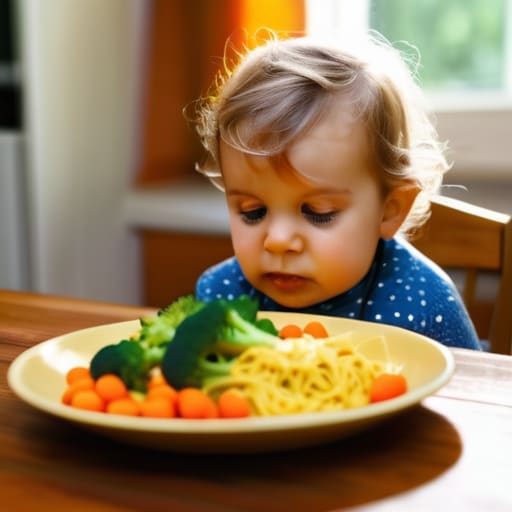
The Complete Guide to Fussy Eating
If you search for a complete guide to fussy eating online, you’ll mostly find two things: expensive, color-coded meal planners that assume you have a personal sous-chef, and clinical advice that treats a toddler like a laboratory specimen. I spent eleven years on a paediatric ward hearing doctors explain the “mechanics of sensory processing,” but none of those textbooks prepared me for my second child, Leo, at eighteen months, when he decided that the mere sight of a green vegetable was a personal affront to his dignity. There is a massive, gaping hole between what the medical literature says about nutritional intake and the reality of standing in a kitchen at 6:00 PM, staring at a plate of expensive organic broccoli that is currently being used as a projectile.
I’m not here to sell you a miracle cure or a way to “fix” your child, because children aren’t broken. What I am going to do is bridge that gap between the evidence and the exhaustion. I’ll give you the clinical basics of what actually matters for growth, but I’ll pair it with the unfiltered reality of what worked when my own kids were in the thick of it. We’ll look at the science, the failure modes, and exactly when you can stop worrying and just go get a cup of tea.
Table of Contents
- The Realists Complete Guide to Fussy Eating and Surviving It
- Why Food Neophobia in Toddlers Isnt Your Personal Failure
- Sensory Processing and Food When Textures Feel Like a Battle
- Introducing New Textures to Children Without the Dinner Table Meltdown
- Picky Eater Mealtime Solutions That Actually Work at 6 Pm
- Creating a Positive Mealtime Environment Amidst Childhood Nutrition Challen
- Five Hard-Won Truths for the Dinner Table Trenches
- The Survivalist’s Summary
- The Long Game
The Realists Complete Guide to Fussy Eating and Surviving It

First, let’s talk about what the textbooks call food neophobia in toddlers. It sounds clinical and intimidating, but in my house, it usually looks like a two-year-old deciding that a piece of broccoli is a personal insult. The science says this is a normal developmental stage—a survival instinct to avoid things that might be poisonous—but the science doesn’t help when you’ve spent forty minutes prepping a balanced plate only to have it pushed face-down into the carpet. When I was working the wards, I saw kids who struggled because of genuine sensory processing and food sensitivities, where the texture of a pea felt like a pebble in their mouth. There is a massive difference between a child being “difficult” and a child who is physically overwhelmed by a sensation.
The trick isn’t to force the bite; it’s to stop the battle. I learned with my second child, who was about eighteen months, that the moment the tension rises, the nutrition goes out the window. You can’t teach a child to eat if they are in fight-or-flight mode. Instead, focus on creating a positive mealtime environment where the goal is just sitting at the table, not necessarily swallowing the cauliflower. It’s about exposure without the interrogation.
Why Food Neophobia in Toddlers Isnt Your Personal Failure

When I was working the night shifts on the paediatric ward, I saw parents who looked absolutely shattered, not just from lack of sleep, but from the crushing guilt of a child who refused everything but plain pasta. They felt like they were failing a fundamental test of care. But here is the clinical truth: food neophobia in toddlers is a biological survival mechanism, not a reflection of your parenting. Evolutionarily speaking, a toddler who is suspicious of anything that isn’t a “safe,” known food is actually a child whose instincts are working exactly as they should.
The textbooks will talk about childhood nutrition challenges as if they are problems to be solved with a checklist, but they don’t account for the sheer sensory overwhelm of a real kitchen. For some children, it isn’t about being “difficult”; it’s about sensory processing and food. A new texture isn’t just a different sensation; to a sensitive two-year-old, it can feel like an assault. When my second child decided that anything green was a personal insult, I had to learn the hard way that you cannot negotiate with a nervous system. It isn’t a battle of wills; it’s just biology doing its thing.
Sensory Processing and Food When Textures Feel Like a Battle

In the ward, we used to see kids who wouldn’t just refuse a broccoli floret; they would physically recoil from it, as if it were a live grenade. That’s where the science of sensory processing and food moves from a textbook concept to a very loud, very messy reality. For some children, a texture isn’t just “yucky”—it’s an overwhelming sensory assault. When you’re trying to navigate these childhood nutrition challenges, you realize that a child rejecting a mushy pear or a crunchy cracker isn’t being “difficult” for the sake of it; their brain is genuinely flagging that sensation as a threat.
I remember my second, Leo, at about eighteen months. I tried the “gentle exposure” method the books swear by, but the moment a piece of soft avocado touched his lip, he went into a full-blown meltdown. I learned the hard way that forcing the issue only increases the trauma. Instead of a battle of wills, I had to focus on creating a positive mealtime environment where the food was just… there. Sometimes, that meant letting him play with dry pasta on the floor for twenty minutes before we even talked about eating it. It’s slow, it’s frustrating, and it feels like you’re moving backward, but it’s the only way to lower the stakes.
Introducing New Textures to Children Without the Dinner Table Meltdown
The textbooks will tell you that you should “expose” a child to a new texture repeatedly, but they fail to mention that doing this while you’re trying to eat a lukewarm dinner is a recipe for a breakdown. When we talk about introducing new textures to children, we often forget that for a toddler, a piece of steamed broccoli isn’t just a vegetable; it’s a wet, green, unpredictable object that might actually be “dangerous.” My second child, Leo, was a prime example. At eighteen months, he decided that anything with a “squish” factor was an immediate enemy. If it wasn’t crunchy or predictable, it was a battleground.
The trick isn’t to force the fork into their mouth, but to de-escalate the tension. I found that the most effective picky eater mealtime solutions actually happened away from the high chair. We started with “food play” during playtime—letting them smash cooked carrots with a spoon or touch cold yogurt with their fingers when they weren’t hungry. It sounds like a mess, and it usually is, but it builds a familiarity that doesn’t feel like a demand. You’re essentially teaching their nervous system that a new texture won’t actually hurt them.
Picky Eater Mealtime Solutions That Actually Work at 6 Pm
By 6:00 PM, you aren’t a nutritionist or a developmental psychologist; you are a person who is hungry, tired, and staring down a tiny human who has decided that broccoli is a personal insult. The textbooks suggest “exposure therapy,” but they don’t account for the fact that you’ve only got twenty minutes before the bedtime battle begins. One of the most effective picky eater mealtime solutions I found—and it worked for my second child when they were about two—was the “safe food” rule. Always ensure there is one thing on the plate you know they will eat. It sounds like giving up, but it actually lowers the stakes. It prevents the meal from becoming a high-stakes negotiation and helps maintain a positive mealtime environment where the goal is eating, not winning a war.
If you are dealing with more intense sensory processing and food issues, stop trying to force the “big bites.” When I was working on the ward, I saw how much anxiety a plate of unfamiliar textures could cause. Instead, try the “deconstructed” approach. If you’re making tacos, don’t serve a wrapped burrito; serve small piles of cheese, meat, and shell separately. It gives the child agency. When my third hit the peak of their food neophobia at age three, we stopped hiding vegetables in everything. We just let them touch, smell, or even just look at the food without the pressure to swallow it. It’s slow, and it’s frustrating, but it works.
Creating a Positive Mealtime Environment Amidst Childhood Nutrition Challen
The textbooks will tell you that a positive mealtime environment is built on “structured routines” and “calm engagement,” but they rarely mention the reality of a toddler who has decided that the mere sight of a broccoli floret is a declaration of war. When you are dealing with the intense childhood nutrition challenges that come with a picky eater, the atmosphere at the table often becomes a high-stakes negotiation. I remember with my second, a three-year-old, trying to implement “division of responsibility” while he was simultaneously using his spoon as a catapult. You can read all the papers you want, but if the vibe at the table is one of frantic tension, the child will pick up on it instantly.
To make this work, you have to lower the stakes. If you approach every meal like a clinical trial for introducing new textures to children, you’re going to end up exhausted and resentful. My rule of thumb—which worked once my youngest hit age four—is to make the table a “no-pressure zone.” This means the goal isn’t necessarily eating the food; sometimes, the win is just having the food sit on the plate without a meltdown. If the environment feels safe rather than combative, you’re actually doing the heavy lifting.
Five Hard-Won Truths for the Dinner Table Trenches
- Stop the “one more bite” negotiations. When my second child was two, I thought I could negotiate him into eating broccoli like a tiny diplomat; all I did was teach him that a meltdown was a valid bargaining chip. The science says exposure matters, but the reality is that pressure creates a power struggle that usually ends with someone crying and no one actually swallowing anything.
- The “Safe Food” rule is your sanity lifeline. Always put one thing on the plate you know they will eat—even if it’s just plain pasta or a slice of toast. When my eldest was three, I tried to be a “balanced plate” hero every single night, and it resulted in him refusing everything. Now, I ensure there’s a win on the plate so the meal doesn’t feel like a high-stakes interrogation.
- Watch the clock, not just the calories. If your toddler is hitting a growth spurt or fighting a teething bout, their appetite will swing wildly. I’ve seen parents panic because a four-year-old barely touched dinner, only to find them raiding the biscuit tin at 9 PM. If they are energetic and growing, they are likely getting what they need, even if the dinner plate looks like a crime scene.
- Deconstruct the “scary” foods. If you’re introducing something new, don’t serve it as a finished, intimidating dish. When my third was about to turn eighteen months, I stopped serving “stew” and started serving tiny, separate piles of carrot, potato, and meat. It lowers the sensory stakes; they can see exactly what they are dealing with before it touches their tongue.
- Accept the “No-Show” dinners. There will be nights where you spend forty minutes prepping a nutritious meal only for it to be treated like toxic waste. On those nights, don’t fight it. Serve a bowl of cereal or a piece of cheese and go to bed. You aren’t failing as a parent; you’re just surviving a phase that, in my experience, usually shifts once they hit age four or five.
The Survivalist’s Summary
Distinguish between a developmental phase and a genuine nutritional crisis; if they are growing and meeting milestones, the “beige diet” is usually a temporary hurdle, not a long-term catastrophe.
Focus on the “division of responsibility”—you decide what, when, and where food is served, but they decide how much (if any) of it actually goes into their mouths.
Prioritize the relationship over the plate; a peaceful meal with three bites of broccoli is a much bigger win for your long-term sanity than a high-nutrient battleground that ends in tears for everyone.
The Long Game
If you’ve followed this far, you know that there is no magic pill or “secret food” that will suddenly turn your picky eater into a gourmet enthusiast. We’ve looked at the science of food neophobia, the sensory battles over textures, and the practical ways to keep the peace when the dinner table feels more like a negotiation zone. The reality is that managing fussy eating is a marathon of small, often invisible wins—like your three-year-old finally touching a piece of broccoli without a full-scale protest, even if they don’t actually swallow it. It’s about separating the nutritional necessity from the emotional exhaustion, and remembering that most of these battles are just developmental milestones in disguise.
When you’re sitting there at 7:00 PM, staring at a plate of untouched pasta and feeling that familiar knot of worry in your stomach, please remember this: you are doing a good job. Your child’s relationship with food is a slow build, and the fact that you are even worrying about their sensory needs or their nutritional intake proves you are the parent they need. There will be weeks where it feels like you’ve regressed to zero, but that is simply part of the process. Hold steady, keep the pressure low, and keep showing up. This phase is exhausting, but it is just a phase, and one day, you’ll look back on these chaotic meals from a much quieter kitchen.