
Moving House With Children Without Losing Anyone
I’ve read the glossy brochures and the “lifestyle expert” blogs that claim you can master how to move house with children by simply using colour-coded stickers and maintaining a “positive transition mindset.” It’s absolute rubbish. When I moved my family with four kids under the age of seven, there were no stickers that could stop a four-year-old from mourning the loss of a specific corner of the living room, and no amount of “mindset” helped when we were surrounded by mountains of cardboard and the distinct, stale smell of unpacked bubble wrap at midnight. The official guidance assumes your children are rational actors who respond well to schedules, but it forgets that kids are essentially small, unpredictable chaos agents who thrive on the very routines you are currently dismantling.
I’m not here to give you a polished checklist that falls apart the moment the first box goes missing. Instead, I’m going to give you the version that actually works: the one built on eleven years of paediatric nursing and four very messy, very loud moves of my own. I’ll tell you what to prioritise, what can safely be ignored, and exactly what to expect when the meltdowns hit. We’re going to focus on the real-world logistics of keeping everyone fed, sane, and somewhat sleeping through the transition.
Table of Contents
- How to Move House With Children the Theory vs the Chaos
- Managing Kids Emotions During Relocation Without Losing Your Mind
- The Moving Checklist for Families That Actually Works
- Minimizing Stress for Toddlers During Move the 2 Am Reality
- Coping With Change in Children When Everything Feels Broken
- Preparing Children for New School and Organizing Kids Rooms
- Five things that actually kept us sane (and some things that didn't)
- The Survival Summary
- The Dust Will Eventually Settle
How to Move House With Children the Theory vs the Chaos
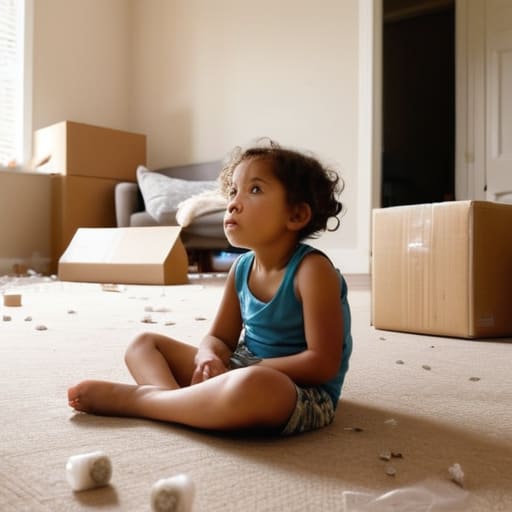
The official literature—the kind you find in glossy brochures or on parenting blogs that seem to have never actually lived in a house with more than one occupant—will tell you that managing kids’ emotions during relocation is all about “predictability” and “visual aids.” They’ll suggest you print out a little calendar with stickers, showing them exactly when the moving van arrives. In theory, it’s sound. It gives them a sense of agency. In practice, when you’re halfway through a pile of bubble wrap and your four-year-old is having a full-scale existential crisis because their favourite dinosaur is currently buried in a box marked “Kitchen/Misc,” a sticker isn’t going to save you.
The reality is that even the most meticulous moving checklist for families can’t account for the sheer, unpredictable chaos of a transition. I remember when my second child was three; I had everything planned, from the way the boxes were stacked to the exact hour we’d arrive at the new place. But by 10:00 PM on move day, we were all exhausted, the new house smelled of nothing but dust and old decisions, and everything that could go wrong did. You can prepare them all you want, but sometimes the best strategy is just being prepared to fail at the plan.
Managing Kids Emotions During Relocation Without Losing Your Mind

When I was on the paediatric ward, I saw kids react to big changes—like a hospital stay—with a level of raw, unfiltered emotion that would make most adults weep. Moving house is its own kind of upheaval. The “official” advice suggests you sit them down for a calm, structured chat about the new house. That works fine for a six-year-old, but if you’re minimizing stress for toddlers during move day, a chat is useless. A two-year-old doesn’t care about the square footage of their new bedroom; they care that their favourite stuffed rabbit is currently buried at the bottom of a cardboard box they can’t open.
For the older ones, it’s less about the physical stuff and more about the loss of control. Coping with change in children often looks like sudden, inexplicable irritability or a regression in sleep. When my second child turned four, she didn’t cry about leaving her friends; she just refused to wear anything but her old, stained pajamas for a week. Don’t fight it. If you try to force “positivity” when they are clearly grieving their old life, you’ll just end up in a standoff. Sometimes, the best way to manage the fallout is to simply acknowledge that this situation sucks and let them be grumpy about it.
The Moving Checklist for Families That Actually Works

If you look at a standard moving checklist for families online, it’s all about utility: change of address, utility transfers, packing the bubble wrap. It’s useful, but it’s missing the human element. My own version of a moving checklist involves a “Survival Suitcase” for each child. This stays in the car, not the van. It needs the specific, slightly ridiculous items that make them feel safe—the threadbare teddy, the specific blue toothbrush, or that one nightlight that actually works. When you’re trying to focus on minimizing stress for toddlers during move, the last thing you want is to be digging through twenty taped boxes at midnight just to find a sleep aid.
The second part of the list is about the stuff that doesn’t fit in a box. When my second child was four, I learned that you can’t just “manage” a transition; you have to scaffold it. This means a visual countdown—not a vague “next week,” but a physical calendar where they can cross off days. It also means getting ahead of the logistics of preparing children for new school before the first day arrives. Visit the playground, walk the route, and let them see the new world before it becomes their permanent reality. It won’t stop the tears, but it stops the feeling of being dropped into the unknown.
Minimizing Stress for Toddlers During Move the 2 Am Reality
If you look at a professional moving checklist for families, it’ll tell you to “maintain a sense of normalcy.” That sounds lovely in a brightly lit office, but it’s a fantasy when you’re trying to minimize stress for toddlers during a move while living out of cardboard boxes. For a two-year-old, “normalcy” isn’t a concept; it’s the specific, dented blue cup that is currently buried at the bottom of a box marked ‘Kitchen/Misc.’ When their physical world disappears into tape and bubble wrap, their sense of security goes with it.
I remember when my second was eighteen months old; we moved during a particularly rainy autumn, and he spent three days treating every moving box like a personal affront. The “expert” way to handle coping with change in children is to use visual aids or picture books, which can help, but sometimes the reality is just a lot of extra cuddles and a complete abandonment of your cleaning schedule. Don’t aim for a pristine new home on day one. Aim for a cleared corner of the living room where the toddler’s familiar rug is laid out, so they have one square metre of predictable ground to stand on while the rest of the world is in flux.
Coping With Change in Children When Everything Feels Broken
When everything feels broken—when the boxes are everywhere, the routine is non-existent, and your youngest is suddenly acting like they’ve forgotten how to use a spoon—it’s easy to feel like you’re failing at coping with change in children. In the ward, I saw kids who could handle a terrifying medical procedure with more grace than a toddler handles a change in scenery. The reality is that children don’t process “big life transitions” through logic; they process them through their bodies. They get clingy, they get aggressive, or they just stop eating. When you’re in the thick of it, don’t aim for perfection. Aim for predictability in the small things. If the big picture is a mess, keep the bedtime story exactly the same.
You might find yourself obsessing over organizing kids rooms in new house before you’ve even unpacked the kettle, but try to resist that urge. A child doesn’t need a Pinterest-perfect bedroom to feel safe; they need their specific, slightly battered teddy bear to be the first thing out of the box. When the environment is chaotic, sensory consistency becomes your best tool. It’s not about the grand gestures; it’s about the familiar smells and the known rhythms that tell their nervous system they aren’t actually lost in the woods.
Preparing Children for New School and Organizing Kids Rooms
When it comes to preparing children for new school, the official advice usually suggests “visiting the playground” or “looking at photos of the classroom.” That sounds lovely on a brochure, but it rarely accounts for the sheer, overwhelming scale of a new environment. When my second child, who was five at the time, started a new school mid-term after a move, the “visual tour” resulted in a meltdown because the playground looked too big. Instead of just showing them pictures, try to find the small, tactile things—the specific type of velcro on their new shoes or the weight of their backpack. It’s about grounding the abstract concept of “school” into something they can actually touch and understand.
Then there is the matter of organizing kids rooms in new house. You’ll see Pinterest boards filled with perfectly curated, minimalist nurseries, but please, ignore them. When you’re in the thick of it, the goal isn’t aesthetic; it’s psychological safety. When my eldest moved into his room at age seven, he didn’t want a “new adventure”; he wanted his old, slightly battered duvet and the exact same glow-in-the-dark stars from his previous bedroom. Prioritise familiarity over freshness. If they can walk into a room and see the same teddy bear in the same corner, the world feels a little less like it’s tilting on its axis.
Five things that actually kept us sane (and some things that didn't)
- The “First Night” Box. In the hospital, we called it having the essentials ready for admission. At home, it’s the box that stays in the car, not the van. It needs the specific sleep sack my two-year-old needs to not wake up screaming, the chargers, the kettle, and enough clean underwear to survive a sudden meltdown. If you pack this in a random cardboard box buried under a mountain of kitchen Tupperware, you’ve already lost the battle.
- Give them a “job” that isn’t a chore. When my eldest was six, I told him he was the Chief Inspector of Bubble Wrap. It sounds silly, but giving a child a sense of agency—even a fake one—stops them from feeling like a piece of furniture being lugged from one place to another. It doesn’t stop the anxiety, but it gives them something to do with their hands instead of just staring at the chaos.
- Forget the “perfect” room setup on day one. The official advice says you should get the kids’ rooms organized immediately to provide stability. The reality? When you’re exhausted and surrounded by half-unpacked boxes, trying to replicate their old bedroom exactly is a recipe for a breakdown. Aim for “familiar enough.” If they have their bed, their favorite lamp, and their stuffed animals, they’ll eventually settle. The rest can wait until next Tuesday.
- Watch for the “Delayed Meltdown.” This is what I saw on the wards all the time. A child will be an absolute angel during the actual move—quiet, helpful, seemingly fine—and then, three days later, when the dust has settled and you’re finally trying to find the coffee filters, they will absolutely implode over a broken biscuit. Don’t mistake their early cooperation for “being fine.” They are processing, and the bill usually comes due when you least expect it.
- Accept that the schedule is dead. You will hear people talk about “maintaining routines” to provide security. Look, I’ve tried. I’ve tried to keep meal times and bedtimes identical during major life shifts, and all it does is make me angry when the toddler refuses to eat their pasta because they’re too tired to sit in a chair. If they eat cereal for dinner and go to bed at 8:00 PM instead of 7:00 PM, let it go. Survival is the priority right now, not perfect habit formation.
The Survival Summary
Forget the perfect checklist; focus on the “anchor” items. Whether it’s a specific worn-out teddy for a three-year-old or a familiar duvet cover for a ten-year-old, having those few pieces of the old life unpacked and accessible within the first hour is worth more than any organized moving schedule.
Brace yourself for the “regression dip.” It is completely normal for a child who was previously sleeping through the night to suddenly start waking up at 3:00 AM, or for a toilet-trained toddler to suddenly have accidents. This isn’t a failure of your parenting or their training; it’s just their nervous system trying to process a massive change.
Distinguish between “moving stress” and “medical red flags.” Most of the crying, clinging, and irritability you’ll see during a move is a standard reaction to upheaval, but if a child’s behavior shifts from “difficult” to “completely inconsolable” or they stop eating entirely for more than a day, trust your gut and call the professional. Otherwise, let them cry it out in their new bed.
The Dust Will Eventually Settle
If you’ve taken anything from this, let it be this: there is no such thing as a seamless move. You can prep the rooms, pack the “essentials” box, and try to follow every piece of professional advice to the letter, but the reality is going to be messy. There will be lost teddy bears, tantrums in the middle of a cardboard labyrinth, and moments where you feel like you’re failing at the very thing you’re trying to protect. But remember that managing the chaos isn’t about perfection; it’s about being the calm port in the storm. Whether you’re dealing with a toddler’s regression or a teenager’s silent fury, focus on the small wins—the shared pizza on a floor covered in bubble wrap or the first night everyone actually sleeps. The logistics are temporary, but your presence is what they’ll actually remember.
I remember when my second child was eighteen months old and we moved; I had planned everything down to the minute, and yet, by day three, I was sitting on a pile of unpacked kitchenware, wondering where it had all gone wrong. It didn’t go wrong; it was just happening. Moving is a massive upheaval, a fundamental shift in a child’s sense of safety, and it is okay if you feel as unsettled as they do. Give yourself the same grace you would give a patient on my ward—be kind to yourself. Eventually, the boxes will be emptied, the new routines will take hold, and this house will stop feeling like a strange new place and start feeling like home. You’ve got this, even if “having it” looks a lot like surviving.