
The Complete Guide to Blended Families
If you pick up a book titled “The Complete Guide to Blended Families,” you’ll likely find a lot of glossy photos of smiling children and enough psychological jargon to make your head spin. They’ll talk about “seamless integration” and “harmonious transitions” as if you can just apply a bit of structural glue to a group of people and expect them to stick. But they won’t tell you about the Tuesday afternoon when your seven-year-old decides that your new partner’s presence is a personal affront to their entire existence, or the heavy, suffocating silence in the car when the biological parent’s visitation ends. The textbooks treat blending like a math problem, but anyone actually living it knows it’s more like trying to perform surgery while someone is constantly shaking the table.
I’m not here to give you a polished manual that only works in theory. What I can offer is a look at what the clinical research says, paired with what I’ve learned from the messy reality of navigating complex family dynamics. I’ll tell you which boundary disputes are just growing pains and which ones actually require a serious sit-down, and I promise to skip the fluff. We’re going to talk about the stuff that actually happens when the house is loud, the schedules are colliding, and you’re wondering if you’re doing any of this right.
Table of Contents
- The Realists Complete Guide to Blended Families Theory vs Reality
- Navigating Step Parent Relationships Without Breaking Everything
- Blended Family Dynamics and Communication Beyond the Polished Manuals
- Co Parenting With Biological Parents When It Gets Messy
- Building Trust in Stepfamilies When Walls Go Up
- Managing Sibling Rivalry and Establishing New Family Traditions
- Five Hard Truths for the Blended Family Trenches
- The Reality Check: Three Things to Hold Onto When It All Feels Messy
- The View from the Messy Middle
The Realists Complete Guide to Blended Families Theory vs Reality

The textbooks will tell you that the key to success lies in “structured integration” and “consistent rule-setting.” They make it sound like you’re assembling IKEA furniture—if you just follow the diagrams, everything will click into place. But when you’re actually navigating step-parent relationships, the diagrams disappear. The theory says you should step into a supportive role immediately, but the reality is often a messy, awkward dance where you’re trying to offer comfort to a child who views you as an intruder. I remember with my second, trying to enforce a “new family rule” about bedtime, only to be met with a level of resentment that felt like I’d personally insulted their entire lineage.
In clinical terms, we talk about building trust in stepfamilies through gradual exposure and emotional safety. In practice, trust isn’t built during a planned family outing; it’s built in the small, unglamorous moments when you don’t overstep. You’ll find that blended family dynamics and communication often break down not because people are being difficult, but because they are grieving the way things used to be. There is no magic manual for this, and if anyone tells you they had a seamless transition, they are either lying or they haven’t actually met a child yet.
Navigating Step Parent Relationships Without Breaking Everything

The textbooks will tell you that the key to success is a “unified front,” but when you’re in the thick of it, that often feels more like a tactical standoff. When I was nursing, I saw plenty of families where the tension wasn’t coming from a lack of love, but from a lack of clarity. Navigating step parent relationships isn’t about becoming a disciplinarian overnight; in fact, if you try to jump straight to the “enforcer” role with a child who is four or five years old, you’re going to hit a brick wall of resentment. My second child, when he was three, treated my attempts at setting boundaries like a personal insult. The trick—and it took me years to learn this—is to let the biological parent hold the heavy lifting of discipline for a while. You focus on building the connection first.
It’s also about the messy business of co-parenting with biological parents, which is rarely as seamless as a diagram suggests. You’ll have days where the communication is fine, and then days where a single text message about a school trip feels like a declaration of war. There is no perfect blueprint for this, and frankly, most of the advice ignores the sheer exhaustion of trying to manage two different sets of household rules. You aren’t failing because it feels complicated; it’s complicated because it is.
Blended Family Dynamics and Communication Beyond the Polished Manuals
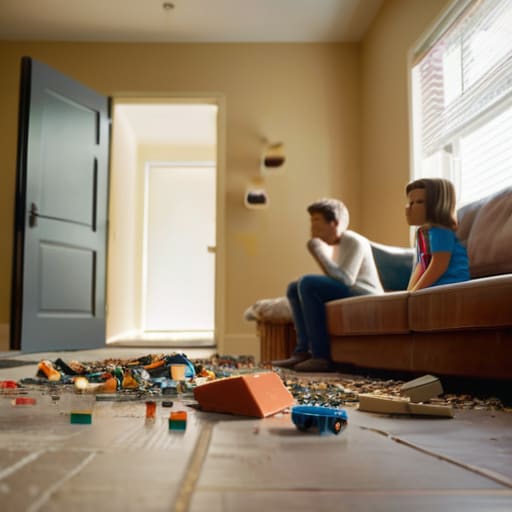
The manuals always talk about “open communication channels” as if you’re running a corporate boardroom rather than a household filled with half-eaten toast and bruised egos. In theory, you sit everyone down, explain the new rules, and everyone nods in agreement. In reality, blended family dynamics and communication usually look a lot more like a series of awkward silences, sudden outbursts over a misplaced Lego brick, and that specific, heavy tension that settles in a room when a biological parent enters the fray. When my oldest was six, we tried the “family meeting” approach. It lasted exactly four minutes before someone cried and someone else retreated to their room to play Minecraft.
You can’t force intimacy; you can only build the scaffolding for it. Building trust in stepfamilies isn’t about grand gestures or forced weekend outings; it’s about the slow, often frustrating work of being a consistent presence without being an intruder. It’s about knowing when to step in and when to step back. Sometimes, the best way to communicate isn’t a deep conversation, but simply showing up, day after day, even when the kids are being difficult or the co-parenting arrangement feels like it’s fraying at the edges.
Co Parenting With Biological Parents When It Gets Messy
The clinical textbooks talk about “parallel parenting” or “cooperative models” like they’re arranging furniture in a showroom. They don’t account for the visceral, gut-wrenching tension that happens when you’re trying to co-parenting with biological parents who view your very presence as an act of war. I remember when my eldest was four; the handovers felt less like a transition and more like a high-stakes hostage negotiation. You can have all the legal documentation in the world, but it won’t stop the stinging feeling in your chest when a biological parent uses a child to send a passive-aggressive text message.
The reality is that you aren’t just managing schedules; you are navigating a minefield of old ghosts and new loyalties. When things get messy, the goal isn’t a perfect, harmonious partnership—that’s a myth. The goal is functional stability for the kids. I learned, usually the hard way, that trying to win an argument with an ex during a school run is a losing game. Instead, I focused on being the “calm port in the storm.” Sometimes, the best way to handle the chaos is to stop trying to fix the other parent and just focus on being the steady, predictable adult your child needs when they finally crash at 8:00 PM.
Building Trust in Stepfamilies When Walls Go Up
When I was working the night shift on the paediatric ward, I learned that trust isn’t something you can demand; it’s something that earns its way into the room through small, repeated actions. In a blended family, you aren’t just managing logistics; you are building trust in stepfamilies where the walls are often reinforced by years of previous loyalty. You might walk in with the best intentions, but to a child who has already experienced a change in their world, you can feel like an intruder. I remember my second child, who was four at the time, deciding that any attempt at a “special bond” was actually a threat to his relationship with his mum. He didn’t need a new best friend; he needed to know that your presence wasn’t going to erase what he already had.
The mistake most people make is trying to force intimacy too quickly. You can’t skip the awkward, sometimes prickly stages of blended family dynamics and communication just because you’ve signed a marriage certificate or moved into the same house. Real trust happens in the quiet, unscripted moments—like when you sit on the floor and help with a Lego set without asking for a hug in return. It’s about being a consistent, predictable presence who doesn’t try to “fix” the family, but simply shows up. Sometimes, the most effective way to build that bridge is to stop trying to build it and just focus on being a safe, steady person in the periphery.
Managing Sibling Rivalry and Establishing New Family Traditions
The textbooks will tell you that sibling rivalry is a natural developmental stage, but they conveniently forget to mention the specific, jagged edge of it when you add step-siblings into the mix. It’s not just about a stolen toy; it’s about perceived fairness, territory, and the sudden, confusing shift in the family hierarchy. When I was working on the ward, I saw how much a child’s sense of security relies on predictable patterns. In a blended home, those patterns are constantly being rewritten. Managing sibling rivalry in blended families isn’t about forcing them to be best friends—that’s a recipe for resentment—it’s about teaching them how to exist in the same space without constant combat. When my second child was four, we tried the “everyone gets equal time” rule, and it failed spectacularly because “equal” doesn’t account for the fact that one child might need more quiet time while the other needs to run.
Once the dust settles on the daily skirmishes, you have to look at establishing new family traditions that don’t feel like a forced performance. You can’t just hijack the old rituals and expect everyone to fall in line; that’s how you trigger the “walls go up” defense mechanism. Instead, build something entirely new. For us, it was a specific, slightly ridiculous Friday night taco ritual that belonged to no one’s past, only to our current, messy present. It’s about creating a shared history that isn’t a competition of who was there first.
Five Hard Truths for the Blended Family Trenches
- Stop chasing the “instant family” myth. The textbooks talk about “integration,” but in my experience, real connection usually arrives in small, messy increments. When my second child was four, I thought we’d failed because they wouldn’t hug their new step-sibling; it took another eighteen months of awkward, parallel play before they actually shared a Lego set without a meltdown. Give it time—real bonding isn’t a light switch, it’s a slow dimmer.
- Prioritise the “Biological Anchor” before adding new layers. When I was nursing, I saw how much children rely on predictable, safe connections to regulate their emotions. In a blended family, the child needs to know their relationship with their biological parent isn’t being “replaced” or even significantly diluted by a new partner. If the foundation feels shaky, no amount of fun weekend outings will fix the underlying anxiety.
- Create “Micro-Traditions” rather than grand gestures. Don’t try to overhaul Christmas or birthdays in the first year; that’s a recipe for a high-decibel crisis. Instead, start small. When my eldest was six, we started a “Friday Night Pizza and Bad Movie” rule. It was low stakes, easy to execute, and didn’t require anyone to pretend they were a perfectly unified unit. It just gave everyone a predictable rhythm.
- Build a “Sanctuary Protocol” for the biological parents. You cannot co-parent effectively if you are running on empty. I tell parents all the time: you can’t pour from an empty cup, but more practically, you can’t manage a child’s emotional outburst if you haven’t had twenty minutes of quiet. Find a way to step out of the fray—even if it’s just a walk around the block—to reset your own nervous system before you try to mediate a dispute between step-siblings.
- Accept that “fair” and “equal” are rarely the same thing. The manual says to treat everyone exactly the same, but real life is rarely that tidy. My four kids have vastly different temperaments and needs; what worked for my three-year-old would have caused a total system failure with my seven-year-old. In a blended family, you often have to give different children different things to make them feel equally valued. It feels unfair in the moment, but it’s often the only way to maintain peace.
The Reality Check: Three Things to Hold Onto When It All Feels Messy
Progress isn’t a straight line, and it certainly isn’t a textbook diagram. You will have weeks where the kids are bonding beautifully, followed by a Tuesday where someone throws a tantrum because a step-parent touched their specific cereal bowl. That isn’t a sign of failure; it’s just the way these things work. When my eldest was six, we thought we’d “cracked” the new routine, only for it to completely implode two weeks later. Don’t mistake a bad day for a bad family structure.
Stop trying to force the “instant family” magic. The manuals often suggest that if you just implement enough shared activities, the love will follow. But children—especially those who have experienced loss or transition—often need to build trust in small, boring increments. My second child didn’t truly accept my role as a parental figure until he was nearly nine, and we only got there because we stopped trying to be “super-parents” and just focused on being consistent, reliable adults who showed up.
Guard your partnership fiercely, but keep your expectations grounded. The friction between you and your partner is often just the pressure of the blended dynamics leaking through the cracks. When the co-parenting drama or the sibling rivalry hits a fever pitch at 11:00 PM, don’t try to solve the entire family’s future in that moment. Decide together what is a “call the professional” problem and what is just a “we need to sleep and try again tomorrow” problem.
The View from the Messy Middle
If you’ve followed this along, you’ll know I haven’t promised you a seamless transition or a Hallmark movie ending. We’ve talked about the friction of co-parenting, the slow, often frustrating work of building trust with stepchildren, and the reality that communication strategies usually fall apart the moment a teenager decides to slam a door. You can read all the clinical research you want about “integration” and “stability,” but the truth is that a blended family is less like a well-oiled machine and more like a slow-cooked stew—it takes time, the right ingredients, and a lot of patience while things simmer and occasionally boil over. There is no manual that accounts for the specific way your seven-year-old might look at you with suspicion during a holiday dinner, and there isn’t a textbook that can prepare you for the sheer exhaustion of navigating two different sets of house rules.
But here is what I know, both from the paediatric ward and from my own living room: the mess doesn’t mean you’re failing. In fact, the friction is often just proof that you are actually doing the work. When my oldest was six, we had a week where it felt like every single interaction was a battlefield, and I felt like a complete fraud. But we stayed in the room, we kept showing up, and eventually, the walls came down. You don’t need to be a perfect family; you just need to be a resilient one. Hold on through the awkwardness and the 2:00 AM doubts, because the connection you’re building isn’t built on perfection—it’s built on the fact that you refused to give up when things got complicated.