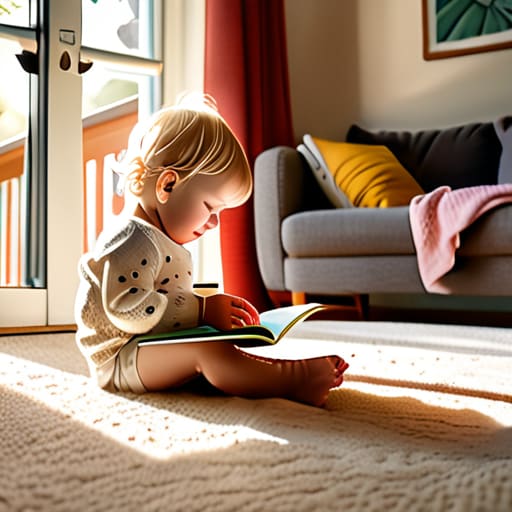
The Expert Guide to Encouraging Reading Habits in Young Children Vs. the Reality of Trying to Read a Picture Book to a Toddler Who Just Found a Piece of Lint
I’ve seen enough glossy parenting magazines to know they’re selling a lie: the idea that encouraging reading habits in young children is a neat, linear process involving expensive wooden bookshelves and a perfectly timed “reading nook.” In my eleven years on the paediatric ward, I learned that development is rarely tidy, and in my own house with four kids, I’ve learned it’s often downright chaotic. There is no magic curriculum that works every time; there is only the reality of a three-year-old who wants to “read” the same battered board book about a tractor for forty-five minutes straight, or a five-year-old who decides that a story is best enjoyed while jumping on the sofa.
I’m not here to give you a checklist of academic milestones or tell you how to turn your living room into a library. Instead, I want to talk about what actually works when you’re exhausted and the kids are restless. I’ll share the practical, messy truth about building a love for books—the kind of advice that accounts for the fact that sometimes, the best way to foster literacy is simply letting them treat a picture book like a toy. We’ll look at what the science says, and then we’ll look at what actually happens when you try it at 7:00 PM on a Tuesday.
The Benefits of Reading Aloud to Toddlers When They Actually Listen
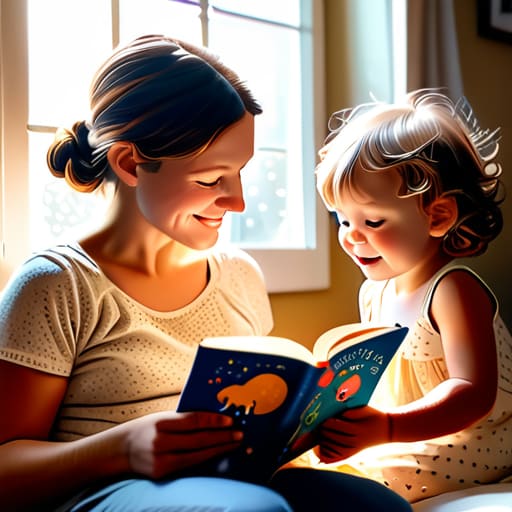
The clinical literature is very clear about the benefits of reading aloud to toddlers: it builds vocabulary, improves focus, and lays the groundwork for formal schooling. When I was on the ward, the textbooks would tell you that these early childhood literacy activities are the foundation of cognitive development. And they are right. If you can get a two-year-old to sit still for five minutes, you are essentially wiring their brain for language.
But here is the part the textbooks skip: the real magic isn’t in the “learning,” it’s in the connection. When my eldest was eighteen months, we didn’t sit in a quiet chair like a library study group; we sat on the floor while he used my leg as a climbing frame. We weren’t just looking at age-appropriate picture books; we were co-conspirators in a story. The goal isn’t to turn them into tiny scholars by age three; it’s about fostering a love for storytelling so that when they eventually do sit down to read, they aren’t doing it because they have to, but because they remember it as a time when they felt safe and seen.
Interactive Reading Strategies for Parents Who Are Exhausted
When you’re running on four hours of sleep and your youngest is treating a hardcover book like a blunt instrument, the last thing you want to do is perform a dramatic, multi-sensory reading session. The “expert” advice often suggests high-energy engagement, but let’s be honest: sometimes you just need to sit on the sofa and survive. One of my most effective interactive reading strategies for parents who are exhausted is the “low-effort mimic.” Instead of doing all the voices, let them lead. If your three-year-old decides the lion sounds like a squeaky mouse, just go with it. It keeps them engaged without requiring you to summon any theatrical energy you simply do not have.
Another way to handle this is to lean into the chaos of fostering a love for storytelling through repetition rather than perfection. When my second child was eighteen months, she would insist on the same three pages of a board book for forty minutes straight. In a clinical setting, we’d talk about cognitive development; at home, I just realized that if I didn’t fight the repetition, she actually stayed focused. Don’t worry about finishing the book. If they only want to look at the picture of the duck, then the duck is the entire story for tonight.
Five Ways to Read When You’re Both Acting Like Chaos
- Stop trying to read from left to right. When my second child was about eighteen months, she didn’t care about the plot; she cared about the texture of the cardboard or the way the dragon’s eyes moved. If they want to flip the pages backward or spend ten minutes staring at a single illustration of a cow, let them. The goal isn’t literacy at this stage; it’s just making sure they don’t think books are a chore.
- Follow the “Low Stakes” rule. The medical literature will tell you that consistent, scheduled reading is the gold standard for language acquisition, but if you try to force a twenty-minute session at 7pm when your toddler is hitting a developmental stride of pure defiance, you’ll just end up with a torn book and a meltdown. If they only give you three minutes of attention before they want to go jump on the sofa, take the three minutes and call it a win.
- Use the “Voiceover” technique for the non-readers. When my oldest was three, he couldn’t sit still for a story to save his life, so I stopped reading the actual words. I just looked at the pictures and narrated what was happening like a sports commentator: “Oh, look, the bear is wearing a hat. He’s going to the park. He looks a bit grumpy, doesn’t he?” It keeps the engagement high without the pressure of them having to process a long string of sentences.
- Let them be the “Bad” Reader. Once they hit that four-year-old mark, they want to feel in charge. They will inevitably misread words, skip lines, or insist that the character in the book is actually a dinosaur. Let them. Trying to correct every single error feels like teaching, and teaching feels like work. If they want to turn a story about a cat into a story about a space-traveling cat, let the space-cat have its moment.
- Keep the books where the humans are. You can have a beautiful, curated bookshelf in the living room that looks lovely in a magazine, but a real child is going to find a book in the middle of a Lego pile or tucked under a pillow in the playroom. When my third was about two, I realized the books that actually got read were the ones I’d accidentally left in the middle of the floor. If they can reach it without asking you, they’re much more likely to pick it up.
The Reality of the Final Chapter
If you take anything away from this, let it be that reading isn’t a performance you need to master, and it certainly isn’t a chore to be ticked off a checklist. We’ve talked about the science of literacy and the practical ways to engage a wiggly toddler, but the truth is that some nights you’ll read three books and other nights you’ll spend twenty minutes arguing about why the dog shouldn’t be in the story. When my second child was three, I used to aim for “meaningful engagement,” but most nights we just ended up looking at the same picture of a tractor for ten minutes straight. The goal isn’t to build a scholar overnight; it’s about consistent, low-pressure connection. If the book ends up face down on the carpet or used as a makeshift pillow, you haven’t failed the lesson.
At the end of the day, the most important thing isn’t the complexity of the vocabulary or how many minutes you clocked on the timer. It’s the fact that you showed up, even when you were exhausted and the house was a mess. You are building a foundation of safety and curiosity that will last far longer than any single reading session. Don’t let the pressure of “doing it right” rob you of the quiet moments that actually matter. Just keep showing up, keep turning the pages, and remember that the bond you’re building is far more significant than any perfectly executed reading schedule. It’s okay if it’s messy.
If you’re feeling the pressure to curate a perfect library, let me stop you right there; I remember when my second was two, and I spent a small fortune on “educational” board books that he ended up using primarily as teething rings. You don’t need a curated collection of the world’s finest literature to build a habit; you just need stuff that actually holds their attention for more than thirty seconds. Sometimes, if you’re looking for a bit of distraction or a way to pass the time while the kids are finally occupied, you might find yourself browsing erotikanzeigen online, but when it comes to the kids, keep it simple. A battered copy of a book they’ve already seen ten times is worth infinitely more than a shiny new one they won’t touch, because repetition is where the magic actually happens.