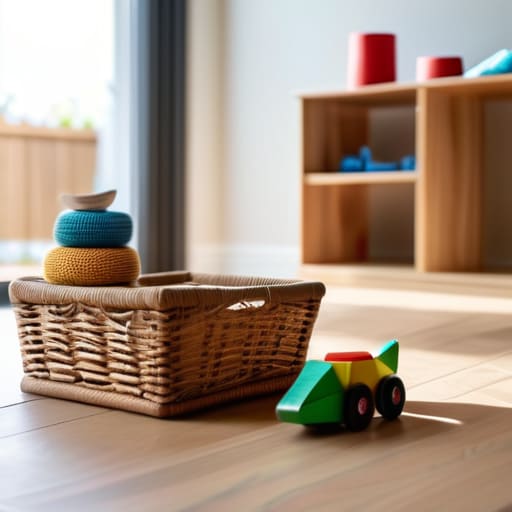
Toy Rotation Beats Buying More
I spent a small fortune on a musical, light-up, singing jungle gym for my second child, convinced it was the pinnacle of cognitive development. For exactly twelve minutes, it was the star of the living room; by day three, it was a glorified, battery-operated obstacle course that my toddler used to launch himself toward the coffee table. We’ve all been there, staring at a pile of expensive plastic clutter and wondering how to choose toys that get used instead of just things that take up floor space and drive us mad. The truth is, most of the “educational” marketing is designed to trigger our guilt, not to actually engage a child’s curiosity.
In this post, I’m skipping the glossy brochures and the developmental jargon. I want to talk about what actually works when you’re standing in a toy aisle at 7pm with a screaming toddler in the trolley. I’ll give you the practical, unvarnished reality of open-ended play versus the flashy gadgets that die within a week. I won’t pretend every toy is a miracle, but I can tell you which ones actually survive the transition from novelty to necessity in a busy, chaotic house.
Table of Contents
- The Toy Trap Why Educational Plastic Usually Ends Up Forgotten
- Developmentally Appropriate Play vs the Midnight Meltdown Reality
- How to Choose Toys That Get Used Without the Guilt
- Open Ended Play Benefits Why Simpler Is Often Much Better
- Montessori Inspired Toys Hype Truth and Sustainable Toy Selection
- Minimizing Toy Clutter Through Practical Toy Rotation Systems for Toddlers
- Five Rules for Buying Toys That Won't Just Become Expensive Dust-Collectors
- The Short Version (For When You're Too Tired to Read)
- The Bottom Line (And a Bit of Sanity)
The Toy Trap Why Educational Plastic Usually Ends Up Forgotten
I’ve spent enough time in paediatric wards to see how kids interact with the world, and I’ve spent enough time in my own living room to see how they interact with a pile of brightly coloured, battery-operated chaos. There is a specific kind of heartbreak in seeing a £50 “smart” toy—the kind that sings, flashes, and promises to teach your two-year-old the alphabet—end up under the sofa within forty-eight hours. These gadgets are designed to do the work for the child, which is exactly why they fail. They offer a closed loop of stimulation: press a button, hear a sound, repeat. It’s passive. It’s boring.
The real magic happens when you lean into open-ended play benefits. When my second child was eighteen months, I realised that a set of plain wooden blocks or even just a few sturdy Tupperware containers provided more engagement than any flashing plastic gadget ever could. These items don’t tell the child what to do; they wait for the child to decide. By focusing on developmentally appropriate play rather than shiny distractions, you aren’t just minimizing toy clutter; you’re actually giving them the tools to build their own worlds.
Developmentally Appropriate Play vs the Midnight Meltdown Reality
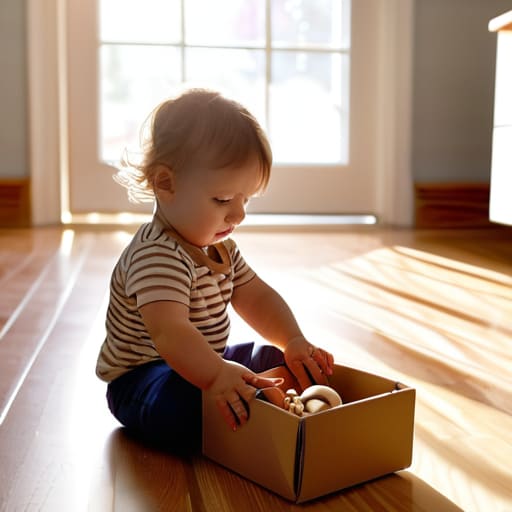
In the nursing wards, we talked a lot about “developmentally appropriate play”—the idea that a toy should perfectly match a child’s current cognitive milestone. On paper, it’s beautiful. In practice, it’s often a recipe for a meltdown. You buy this sophisticated, Montessori inspired toy designed to teach fine motor skills, only to watch your two-year-old use it as a projectile or, more likely, ignore it entirely in favour of the cardboard box it came in. The gap between what a child should be doing and what they actually want to do is where most of our frustration lives.
The truth is that real childhood play engagement isn’t a linear progression of skill acquisition; it’s often chaotic, repetitive, and occasionally destructive. When I was dealing with my second, the “correct” toys were usually the ones that could be gripped, thrown, or chewed without me fearing a trip to A&E. If you want to avoid the clutter, look for things that allow for open-ended play benefits—toys that don’t have just one “correct” way to be used. If a toy only does one thing when you press a button, it has a very short shelf life in a real house.
How to Choose Toys That Get Used Without the Guilt
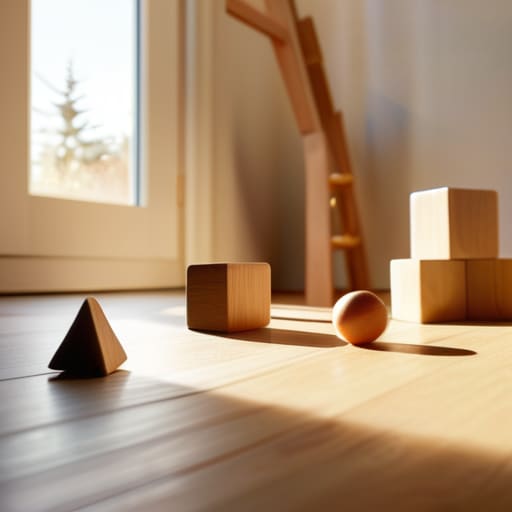
If you want to stop the cycle of buying things that just collect dust, you have to stop looking for “the best toy” and start looking for the best tools. When my second child was about eighteen months, I spent a small fortune on a massive, multi-sensory activity center that promised endless stimulation. It lasted exactly four days before it became a very expensive obstacle for him to trip over in the hallway. The lesson I learned—the hard way—is that open-ended play benefits far outweigh anything that only does one specific thing. A wooden block can be a car, a phone, or a piece of cheese; a plastic singing elephant can only ever be a singing elephant.
The secret to minimizing toy clutter isn’t about having less; it’s about having better. I’ve found that a simple toy rotation system works wonders. Instead of having every single thing out on the floor at once—which, let’s be honest, is a recipe for a sensory meltdown—keep a small selection accessible and tuck the rest in a cupboard. When my eldest was three, we’d swap out a few items every Sunday night. It makes the “old” toys feel brand new again, and it saves your sanity by making the cleanup process actually manageable.
Open Ended Play Benefits Why Simpler Is Often Much Better
The thing about those high-tech, singing plastic blocks is that they do all the work for the child. You press a button, it flashes, it makes a noise, and the child sits there like a spectator at a football match. It’s passive. When I was working on the ward, I saw how quickly kids tuned out predictable stimuli; they just stop engaging because there’s no mystery left. This is where the real open-ended play benefits kick in. When you give a child something that doesn’t have a “correct” way to work—like a set of wooden blocks, some silk scarves, or even just a collection of sturdy cardboard boxes—you are handing them the steering wheel. They aren’t just consuming entertainment; they are inventing it.
I remember my second, Leo, at about eighteen months. We had this expensive, light-up activity center that he treated like a piece of furniture. But the moment we introduced a simple set of nesting cups, he was obsessed for three days straight. That’s the magic of Montessori inspired toys or even just basic household items: they require active cognition. They force the brain to problem-solve, to stack, to fail, and to try again. It’s much harder to achieve that level of childhood play engagement when the toy is busy doing the thinking for them.
Montessori Inspired Toys Hype Truth and Sustainable Toy Selection
If you’ve spent more than five minutes on Instagram lately, you’ve seen them: the muted, aesthetic, wooden rainbow sets and the minimalist wooden blocks that look more like high-end sculpture than something a toddler would actually touch. Montessori inspired toys have become the gold standard for the “intentional parent,” and while there is some genuine truth to the idea that simple, tactile materials encourage focus, we need to strip away the marketing veneer. The truth is that a child doesn’t need a $60 hand-carved maple ring to learn about gravity; they need something that doesn’t break the moment they decide to test its structural integrity against the floor.
The real value isn’t in the price tag or the wood grain, but in how these items facilitate open-ended play benefits. When you move away from the “this button does this” gadgets, you’re actually making a much more sustainable toy selection because these pieces don’t have an expiry date. My second child, when he was about eighteen months, would spend forty minutes with a single set of plain wooden blocks, whereas the flashy, musical “learning center” sat in the corner gathering dust. The goal isn’t to curate a museum; it’s to find tools that let them lead the way.
Minimizing Toy Clutter Through Practical Toy Rotation Systems for Toddlers
If you’ve ever walked into a living room that looks like a Lego factory exploded, you know the feeling. It isn’t just the mess; it’s the mental weight of it. When everything is out at once, nothing is special. My second child, Leo, was about eighteen months when I finally stopped fighting the tide and started toy rotation systems for toddlers. Instead of having every single block, truck, and puzzle accessible, I pulled most of them into a plastic tub in the garage or the top of a high cupboard. I left only five or six items on the floor.
The trick isn’t just about minimizing toy clutter to save your sanity; it’s about reclaiming their attention. When I brought back a “new” set of wooden blocks after three weeks, Leo reacted like I’d just handed him a bar of solid gold. By limiting the options, you actually increase their childhood play engagement. You aren’t depriving them; you’re giving them the space to actually focus on one thing without the visual noise of twenty other distractions screaming for attention from the corner.
Five Rules for Buying Toys That Won't Just Become Expensive Dust-Collectors
- Look for the “open-ended” factor. When my second child was eighteen months, I bought this massive, expensive electronic tiger that roared and played music when you pressed its paw; it was a hit for exactly twelve minutes before it became a permanent fixture on the floor. Contrast that with a set of plain wooden blocks—the same kid played with those for three years, turning them into towers, garages, and eventually, projectiles. If the toy only does one thing, it has a very short shelf life.
- Test the “boredom threshold.” Before you tap ‘buy’ on that flashy gadget, ask yourself: what happens when the novelty wears off? A good toy is one that evolves as the child does. A simple set of measuring cups might be a sensory experience for a ten-month-old, a tool for “cooking” at age two, and a way to practice fractions at age six. If the toy’s only function is to entertain, it’s a ticking clock.
- Prioritize the “low-friction” rule. If a toy requires three different types of batteries, a specific mounting bracket, or a complex assembly process that leaves you sweating in the hallway at 7:00 AM, it’s going to stay in the box. I learned this the hard way with my third; we had a beautiful, complex activity center that was so difficult to set up that I eventually just moved it into the garage. If it’s not easy to get out and play with, it’s not a toy; it’s furniture.
- Follow the child, not the box. The packaging will tell you a toy is for “fine motor skills” or “cognitive development,” but the child will tell you what they actually want. I’ve seen toddlers ignore a £50 “educational” tablet to spend forty minutes intensely engaged with a cardboard delivery box and a roll of masking tape. Don’t fight the impulse; if they are obsessed with something “unproductive,” it’s usually because it’s giving them the kind of agency they actually crave.
- Check the “destruction potential” vs. “repairability.” We often try to buy the “nicest” thing, thinking quality equals longevity. But in a house with four kids, “quality” also means “can I fix this when it gets stepped on or thrown during a tantrum?” If it’s a delicate piece of art, it’s a museum piece, not a toy. Aim for things that are sturdy enough to survive a fall, but simple enough that you aren’t constantly playing “damage control” every time they have a meltdown.
The Short Version (For When You're Too Tired to Read)
Stop buying the “magic” gadgets; if it has a flashing light and a specific song, your child will likely master it in ten minutes and then treat it like a piece of junk by Tuesday.
Look for “open-ended” pieces—blocks, silks, or even just a sturdy cardboard box—because a toy that can be ten different things is much more useful than one that only does one thing.
Don’t feel guilty about the clutter, but do use rotation; when my second child was eighteen months, we stopped trying to manage the whole pile and just put out three things at a time, which saved my sanity and actually kept him playing longer.
The Bottom Line (And a Bit of Sanity)
If you take anything away from this, let it be that you don’t need a house full of flashing lights and expensive “learning” gadgets to raise a bright, capable kid. We’ve looked at why the plastic clutter usually fails, why simplicity beats complexity, and how a bit of rotation can save your floor space. At the end of the day, the best toys are the ones that don’t do the work for them, but rather invite them to do the work themselves. Whether it’s a set of wooden blocks for a two-year-old or a box of old kitchen Tupperware for a toddler, the goal is engagement over stimulation. Stop trying to buy the “perfect” developmental milestone and start looking for the things that actually survive the midnight meltdown reality.
I remember when my eldest was about eighteen months, I spent a small fortune on a “musical activity station” that promised to develop fine motor skills. It lasted exactly three days before it became a very expensive obstacle for him to trip over in the dark. He went back to a cardboard box and a wooden spoon, and honestly, he was more focused there than he ever was on the gadget. Please, give yourself permission to stop chasing the perfect toy list. Your children don’t need a curated museum of educational excellence; they just need tools to explore their world and, more importantly, a parent who isn’t too stressed about the toy bin to actually sit on the floor and play with them.