Small Traditions Children Remember for Decades
You’ve seen the photos on Instagram: perfectly coordinated linen outfits, a beautifully set table, and a “magical” Sunday brunch that looks like it was staged by a professional decorator. It makes you feel like you’re failing at how to build family traditions because your own attempt at a “special Friday movie night” ended with a spilled bowl of popcorn, a toddler screaming because the wrong film was chosen, and you sitting on the kitchen floor wondering if you’ll ever see a full night’s sleep again. The internet treats traditions like these expensive, polished rituals that require immaculate planning, but let’s be honest: most of that stuff is just performance art for people who don’t have kids.
I’m not here to give you a checklist of Pinterest-perfect activities that will inevitably collapse under the weight of real-life chaos. Instead, I want to talk about the rituals that actually survive the messy, loud, and often exhausting reality of raising four humans. I’ll show you how to find the small, low-stakes patterns that actually stick—the ones that work when your three-year-old is mid-meltdown and your teenager is refusing to leave their room. We’re going to focus on meaningful, repeatable moments rather than expensive productions, because the best traditions are usually the ones that require zero prep and a lot of grace.
Table of Contents
- The Textbook Definition vs the Reality of How to Build Family Traditions
- Daily Family Rituals for Kids Beyond the Pinterest Perfection
- Creating Meaningful Family Connections When Everyone Is Exhausted
- Strengthening Family Bonds Without the Forced Holiday Cheer
- Holiday Tradition Ideas That Wont Break Your Sanity
- Building a Sense of Identity Through Legacy and Family Values
- Five Ways to Make Traditions Stick (Without Losing Your Mind)
- The Bedside Manner Version: What to Actually Take Away
- The Long Game of Showing Up
The Textbook Definition vs the Reality of How to Build Family Traditions

If you pick up a child development book, they’ll tell you that rituals are essential for building a sense of identity and providing a predictable framework for a child’s growing world. The theory is beautiful: you establish certain markers—a special breakfast on Saturdays, a specific way you read bedtime stories, or perhaps a set of holiday tradition ideas that anchor the year. On paper, these are the building blocks of stability. They suggest that by simply deciding to do something repeatedly, you are automatically strengthening family bonds and creating a lifelong emotional safety net.
But here is what the textbooks leave out: children are unpredictable, and life is messy. When my eldest was four, I tried to implement a “Sunday Morning Pancake Ritual.” I had the recipe, the special plates, and the vision of a calm, connected family. Instead, I got a toddler who refused to sit in a chair, a spilled jug of milk, and a kitchen that looked like a crime scene. You can follow every guide on creating meaningful family connections to the letter, but if the kids are teething or you’re running on four hours of sleep, the “tradition” often feels less like a legacy and more like an extra chore on an already overflowing plate.
Daily Family Rituals for Kids Beyond the Pinterest Perfection
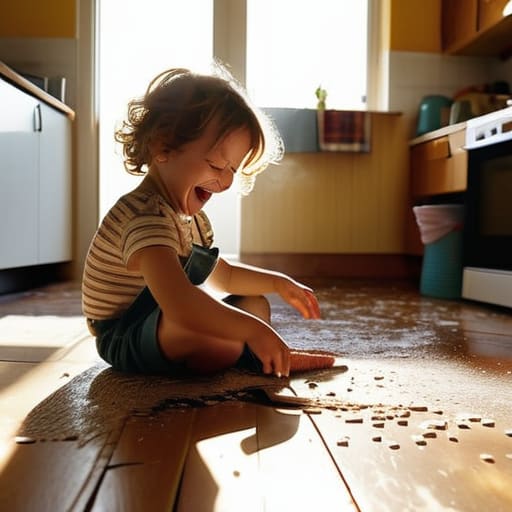
The problem with most advice on daily family rituals for kids is that it assumes you have a calm, controlled environment. You see a video of a family sitting in perfect sunlight, sharing a “mindful morning connection,” and you think, I can’t do that; my four-year-old is currently using a piece of toast as a projectile. But rituals don’t need to be choreographed performances. For my second child, when he was three, we realized that a “ritual” didn’t have to be a grand event; it was just the specific way we did the “toddler tango” in the kitchen while the kettle boiled. It was small, it was messy, and it was entirely effective at strengthening family bonds before the chaos of the school run hit.
Real connection happens in the margins. It’s the specific book you read every single night, even when you’re too exhausted to turn the pages, or the way you always have “special pancakes” on rainy Tuesdays. These aren’t just habits; they are the building blocks of building a sense of identity. They tell a child, this is who we are, and this is how we do things here. You don’t need a Pinterest board to do this; you just need something that works when everyone is tired.
Creating Meaningful Family Connections When Everyone Is Exhausted
The problem with most advice on strengthening family bonds is that it assumes you have a surplus of emotional energy. It suggests “quality time” as if that’s a commodity you can just pull out of a cupboard, rather than something you’re desperately trying to scrape together between a teething toddler and a teenager who has decided you are officially the enemy. When you are running on four hours of broken sleep, the idea of a structured board game night feels less like a way of building a sense of identity and more like an additional chore on an already impossible to-do list.
In my experience—and I’m talking about the years when my second child was perpetually unwell—meaningful connection doesn’t happen during the big, planned events. It happens in the gaps. It’s the ten minutes of quiet reading on the sofa when the house finally stops vibrating, or the way we do a “high-low” recap of the day while I’m stirring a pot of pasta. You don’t need a grand gesture to succeed; you just need to be present in the mess. Sometimes, the most profound way of creating meaningful family connections is simply sitting on the floor in the same room, even if nobody is actually talking.
Strengthening Family Bonds Without the Forced Holiday Cheer
There is a specific kind of pressure that arrives every December, or every birthday, or every major holiday, suggesting that if you aren’t performing a choreographed sequence of festive joy, you are somehow failing at strengthening family bonds. I see it in the eyes of parents in the hospital corridors sometimes—that quiet, desperate exhaustion masked by the need to “make memories.” But here is the truth from someone who has navigated both the paediatric ward and a house with four kids: forced cheer is the enemy of genuine connection. When you try to manufacture a “magical moment” while your four-year-old is mid-tantrum because their toast was cut into triangles instead of squares, you aren’t building a legacy; you’re just building resentment.
Real connection doesn’t require a matching set of pyjamas or a perfectly timed photo op. It happens in the low-stakes, unglamorous gaps. For my second child, when they were five, we stopped trying to do the “big” annual events and instead started a tiny, ridiculous ritual of eating pancakes in bed on the first rainy Saturday of autumn. It wasn’t a grand holiday tradition idea, but it was ours. It was quiet, it was messy, and it actually worked because it didn’t demand perfection—it just demanded we show up.
Holiday Tradition Ideas That Wont Break Your Sanity
The problem with most holiday tradition ideas is that they are designed for people who don’t have a four-year-old with a sensory processing issue or a teenager who thinks everything you do is “cringe.” You see these elaborate setups online—matching pajamas, perfectly timed photo shoots, and three-course meals—and you think, I can do that. Then December 20th hits, someone has spilled cranberry sauce on the rug, and you’re wondering why you didn’t just stay in bed.
If you want to actually succeed at strengthening family bonds during the holidays, you have to lower the stakes. When my second child was three, we tried to do the “big festive breakfast” every morning. By day three, the sheer effort of making pancakes while managing a toddler meltdown felt like a heavy lift rather than a joy. Now, we focus on small, repeatable wins. Maybe it’s just a specific way we decorate the tree, or a silly song we sing while wrapping presents. These tiny, low-pressure moments are what actually end up building a sense of identity for the kids, because they aren’t fighting the exhaustion of a perfectionist parent.
Building a Sense of Identity Through Legacy and Family Values
When we talk about building a sense of identity, the textbooks often make it sound like you need to sit your children down for a formal lecture on “the family creed.” It sounds heavy, doesn’t it? Like you’re drafting a constitution. In reality, my kids didn’t learn what our family stands for by reading a list of values on a kitchen chalkboard. They learned it through the messy, unscripted moments—like how we always stop to help a neighbor with their groceries, or the way we handle it when someone makes a mistake. It’s less about the grand declarations and more about the quiet, repeated actions that eventually become the bedrock of who they are.
Legacy isn’t about passing down a silver spoon or a pristine family tree; it’s about the stories we tell when we’re all slumped on the sofa. I remember my eldest, who was about six, suddenly deciding that “being a Beddoe” meant always sharing the last biscuit, even when he clearly didn’t want to. That wasn’t a lesson I taught him in a classroom; it was just something he picked up by watching us strengthening family bonds through our small, everyday habits. You aren’t building a monument; you’re just planting seeds through the small things you do every single day.
Five Ways to Make Traditions Stick (Without Losing Your Mind)
- Start with the “Micro-Tradition.” When my second child was eighteen months, we couldn’t manage a “Sunday Roast” because a nap would inevitably fail. Instead, we started a “Tuesday Biscuit” ritual—just five minutes of sitting on the floor together with a biscuit after bath time. It’s small, it’s low-stakes, and it doesn’t require a Pinterest-worthy table setting to work.
- Build in an “Exit Strategy.” The biggest mistake I see in parenting books is the idea that a tradition must be a marathon. If you’re attempting a family game night and your four-year-old is starting to look like they’re about to enter a sensory meltdown, end it. A tradition that ends in tears isn’t a ritual; it’s a chore. It is better to have ten minutes of genuine connection than an hour of forced compliance.
- Let the kids “Co-Pilot.” By the time my third was five, I realised that if I dictated every single rule of our Saturday morning routine, they just checked out. Now, I give them a choice: “Do we do the pancake walk or the park walk?” Giving them a tiny bit of agency makes them feel like they belong to the tradition, rather than just being dragged along by it.
- Expect the “Failure Mode.” I learned this the hard way with my eldest. We had this beautiful plan for a specific bedtime story ritual, but at age three, he decided he only wanted to read books about tractors, and he wanted them read in the kitchen, not the bedroom. The tradition didn’t die; it just mutated. If your tradition doesn’t look like the version in your head, don’t scrap it. Just pivot.
- Prioritise Consistency over Complexity. A tradition doesn’t need to be a grand annual event. In fact, the most meaningful things in my house are the boring ones—like the specific way we do the “Friday Night Pizza” even if it’s just supermarket frozen bases. The magic isn’t in the quality of the food; it’s in the predictable rhythm of knowing that, no matter how chaotic the week was, Friday is predictable.
The Bedside Manner Version: What to Actually Take Away
Forget the Pinterest-perfect aesthetic; a tradition isn’t a “success” because it looks good in a photo, it’s a success if it’s predictable. For my second child, who was about eighteen months old and prone to massive transitions, it wasn’t the elaborate holiday displays that mattered—it was the fact that we did the exact same “taco Tuesday” every single week. Predictability is the real glue, even if it’s just a repetitive Tuesday meal.
Scale your traditions to your current capacity, not your ideal self. There is a massive difference between the version of you that plans a summer camping trip in January and the version of you at 7:00 PM on a rainy Tuesday when the toddler is teething and the eldest is being difficult. If a tradition feels like an obligation that’s adding to your burnout, scrap it or shrink it. A five-minute bedtime story counts more than a failed hour-long board game session.
Focus on the “micro-rituals” that survive the chaos. The big, annual traditions are lovely, but they rarely hold the family together during the hard weeks. It’s the small, repeatable things—the way we do breakfast on Saturdays or the specific song we sing when someone is scraped up—that build the sense of identity. Aim for the small wins that work even when you’re running on four hours of sleep and a lukewarm cup of tea.
The Long Game of Showing Up
If you take anything away from this, let it be that traditions aren’t about the expensive matching pajamas or the perfectly curated holiday spread you see on Instagram. They are about the small, predictable anchors you drop in the middle of the chaos. Whether it’s a specific way you say goodnight, a Friday night pizza ritual that survives even the worst toddler meltdowns, or just the way you handle a crisis together, these moments are what actually stick. I learned this the hard way with my second child, who was four when I realized that a “special tradition” was actually just us eating pancakes in our pyjamas because we were too tired to cook anything else. It wasn’t in the parenting books, but it became the thing he looked forward to most. Focus on the rhythms that work for your specific, messy reality, not the ones that look good in a photo.
At the end of the day, your children won’t remember the specific itinerary of a holiday or the exact brand of decorations you used. They will remember how they felt when they were with you. They will remember the sense of safety that comes from knowing that, even when the world feels unpredictable, some things remain constant. You are going to fail at some of these rituals; you will skip weeks, or months, or entire seasons because life gets heavy and you are simply exhausted. That is okay. Traditions aren’t a test you pass or fail; they are a slow-built sense of belonging that you weave together, one imperfect, tired, and beautiful moment at a time.