Sibling Fights: Referee Less, Coach More
I remember sitting on the floor of my hallway when my middle two were four and six, watching them tear into each other over a single, headless dinosaur. The internet is full of glossy articles telling you that you need “structured mediation” or “emotional intelligence workshops” to fix the problem, but nobody tells you that those theories tend to evaporate the moment someone actually gets a bloody nose. Most of the advice on how to manage sibling rivalry is written by people who have never had to referee a battle while trying to stir a pot of pasta and prevent a toddler from eating a crayon. It’s easy to talk about conflict resolution when your house is quiet and your coffee is still hot.
I’m not here to give you a list of perfect, textbook solutions that only work in a vacuum. What I want to do is bridge the gap between what the nursing manuals say and what actually happens when the screaming starts. I’ll give you the evidence-based tactics that actually hold up, but I’ll also tell you when you should just walk into the other room and let them settle it themselves. We’re going to look at what works, why it fails, and how to survive the chaos without losing your mind.
Table of Contents
Understanding How to Manage Sibling Rivalry
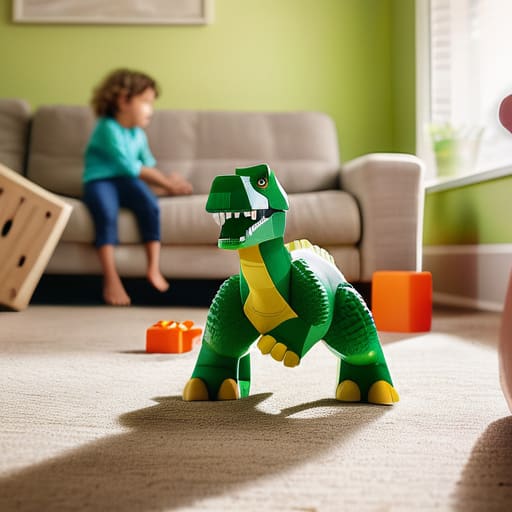
The clinical approach to this is usually framed around conflict resolution for children, which sounds lovely on a training seminar. The theory suggests that if you step in as the mediator, you can teach them to use their words and negotiate their needs. But when I was dealing with my second and third in quick succession, I learned that “negotiation” is a hard sell to a three-year-old who has just decided that his brother’s dinosaur is actually his dinosaur. In those moments, you aren’t a mediator; you are a weary peacekeeper trying to prevent a domestic incident.
The reality is that much of the fighting stems from dealing with jealousy in children—a natural, biological response to a perceived threat to their resources (which, in toddler terms, means your attention and the blue Lego brick). While the books focus on promoting sibling bonding through shared activities, they often skip the messy middle part: the territorial disputes. You can’t force a bond, but you can manage the environment. I’ve found that the most effective way to lower the temperature isn’t to force them to be best friends, but to focus on setting boundaries between siblings that actually hold up when the room is spinning.
Key Things to Know
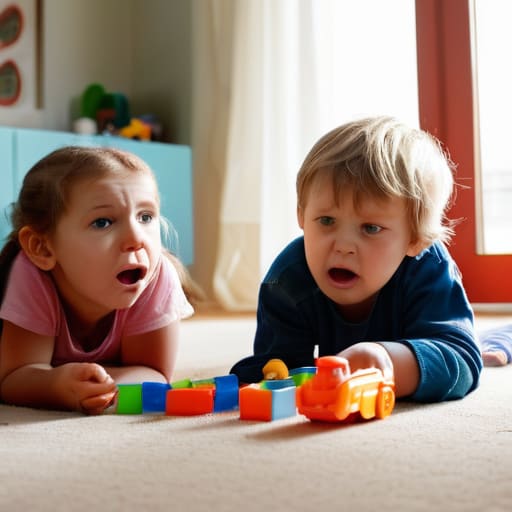
First, you need to understand that fighting isn’t necessarily a sign that you’re failing; it’s often just a sign that they’re practicing being humans. When my second and third were about three and five, the house sounded like a construction site. The clinical literature talks about conflict resolution for children as if it’s a polite negotiation over tea, but in reality, it’s usually a desperate scramble to reclaim a stolen toy or a bit of territory. You can’t teach them to share when they’re in the middle of a full-blown meltdown; at that point, you’re just a referee in a very loud, very sticky arena.
The goal isn’t to stop the friction entirely—that’s impossible—but rather about setting boundaries between siblings so the chaos doesn’t become the permanent house rule. I found that once my oldest hit six, we could actually start talking about how they fought, rather than just shouting “stop it.” It’s about moving from pure damage control to teaching them how to navigate the inevitable clashes. It takes a long time, a lot of patience, and usually a fair amount of caffeine.
Practical Tips and Steps
When you’re in the thick of it, the textbooks suggest “conflict resolution for children” through calm, mediated discussion. That sounds lovely in a seminar, but it’s a lot harder when a three-year-old is mid-tantrum and a five-year-old is trying to use their brother as a human shield. My practical approach starts with setting boundaries between siblings that are actually enforceable. For my middle two, when they were four and six, I stopped trying to play judge and jury over who started the fight. Instead, I focused on the immediate physical safety. If they’re hitting, they separate. Period. You can’t teach empathy while they are in a state of neurological red-alert.
Once the dust has settled—and I mean really settled, usually twenty minutes later when everyone has stopped vibrating with rage—that’s when you try the teaching part. I’ve found that promoting sibling bonding doesn’t happen during the fight; it happens in the quiet moments afterward. I used to try to force them to “make up” immediately, which was a disaster. Now, I wait until they can actually speak. When my eldest was seven, I learned that the most effective way to handle the fallout wasn’t a forced apology, but helping them find a way to repair the connection on their own terms.
Common Mistakes to Avoid
The biggest mistake I see—and I’ve made it myself, usually when I’m too tired to think straight—is the urge to play judge and jury. When the screaming starts over a stolen toy, the instinct is to rush in, find the “guilty” party, and hand out a sentence. But when you’re constantly playing referee, you aren’t actually teaching conflict resolution for children; you’re just teaching them that the person who yells loudest or cries the hardest gets the win. I remember with my second, when he was about three, I tried to be the “fair” parent by splitting everything down the middle. It didn’t work. It just turned every afternoon into a high-stakes negotiation that left us all exhausted.
Another trap is trying to force “harmony” through sheer willpower. You can’t mandate promoting sibling bonding by making them sit together and play nicely; that usually just leads to more resentment. Instead of trying to fix the relationship in the heat of the moment, focus on setting boundaries between siblings that actually hold up. If they are hitting, the play stops. It’s not about being mean; it’s about providing the guardrails they aren’t capable of building themselves yet.
Final Thoughts
If you’re sitting there feeling like you’ve failed because your house sounds like a battlefield, please hear me: you haven’t. I’ve spent a decade in clinical settings watching “perfect” families crumble under the weight of a single broken toy, and I’ve spent my own living room doing the exact same thing. There is no magic switch for promoting sibling bonding that suddenly turns a chaotic household into a peaceful sanctuary. You can implement every parenting strategy in the book, but when a three-year-old decides a five-year-old’s Lego tower is a target, the theory goes right out the window.
The goal isn’t to eliminate the noise; it’s to ensure the noise doesn’t break you. Focus on setting boundaries between siblings that actually stick, but allow for the messy, loud, and often unfair reality of growing up together. Some days you will be the calm mediator, and some days you will just be the person trying to survive until bedtime. Both are okay. Just remember that the friction they are feeling now is often just the growing pains of learning how to exist alongside another person.
Five things that actually work (and the ones that don't)
- Stop playing judge and jury. The textbooks tell you to get to the bottom of “who started it,” but when you’re standing in a kitchen covered in spilled milk, you don’t have the bandwidth for a forensic investigation. When my second and third were four and two, I learned that trying to find the truth usually just gives both kids an audience to perform for. Instead of “who did this?”, try “I can see you’re both angry, so we’re going to sit in separate corners until the screaming stops.” It’s not a permanent fix, but it stops the escalation.
- Watch out for the “fairness” trap. Kids have a biological radar for perceived injustice that would put a Supreme Court justice to shame. If you give one child a bigger slice of toast or five minutes more of screen time, you aren’t just being “unfair”—you are effectively declaring war. I used to try to make everything perfectly equal, but by the time my oldest was six, he realized that if he complained enough, he could manipulate the “equality” rule. Now, I aim for equity: “You get the blue plate because you’re using the red one,” rather than “Everyone gets the exact same thing regardless of the chaos.”
- Don’t fear the “special time” tax. It sounds like a chore, but giving each child ten minutes of undivided, phone-free attention a day is the best preventative medicine for jealousy. When my youngest was eighteen months, I found that if I spent ten minutes just sitting on the floor playing whatever nonsense he wanted, the older two were significantly less likely to try and sabotage his play later that afternoon. It’s a high upfront cost in time, but it pays dividends in fewer meltdowns.
- Validate the feeling, even if the behavior is rubbish. This is the hardest one to do when you’re exhausted. The clinical advice is to “acknowledge their emotions,” which sounds lovely in a seminar, but it’s incredibly difficult when a five-year-old is trying to bite a three-year-old. I’ve learned to say, “It’s okay to be angry that your brother broke your tower, but it is not okay to hit him.” You’re separating the emotion (which is valid) from the action (which is unacceptable). It doesn’t stop the crying immediately, but it stops the child from feeling like they’re “bad” just because they’re mad.
- Accept that some fighting is actually healthy development. This is the part that helps me sleep at night. In the ward, I saw plenty of kids who were “perfect” siblings, and often they were just the ones who had learned to suppress everything to keep the peace. A bit of bickering over a Lego brick or a seat in the car is often just them testing boundaries and learning how to exist as separate individuals. If they aren’t fighting at all, they might not be learning how to negotiate. Only step in when it turns physical or becomes a cycle of genuine cruelty.
The Reality Check
The textbooks will tell you to be the “impartial mediator,” but when you’re standing in a kitchen covered in flour and two four-year-olds are screaming over a stolen dinosaur, your priority isn’t justice—it’s peace. Aim for de-escalation first and “fairness” second; you can sort out the truth once everyone has stopped shouting.
Conflict is actually how they learn to navigate the world, even if it feels like they’re just practicing how to be professional nuisances. When they’re around three or four, these little skirmishes are their version of a boardroom negotiation, so try not to view every spat as a sign of a failing household.
There is no “magic fix” that works for every child, because your two kids will have entirely different temperaments. What worked for my eldest at age five—giving them a specific “job” to do to distract them—was a total disaster for my second, who just wanted to be heard. Listen to the specific child in front of you, not the manual.
The Long Game
If you take anything away from this, let it be that sibling rivalry isn’t a sign that you’ve failed or that your children are fundamentally broken; it’s actually a sign they are learning how to be humans in a very small, high-pressure environment. We’ve talked about the importance of individual time, the necessity of staying neutral when the shouting starts, and why those “textbook” mediation techniques often fall apart when a four-year-old is mid-meltdown. You can’t stop the friction entirely—it’s part of the physics of living together—but you can change how you respond to the heat. Focus on being the steady anchor rather than the judge, and remember that most of these battles are about much more than a stolen toy; they are about territory, attention, and the messy process of growing up.
There will be nights when the screaming feels endless and you feel like you’re just refereeing a series of increasingly creative injustices. I’ve been there, usually sitting on the floor of a darkened hallway, wondering when the peace and quiet actually kicks in. But looking back at my own four, I can tell you that the intensity of the rivalry usually shifts with the ages, and the skills they are fighting over now are the very same ones that will help them navigate relationships as adults. Give yourself some grace on the days when you lose your cool or pick the wrong side. You aren’t building a perfect family; you’re building a resilient one, one chaotic afternoon at a time.