
Separation Anxiety and the Goodbye That Helps
I remember sitting on the edge of a plastic hospital bed in the paediatric ward, watching a mother try to follow the “distraction technique” she’d read about in a glossy parenting magazine. Her two-year-old wasn’t just crying; he was screaming with a primal, bone-deep terror that no colorful picture book or rhythmic shaking could touch. The textbook says to encourage independence through gradual exposure, but it doesn’t account for the way a child’s hands turn into velcro the moment you try to step toward the door. If you are currently wondering how to handle clinginess and separation without losing your own mind, you aren’t doing anything wrong—you’re just dealing with the messy, unscripted reality that the brochures conveniently leave out.
In this post, I’m going to skip the academic jargon and give you the truth from both sides of the clinical desk. I’ll tell you what the developmental milestones actually look like in practice, and more importantly, I’ll share what worked for my own kids at eighteen months versus when they were three. We’ll look at the difference between a healthy attachment and a reason to call the doctor, providing you with concrete strategies that actually survive the 2:00 AM meltdown.
Table of Contents
- What the Manual Says vs the Reality of Clinginess
- Decoding Attachment Styles and Clinginess Without the Guilt
- How to Handle Clinginess and Separation When Everything Breaks
- Real World Toddler Separation Anxiety Coping Strategies That Actually Work
- Managing Transition Anxiety and Effective Goodbye Rituals for Kids
- Building Emotional Independence in Children Without Losing Your Mind
- Five Ways to Survive the Clingy Phase Without Losing Your Sanity
- The Survival Guide Summary
- Finding Your Feet When They Won't Let Go
What the Manual Says vs the Reality of Clinginess

If you pick up a textbook on child development, it’ll talk about “attachment styles and clinginess” in very tidy, clinical terms. It’ll tell you that this phase is a “normal developmental milestone” and suggest that you focus on building emotional independence in children by gradually increasing the time you spend apart. On paper, it sounds like a simple matter of logical progression—step one, leave for five minutes; step two, leave for ten. It makes it sound like you’re just calibrating a piece of machinery.
But the manual doesn’t account for the way a two-year-old’s grief feels like a genuine emergency. When my second, Leo, hit that stage at eighteen months, he didn’t just “show signs of transition anxiety”; he turned into a human barnacle. There is a massive gulf between the theory of fostering self-confidence in toddlers and the reality of trying to walk from the front door to the car while a child is screaming as if you’re heading off to a war zone. The books suggest you stay calm and consistent, but they rarely mention the sheer, bone-deep exhaustion of being clung to like a life raft when you’re already running on four hours of sleep and a lukewarm coffee.
Decoding Attachment Styles and Clinginess Without the Guilt
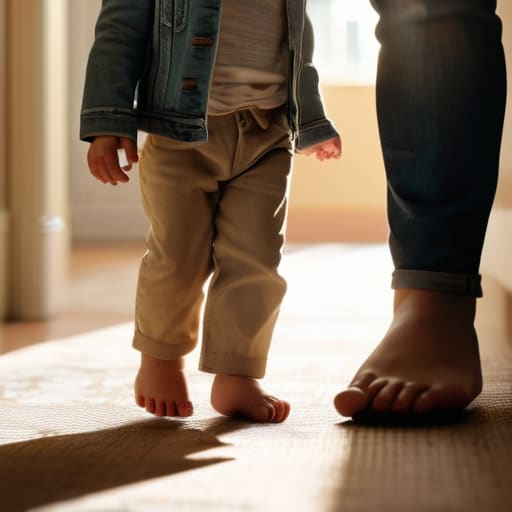
When you start googling, you’ll run straight into the heavy-duty psychological terms. You’ll see talk of attachment styles and clinginess, categorising your child into ‘secure’, ‘avoidant’, or ‘ambivalent’. It sounds very clinical, very tidy, and—if I’m being honest—completely unhelpful when you’re standing in the hallway trying to get out the door. In the ward, I saw kids who were “perfectly secure” on paper but would absolutely melt down the second their primary caregiver turned a corner.
The truth is, clinginess isn’t a personality flaw or a sign of a “bad” attachment; it’s usually just a child’s way of testing the boundaries of their world. My second child, Leo, was a textbook “velcro baby” around eighteen months. He wasn’t broken; he was just learning how to be a person separate from me. Instead of worrying about long-term psychological damage, I found it more useful to focus on building emotional independence in children through small, predictable wins. It’s less about fixing a temperament and more about proving to them, over and over again, that even when you leave the room, you always, inevitably, come back.
How to Handle Clinginess and Separation When Everything Breaks
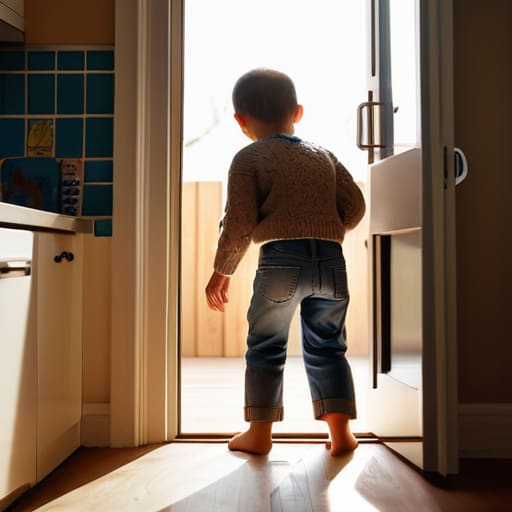
When everything breaks—when the toddler is screaming because you’ve picked up a spatula instead of a toy, or when the preschooler is physically fused to your leg—you have to stop trying to “fix” the emotion and start managing the environment. The textbooks suggest building emotional independence in children through gradual exposure, which sounds lovely in a quiet office. In practice, it usually looks like you standing in a doorway, feeling like a villain, while your three-year-old mourns your departure as if you’re heading off to war.
My advice? Stop fighting the wave and start using effective goodbye rituals for kids. When my second child was two, we started a “pocket kiss” ritual—I’d blow a kiss into their palm and tell them to keep it for later. It felt silly, almost patronizing, but it gave them a tangible thing to hold onto. It’s not about curing the anxiety; it’s about providing a bridge. You aren’t teaching them not to be scared; you are teaching them that the separation is temporary and that you always, without fail, return.
Real World Toddler Separation Anxiety Coping Strategies That Actually Work
When I was working the wards, I saw parents try to “sneak out” to avoid a scene. It feels like a mercy in the moment, but it’s a disaster for the child’s trust. Instead, you need effective goodbye rituals for kids. My second, Leo, was a terror about this at eighteen months. We settled on a “special handshake”—two claps and a nose boop. It sounds ridiculous, but it gave him a predictable script. The goal isn’t to stop the tears; it’s to provide a sense of ceremony that says, I am leaving, but I am coming back.
For the bigger shifts, like starting nursery or a new playgroup, you’re essentially managing transition anxiety through micro-steps. Don’t go from zero to an eight-hour day. When my eldest, Maya, was two and a half, we started with “practice separations”—leaving her with a grandparent for just twenty minutes while I went to the shops. You have to build that muscle of independence in small, manageable increments. It’s exhausting to keep track of the schedule, but it works far better than the “cold turkey” approach the brochures often suggest.
Managing Transition Anxiety and Effective Goodbye Rituals for Kids
The textbooks will tell you that consistency is the golden rule for managing transition anxiety, but they rarely mention the sheer willpower it takes to stay consistent when your three-year-old is currently treating your leg like a climbing frame. In my experience, the goal isn’t to force them to be brave; it’s to make the exit feel predictable rather than like a sudden disappearance. This is where effective goodbye rituals for kids come in. It might be a specific secret handshake, a “pocket kiss” they can keep with them, or a silly phrase you only say at the door. My second child, Leo, wouldn’t let me leave the house unless we did a very specific “high-five, low-five, nose-boop” sequence. It felt ridiculous at 8:00 AM, but it gave him a sense of control over a moment that usually felt chaotic.
The trick is to keep these rituals short. If you linger, you’re inadvertently teaching them that the goodbye is a negotiation, which only fuels the fire. When I was nursing on the ward, I saw how much a clear, calm exit helped kids settle; the same applies at home. You want to focus on fostering self-confidence in toddlers by showing them that you are leaving, but—and this is the part that matters—you are always, always coming back.
Building Emotional Independence in Children Without Losing Your Mind
The tricky thing about building emotional independence in children is that it feels like a massive contradiction. You’re essentially trying to teach someone how to be okay without you, while your entire biological and professional instinct is to scoop them up and shield them from every scrap of discomfort. When my second child was about eighteen months, I thought I was doing everything right—the rituals, the calm voice, the steady presence—but every time I tried to step back, the meltdown was so visceral it felt like I was failing a fundamental test of parenting.
The secret isn’t about pushing them away; it’s about scaffolding. In the ward, we used to talk about gradual exposure, and it’s the same at home. You don’t start by leaving for a weekend; you start by leaving the room for thirty seconds while they play with something they actually love. You’re fostering self-confidence in toddlers by proving, in tiny, manageable increments, that the world doesn’t end when your shadow disappears. It’s slow, it’s frustrating, and there will be days where you end up sitting on the floor next to them anyway, and that’s perfectly fine.
Five Ways to Survive the Clingy Phase Without Losing Your Sanity
- Stop the “Slow Fade” goodbye. The textbooks suggest a gradual withdrawal to avoid upsetting the child, but in my experience—and certainly with my second, who was about 18 months old—trying to sneak out of the room while they’re distracted is a recipe for a meltdown later. It builds a tiny bit of mistrust. Give them a clear, loving, thirty-second goodbye. Tell them exactly when you’ll be back (use a concrete marker like “after your nap” rather than “in an hour”), hug them, and then actually leave. It feels cruel in the moment, but it stops the panic from escalating into a full-blown crisis.
- Watch for the “Regression Spike.” If you’ve just moved house, started a new nursery, or even if a grandparent has just visited, expect the clinginess to double. When my third was two and a half, a simple change in our weekend routine sent him back to wanting to be physically attached to my leg at all times. Don’t view this as a failure of your previous training; view it as a temporary biological response to change. It’s not a step backward; it’s just them recalibrating.
- Use “Bridge Objects” with intention. A dummy or a specific soft toy can work, but for a child around 2 years old, a “transitional object” that actually belongs to you—like one of my old t-shirts that smells of home—is often more effective. It gives them something tactile to hold onto that connects them to your presence when you aren’t physically there. It’s a sensory anchor in a moment where they feel adrift.
- Differentiate between “Connection Seeking” and “Crisis.” As a nurse, I learned to look for the physiological signs. If they are clingy but can still be distracted by a book or a snack, they are just seeking connection—they need a bit of extra “filling the cup” time. If they are inconsolable, hyperventilating, or physically unable to settle even with your help, that’s a different level of anxiety. Knowing the difference helps you decide whether to offer a cuddle or whether to call a professional.
- Lower your own cortisol before the transition. This sounds like one of those “self-care” platitudes that people throw around when they haven’t dealt with a screaming toddler, but it’s actually about physics. Children are incredibly sensitive to our own tension. If you are approaching the door feeling guilty, rushed, or frustrated, they will pick up on that vibration and it will feed their anxiety. Take ten seconds to breathe—really breathe—before you engage. If you go in like a storm, they’re going to react like a storm.
The Survival Guide Summary
Clinginess isn’t a failure of your parenting or a flaw in their temperament; it’s usually just a developmental milestone hitting you at the worst possible time. When my second child turned eighteen months, the “independence” we’d been promised vanished overnight, and I had to learn that being a human anchor is part of the job, not a sign that you’re doing it wrong.
Distinguish between “developmental clinginess” and “concerning anxiety” by looking at the baseline. If they are generally happy, playing, and hitting milestones, the 2:00 AM clinginess is likely just a phase; if the anxiety is constant, prevents eating, or seems disconnected from separation, that’s when you pick up the phone and call the professional.
Forget the “perfect” goodbye ritual you read about in a glossy parenting magazine. The best ritual is the one that actually works for your specific child at their specific age—whether that’s a silly high-five or a quick, firm kiss on the forehead—and the most important part is that you actually follow through and leave, rather than lingering and making the goodbye longer and harder for both of you.
Finding Your Feet When They Won't Let Go
We’ve covered a lot of ground, from the clinical definitions of attachment to the messy, tear-soaked reality of a toddler who suddenly decides your leg is their permanent residence. If you take anything away from this, let it be this: clinginess isn’t a sign of a “broken” child or a “weak” parent; it is usually just a child trying to figure out where they end and you begin. Whether you are using tiny goodbye rituals or just trying to survive the transition from the car to the front door, remember that consistency beats perfection every single time. You don’t need to execute a flawless psychological intervention every time they cry; you just need to be the person who comes back.
I remember my second, when she was about eighteen months, and the way she would practically anchor herself to my shin the moment I reached for my keys. I felt like I was failing at being an independent adult, and she felt like the world was ending. But looking back from the other side of the nursing desk and the kitchen table, I see that those clingy moments were actually her way of building a secure foundation. They are learning that love is a constant, even when the scenery changes. So, take a breath. If you’re tired, if you’re frustrated, or if you’re currently being used as a human climbing frame, know that this is not a permanent state. You are doing better than you think you are.