
Responding to Hitting Without Hitting Back
I remember sitting on the floor of a brightly lit playgroup, my knees aching, watching a three-year-old launch a tiny, frantic fist directly into my forearm. In that moment, my nursing brain—the one that had spent eleven years calmly explaining developmental milestones to terrified parents on a paediatric ward—completely evaporated. I didn’t think about “positive reinforcement cycles” or “emotional regulation frameworks”; I just felt a sharp, stinging heat and a sudden, desperate urge to hide in the kitchen. The textbooks make it sound so clinical, but when you are actually figuring out how to handle a child who hits, the reality isn’t a calm lecture—it’s a frantic, sweaty scramble to stay composed while your own nervous system is screaming.
I’m not here to give you a list of expensive sensory toys or a lecture on “gentle parenting” that ignores the fact that you’re currently exhausted and bruised. Instead, I want to give you the middle ground: the actual science of why their little hands are flying, paired with the unfiltered reality of what works when you’re at the end of your tether. I’ll tell you what the clinical guidelines say, and then I’ll tell you what I actually did with my own four kids when the hitting started.
Table of Contents
- The Manual Says One Thing but Your Living Room Says Another
- Developmental Stages of Physical Aggression Why They Arent Just Being Mean
- Understanding Childhood Emotional Regulation vs the Midday Meltdown
- How to Handle a Child Who Hits Without Losing Your Mind
- Discipline vs Punishment for Hitting Choosing Peace Over Power Struggles
- Setting Boundaries With Aggressive Children When Youre Already Exhausted
- Five Things to Try When the Hitting Starts (And What to Do When They Don't)
- The Real-World Summary
- The Long Game of Good Intentions
The Manual Says One Thing but Your Living Room Says Another

If you pick up a textbook on toddler behavioral management techniques, you’ll find a lot of talk about “impulse control” and “emotional regulation.” It sounds very clean, doesn’t it? Like you can just install a little software update in their brain and suddenly the slapping stops. The theory is that children hit because they lack the linguistic tools to express frustration—a concept known as understanding childhood emotional regulation—so they use their hands instead of their words.
But when I was standing in my hallway with my second child, who was about twenty months old, the theory felt a bit thin. There is a massive gap between knowing that a child is “emotionally dysregulated” and actually dealing with a tiny human who is currently trying to take a chunk out of your forearm. The manual tells you to remain a calm, neutral anchor, but it fails to mention that being a neutral anchor is incredibly difficult when you are sleep-deprived and your physical safety feels genuinely threatened. In the ward, we called it a developmental milestone; in my living room, it felt like a personal assault.
Developmental Stages of Physical Aggression Why They Arent Just Being Mean

When I was on the ward, I’d see parents looking absolutely shell-shocked because their little one had just lashed out. They weren’t just tired; they felt like they were raising a tiny villain. But here is the thing: when you look at the developmental stages of physical aggression, it becomes much less about “being mean” and much more about a brain that hasn’t finished its wiring.
At eighteen months, a child doesn’t have the vocabulary to say, “I am feeling incredibly overwhelmed by the sensory input in this room.” Instead, they use their hands. It’s clumsy, it’s sudden, and it’s purely reactive. By the time they hit three or four, they’re starting to understand why they’re angry, but their impulse control is still essentially non-existent. They know the rule is “no hitting,” but the physical urge to strike often moves faster than their ability to think. Understanding childhood emotional regulation means accepting that their prefrontal cortex is basically a construction site—there are plenty of blueprints, but very few finished roads for them to drive on just yet.
Understanding Childhood Emotional Regulation vs the Midday Meltdown
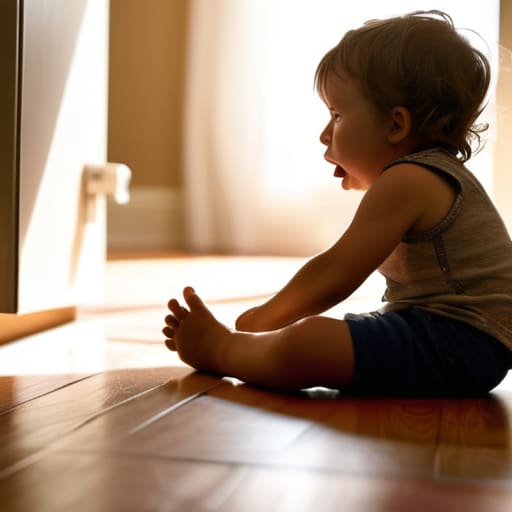
In the clinical setting, we talk a lot about understanding childhood emotional regulation as a biological process—the idea that the prefrontal cortex, the part of the brain that says “stop, don’t swing,” is essentially under construction. It’s a neat, tidy concept. But when you’re in the thick of it, that biological theory feels very different from the reality of a child who has lost all control because they couldn’t find their favourite blue sock.
There is a massive gap between a child being “overwhelmed” and a child being “naughty.” A meltdown is often a physiological collapse; their nervous system has simply redlined. I remember with my second, Leo, he would hit not because he wanted to hurt me, but because his brain had reached a point of total sensory overload. In those moments, traditional toddler behavioral management techniques like time-outs often backfire because you’re essentially asking a person in the middle of a panic attack to go sit in a corner and reflect. You aren’t dealing with a choice; you’re dealing with a system failure.
How to Handle a Child Who Hits Without Losing Your Mind
When the hit actually happens—the sharp smack to the arm or the unexpected shove—your nervous system is going to go into overdrive. I remember being on the ward and seeing parents freeze, or worse, react with a sudden, sharp shout that only escalates the chaos. The first thing to remember is that discipline vs punishment for hitting is a massive distinction. Punishment is about making them pay for the act; discipline is about teaching them what to do instead. When my second child was about two, he’d swing at me the moment he felt frustrated, and my instinct was to yell. But yelling just tells a tiny, overwhelmed brain that the situation is even more dangerous than it already feels.
Instead, try to get down on their level. It sounds cliché, but it works because it removes the looming threat of your height. You need to be the calm anchor in their storm. State the boundary clearly and without a lecture: “I won’t let you hit; hitting hurts.” Then, move them to a quiet space if they can’t settle. This isn’t about shaming them; it’s about setting boundaries with aggressive children in a way that keeps their dignity intact while keeping your skin safe. It’s much harder to do when you’re running on four hours of sleep, but it’s the only way to break the cycle.
Discipline vs Punishment for Hitting Choosing Peace Over Power Struggles
In the nursing wards, we talked a lot about the “why” behind a behavior, but in my own living room, the “why” usually gets lost the second a small hand connects with my cheek. This is where the distinction between discipline vs punishment for hitting becomes everything. Punishment is about making a child pay for what they did—a time-out, a corner, a stern lecture that goes over their head while they’re still vibrating with adrenaline. It’s about power. Discipline, however, is about teaching. It’s the difference between trying to suppress a symptom and actually treating the cause.
When I was working the night shifts, I saw plenty of parents try to “scare” the aggression out of a child, but that rarely sticks. If you want to move toward actual toddler behavioral management techniques that work, you have to focus on the aftermath. When my second child, Leo, was about two and a half, he’d hit when he was overstimulated. If I just sat him in a chair as a penalty, he’d emerge more frustrated and more likely to do it again. Instead, we focused on setting boundaries with aggressive children by physically intercepting the hit and then modeling the words he couldn’t find. It’s much harder, and it takes ten times longer, but it actually builds a skill rather than just a fear of getting caught.
Setting Boundaries With Aggressive Children When Youre Already Exhausted
When you’re operating on four hours of broken sleep and your three-year-old has just decided your forearm is a punching bag, “setting boundaries with aggressive children” feels less like a parenting strategy and more like a feat of superhuman endurance. The textbooks talk about consistent, calm responses, but they don’t account for the physiological reality of your own nervous system being hijacked. When you are running on empty, your ability to model the very emotional regulation you’re trying to teach is the first thing to go.
The trick I learned—mostly through trial and error with my second child, who was a particularly spirited four-year-old—is to lower the bar for yourself. You don’t need a grand pedagogical breakthrough in the middle of a hallway skirmish. You just need to be a physical barrier. Stop the hand, use a low voice, and keep the interaction as brief as possible. If you can’t find the patience for a long explanation about empathy, don’t force it. Sometimes, the most effective way to navigate discipline vs punishment for hitting is simply to ensure safety first and save the “teaching moment” for when you’ve both had a snack and a moment to breathe.
Five Things to Try When the Hitting Starts (And What to Do When They Don't)
- The “Immediate Stop” Rule: When a child hits, the first goal isn’t a lecture; it’s physical safety. I learned this on the ward with five-year-olds, and reinforced it with my second child when he was three. You move your body between them and the target, or you physically hold their hands for a second to stop the momentum. It’s not a wrestling match, it’s a boundary. You say, “I won’t let you hit,” and then you stop the action. The textbook calls this ‘interrupting the behavior,’ but in reality, it’s just preventing the next bruise.
- Don’t Chase the “Why” in the Heat of the Moment: When a toddler is mid-meltdown, their prefrontal cortex—the part of the brain that handles logic—has essentially gone offline. If you try to ask, “Why did you do that?” or “How do you think that made them feel?” while they are actively swinging, you are wasting your breath and your energy. Wait until the storm has passed. My fourth child, now six, couldn’t tell me why he hit his sister while he was screaming; he could only tell me ten minutes later when we were both sitting quietly on the floor.
- Name the Feeling, Not Just the Action: We often focus so much on the hitting that we forget the child is usually drowning in an emotion they don’t have the vocabulary for yet. Try saying, “You are really angry that the tower fell down,” rather than just “No hitting.” It doesn’t stop the hit immediately, but it builds the bridge toward regulation. It’s the difference between treating a symptom and understanding the fever.
- The “Low and Slow” Approach: This is a trick from my nursing days that works just as well in a messy living room. When a child becomes aggressive, your instinct is to stand tall, raise your voice, and project authority. But that often escalates their nervous system. Instead, get down on their level. Sit on the floor. Lower your volume. If you stay calm, you aren’t “giving in”—you are providing the steady anchor they currently lack. It is much harder for a child to escalate a fight with someone who is sitting quietly at their eye level.
- Watch for the “Pre-Hit” Tells: Every child has a tell. For my eldest, it was a specific way his eyebrows knit together when he was overstimulated. For my third, it was a sudden, frantic kind of movement. If you can spot the physical signs of rising frustration—the clenched fists, the heavy breathing, the sudden silence—you can intervene with a distraction or a change of scenery before the hand makes contact. It’s much easier to redirect a frustrated four-year-old toward a sensory toy than it is to manage a child who has already landed a blow.
The Real-World Summary
Remember that hitting is almost always a failure of communication, not a failure of character; whether they are 18 months or 4 years old, they are usually reacting to a big feeling they don’t have the words for yet.
Your primary job in the moment isn’t to deliver a lecture on morality—it’s to be the calm regulator they can’t be themselves. If you can’t stay calm, it’s okay to step back for sixty seconds to breathe before you intervene.
Consistency beats intensity every single time. It is better to calmly say “I won’t let you hit” a hundred times than to have one massive, terrifying blowout that leaves you both shaking and doesn’t actually teach them anything new.
The Long Game of Good Intentions
If you take anything away from this, let it be that hitting is rarely a character flaw and almost always a failure of communication. We’ve looked at why the textbooks suggest calm boundaries, why developmental stages matter more than “naughtiness,” and how to manage your own exhaustion so you don’t end up adding more chaos to the room. It’s about moving away from the idea of punishment—which usually just teaches a child how to hide their anger better—and moving toward teaching them how to regulate it. It won’t be a linear journey. You will have days where you follow every bit of evidence-based advice, and you will have days where you simply run out of patience and react exactly how you promised you wouldn’t.
When you’re standing in the middle of a living room that feels like a battlefield, please remember that you are doing the hardest job in the world. My second child was about three when the hitting peaked, and I remember feeling like I was fundamentally failing at the most basic level of parenting. But the hitting wasn’t a sign that I was a bad parent, and it wasn’t a sign that my child was “bad”—it was just a very loud, very physical signal that they needed help navigating big feelings. Be kind to yourself. You are teaching a human how to be a person, and that is a process that takes years, not a single afternoon of perfect discipline.