
Newborns Need Fewer Baths Than You Think
The glossy baby catalogues love to sell you the dream: a temperature-controlled, ergonomic, multi-stage bathing suite that looks more like a miniature spa than a bathroom. They make it seem like if you don’t have the right $50 silicone cushion, you’re somehow failing at the fundamental task of how to bathe a newborn. I remember sitting in a darkened nursery with my first, staring at a tiny, slippery, screaming bundle of limbs, wondering why the “expert” guides hadn’t mentioned that babies are essentially uncontrollable little eels. You don’t need a high-tech gadgetry setup; you just need to know how to keep a tiny human from sliding into the abyss while you’re trying to find the towel.
In this post, I’m going to strip away the marketing fluff and give you the actual mechanics of the job. I’ll tell you what the clinical guidelines say about cord care and water temperature, but more importantly, I’ll tell you what actually works when you’re exhausted and the baby is mid-meltdown. We’ll cover the essential gear, the safest techniques, and the specific moments when you can stop worrying and just get on with it.
Table of Contents
- The Textbook vs the 200 Am Reality How to Bathe a Newborn
- Sponge Bath vs Tub Bath When to Actually Use the Water
- The Baby Bath Essentials List What You Actually Need
- Baby Bath Temperature Safety Avoiding the Unnecessary Panic
- Newborn Skin Care Tips and Cleaning the Umbilical Cord Stump
- Preventing Baby Bath Accidents Without Living in Constant Fear
- Five Things the Manual Missed (But Your Exhausted Self Will Appreciate)
- The Short Version (For When You're Too Tired to Read)
- The Final Word on Water and Worry
The Textbook vs the 200 Am Reality How to Bathe a Newborn
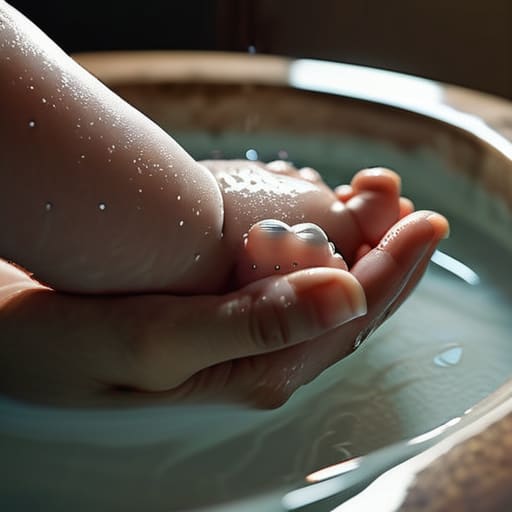
The clinical manual is very polite about this. It tells you to use lukewarm water, check the temperature with your elbow, and ensure the environment is warm to prevent chilling. It makes the whole process sound like a serene, spa-like ritual. But the manual doesn’t account for the fact that at 2:00 AM, you are operating on three hours of sleep, the lighting is terrible, and you are holding a creature that is essentially a warm, slippery, uncooperative bar of soap.
When you’re deciding between a sponge bath vs tub bath, the textbook says to stick to sponge baths until the umbilical cord falls off to avoid infection. I remember with my eldest, Leo, I followed that rule to the letter, terrified of the cleaning umbilical cord stump process. I spent ten minutes meticulously dabbing him with a cloth, only to realize I was making him more miserable by keeping him in a cold room for too long. The reality is that while safety is paramount, a newborn doesn’t care about your adherence to the “perfect” protocol; they care about being warm and held. Sometimes, the most important part of the process isn’t the technique, but just getting them clean and back into a dry nappy as quickly as possible.
Sponge Bath vs Tub Bath When to Actually Use the Water

The official guidance is usually pretty clear: stick to sponge baths until that umbilical cord stump has completely dried up and fallen off. From a clinical perspective, it makes perfect sense; you aren’t trying to introduce bacteria or moisture to a wound that’s still healing. But when you’re sitting there at 3:00 AM with a baby who is starting to smell a bit like sour milk and old sweat, the idea of carefully dabbing a lukewarm cloth around a sensitive midsection feels less like “medical best practice” and more like a test of your patience.
When you do finally transition to a proper tub, the debate of sponge bath vs tub bath usually settles itself quite quickly once the baby starts enjoying the sensation of the water. My second child, Leo, was a total sponge-bath skeptic; he hated the damp cloth and would scream the house down. However, once he was six weeks old and we moved to the tub, he was a different human. Just remember that the baby bath temperature safety is your absolute priority here. I always tell parents to check the water with an elbow, not a fingertip—your hands are far too used to the heat, but your elbow is much more honest about whether that water is actually going to scald them.
The Baby Bath Essentials List What You Actually Need
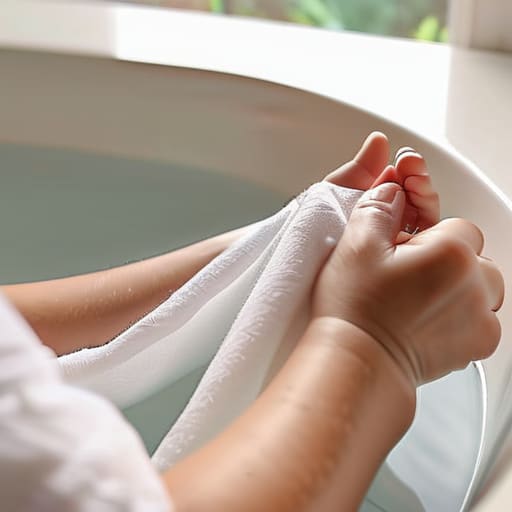
If you walk into a high-end baby shop, they will try to sell you a kit that looks like it belongs on a lunar landing. You don’t need it. When I was nursing on the ward, we kept things clinical and simple, and honestly, that’s how I approach my own house. For a true baby bath essentials list, start with the basics: a small plastic tub, a couple of soft muslin cloths, and a thermometer. You might think you can just “feel” if the water is right, but when you’re exhausted, your internal thermostat is useless. I learned with my second—who was about three weeks old at the time—that testing the water with your elbow is the only way to be sure you aren’t accidentally scalding them.
Beyond the tub, focus on your newborn skin care tips by keeping things minimal. You don’t need ten different pH-balanced lotions; a gentle, fragrance-free wash is plenty. Most importantly, keep a clean, dry piece of gauze nearby for cleaning the umbilical cord stump if it’s still looking a bit messy. Everything else is just clutter that will eventually end up at the bottom of a laundry basket.
Baby Bath Temperature Safety Avoiding the Unnecessary Panic
The medical literature is very clear: water should be around 37°C (98.6°F), which is essentially body temperature. In the ward, we had digital thermometers that gave us a reading in seconds, and it felt very clinical and controlled. But when you’re at home, standing in a dimly lit bathroom with a wet, squirming infant, that clinical certainty vanishes. You’ll find yourself hovering over the bath, performing a frantic little dance of testing the water with your elbow or wrist, terrified that a single degree too high will scald them or a degree too low will send them into a shivering fit.
The reality is that baby bath temperature safety isn’t about hitting a precise decimal point; it’s about the lack of extremes. If the water feels comfortably warm—not hot, not lukewarm—to your most sensitive skin, you are almost certainly fine. I remember with my second, I spent ten minutes trying to find a thermometer I’d lost, only to realize I was overthinking it. If you’re worried about preventing baby bath accidents, focus more on the stability of the temperature than the exact number. Once you get the water settled, it stays warm enough for a quick, efficient wash without the need for a degree-by-degree investigation.
Newborn Skin Care Tips and Cleaning the Umbilical Cord Stump
When it comes to newborn skin care tips, the biggest mistake I see—both on the ward and in my own living room—is the urge to over-scrub. You’ll see products promising “ultra-gentle, tear-free, pH-balanced” everything, but the reality is that a newborn’s skin is already doing a pretty decent job of being a skin. When my eldest was three weeks old, I used to obsess over every little dry patch, only to realize I was making it worse by stripping away the natural oils. Stick to plain water or a soap-free wash, and keep it brief. If they aren’t covered in something substantial, they don’t need a full ritual every single day.
Then there is the umbilical cord stump, which is the part that usually sends parents into a quiet, localized panic. The old-school clinical advice is to keep it dry and let it fall off naturally, which is still the gold standard. When my second was a newborn, I spent way too much time hovering over that little nub with a cotton bud, terrified of infection. You don’t need to be a surgeon; just ensure you’re patting the area dry after a bath and avoiding any heavy lotions that might trap moisture. If it looks angry, red, or smells a bit off, that’s when you call the GP—otherwise, just let nature take its course.
Preventing Baby Bath Accidents Without Living in Constant Fear
The biggest mistake I see—and I saw it constantly on the ward—is the idea that you can “set it and forget it.” You might have the perfect setup from your baby bath essentials list, but the moment you turn your back to grab a fresh towel or reach for a clean nappy, the risk level spikes. I learned this the hard way with my second, who decided that a wet, slippery moment of distraction was the perfect time to attempt a disappearing act. The rule isn’t just “keep an eye on them”; it is never, ever let go. Even if they are just a few weeks old, if your hands aren’t on that skin, you are too far away.
When it comes to preventing baby bath accidents, your biggest enemy is actually your own helpfulness. We often try to multitask—checking a phone, grabbing a wipe, or looking for a burp cloth—but a newborn is essentially a very heavy, very soapy bar of soap. If you feel that creeping sense of panic, stop. Sit down. Get everything within arm’s reach before the water even touches them. It’s not about being a perfect parent; it’s about reducing the number of reasons you have to move your hands away.
Five Things the Manual Missed (But Your Exhausted Self Will Appreciate)
- The “One Hand Rule” isn’t a suggestion, it’s a lifeline. When my second was about four weeks old, I tried to multitask by reaching for a towel with my free hand. Big mistake. One hand must be a permanent anchor on that slippery, tiny torso at all times. If you can’t reach the towel without letting go of the baby, the towel is too far away.
- Forget the “perfect” temperature; aim for “comfortably warm and predictable.” The clinical advice says 37°C, but when you’re dealing with a baby who has just woken from a nap and is shivering, that precision is impossible. I learned with my third that if the water feels slightly too warm to your own wrist, it’s probably fine, but if you’re hovering over the tub sweating, it’s too hot. Aim for the temperature of a lukewarm bath, not a hot spring.
- Don’t bother with the fancy, scented “baby washes” that cost a fortune. Most newborns have skin so sensitive that even the “gentle” stuff can cause a red, angry rash. When I was on the ward, we used plain water or something incredibly basic. At home, I found that a simple, fragrance-free wash used sparingly is much better than trying to turn bath time into a spa day for a person who can’t even hold their own head up.
- Preparation is the only way to avoid the “mid-bath meltdown.” You need everything—towel, clean nappy, fresh clothes, cotton wool—within arm’s reach before a single drop of water touches them. I remember with my fourth, trying to find a clean onesie while the baby was halfway out of a towel; the resulting panic and crying from both of us was a lesson learned. If you have to stand up to grab something, you aren’t ready.
- Accept that “clean” is a spectrum. If the baby hasn’t had a massive blowout and isn’t covered in spit-up, a full bath every single day is often overkill and can actually dry out their skin. By the time my kids were six weeks old, we moved to “targeted cleaning”—just the bits that need it—and saved the actual tub sessions for every other day. It saves time, saves skin, and saves your sanity.
The Short Version (For When You're Too Tired to Read)
Stick to sponge baths until that umbilical cord stump falls off naturally; trying to navigate a slippery, naked newborn in a tub before then is just asking for a chaotic mess and unnecessary stress.
Temperature is about the water, not your intuition—test it with your elbow or a thermometer, and don’t let the “perfect” temperature distract you from the fact that a slightly cool baby is much easier to fix than a scalded one.
You don’t need a mountain of specialized gear to get the job done; a plain old basin, a soft cloth, and your own two hands are more reliable than any expensive gadget that promises to make bath time “easier” than it actually is.
The Final Word on Water and Worry
If you take anything away from this, let it be that bathing a newborn is less about following a rigid clinical protocol and more about managing the chaos of a tiny, slippery human. You don’t need a dozen specialized gadgets; you need a warm room, a safe way to support their neck, and a thermometer if it helps your nerves. Remember that the umbilical cord will eventually fall off, the skin will eventually toughen up, and the terrifying “what if” scenarios you’re playing in your head are usually just exhaustion masquerading as intuition. Focus on the temperature, keep one hand on them at all times, and if they start screaming, it is perfectly okay to stop. A dry baby is better than a stressed-out parent.
I remember sitting in the nursery during my night shifts, watching parents stare at these tiny creatures like they were handling unexploded ordnance. It took me until my second child, who was about six weeks old, to realize that I wasn’t going to break them by being a little bit clumsy. You are going to spill water, you might forget a towel, and you will almost certainly feel like you’re doing it wrong at some point. But please, hear me: you are doing fine. This phase is short, the water will eventually get warmer, and one day soon, you’ll be able to do this in your sleep—though, given my current house, I’d prefer if you didn’t.