
Moving Out of the Cot Without Losing Bedtime
I remember sitting in the darkened nursery with my second, watching him stare at that new, low-profile mattress like it was a trap door, while I wondered why every parenting blog suggested this would be a “milestone of independence.” The glossy brochures make it sound like a seamless transition, a natural evolution of growth, but they never mention the exhausting standoff that happens when your two-year-old decides that the floor is a much more interesting place to sleep than the bed you spent eighty quid on. If you are currently Googling how to move to a toddler bed because you’re hoping for a magical, quiet shift in routine, I have some bad news: the manual is lying to you.
In this post, I’m going to skip the clinical jargon and the expensive gear recommendations that don’t actually work. Instead, I’ll give you the reality of what to expect, from the safety checks that actually matter to the inevitable midnight negotiations. I’ll tell you what worked for my kids at ages two, three, and four, and more importantly, I’ll tell you when to push through and when it’s better to just put them back in the cot and try again tomorrow.
Table of Contents
- The Big Bed Myth What the Manuals Miss About How to Move to a Toddler Bed
- Transitioning From Crib to Bed Expecting Progress vs Reality
- The Midnight Marathon Navigating Toddler Sleep Regression and Big Bed Chaos
- Safety First a Toddler Bedroom Safety Checklist for Exhausted Parents
- Stopping the Great Escape Best Toddler Bed Rails and Preventing Escapes
- Survival Mode Real World Toddler Sleep Training Tips That Actually Work
- Five things I wish I’d known before the first midnight escape
- The Reality Check: Three Things to Carry With You
- The Long Game
The Big Bed Myth What the Manuals Miss About How to Move to a Toddler Bed
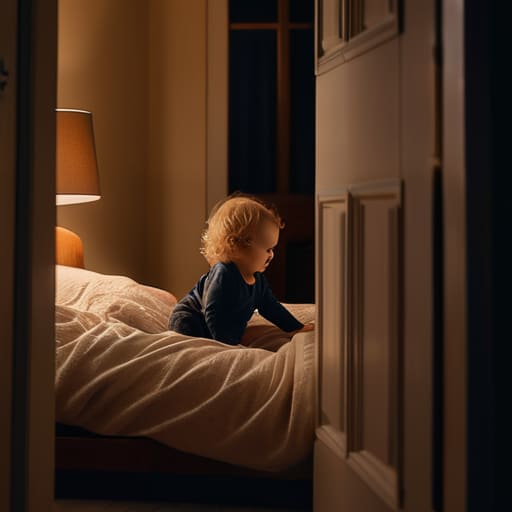
The manuals make it sound like a milestone—a triumphant step toward independence. They talk about “facilitating autonomy” and “encouraging self-regulation,” as if your two-year-old is about to sign a lease on a studio apartment. But they don’t mention that for many kids, the move isn’t a promotion; it’s a loss of a fortress. When I moved my second child, Leo, into his big bed at twenty-two months, the textbook promised he’d sleep more soundly. Instead, we entered a month-long era of toddler bed escapes where he treated the hallway like a high-speed track.
The reality is that transitioning from crib to bed often triggers a brand new kind of sleep regression. In the crib, the boundaries were physical and absolute. In a bed, the world suddenly feels much larger and, frankly, much more intimidating. You’ll find yourself hovering over a toddler bedroom safety checklist not just to prevent falls, but to manage the sudden, frantic need for reassurance. There is no magic switch that flips once the rails come down; there is only the slow, often messy process of learning that a bigger bed doesn’t mean a bigger appetite for midnight adventures.
Transitioning From Crib to Bed Expecting Progress vs Reality

The clinical literature makes it sound like a linear progression: the child outgrows the physical constraints of the cot, they move to a bed, and suddenly they are a “big kid” with a structured sleep routine. In my eleven years on the ward, I saw plenty of kids who looked ready on paper, but when I had my second, Leo, we learned that readiness is a moving target. You can follow every textbook recommendation for transitioning from crib to bed, but the reality is often a messy, three-week period where your child treats their new mattress like a launchpad for midnight acrobatics.
Expect to see a temporary dip in sleep quality. You might think you’re hitting a standard toddler sleep regression and big bed overlap, but usually, it’s just the sheer novelty of having zero boundaries. When I moved my oldest at eighteen months, the “progress” looked less like independence and more like him standing by the door at 3:00 AM, staring at me with wide, unblinking eyes. It isn’t a failure of your parenting or his development; it’s just the uncomfortable gap between being contained and being free.
The Midnight Marathon Navigating Toddler Sleep Regression and Big Bed Chaos

The manuals talk about “developmental milestones,” but they rarely mention that these milestones often arrive in the form of a tiny, pajama-clad shadow appearing in your doorway at 3:15 AM. When you are transitioning from crib to bed, you aren’t just changing furniture; you are renegotiating the terms of your entire existence. My second child, who was about two and a half when we made the leap, decided that the “big bed” was actually a mobile unit designed for frequent, unprompted visits to my bedroom. This is the part of toddler sleep regression and big bed chaos that nobody prepares you for: the sudden, intense realization that your child has discovered the concept of autonomy, and they intend to use it to keep you awake.
It feels like a regression, and in many ways, it is. You might find yourself frantically Googling preventing toddler bed escapes or looking for the best toddler bed rails to keep them contained, but the truth is more complex. At two years old, the novelty of the new bed is often outweighed by the sudden, overwhelming fear of the empty space around them. It isn’t a failure of your routine; it’s just a very loud, very tired way of them testing their new boundaries.
Safety First a Toddler Bedroom Safety Checklist for Exhausted Parents
When I was working the nights on the paediatric ward, I saw plenty of kids who had “graduated” to a big bed only to end up in a bay because their room wasn’t quite ready for their new-found freedom. The clinical advice is simple: remove the hazards. But the reality is that once you start transitioning from crib to bed, your child suddenly becomes a tiny, mobile mountaineer. It isn’t just about the corners of the furniture; it’s about the things they can now reach that they couldn’t before. I remember my second, when he was two and a half, deciding that the heavy bedside lamp was actually a very interesting toy to explore at midnight.
You need a solid toddler bedroom safety checklist that accounts for their new ability to roam. First, check the “reach zone”—anything heavy, breakable, or small enough to swallow needs to be moved up high. Second, consider the window treatments; cordless blinds are a must. Finally, don’t ignore the bed itself. While many parents look for the best toddler bed rails to prevent falls, remember that rails can sometimes become a ladder if they aren’t anchored properly. If you’re dealing with toddler sleep regression and big bed chaos, a secure, boring room is your best friend.
Stopping the Great Escape Best Toddler Bed Rails and Preventing Escapes
When you’re transitioning from crib to bed, you quickly realize that “independence” is often just a polite euphemism for “unsupervised roaming at midnight.” My second child, Leo, was two and a half when he decided that his mattress was merely a suggestion and the hallway was his new kingdom. You can buy the most expensive, padded best toddler bed rails on the market, but I learned the hard way that a rail is only as good as the child’s determination to climb over it. Some rails are great for preventing a roll-out, but if your toddler is a climber, they can inadvertently turn a safety feature into a step-ladder.
If you are serious about preventing toddler bed escapes, you have to look at the room as a whole, not just the bed. I found that the most effective “rail” wasn’t actually on the bed; it was a firm boundary at the bedroom door. I eventually moved to a door wedge and a heavy-duty baby gate in the doorway. It feels a bit extreme when you’re reading the glossy brochures, but when you’re facing a toddler sleep regression and big bed chaos combo, sometimes you need a physical barrier that doesn’t involve your child scaling a piece of furniture like a mountain goat.
Survival Mode Real World Toddler Sleep Training Tips That Actually Work
When you’re deep in the thick of toddler sleep regression and big bed chaos, the clinical advice about “consistent routines” starts to feel a bit insulting. The manuals suggest you establish a predictable wind-down period, which sounds lovely until your two-year-old decides that the only way to process their new autonomy is to perform a dramatic monologue about why they need three glasses of water and a specific blue dinosaur. My second child, Leo, was twenty-eight months when we finally stopped fighting the momentum and embraced the “boring parent” method. If they get out of bed, you don’t get angry, and you don’t get playful; you simply become a human statue. You lead them back, tuck them in, and say the exact same three words every single time. It is mind-numbingly repetitive, but it works because it removes the reward of your attention.
Another thing the textbooks gloss over is the psychological shift required for transitioning from crib to bed. You aren’t just changing furniture; you’re changing the rules of engagement. I’ve learned that “check-ins” are your best friend during the first week. Instead of leaving them to cry in a room that suddenly feels too big, I’d pop my head in every ten minutes just to say, “I’m right here, you’re safe, go to sleep.” It’s not a “fail” in sleep training; it’s a bridge. Sometimes, the most effective tool isn’t a piece of gear, but simply lowering your own expectations of what a “good” night looks like while they find their footing.
Five things I wish I’d known before the first midnight escape
- Timing the move by age rather than by milestone. The books say wait until they are physically too big, but my second child, who was about 26 months, was already climbing out of his cot like a seasoned gymnast. If they are already testing the bars, the cot has already lost the battle. Move them before they turn the cot into a jungle gym.
- The “Low-Stakes” Trial Run. Don’t make the first night in the toddler bed a Tuesday night before you have work. Try it on a Saturday afternoon when they’re napping, or a Friday night when you can afford to be slightly more useless. You need to see how they interact with the new space when they aren’t sleep-deprived and cranky.
- Managing the “Doorway Dilemma.” When you move to a bed, you lose the physical barrier of the cot, which means you lose the ability to say “you’re safe in there.” I found that at 18 months, my third child needed a visual cue that the room was still “closed.” A dim nightlight or a specific sleep sack helped signal that even though the walls had changed, the rules hadn’t.
- Accept that the “Big Kid” novelty wears off fast. The first three nights, they’ll be thrilled. They’ll want to sit up and play with their cars or narrate their entire day to you. By night four, the novelty is gone and they’re just a toddler who realized they can now wander into the kitchen for a biscuit. Expect the “honeymoon phase” to last exactly 72 hours.
- The “One-Trip” Rule for nighttime returns. When they inevitably wander out of the room at 3:00 AM—and they will—don’t make it an event. I learned with my fourth that if you sit on the floor, turn on the big light, and start a negotiation about why we don’t sleep in the hallway, you’ve already lost. Lead them back, keep the lights low, say the same boring sentence, and get back in bed. If you make the escape interesting, they’ll keep doing it.
The Reality Check: Three Things to Carry With You
Don’t mistake a successful transition for a permanent fix; when my second child was two and a half, we had three perfect nights of bed-sleeping followed by a week of him treating the hallway like a personal runway. Expect the regression, and don’t let it convince you that you’ve done something wrong.
Safety isn’t just about the furniture; it’s about the environment you can’t control once they’re out of the crib. If you’re moving to a bed, you have to treat that room like a tiny, unsupervised zone—anchor the dresser, hide the cords, and accept that the “safety checklist” is a living document that changes every time they find a new way to be clever.
Choose your battles between the clinical guidance and your own sanity. The manuals will tell you to implement strict boundaries and consistent routines, but when it’s 3:00 AM and you’re on your fourth cup of lukewarm coffee, sometimes the “correct” way is simply whatever gets everyone back to sleep so you can function tomorrow.
The Long Game
If you take nothing else from this, remember that moving to a toddler bed isn’t a single event you “complete”—it’s a messy, oscillating process of trial and error. You’ll have the brilliant nights where they stay put, followed by the inevitable week where they decide your bedroom floor is their new permanent residence. You’ve checked the rails, you’ve secured the furniture, and you’ve probably tried every sleep training method in the book, but please understand that regression is not a failure of your parenting. It is simply a developmental milestone disguised as a headache. Whether you’re dealing with a two-year-old who has suddenly discovered the joy of running laps around the room or a three-year-old testing the boundaries of their new independence, just keep breathing. The goal isn’t a perfect transition; it’s a safe, predictable routine that eventually settles into a rhythm.
I remember when my second child finally stopped treating his bed like a launching pad for midnight adventures. He was nearly three, and it took about six months of sheer, stubborn consistency to get there. There were nights I sat on the floor of his room, exhausted and wondering if I’d made a massive mistake, feeling like I was failing at the simplest part of parenting. But looking back, those chaotic months were just part of the growth. You are doing a much better job than your sleep-deprived brain is telling you right now. This phase is temporary, the chaos will subside, and one day soon, you will sleep through the night again. Hang in there.