Mealtimes: Your Job and Their Job Are Different
I once spent an entire shift on a paediatric ward watching a mother try to coax a three-year-old to eat a single spoonful of porridge, her face a mask of pure, exhausted desperation. It reminded me of the many times I’ve sat at my own kitchen table, staring at a pile of smashed peas and a toddler who had decided that the mere sight of a spoon was a declaration of war. The glossy parenting books make it sound so simple—just offer small portions, stay calm, and follow a routine—but they never quite explain what to do when your child decides that a piece of broccoli is a personal insult. If you are currently searching for how to handle mealtimes without a battle, you’ve likely realized that the “expert” advice often falls apart the moment the actual hunger (or lack thereof) hits the fan.
I’m not here to sell you a sensory play kit or a rigid schedule that will inevitably fail by Tuesday. Instead, I want to give you the middle ground: the clinical reality of what a child actually needs to grow, balanced against the unfiltered chaos of feeding four real, stubborn humans. I’ll tell you what the evidence says, what I learned when my own kids were eighteen months old, and when it is perfectly okay to just give up and serve toast.
Table of Contents
- The Manual vs the Mess Why Guidance Fails at Dinner
- Ellyn Satters Division of Responsibility Theory Meets Toddler Mealtime Stru
- How to Handle Mealtimes Without a Battle or Burnout
- Sensory Issues With Food When the Plate Becomes a Battlefield
- Strategies for Picky Eaters That Dont Involve Power Struggles
- Building Childhood Nutrition Habits Without the Mealtime Anxiety
- Five ways to survive the dinner table without losing your mind
- The Survival Kit: What to Hold Onto When the Plate Hits the Floor
- The Long Game of the Dinner Table
The Manual vs the Mess Why Guidance Fails at Dinner
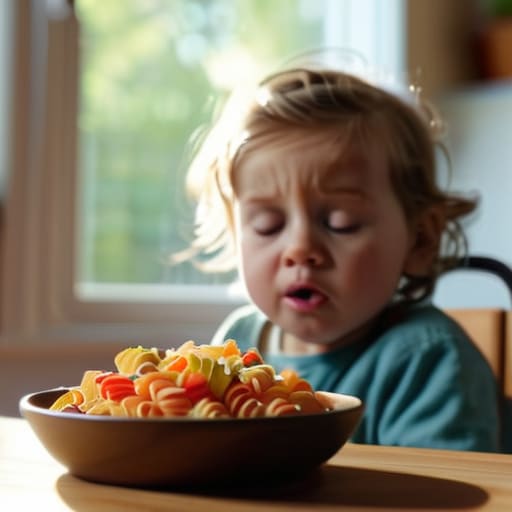
The textbooks love to talk about the Ellyn Satter division of responsibility, which sounds beautifully clinical on paper: you provide the food, they decide how much to eat. It’s a tidy concept that promises a peaceful, regulated household. But the manual fails to mention the look of pure, unadulterated betrayal on a two-year-old’s face when you serve something that isn’t a plain piece of toast. When I was working the wards, the clinical advice was always about nutrition and caloric intake, but when I brought my second home, I realized that nutrition is secondary to the psychological warfare happening over a bowl of pasta.
In a perfect world, you’d create a positive feeding environment by simply sitting calmly and modeling good behavior. In reality, you’re often trying to manage a meltdown while simultaneously wondering if you’ve forgotten to defrost the chicken or if your youngest is about to wipe a handful of mashed peas into the carpet. The guidance assumes a level of emotional regulation that most adults—let alone exhausted parents—simply don’t possess at 6:00 PM. We aren’t just managing calories; we are managing tiny, unpredictable humans with very strong opinions.
Ellyn Satters Division of Responsibility Theory Meets Toddler Mealtime Stru

If you’ve spent any time reading about feeding, you’ve inevitably run into the Ellyn Satter division of responsibility. In theory, it’s beautiful: the parent decides what, when, and where food is served, and the child decides whether to eat and how much. It’s designed to foster a positive feeding environment by removing the tug-of-war from the table. When my second child was eighteen months old, I read this and thought, Finally, a roadmap. I felt like I’d found the holy grail of reducing mealtime anxiety.
But here is what the textbooks omit: the “decision” part of that equation feels a lot less like autonomy and a lot more like a hostage negotiation when you’re staring at a plate of plain pasta and a toddler who has decided that anything with a texture more complex than a smooth puree is a biological hazard. When you’re dealing with actual sensory issues with food, the division of responsibility can feel less like a partnership and more like you’re standing on the sidelines watching a tiny, stubborn dictator reject everything you’ve prepared. It works, eventually, but it requires a level of emotional discipline that most people don’t possess when they’re hungry and exhausted.
How to Handle Mealtimes Without a Battle or Burnout

If you want to stop the tug-of-war, you have to change what you’re actually fighting about. Most of us go into dinner thinking our job is to get the child to eat a specific amount of protein or a specific number of carrots. It isn’t. Your job is simply to provide the food and the setting; their job is to decide if it goes in their mouth. When I was working the wards, I saw how much toddler mealtime struggles were actually just power struggles in disguise. If you can lower the stakes, you lower the tension.
The practical way to do this is to focus on building a positive feeding environment rather than a perfect nutritional spreadsheet. This means if my two-year-old decides that the texture of mashed potato feels like wet sand—which is a common sensory issue with food at that age—I don’t turn it into a lecture on vitamins. I just acknowledge it, offer an alternative, and move on. It feels like losing in the moment, but you are actually winning the long game of childhood nutrition habits. You aren’t just feeding a belly; you’re teaching them that eating isn’t a combat sport.
Sensory Issues With Food When the Plate Becomes a Battlefield
In my nursing days, I saw kids who wouldn’t touch a certain food because of a texture that felt like “slimy” or “crunchy” in a way that triggered a genuine gag reflex. When you’re sitting at home, it’s easy to mistake sensory issues with food for mere stubbornness or a power struggle. You think they’re being difficult, but for a two-year-old, a piece of mushy carrot can feel as threatening as a physical assault. I remember my second, when he reached age two, and a single rogue pea on his plate could trigger a full-scale meltdown that lasted twenty minutes. It wasn’t about defiance; it was about a sensory overload that his little brain simply couldn’t process.
This is where the Ellyn Satter division of responsibility actually becomes a lifesaver rather than just a theory. If you accept that you control the what and the when, but they control the how much, you stop being the food police and start being the facilitator. When we try to force-feed or negotiate, we increase the pressure, which only heightens their sensory sensitivity. Instead of fighting the texture, I learned to stop making the texture the center of the conversation. We stop the interrogation, lower the stakes, and try to maintain a positive feeding environment where the food is just there, existing, without the drama.
Strategies for Picky Eaters That Dont Involve Power Struggles
When you’re staring down a three-year-old who has decided that anything green is a direct threat to their safety, your instinct is to negotiate. You offer a biscuit if they eat two peas; you try to bribe, coerce, or explain the merits of vitamins. But in my eleven years on the ward, I saw how much pressure can actually shut a child’s appetite down entirely. The most effective strategies for picky eaters aren’t about winning a debate; they are about lowering the temperature in the room. If the dinner table feels like a courtroom, they aren’t going to eat; they’re going to defend themselves.
I learned this the hard way with my second, who was about twenty months old and decided pasta was suddenly “too loud” for her mouth. Instead of fighting it, I leaned back into the ellyn satter division of responsibility. I stopped being the negotiator and went back to being the provider. I put the food down, stayed calm, and focused on creating a positive feeding environment where the goal wasn’t “finish your plate,” but simply “we are all sitting together.” It took about three weeks of her mostly ignoring the actual food before she finally took a brave, tiny bite, but the lack of a fight was what eventually made her feel safe enough to try.
Building Childhood Nutrition Habits Without the Mealtime Anxiety
When we talk about building long-term childhood nutrition habits, we tend to focus on the what—the vitamins, the minerals, the perfect ratio of protein to carbs. But after four kids and a decade in paediatrics, I’ve learned that the “what” matters far less than the “how.” If the dinner table becomes a place of tension, high cortisol, and frantic negotiating, you aren’t building a healthy eater; you’re building a child who associates food with stress. My second child, Leo, was about two years old when I realized that my attempt to force-feed him peas was actually just training him to hate the sight of a vegetable.
The goal isn’t a perfect plate; it’s a positive feeding environment. This means shifting your focus from the amount of broccoli consumed to the atmosphere of the room. When you focus on reducing mealtime anxiety, you create a space where a child feels safe enough to actually explore new textures. It’s a slow game. You might see zero progress for three weeks, and then suddenly, at age three, they’ll take a single, tentative bite of something new. It’s not a victory parade, but it’s progress, and it’s much easier to maintain when you aren’t both exhausted by the end of the meal.
Five ways to survive the dinner table without losing your mind
- Stop the “one more bite” negotiations. When my second child was eighteen months, I thought I could negotiate him into eating a pea like we were settling a trade deal. It didn’t work; it just turned dinner into a courtroom drama. The rule is: you provide the food, they decide how much to eat. If they eat nothing, they eat nothing. It feels like failure in the moment, but it’s better than a forty-minute standoff that leaves you both crying.
- The “Safe Food” safety net. Never serve a plate that is entirely alien territory. When my oldest was two, I learned that if there isn’t at least one thing on that plate I know for a fact he won’t reject—even if it’s just a plain piece of bread—the meal is doomed before it starts. A little bit of familiarity lowers the stakes and stops the “fight or flight” response from kicking in at the table.
- Watch the clock, not the fork. If a meal has dragged on for forty minutes, the battle is already lost. Toddlers have the attention spans of goldfish, and by the time they’ve hit the thirty-minute mark, they aren’t “being difficult,” they are physically exhausted. At age three, I learned to call it a day when the squirming starts. It’s better to end the meal early than to turn a nutritional opportunity into a traumatic event.
- De-escalate the sensory overload. Sometimes the battle isn’t about the taste; it’s about the texture or the noise. If the kitchen is loud and the lights are bright, a kid who is already struggling with a new food will hit a breaking point. I’ve found that turning down the radio and keeping the environment low-key makes a massive difference. If they can’t handle the mushy texture of mashed potatoes, let them have the dry toast. Don’t force the sensory collision.
- Forgive the “bad” days. There will be days when you follow every piece of advice, stick to the Division of Responsibility, and your child still decides that a single blueberry is an act of war. That is not a reflection of your parenting, and it isn’t a permanent setback. I’ve had days where dinner was basically just crackers and cheese because we were both too tired to fight. Sometimes, the most “professional” thing you can do is just let it go and try again tomorrow.
The Survival Kit: What to Hold Onto When the Plate Hits the Floor
Remember that you are responsible for the what, the when, and the where, but they are responsible for the how much. When my second child was eighteen months old, I spent three weeks trying to force-feed peas like I was administering IV fluids; it didn’t work, and it only made him hate the sight of green. Stick to the Division of Responsibility, even when it feels like you’re losing.
Distinguish between a “phase” and a “problem.” In my nursing days, I saw kids who had genuine sensory aversions that required specialist help, but most of the time, a toddler refusing a carrot is just a toddler exercising the only bit of autonomy they have. If they are growing, hitting milestones, and generally acting like themselves outside of mealtime, you can probably afford to stop the battle and try again tomorrow.
Lower the stakes to save your sanity. The goal isn’t a perfectly balanced plate every single night; the goal is a child who doesn’t associate the dinner table with a high-stress confrontation. If dinner is a disaster, serve something easy and low-effort for the next meal—sometimes a plain piece of toast is the best way to reset the emotional temperature of the house.
The Long Game of the Dinner Table
If you’ve followed along this far, you know that there is no magic trick to make a three-year-old suddenly crave steamed spinach. We’ve looked at the science of the Division of Responsibility, the reality of sensory overwhelm, and why trying to force-feed a child is essentially a losing battle for both of you. The takeaway isn’t a perfect menu or a silent dining room; it’s about recognizing that mealtime is a skill they are learning, just like walking or talking. It’s about moving away from the power struggles and toward a predictable environment where they feel safe to explore. You can’t control what goes into their mouths, but you can control the temperature of the room and the level of tension in your own voice.
I remember a mother on the ward, years ago, crying because her toddler wouldn’t touch anything but plain pasta. She felt like she was failing at the most basic human task. I told her then what I’ll tell you now: your worth as a parent is not measured by the nutritional density of a single meal. Some days will be triumphs of balanced plates, and some days will be a frantic scramble for whatever isn’t currently being thrown on the floor. That’s okay. Focus on the connection, not just the calories. If you can keep the table a place of safety rather than a battlefield, you’ve already won the most important part of the fight.