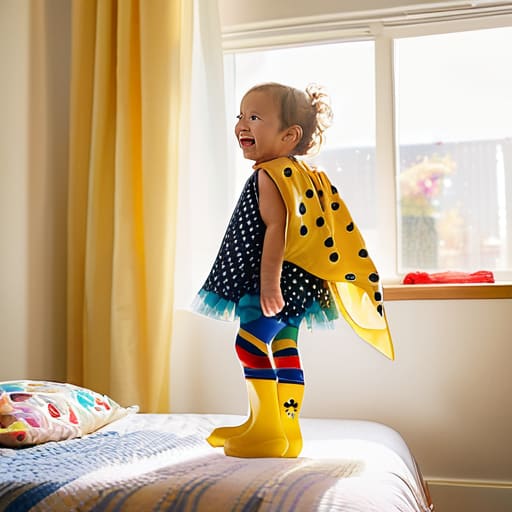
Letting Them Choose the Terrible Outfit
I once spent an entire shift on the paediatric ward explaining to a sleep-deprived mum why her toddler’s refusal to wear trousers wasn’t a developmental crisis, only to go home and find myself in a literal wrestling match over a pair of denim jeans with my own two-year-old. The parenting blogs will try to sell you on “empowerment through choice” or expensive, sensory-friendly clothing lines, but they never quite capture the sheer, sweaty desperation of trying to figure out how to handle dressing battles when you’re already ten minutes late and your child has decided that socks are the enemy of their personal freedom.
I’m not going to give you a list of clinical “strategies” that only work when everyone is calm and well-rested. Instead, I’m going to give you the messy truth: what the nursing manuals say, and what actually works when you’re staring at a pile of discarded clothes on the floor at 7:45 AM. We’ll look at specific age milestones—because a three-year-old’s defiance is a different beast entirely from a newborn’s fussiness—and I’ll tell you exactly when to hold your ground and when to just let them wear the mismatched superhero cape to nursery.
Table of Contents
- The 700 Am Stand Off How to Handle Dressing Battles
- When the Textbook Fails and Toddler Clothing Refusal Strategies Break
- Promoting Child Autonomy in Morning Routines Without Losing Your Mind
- Developmental Milestones and Self Dressing the Gap Between Theory and Reali
- Sensory Processing Disorder Clothing When Tags Feel Like Torture
- Adaptive Clothing for Sensory Sensitivities Real Tools for Real Mornings
- Five Ways to Stop the Morning War (Without Losing Your Dignity)
- The Morning Survival Kit
- The Long View from the Wardrobe Floor
The 700 Am Stand Off How to Handle Dressing Battles

The clinical textbooks will talk to you about promoting child autonomy in morning routines, suggesting you offer “limited choices”—blue shirt or red shirt, you know the drill. In theory, it’s a brilliant way to foster independence. In practice, when you’re staring down a three-year-old who has decided that today, for reasons known only to him, he is only a dinosaur person, those choices feel like a trap. I remember my second, Leo, at age three, who once staged a twenty-minute protest because his trousers had a seam that felt “too pokey.”
If you suspect it’s more than just a power play, keep an eye out for signs of sensory processing disorder clothing sensitivities. It isn’t always about being difficult; sometimes, a tag actually does feel like a serrated knife against their skin. When I was on the ward, we saw kids who would melt down over the simplest change of clothes because their nervous systems were overwhelmed. If the battle feels less like a tantrum and more like a genuine physical distress, stop fighting the clock and start looking at the textures. Sometimes, the most effective way to win is to stop trying to win.
When the Textbook Fails and Toddler Clothing Refusal Strategies Break

The clinical literature is wonderful at discussing promoting child autonomy in morning routines, but it’s remarkably quiet on the fact that autonomy often looks like a naked, screaming three-year-old standing in the middle of the hallway. When I was on the ward, we talked about developmental milestones and self-dressing as a logical progression of fine motor skills. In my own house, with my second child, it felt less like a milestone and more like a hostage situation involving a pair of denim trousers that he suddenly, inexplicably, decided were “too scratchy.”
Sometimes, the refusal isn’t just a power play; it’s physiological. I’ve learned the hard way that what looks like a tantrum can actually be a genuine struggle with sensory processing disorder clothing issues—tags, seams, or even the weight of a particular jumper can feel like sandpaper to a sensitive child. If you find yourself hitting a wall where every toddler clothing refusal strategy you’ve read fails, stop trying to “manage” the behavior and start looking at the fabric. If the seam is the enemy, no amount of calm redirection is going to win that battle.
Promoting Child Autonomy in Morning Routines Without Losing Your Mind

The textbook approach to promoting child autonomy in morning routines is lovely on paper: “Give them two choices to empower their decision-making.” In theory, you offer a blue shirt or a red shirt. In reality, when you’re staring down a three-year-old who has decided that the blue shirt is an affront to their very soul, “choice” feels a lot like a trap. I learned this the hard way with my second, who wouldn’t touch anything that wasn’t a specific shade of mustard yellow. You realize quickly that autonomy isn’t about letting them run the show; it’s about building a framework where they feel they have a say, without the whole morning collapsing into a heap of laundry and tears.
Sometimes, the refusal isn’t about power at all; it’s about the physical sensation of the fabric. During my nursing days, I saw how much a scratchy tag could derail a child’s entire day. If you’re dealing with constant meltdowns, it might be worth looking into adaptive clothing for sensory sensitivities. My youngest didn’t start “choosing” clothes until we swapped the stiff denim for soft joggers and seamless socks at age four. Once the sensory friction was gone, the battle for control actually diminished.
Developmental Milestones and Self Dressing the Gap Between Theory and Reali
The textbooks make it sound so linear. They’ll tell you that around eighteen months, a child might start pulling at their socks, and by age three, they should be mastering the art of the button. They treat developmental milestones and self-dressing like a checklist you tick off in a quiet room. But in my house, those milestones don’t arrive with a fanfare; they arrive in fits and starts, usually right when you’re already running late. My second, Leo, hit the “independence” stage at twenty-two months, but that didn’t mean he wanted to dress himself; it meant he wanted to choose the most abrasive, scratchy woollen jumper in the house and wear it regardless of the heat.
This is where the gap between theory and reality gets wide. The medical literature often misses the nuance of sensory processing disorder clothing issues—the way a simple seam can feel like a serrated knife to a sensitive child. I’ve learned that what looks like a tantrum is often just a physical rejection of a texture. Sometimes, the best way to manage the chaos isn’t to push for more autonomy, but to pivot toward adaptive clothing for sensory sensitivities to stop the meltdown before it starts.
Sensory Processing Disorder Clothing When Tags Feel Like Torture
In the ward, we saw it all: the child who wasn’t just being “difficult,” but who was genuinely distressed by the texture of their uniform. When we talk about sensory processing disorder clothing, we aren’t just talking about a preference for soft cotton; we are talking about a neurological reality where a seam feels like a serrated knife against the skin. I remember my second, when he was three, having a full-scale meltdown because his new school jumper had a label that felt “spiky.” You can try every toddler clothing refusal strategy in the book—distraction, bribery, the “gentle approach”—but none of them work when the child is experiencing actual physical discomfort.
If you suspect this is what’s happening, stop fighting the battle of wills and start looking at the fabric. Moving toward adaptive clothing for sensory sensitivities, like seamless socks or tagless tops, can be a game-changer. It isn’t “giving in”; it’s removing a barrier to their ability to function. I’ve learned that you can’t teach a child to be independent if their very skin is screaming at them to get those clothes off.
Adaptive Clothing for Sensory Sensitivities Real Tools for Real Mornings
When I was working the night shift on the paediatric ward, I saw kids who would physically recoil from a simple cotton t-shirt because the seam felt like a serrated knife. We often talk about developmental milestones and self-dressing as if the only barrier is motor skills, but for a child with sensory sensitivities, the barrier is often a neurological alarm bell going off. If your toddler is screaming because a waistband feels “spiky,” they aren’t being difficult; their brain is telling them they are being attacked.
I learned this the hard way with my second child, who was about eighteen months old when we realized that “standard” clothes were the enemy. We started looking into adaptive clothing for sensory sensitivities, specifically hunting for seamless socks and tagless tops. It’s not about being “soft”; it’s about removing the friction that turns a simple morning into a meltdown. It’s one of those practical shifts that actually works for reducing morning power struggles because you stop fighting a battle against a sensation that the child genuinely cannot control.
Five Ways to Stop the Morning War (Without Losing Your Dignity)
- The “Two Choices” Rule: At eighteen months, my eldest decided that every piece of clothing was a personal affront. I learned quickly that if I asked “What do you want to wear?”, I was inviting a meltdown. Instead, I’d hold up the blue shirt and the red shirt. They still feel in control because they made a choice, but you’ve already narrowed the field so they aren’t staring at a wardrobe of infinite possibilities.
- The “Pre-emptive Strike” on Sensory Triggers: If you have a child who screams when a seam touches their skin, don’t wait for the dressing battle to start. I learned this the hard way with my second child at age two; we spent forty minutes fighting over a jumper that felt like sandpaper to him. Buy the seamless ones, cut the tags off before they even see them, and if they’re having a particularly rough morning, let them wear the softest, ugliest oversized T-shirt you own. Comfort beats fashion every single time.
- Use a “Transition Object”: When you’re moving from play to dressing, the sudden shift can feel like a physical blow to a toddler. I started letting my youngest carry his dinosaur to the bedroom to “help” him get dressed. It sounds silly, and you’ll feel ridiculous doing it, but at three years old, having a companion makes the transition feel less like a command and more like a change in scenery.
- The “Low-Stakes” Practice: If you’re aiming for that developmental milestone of self-dressing, don’t try to teach it at 7:30 AM when you’re both running late. That’s when failure happens and everyone ends up crying. Practice with big, easy items—like pulling up loose trousers—during a calm period in the afternoon. My third child didn’t master the art of the sock until he was nearly four, and we only got there because we stopped trying to make it a “morning task.”
- Know When to Fold: Sometimes, the evidence says “encourage independence,” but your reality says “we are going to be late for nursery and I am about to have a breakdown.” If the battle is escalating and nobody is winning, just get them dressed in whatever is closest and deal with the autonomy lesson another day. You aren’t failing as a parent because you chose a mismatched outfit over a screaming match.
The Morning Survival Kit
Ditch the “perfect” routine for a “functional” one; if your three-year-old refuses the sensible trousers but will wear the dinosaur ones that are slightly too small, take the win and move on.
Watch for the sensory triggers—if the battle is actually about a scratchy seam or a tight waistband, no amount of “gentle parenting” or bribery will fix a child who feels like they’re being poked with needles.
Give yourself permission to fail the textbook; there is a massive, messy gap between a developmental milestone and a child actually cooperating at 7:15 AM, and your sanity is worth more than a perfectly dressed toddler.
The Long View from the Wardrobe Floor
We’ve covered a lot of ground here, from the clinical reality of sensory processing to the messy, unscripted chaos of a toddler deciding that trousers are the enemy. We’ve looked at how autonomy can be a tool rather than a weapon, and how sometimes, the most “evidence-based” thing you can do is just buy the seamless socks and move on. But if there is one thing I want you to take away from this, it’s that there is no perfect system for dressing a child. Whether you are navigating a sensory meltdown or a simple power struggle, the goal isn’t to achieve a flawless, seamless morning routine; it’s to find a way through the friction without losing your connection to the little person standing in the middle of it.
I remember a mother on the paediatric ward, exhausted and tearful because her two-year-old refused to wear anything but a specific dinosaur cape, even in the freezing cold. She felt like she was failing at the basics. I told her what I’ll tell you: this isn’t a failure of parenting; it’s a sign of a developing brain trying to figure out where it ends and the world begins. One day, when they are about four or five, the battles will shift from socks to school shoes, and eventually, they’ll just do it themselves while you’re busy worrying about something else entirely. Until then, be kind to yourself. Some mornings the evidence wins, and some mornings the toddler wins, and most mornings you’ll just be glad you finally got them out the door.