
Letting Consequences Teach Instead of You
I remember sitting in a brightly lit seminar room early in my nursing career, nodding along as a specialist explained how natural consequences are the “ultimate, seamless teaching tool” for child development. The textbook version makes it sound like a gentle, logical progression where a child learns to wear a coat because they feel cold, and everyone walks away enlightened. But nobody in that seminar mentioned the reality of trying to explain how natural consequences work when you’re standing in a rain-soaked car park with a three-year-old who has just decided that shoes are an optional luxury and you are already twenty minutes late for a doctor’s appointment.
In this post, I’m not going to give you the polished, clinical version that looks good on a laminated parenting chart. I want to talk about the messy, exhausting gap between theory and practice. I’ll tell you what the evidence actually supports, but I’ll also tell you exactly where the system breaks down when you’re too tired to be a philosopher. We’ll look at what actually sticks—and what just results in a total meltdown—so you can stop feeling like a failure every time a “teaching moment” turns into a battlefield.
Table of Contents
- The Textbook Theory of How Natural Consequences Work
- Natural vs Logical Consequences When the Theory Meets Reality
- Teaching Responsibility Through Consequences Without the Midnight Meltdown
- Child Development and Cause and Effect the Messy Truth
- Discipline Without Punishment What the Manuals Conveniently Leave Out
- Understanding Behavioral Outcomes When Nothing Goes According to Plan
- Five ways to actually use consequences without losing your mind
- The Reality Check: What to Carry in Your Pocket
- The Long Game and the Late Nights
The Textbook Theory of How Natural Consequences Work

If you open any standard manual on positive parenting techniques, the explanation is beautifully clinical. They describe a seamless loop of cause and effect: a child makes a choice, the environment reacts, and the child learns. The theory is that by stepping back and letting the world provide the feedback, you are teaching responsibility through consequences rather than imposing your own arbitrary will. It sounds incredibly elegant on paper—almost like a way to achieve discipline without punishment, letting the child become the architect of their own learning.
In the textbook version, the process is a straight line. You teach a child that if they refuse to wear a coat, they will feel cold. They feel cold, they realize the link, and they choose the coat tomorrow. It’s a tidy way of looking at child development and cause and effect. The books suggest that this builds internal motivation because the “punishment” isn’t coming from a frustrated parent, but from the natural laws of the universe. It’s a lovely, logical concept that assumes children are tiny, rational scientists constantly running experiments on their own lives.
Natural vs Logical Consequences When the Theory Meets Reality
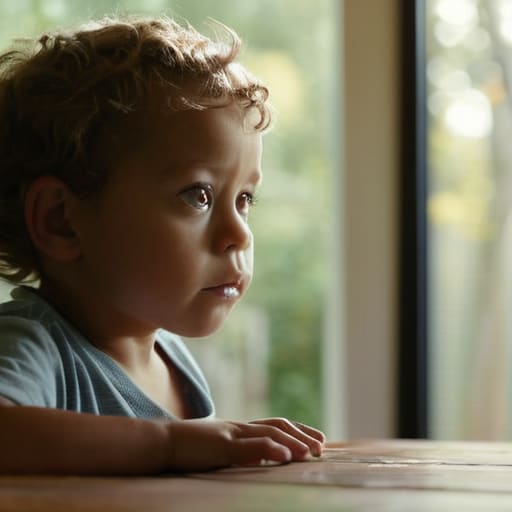
The textbooks love to draw a neat line between natural vs logical consequences, but in a house with four kids, that line feels more like a smudge. A natural consequence is what happens without you getting involved—like the toddler refusing to wear a coat and ending up cold. A logical consequence is the one you engineer—like the four-year-old losing their drawing tablet for an hour because they wouldn’t stop using it as a coaster. In theory, this is the gold standard for teaching responsibility through consequences without the drama of a shouting match.
The reality, however, is that the “logical” part often feels entirely arbitrary when you’re staring at a screaming child at 5:00 PM. I remember with my second, when I tried to implement a logical consequence for refusing to put toys away. The “theory” said he’d learn the link between his actions and the result; the actual outcome was a child face-down on the rug, a parent on the verge of a breakdown, and a living room that looked like a Lego bomb had gone off. It’s easy to talk about discipline without punishment when you aren’t the one trying to manage the fallout.
Teaching Responsibility Through Consequences Without the Midnight Meltdown

The trick to teaching responsibility through consequences without the midnight meltdown is knowing when to step in and when to let the universe do the heavy lifting. In my nursing days, I saw how much kids rely on predictable patterns to feel safe, and parenting is no different. If you try to force a “lesson” when everyone is overtired, you aren’t teaching cause and effect; you’re just participating in a power struggle. I remember with my second, who was about three, trying to enforce a logical consequence regarding a spilled drink. I thought I was being a master of discipline without punishment, but instead, I just ended up scrubbing floorboards while he screamed.
The secret is timing. Wait for the “cool down” period. If you want to focus on teaching responsibility through consequences, the lesson needs to land when their brain is actually capable of processing it. For a toddler, that might be ten minutes later; for my eldest, it was often the next morning. If the consequence is too disconnected from the act, it feels like an attack rather than a learning moment. Aim for consequences that are immediate, related, and respectful, and you’ll find you spend much less time playing judge and jury.
Child Development and Cause and Effect the Messy Truth
The textbooks make it sound like a clean, linear equation: Child does X, Result Y happens, and the brain connects the dots. But if you’ve ever stood in a kitchen with a three-year-old who has just decided that gravity is a suggestion and emptied a bowl of cereal onto the floor, you know that child development and cause and effect is rarely a straight line. At that age, the prefrontal cortex—the part of the brain responsible for actually understanding those consequences—is essentially a construction site with no foreman on duty. They aren’t being defiant; they just lack the neurological hardware to bridge the gap between “I dropped the milk” and “now the floor is a hazard.”
When I was working on the ward, I saw how much frustration comes from expecting a child to act with a level of logic they simply haven’t grown into yet. My second child, Leo, was about three when he finally grasped that if he didn’t put his shoes on, we couldn’t go to the park. Before that, it was just a series of unrelated, high-decibel battles. Understanding behavioral outcomes requires you to meet them where their brain actually is, not where the parenting manual says it should be. You aren’t just teaching them about gravity; you’re waiting for their brain to catch up to the reality of it.
Discipline Without Punishment What the Manuals Conveniently Leave Out
The manuals love the phrase discipline without punishment, painting a picture of calm, rational exchanges where a child calmly accepts the results of their actions. They make it sound like a peaceful negotiation. But they don’t mention the sheer, unadulterated grit it takes to stay “calm and curious” when your four-year-old has just decided that the living room rug is a canvas for permanent marker. In the clinical world, we talk about understanding behavioral outcomes, but in a real house, those outcomes often involve a lot of screaming and a parent wondering if they’ve actually lost their mind.
When you try to pivot to positive parenting techniques, the gap between theory and practice feels massive. The books suggest that by removing a toy, you are teaching a lesson; they don’t tell you that the child will often view this as a personal declaration of war. I remember with my second, when I tried to use a logical consequence for a spilled drink, he didn’t learn “responsibility”—he just sat on the floor and sobbed because he was tired and hungry. Sometimes, the most “positive” thing you can do isn’t a clever pedagogical maneuver, but simply surviving the moment without losing your temper.
Understanding Behavioral Outcomes When Nothing Goes According to Plan
The hard truth is that even when you follow the manual to the letter, you will still end up with a child who is screaming on the floor and a parent who feels like they’ve failed. When we talk about understanding behavioral outcomes, we often assume the outcome will be a neat little “aha!” moment where the child learns their lesson. But in reality, the outcome is often just more chaos. My second child, when he was about three, refused to wear his coat despite the biting wind. I let the natural consequence happen—he got cold. The “textbook” outcome was that he’d learn to check the weather. The actual outcome was a shivering, tearful toddler who clung to my leg for twenty minutes, making the walk to the park a miserable experience for everyone involved.
This is the gap between theory and life. You can use all the positive parenting techniques in the world, but they don’t insulate you from the fact that sometimes, the consequence is just more work for you. There will be days when the “lesson” is lost in the sheer exhaustion of the moment. And that’s okay. Learning isn’t a straight line; it’s a series of messy, repetitive loops.
Five ways to actually use consequences without losing your mind
- Wait for the “Aha!” moment, not the “Oh no!” moment. The theory says the consequence is the teacher, but for a three-year-old, a consequence only sticks when they have the mental bandwidth to connect their action to the result. If you try to force a “lesson” while they are mid-tantrum or exhausted, they aren’t learning cause and effect; they’re just learning that you’re the person making their life miserable.
- Check for safety before you let nature take the lead. The textbooks love the idea of letting a child get wet because they refused to wear a coat, but as a former nurse, I know there is a massive difference between “learning that rain is cold” and “catching a chest infection because you’re too stubborn to intervene.” If the natural consequence involves physical harm or significant distress, step in. You aren’t failing the lesson; you’re just being a parent.
- Use the “Small Stakes” rule for testing the waters. When my second child was about four, I started using very low-risk natural consequences—like the consequence of a toy being put away because it was left in the garden. It’s better to let them fail at something trivial like losing a plastic dinosaur than to let them fail at something high-stakes like forgetting their lunchbox. You need to build their “consequence muscle” on things that don’t ruin your entire afternoon.
- Separate the consequence from the conflict. The biggest failure mode I see is when a consequence turns into a power struggle. If the consequence of not putting on shoes is that we leave the house ten minutes late, don’t spend those ten minutes shouting about how irresponsible they are. Just let the clock be the bad guy. The goal is for the child to eventually realize, “When I don’t do X, Y happens,” rather than “When I don’t do X, Dad gets angry.”
- Prepare for the “No-Win” scenario. There will be days—usually around 6:00 PM on a Tuesday—where the natural consequence is simply too much for everyone involved. If you let them refuse their coat and they end up shivering and crying, you might feel like you’ve failed the “natural consequence” experiment. You haven’t. Sometimes the most effective parenting move is to abandon the lesson, get them warm, and try the whole thing again when everyone is fed and rested.
The Reality Check: What to Carry in Your Pocket
Stop aiming for the textbook version of “learning through experience.” In the real world, a natural consequence is often just a way to help your child navigate a mistake without you having to turn into a drill sergeant. If the consequence involves a screaming toddler and you being too exhausted to function, it’s not a teaching moment; it’s just a bad night.
Timing is everything, and it’s almost never when the manual says it should be. A two-year-old won’t grasp the link between a spilled drink and a wet floor in the heat of the moment; they just see a mess and a frustrated parent. Wait for the “calm window”—usually about twenty minutes after the chaos has died down—before you try to connect the dots.
Distinguish between a “teaching moment” and a “safety moment.” If they refuse to wear a coat, let them be cold (within reason) so they learn the lesson; if they refuse to wear a helmet, there is no room for natural consequences. Know when to let the world teach them and when you need to step in and be the barrier.
The Long Game and the Late Nights
If you take one thing away from this, let it be that natural consequences are a marathon, not a sprint. The theory is beautiful—letting the cold rain teach them why they need a coat—but the reality is often just you standing in a damp hallway feeling like a failure because your three-year-old is crying. We’ve covered how the textbooks gloss over the emotional fallout, how to distinguish a logical lesson from a punitive one, and why your child’s brain isn’t even wired to grasp cause-and-effect until they are well into their preschool years. You cannot force a child to learn a lesson through sheer willpower or exhaustion. You are essentially planting seeds in rocky soil, and most days, it’s going to feel like nothing is actually growing.
So, when you find yourself staring at a mess that won’t be cleaned or a child who refuses to wear shoes, take a breath. You aren’t failing at parenting; you are simply navigating the gap between how children are supposed to learn and how they actually do. Some days, the “natural consequence” is going to be a disaster that leaves you both exhausted, and that is okay. The goal isn’t a perfectly behaved child by Tuesday; it’s a child who understands the world by the time they’re ten. Be kind to yourself in the middle of the chaos, because the lessons are happening even when they feel like they’re failing.