
Getting a Child Through a Big Change
If you search for advice on how to support a child through change, you’ll be met with a tidal wave of “gentle parenting” infographics and expensive, color-coded transition calendars that promise a seamless shift from one life stage to the next. They make it sound like if you just buy the right wooden toy or use the right soothing tone, your child will transition into a new school or a new sibling’s arrival with the grace of a ballet dancer. But I’ve spent eleven years on a paediatric ward and four years in my own living room, and I can tell you: the textbooks are lying to you. Real change doesn’t look like a curated Pinterest board; it looks like a four-year-old screaming because their toast was cut into triangles instead of squares, simply because everything else in their world feels untethered.
I’m not here to give you more fluff or tell you how to be a perfect parent. Instead, I want to give you the unvarnished truth of what actually works when the wheels fall off. I’ll share the clinical evidence that explains why their little brains are reacting this way, but I’ll also tell you what I did when my own kids were mid-meltdown at 3:00 AM. We’re going to look at the real-world failure modes and the small, messy wins that actually help a child feel safe when their world is shifting.
Table of Contents
- The Textbook Guide on How to Support a Child Through Change
- Creating Routine for Stability Versus the Chaos of Real Life
- Spotting Signs of Anxiety in Children During Change and Transitions
- Emotional Regulation in Children Theory vs the 200 Am Reality
- Coping Mechanisms for Kids During Transitions That Actually Work
- Helping Children Adjust to New Environments Without Losing Your Mind
- Five things that actually help when the world is shifting
- The Reality Check: Three Things to Carry With You
- The Long Game of Getting Through It
The Textbook Guide on How to Support a Child Through Change

If you pull up a clinical textbook or a glossy parenting magazine, the advice is remarkably tidy. They’ll talk about the importance of creating routine for stability as if you can just snap your fingers and turn a chaotic house into a well-oiled machine. The literature suggests that by providing predictable structures, you facilitate better emotional regulation in children, allowing them to process shifts like a new school or a move without too much friction. It’s logical, it’s evidence-based, and it sounds perfectly sensible when you’re reading it over a cup of tea in the afternoon.
The “official” line usually focuses on clear communication: explain the change, use visual aids, and offer consistent coping mechanisms for kids during transitions. It suggests that if you simply label the emotions and provide a safe space, the child will navigate the upheaval with grace. It’s a beautiful, linear progression of psychological milestones. But as any nurse who has sat in a quiet hospital corridor knows, the textbook rarely accounts for the sheer, unvarnished messiness of human temperament. It treats children like predictable systems rather than the tiny, unpredictable humans they actually are.
Creating Routine for Stability Versus the Chaos of Real Life

The textbooks are obsessed with creating routine for stability. They’ll tell you that if you keep breakfast at 7:00 AM and bedtime at 7:30 PM, the child’s nervous system will remain anchored despite the chaos of a house being packed into cardboard boxes. And in theory, they’re right. Predictability is a cornerstone of emotional regulation in children. When the world feels like it’s tilting on its axis, knowing that the blue bowl is for cereal and the bath comes after the story provides a small, vital sense of control.
But let’s talk about the reality of a Tuesday when the radiator has died, the toddler has a fever, and you’re trying to move house. The “routine” doesn’t just slip; it evaporates. I remember with my second, who was four at the time, we tried to maintain this rigid schedule during a move, and it ended in a spectacular meltdown because I was more focused on the clock than the kid. Sometimes, the best way of helping children adjust to new environments isn’t sticking to a schedule, but flexing with the mess. If the routine breaks, don’t view it as a failure of parenting; view it as a tactical retreat.
Spotting Signs of Anxiety in Children During Change and Transitions
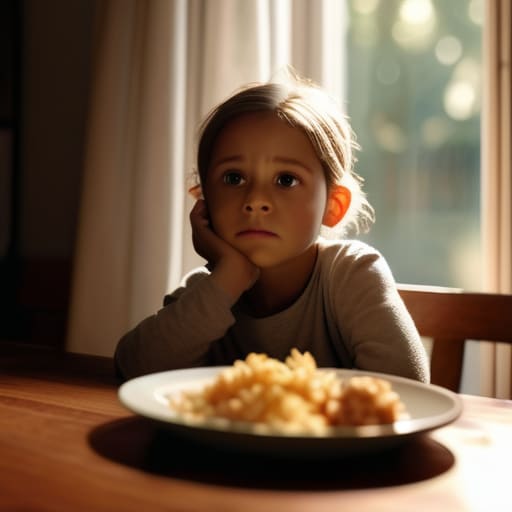
In the ward, I used to watch parents scan their children’s faces, looking for something they couldn’t quite name. They’d ask, “Is this just a phase, or is something wrong?” The tricky thing about signs of anxiety in children during change is that they rarely look like a panic attack in a movie. Instead, they look like a four-year-old who suddenly insists on sleeping in your bed every night, or a seven-year-old who has become strangely, unnervingly quiet during dinner.
You have to look for the regressions. When a child has mastered the toilet but suddenly starts having accidents during a move, or when a toddler who used to eat everything suddenly refuses even a cracker, that’s often their body trying to process stress. It’s not “bad behavior” or a lack of discipline; it’s a primitive way of signaling that their world feels shaky. Sometimes, the most telling sign is a change in sleep or appetite—the kind of subtle shifts that don’t show up in a medical textbook but become painfully obvious when you’re sitting on the floor at midnight, trying to figure out why the usual rules no longer seem to apply.
Emotional Regulation in Children Theory vs the 200 Am Reality
The textbooks will tell you that emotional regulation in children is a skill that can be taught through “co-regulation”—the idea that if you stay calm, they will eventually mirror your stability. In a clinical setting, or in a well-lit living room at 4:00 PM, this makes perfect sense. You sit with them, use soft tones, and validate their feelings. It is a beautiful, logical theory that assumes both the adult and the child have access to their prefrontal cortex.
But at 2:00 AM, when your three-year-old is screaming because the new house “smells wrong” or the transition to a new school has turned their sleep into a battlefield, that theory goes out the window. You aren’t “co-regulating”; you are just two exhausted humans vibrating with stress in a dark room. My second child, when he was two, didn’t need a lesson in coping mechanisms for kids during transitions; he needed me to be a human weighted blanket while he had a total meltdown. Sometimes, the most effective way of helping children adjust to new environments isn’t a pedagogical technique—it’s just surviving the night until the sun comes up.
Coping Mechanisms for Kids During Transitions That Actually Work
The problem with most lists of coping mechanisms for kids during transitions is that they assume a child has the executive function of a miniature adult. You’ll read somewhere that you should “encourage verbal expression of feelings,” which sounds lovely until you’re facing a four-year-old who has decided that the only way to process moving house is by screaming that they hate their new bedroom. At that age, they don’t have the words; they only have the physicality of the meltdown.
What actually works—or at least, what stopped my second child from turning every car ride into a crisis—is sensory grounding. When the world feels too big and unpredictable, you have to make it small and tactile. I’m talking about heavy blankets, a specific “transition toy” that travels in the car, or even just a very predictable snack ritual. It’s not about teaching them a complex psychological lesson; it’s about providing a physical anchor. Sometimes, helping children adjust to new environments isn’t about a deep conversation; it’s about ensuring their hands are busy with something familiar while their brain tries to catch up to the change.
Helping Children Adjust to New Environments Without Losing Your Mind
The clinical manuals make moving house or starting a new school sound like a logistical puzzle to be solved with a well-organized checklist. They suggest “familiarity” and “gradual exposure,” which sounds lovely until you’re standing in a half-unpacked living room with a four-year-old who has decided that the only way to process this new bedroom is by screaming because the air smells different. When you are helping children adjust to new environments, you have to accept that their sense of safety is tied to the physical world. For my second, when we moved, she didn’t need a “tour of the new facilities”; she needed her specific, slightly battered teddy bear and the exact same heavy duvet she’d had since she was two.
The trick isn’t to force them to embrace the newness, but to anchor them in the old. You can try creating routine for stability by bringing the small, non-negotiable things with you—the same breakfast cereal, the same bedtime song, the same way you tuck the covers. It feels like you’re just delaying the inevitable adjustment, but you’re actually providing the scaffolding they need to build their confidence. If they feel like the ground beneath them is shifting, give them something solid to hold onto, even if it’s just a familiar ritual.
Five things that actually help when the world is shifting
- Stop explaining the “why” and start acknowledging the “what.” When my second child was four and we moved houses, I spent three days explaining the logistics of the mortgage and the new school catchment area. He didn’t care. He just wanted me to admit that his bedroom was gone and that it sucked. You don’t need a lecture; you need to sit on the floor and say, “This is a big change, and it’s okay to be cross about it.”
- Use “bridge objects” for the physical stuff. The clinical advice says “maintain continuity,” which sounds lovely until you’re trying to pack a life into cardboard boxes. What it actually means is letting them pick three things that travel in the front seat of the car—a specific stuffed rabbit, a certain blanket, or even a plastic dinosaur. When the environment becomes unrecognizable, having one object that hasn’t changed since yesterday is a lifeline.
- Predict the “micro-transitions” rather than the big ones. We focus so much on the massive life events—the new sibling, the new school, the divorce—that we forget the daily friction. For my three-year-old, the transition from “playing” to “bath time” was a battlefield. Giving a ten-minute warning is the textbook way, but the real-world way is saying, “In ten minutes, the Legos go to sleep so the bubbles can wake up.” It gives them a sense of agency when everything else feels out of their control.
- Watch for the “regression trap” and don’t panic. If you have a six-year-old who suddenly insists on being carried like a baby or starts wetting the bed again during a transition, your instinct will be to worry that they’ve “lost” their development. They haven’t. They’re just reaching for a stage where they felt safe. When my eldest hit age five and suddenly couldn’t use the potty during a move, I had to remind myself: this isn’t a medical crisis; it’s a temporary emotional retreat.
- Build in “nothing time.” When life is changing, we tend to over-schedule everything to “help them adjust”—more playdates, more outings, more structure. But a child’s brain is working overtime just to process the new normal. Sometimes the best support you can give is a quiet afternoon with zero expectations, where they can just sit on the sofa and stare at a wall if they need to. They need space to digest the change, not more tasks to manage it.
The Reality Check: Three Things to Carry With You
Ditch the “perfect” plan for a “good enough” one. The textbooks love the idea of a seamless transition, but when you’re dealing with a four-year-old who has decided that moving house is a personal insult, a rigid schedule is just a recipe for more fighting. Aim for predictable anchors—like a specific bedtime book or a certain breakfast—rather than trying to control every minute of the day.
Watch for the “regression” and don’t panic. When things change, it is completely normal for a child who was previously toilet trained or sleeping through the night to suddenly revert to old habits. I saw this constantly on the ward; stress manifests physically. It’s not a failure of your parenting, and it’s not a permanent setback; it’s just their little nervous system trying to find its footing again.
Trust your gut over the glossy brochures. If your child’s behavior feels “off” in a way that goes beyond typical transition tantrums—if they aren’t eating, aren’t playing, or are showing a level of withdrawal that feels heavy—call the GP. There is a massive difference between a child being grumpy about a new school and a child who is genuinely struggling to cope, and you are the best person to tell the difference.
The Long Game of Getting Through It
If you’ve been following along, we’ve looked at the gap between the clinical advice and the messy reality of life. We’ve talked about why a rigid schedule often fails when a toddler is actually grieving a move, and why spotting anxiety looks less like a textbook symptom and more like a sudden, inexplicable meltdown over a broken cracker. We’ve acknowledged that while routine provides a scaffold, it’s your presence—the ability to sit on the floor in the middle of the chaos—that actually holds them up. You can’t fix every transition with a color-coded chart, and you certainly won’t get it right every single time. Some days, the win isn’t a seamless adjustment; sometimes, the win is simply making it to bedtime without anyone losing their head.
I remember a four-year-old on the ward who refused to sleep in a new bed after a surgery; his parents were terrified they were failing because they couldn’t “implement a sleep hygiene protocol.” They weren’t failing; they were just being human. Change is loud, it is exhausting, and it is inherently unpredictable. Please, give yourself the same grace you give your children. You are not a machine designed to manage transitions; you are a parent navigating them alongside your child. Trust the process, even when the process feels like a disaster, because the resilience they are building isn’t coming from the perfect routine—it’s coming from seeing that you stayed steady when everything else felt shaky.