Choosing a Pram for the Life You Have
If you spend any time in a high-end baby boutique, you’ll be told that choosing a pram is about “lifestyle integration” and “aerodynamic chassis design.” It’s a load of rubbish. They want you to believe that a thousand-pound piece of engineering is the secret to a peaceful stroll, but they aren’t the ones trying to figure out how to choose a pram or buggy while standing in a rain-slicked car park, trying to shove a sleeping newborn, a half-eaten bag of rusks, and a massive changing bag into a boot that is clearly too small. I’ve seen the most expensive strollers in the world become nothing more than expensive, heavy anchors the moment you actually have to navigate a narrow shop aisle or a gravel path.
I’m not here to sell you on a brand or a shiny new feature that looks great in a glossy catalogue. My promise to you is much simpler: I’m going to tell you what actually survives the reality of daily life. I’ll weigh the clinical safety specs against the sheer physical frustration of a one-handed fold, and I’ll tell you which features are worth the money and which are just marketing noise. We’re going to look at what works for a newborn and what actually holds up when your toddler decides they’d rather walk than sit.
Table of Contents
- The Manual Says One Thing Your Living Room Says Another
- How to Choose a Pram or Buggy Without Losing Your Mind
- All Terrain Stroller Features vs the Reality of Pavement Cracks
- Stroller Weight and Foldability the 300 Am Struggle Is Real
- Safety Standards and Infant Car Seat Compatibility What Actually Matters
- Compact Travel Strollers Great on Paper Tricky in Practice
- Five Things the Salesperson Won't Tell You (But Your Exhausted Self Will Wish They Had)
- The Bottom Line (Before You Click 'Buy')
- The Final Verdict
The Manual Says One Thing Your Living Room Says Another

The manual will spend three pages explaining baby stroller safety standards and the physics of the braking system, which is important, don’t get me wrong. But the manual won’t tell you about the moment you’re standing on a wind-swept pavement, trying to balance a squirming ten-month-old on one hip while wrestling with a mechanism that’s supposed to be “intuitive.” When I was a nurse, I saw plenty of kids with bruised shins because their parents were fighting a chassis that wouldn’t cooperate. In the real world, stroller weight and foldability aren’t just technical specs; they are the difference between a smooth transition into the car and a frantic, tearful meltdown in the middle of a supermarket aisle.
The brochures love to talk about “seamless integration,” but they rarely mention the reality of your actual life. They’ll show a pristine, lightweight model gliding through a minimalist showroom, but they won’t show you that same model struggling with stroller suspension and maneuverability when you hit a patch of uneven paving or a stray bit of gravel. I learned this the hard way with my second; I bought something sleek and “compact” that felt like pushing a shopping trolley with one broken wheel. It looked great in the photos, but it was a nightmare in practice.
How to Choose a Pram or Buggy Without Losing Your Mind

First, stop looking at the glossy showroom models that glide effortlessly across polished marble floors. Unless you live in a penthouse with a dedicated elevator, your real-world testing ground is going to be a narrow hallway, a car boot that’s too small, or a pavement that hasn’t been leveled since the nineties. When I was looking for my second, I obsessed over the technical specs, but I learned the hard way that stroller weight and foldability are the only things that actually matter when you’re juggling a sleeping toddler and a heavy grocery bag. If it takes more than two intuitive movements to collapse, you’ll eventually find yourself cursing it in a rainy car park.
You also need to be honest about your geography. If your daily route involves gravel paths or uneven park trails, those “lightweight” models will feel like you’re pushing a shopping trolley through wet sand. You’ll want to look for decent stroller suspension and maneuverability so you aren’t physically fighting the machine just to get to the cafe. I remember trying to use a sleek, city-focused buggy on a woodland walk with my three-year-old; it was a disaster of jolting movements and a very unhappy child. Choose for the life you actually lead, not the one you see in the brochures.
All Terrain Stroller Features vs the Reality of Pavement Cracks
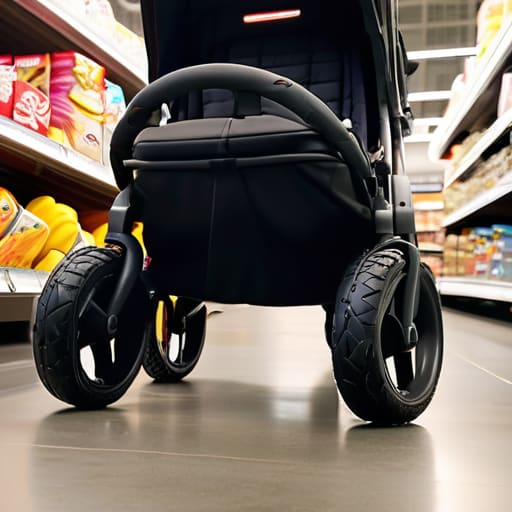
The marketing brochures for all-terrain stroller features are beautiful. They show high-resolution photos of a pristine, matte-black pram gliding effortlessly over a pebble-strewn beach or a mountain trail. It looks rugged, capable, and—most importantly—expensive. But unless your daily life involves hiking through the Scottish Highlands with a sleeping newborn, those heavy-duty wheels might actually be your undoing. I learned this the hard way with my second child; I bought a tank of a pram thinking it would handle everything, only to find that maneuverability in a narrow shop aisle was non-existent.
In reality, your “terrain” is mostly a battle against uneven paving slabs, rogue shopping trolley wheels, and the occasional muddy patch in a local park. You don’t need a mountain-climbing rig; you need decent stroller suspension and maneuverability that won’t result in your child’s head bouncing like a pinball every time you hit a crack in the pavement. When I was nursing, I saw plenty of exhausted parents struggling to heave massive, bulky frames into small cars. If you aren’t actually trekking through the woods, don’t sacrifice your sanity for a chassis that’s built for a landscape you’ll never visit.
Stroller Weight and Foldability the 300 Am Struggle Is Real
The marketing brochures love to talk about “sleek engineering” and “effortless transitions,” but they never mention the specific brand of madness that sets in when you’re trying to collapse a pram with one hand while a teething ten-month-old is trying to eat your car keys with the other. I remember with my second, I bought what I thought was a high-spec model, only to realize at a rainy bus stop that it required the dexterity of a concert pianist to fold. When we talk about stroller weight and foldability, we aren’t just talking about a number on a spec sheet; we’re talking about whether or not you’ll end up sitting on the pavement, defeated, because the mechanism is too finicky for a tired parent.
If you are planning on using public transport or a small boot, those compact travel strollers are your best friends, but they often come with a trade-off in durability. I’ve learned the hard way that a pram might be light enough to carry up three flights of stairs, but if it doesn’t have decent infant car seat compatibility, you’re going to spend your entire life playing a high-stakes game of “transfer the sleeping baby” without waking them up. Aim for the middle ground: something that folds predictably every single time, even when you’re running on three hours of sleep.
Safety Standards and Infant Car Seat Compatibility What Actually Matters
When I was working the wards, I saw plenty of parents who were terrified because they’d read a headline about a recall, or conversely, parents who thought a “fancy” look was more important than a harness that actually stays secure. The brochures will obsess over baby stroller safety standards—and they should, because those certifications are the baseline for a reason—but they won’t tell you how a harness feels when you’re trying to click it into place with one hand while a teething ten-month-old is trying to eat your sleeve.
The real headache, though, is the logistics of the transition. You’ll see beautiful infant car seat compatibility promised on the box, which sounds great until you realize that “compatible” sometimes means a temperamental clicking mechanism that requires the precision of a watchmaker. I remember with my second, we spent twenty minutes in a rainy car park trying to get the seat to lock into the chassis. It’s not just about the safety rating; it’s about whether the system actually works when you are exhausted, damp, and losing your patience.
Compact Travel Strollers Great on Paper Tricky in Practice
The marketing for compact travel strollers makes them sound like a magic wand for urban living. They promise effortless portability, lightweight frames, and a seamless transition from the train to the cafe. On paper, they are the dream solution for anyone trying to navigate a crowded city or a cramped apartment hallway. But here is what the brochures leave out: once your child hits about 10 or 11 months, that “compact” design often starts to feel like a diminishing returns situation.
When I was dealing with my second, we bought a tiny umbrella-style model thinking we were being clever. It was light, certainly, but the moment he hit a slightly uneven pavement or a patch of gravel, the lack of decent stroller suspension and maneuverability became painfully obvious. You aren’t just gliding; you are vibrating your child’s entire skeletal system every time you hit a crack in the sidewalk. They are fantastic for a quick trip to the shops or a flight, but if you expect them to be your primary workhorse, you might find yourself wishing for something with a bit more backbone.
Five Things the Salesperson Won't Tell You (But Your Exhausted Self Will Wish They Had)
- Test the “One-Handed Fold” while you’re actually holding something. In the showroom, you’re standing there with empty hands and a clear head. In reality, you’ll be trying to fold that pram while a two-year-old is clinging to your leg and you’ve got a half-empty coffee in the other. If it requires two hands and a bit of a rhythmic dance to collapse, it’s going to fail you on a rainy Tuesday.
- Check the basket capacity for more than just nappies. When my second was about ten months old, I realised a “generous” basket was actually useless because it was too narrow for a standard changing bag. You need space for the heavy stuff—the big water bottles, the extra layers, and the inevitable bag of snacks that seems to multiply overnight.
- Don’t ignore the “Wheel Wobble.” A pram might look sleek and expensive, but if the wheels feel flimsy or the steering feels jerky when you’re doing a sharp turn, you’re going to fight it every single time you leave the house. By the time your child is eighteen months old, they’ll be heavy, and a buggy that doesn’t track straight will feel like you’re steering a shopping trolley with a broken castor.
- Look at the sunshade, not just the height. The manual will talk about UPF ratings, but I’m talking about whether that canopy actually reaches far enough to stop the sun hitting your baby’s face when you’re walking at 4:00 PM and the light is hitting at an angle. If you have to hold a piece of cardboard over the seat just to keep them from squinting, the pram has failed its primary job.
- Consider the “Car Boot Reality Check.” Measure your boot before you buy anything. I’ve seen parents buy these beautiful, high-end all-terrain beasts only to realise they take up 90% of the boot space, leaving no room for the grocery shop or the toddler’s car seat. If it doesn’t fit in the car with minimal swearing, it’s the wrong pram for your life.
The Bottom Line (Before You Click 'Buy')
Don’t buy for the person you think you’ll be in six months; buy for the person you are right now, likely exhausted, probably carrying three bags of groceries, and definitely trying to navigate a cracked pavement with a toddler who has just decided they hate walking.
Forget the marketing jargon about “all-terrain” capabilities if you live in a flat; focus instead on the “one-handed fold,” because when you’re holding a squirming ten-month-old in one arm, that second hand is going to be useless.
Prioritize the things that actually affect your sanity—like how easy it is to clean crumbs out of the seat and how much it actually fits in your car boot—rather than the bells and whistles that look great in a showroom but end up gathering dust in the hallway.
The Final Verdict
Look, if you’ve read this far, you probably have a spreadsheet open or a dozen tabs of strollers half-loaded in your brain. Just remember: there is no such thing as the “perfect” pram, only the one that survives your specific brand of chaos. Whether you prioritise the lightweight fold for those frantic supermarket dashes or the heavy-duty suspension for the muddy walks that actually keep you sane, make sure it matches your actual daily life, not the idealized version of parenthood you see in the glossy brochures. Don’t get caught out buying a heavy, all-terrain beast if you live in a third-floor flat with no lift, and don’t buy a tiny travel buggy if you know your toddler will be a heavy, uncooperative ten-kilogram weight by the time they are two. Buy for the reality of your commute, not the dream of a Sunday stroll.
At the end of the day, once you’ve wrestled the thing into the boot and finally managed to get the child buckled in without a meltdown, the gear becomes secondary. Your baby won’t remember the brand of the wheels or the premium fabric of the seat; they will remember that you were there, pushing them through the park or through the rain, keeping them safe. There will be days when the pram is a disaster, when it gets stuck in a puddle or refuses to fold when you’re already ten minutes late, and that is perfectly okay. You aren’t failing because the equipment is difficult; you’re just parenting. Take a breath, pick the one that feels most manageable, and just get moving.