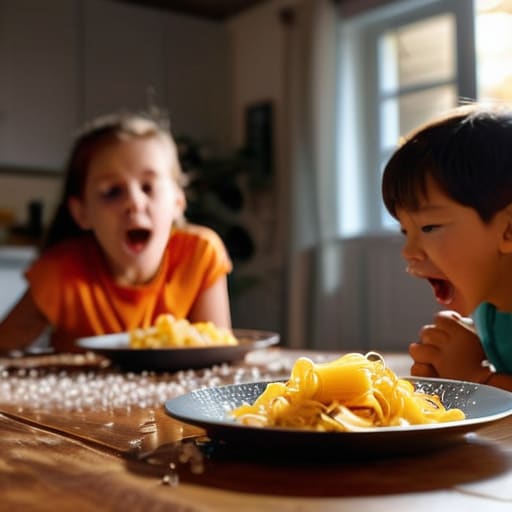
Forget the Textbook Strategies for Resolving Sibling Rivalry at Home; Here Is What Actually Happens When the Living Room Turns Into a Battlefield at Dinner Time.
If you spend any time scrolling through parenting blogs, you’ll find a thousand expensive “strategies for resolving sibling rivalry at home” that involve elaborate emotion wheels, designated “peace zones,” or complex negotiation scripts that require a PhD to implement. They make it sound like if you just find the right system, the screaming will stop. But I’ve spent eleven years in paediatric wards watching kids fight, and then four years in my own living room watching my own four children turn a simple Lego set into a battleground of the century. The truth is, no amount of structured conflict resolution is going to help when your three-year-old is mid-meltdown and your six-year-old is currently trying to use their brother as a human shield.
I’m not here to sell you a lifestyle or a complex psychological framework. What I can offer is a look at what actually works when you are tired, outnumbered, and completely out of patience. I’ll give you the clinical perspective on why they’re actually fighting, but more importantly, I’ll tell you which tactics held up when my kids were four and two, and which ones just made the chaos worse. This isn’t about perfect harmony; it’s about surviving the afternoon without losing your mind.
Managing Sibling Conflict in Toddlers When the Manual Fails
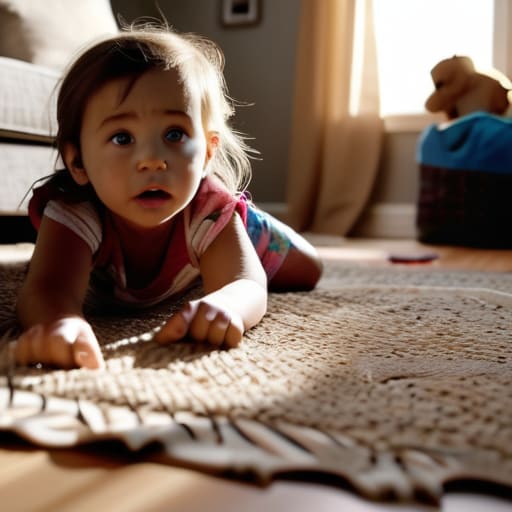
The textbooks love to talk about “conflict resolution skills for children” as if a two-year-old is capable of sitting in a circle and discussing their feelings. In a clinical setting, you can explain the concept of personal space; in a living room covered in half-eaten toast, that theory hits a brick wall. When you are managing sibling conflict in toddlers, the reality isn’t a calm negotiation—it’s usually a frantic scramble to stop a blunt-force object from hitting a smaller, more vulnerable skull. I remember when my second was eighteen months and my third was barely four months; the “manual” suggested gentle redirection, but what actually happened was me physically wedging myself between them like a human buffer.
The trick isn’t to stop the fighting entirely—that’s an impossible goal—but in setting boundaries between siblings that actually hold up under pressure. You can’t teach a toddler empathy while they are mid-tantrum, but you can teach them that certain behaviors result in the immediate removal of the “prize” (usually a specific toy). I found that when my middle child was three, the most effective way of preventing sibling jealousy and competition wasn’t more shared playtime, but actually creating distinct, non-negotiable zones for their most prized possessions. It felt counter-intuitive to the “sharing is caring” mantra, but it lowered the baseline tension in the house significantly.
Setting Boundaries Between Siblings Without Losing Your Mind
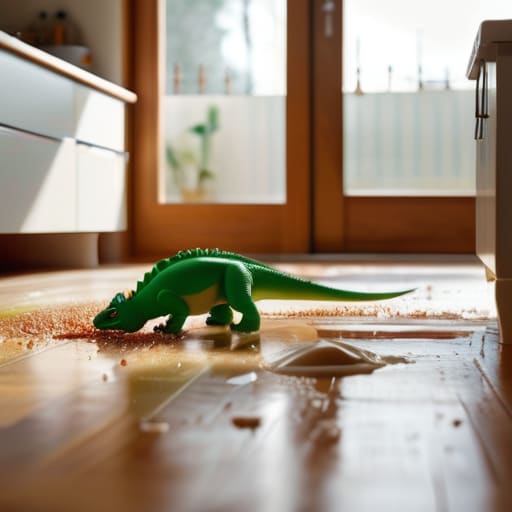
The clinical way to approach this is through “structured boundary setting,” but when you’re standing in a kitchen covered in spilled milk while two children fight over a single plastic dinosaur, that sounds like a joke. The reality of setting boundaries between siblings isn’t about creating a legal code of conduct; it’s about deciding which battles are actually worth your remaining sanity. I learned this the hard way with my second child, who was four at the time. I tried to implement a strict “fairness” rule where every toy had to be shared equally, and it resulted in nothing but more screaming and a complete breakdown of peace.
Instead of aiming for perfect equality, I found that managing sibling conflict in toddlers works better when you focus on individual space rather than forced sharing. If the three-year-old wants to play with a specific set of blocks, let them. If the five-year-old needs a “no-touch zone” to build a Lego castle, respect it. You aren’t being unfair; you are preventing sibling jealousy and competition by acknowledging that their needs and their belongings aren’t always identical. It’s less about being a judge and more about being a referee who knows when to let the play continue.
Five Ways to Stop the War (Without Becoming the Referee)
- Stop being the judge. When my second and third were about four and two, I spent every evening deciding who “started it” and who was “being mean.” It was exhausting, and it never worked because the toddler was always the aggressor and the four-year-old was always the victim. Instead, try describing what you see without assigning blame: “I see two kids who both want the blue truck.” It shifts you from being the judge to being the mediator, which is a much quieter job.
- The “Special Time” hack. The research says children need individual attention to feel secure, but the reality is that when you have three or four kids, “individual attention” feels like a mathematical impossibility. I started doing ten minutes of “undivided attention” with one child while the others were occupied with a snack or a screen. My eldest, when he was five, found that ten minutes of me actually listening to his nonsense about dinosaurs was enough to stop him from sabotaging his sister’s playtime for the rest of the afternoon.
- Teach the “Ask and Wait” rule. Most sibling fights are just bad timing. A six-year-old wants to play, and a three-year-old is mid-tantrum. The manual says teach “social skills,” but I find it’s more effective to teach a specific script. I taught my kids that if they want something from a sibling, they have to ask, and then—this is the hard part—they have to wait for an answer. If the sibling says no, the “negotiation” ends there. It’s brutal, and it fails about 40% of the time, but it gives them a framework that isn’t just screaming.
- Separate the space, not the kids. You’ll hear advice about “separate bedrooms” or “individual play zones,” which is great if you live in a manor house, but most of us are living in a domestic squeeze. Instead of trying to physically separate them, try “activity separation.” When the tension is high, don’t try to force them to “play together nicely”—that’s a recipe for a meltdown. Give them two different tasks in the same room. One gets the playdough, the other gets the colouring book. It keeps them in the same orbit without the collision course.
- Validate the frustration, skip the lecture. When a fight breaks out, your instinct is to lecture them on being “kind” or “sharing.” Please, don’t. At 5:00 PM on a Tuesday, when everyone is tired and hungry, a lecture is just more noise. I learned with my third that saying, “It is really hard when your brother takes your toy,” works a lot better than “We don’t hit in this house.” Acknowledge the feeling first. Once the emotional temperature has dropped, then—and only then—can you talk about the rules.
The Long Game
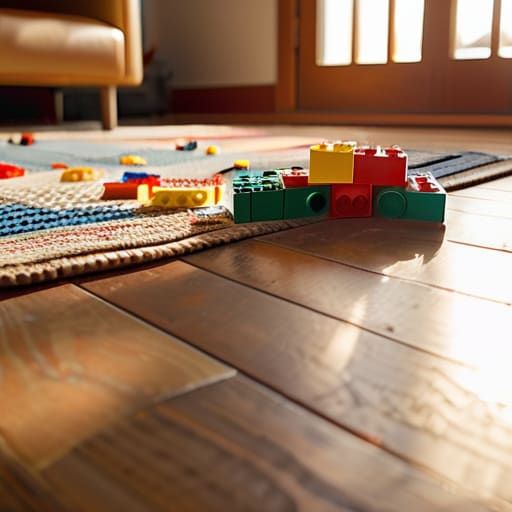
If you’ve followed this far, you know that there is no magic switch to flip that turns a house of warring factions into a peaceful commune. We’ve talked about the difference between the developmental rage of a two-year-old and the calculated social warfare of a seven-year-old, and we’ve looked at why those rigid “conflict resolution” checklists usually fall apart the moment a Lego gets stepped on. The reality is that you will spend a lot of time mediating, a lot of time being the referee, and a lot of time wondering if you’ve somehow failed at the basic task of raising humans. But remember: setting boundaries isn’t about stopping the noise entirely; it’s about teaching them how to navigate the noise without breaking each other.
I remember sitting in the hospital nursery with a mother who was weeping because her two toddlers wouldn’t stop fighting over a single toy. I told her then what I’ll tell you now: this is not a sign of a broken home. It is a sign of a home where children are learning the hardest, messiest skills they will ever own—negotiation, empathy, and how to stand their ground. When you are in the thick of it, exhausted and feeling like you’re just managing chaos, try to remember that the friction is often where the growth happens. You aren’t just surviving the rivalry; you are witnessing the slow, loud, and often frustrating construction of their character. Hang in there.
When the screaming reaches that pitch where you feel your own pulse thumping in your ears, it’s easy to fall into the trap of trying to play judge and jury, deciding who actually started the row. I learned that the hard way with my second child, who was four at the time; I spent twenty minutes trying to untangle a lie about a stolen biscuit only to realize I was just feeding the chaos. Sometimes, when the house feels like it’s tilting on its axis, you need a distraction or a way to vent that isn’t directed at the kids, whether that’s finding a bit of adult connection through a redhead sex text chat to remind yourself you exist outside of being a referee, or simply stepping into the kitchen for a minute of silence. The goal isn’t to achieve a perfectly peaceful household—that’s a myth—but to find those small pockets of sanity that keep you from joining in on the meltdown.