
High-energy Toddlers Need Output, Not Discipline
I remember sitting in a brightly lit paediatric ward ten years ago, watching a mother try to use a “sensory calming kit” on a two-year-old who was currently trying to climb a IV pole. The textbook said to provide quiet, tactile stimulation, but the reality was a child who looked like he’d been plugged into a socket. If you are currently staring at a whirlwind of limbs and searching for how to deal with a toddler who will not sit still, please stop buying the expensive wooden puzzles and the “calming” weighted blankets. Most of that high-end gear is designed for a child who actually wants to cooperate, not for the tiny, beautiful, chaotic humans who seem to run on pure kinetic energy.
In this post, I’m not going to give you a list of clinical interventions that only work in a controlled environment. Instead, I’m going to tell you what actually worked for my own kids—from the age of eighteen months up to three—and what the nursing manuals get wrong about developmental bursts. We’ll look at when to lean into the movement and when to realize that nothing you do will stop the spinning. I’ll give you the honest truth about the failure modes, the energy drains, and the moments when you should just let them run.
Table of Contents
- The Science of Movement vs the Chaos of Real Life
- Decoding Toddler Developmental Milestones Why They Simply Wont Stay Put
- How to Deal With a Toddler Who Will Not Sit Still
- Managing High Energy Children Without Losing Your Mind
- Gross Motor Skill Development Fueling the Need for Constant Motion
- Calming Activities for Toddlers That Actually Work at 2 Am
- Five ways to survive the whirlwind (without losing your sanity)
- The Reality Check: What You Actually Need to Remember
- The Long View from the Living Room Floor
The Science of Movement vs the Chaos of Real Life
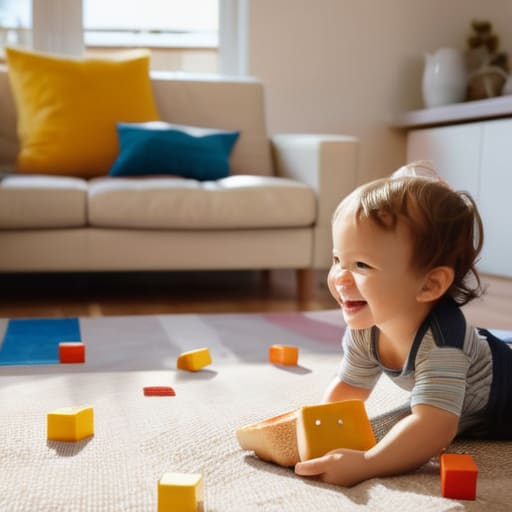
If you look at a textbook on toddler developmental milestones, movement is framed as a triumph. It’s all about “gross motor skill development” and the wonderful way a child explores their environment. On paper, a child who can’t stop moving is simply a child who is successfully mastering their physical autonomy. In the pediatric ward, we’d call it healthy engagement; in my living room, when I’m trying to eat a piece of toast, it feels more like a controlled demolition.
The clinical reality is that a toddler’s brain is essentially a high-powered engine with no brakes. They aren’t trying to be difficult; they are physically incapable of the stillness that adults equate with “good behavior.” However, the gap between knowing this and actually managing high energy children is massive. The science tells you they need to move to learn, but it doesn’t tell you what to do when that movement involves using your coffee table as a launching pad. You realize very quickly that the goal isn’t to stop the motion, but to figure out how to channel it before something expensive breaks.
Decoding Toddler Developmental Milestones Why They Simply Wont Stay Put

In the ward, we used to talk about gross motor skill development as if it were a neat checklist on a clipboard. The textbooks say that between eighteen months and three years, children are “exploring their physical capabilities,” which is a very polite, clinical way of saying they have suddenly discovered they have limbs and those limbs want to go everywhere at once. When my second, Leo, hit eighteen months, he didn’t just walk; he became a sentient projectile. He wasn’t being defiant or trying to ruin my afternoon; his brain was simply hardwired to test the limits of gravity and momentum.
The thing the guidance often misses is that toddler developmental milestones movement isn’t a side effect of growing up—it is the primary job description. For a two-year-old, sitting still actually feels counter-intuitive to their biology. They aren’t “refusing to settle”; they are practicing the very skills that will eventually allow them to walk, run, and climb. I learned the hard way with my third that trying to force a child to sit still during a meal is often a losing battle because you are essentially asking them to ignore their own nervous system.
How to Deal With a Toddler Who Will Not Sit Still

When I was working on the ward, we used to talk about “active engagement,” which is a lovely, clinical way of saying a kid needs to move to feel regulated. In the real world—the one where you’re trying to eat a piece of toast while your two-year-old treats the hallway like an Olympic sprint—you can’t just demand stillness. You have to lean into it. Instead of fighting the momentum, I found that focusing on gross motor skill development actually buys you more peace in the long run. When my second child was about 24 months, I stopped trying to force him into a chair for “quiet time” and started giving him “jobs” that involved heavy lifting, like moving laundry baskets or pushing a heavy toy pram. It’s about burning that physical currency before you ask them to spend it on sitting down.
If you are looking for ways to bridge the gap between a whirlwind and a nap, look toward toddler sensory play ideas that involve more than just sitting at a table. Think about water play in a tub or a “sensory bin” filled with dried beans where they can use their hands and arms vigorously. It’s not about making them quiet; it’s about channeling the energy into something that doesn’t involve running into a coffee table.
Managing High Energy Children Without Losing Your Mind
When I was working on the ward, we talked a lot about gross motor skill development as this structured, clinical necessity. In the textbooks, it’s all about hitting markers. In my living room, with a two-year-old who has the kinetic energy of a small sun, it feels more like a survival exercise. The trick isn’t to fight the energy—you can’t win a wrestling match with a whirlwind—but to redirect it before it turns into a full-scale living room demolition. I found that if I gave my second child a “job” that involved heavy lifting, like carrying a basket of laundry from one room to another, it served as a way of managing high energy children by meeting that physical need for input.
The goal is to transition from high-octane movement to something more grounded without the inevitable meltdown. I’ve learned that you can’t just flip a switch from jumping on cushions to sitting for a story. You need a bridge. For my three-year-old, that meant moving from a “heavy work” activity to something involving toddler sensory play ideas, like a tray of dried beans or even just some playdough. It’s about lowering the physiological temperature of the room slowly, rather than trying to force a sudden, and usually unsuccessful, stillness.
Gross Motor Skill Development Fueling the Need for Constant Motion
In the nursing wards, we used to talk about gross motor skill development as a series of clinical checkboxes—can they crawl, can they stand, can they walk. But when you’re at home, that development looks less like a checklist and more like a small, determined wrecking ball. Between eighteen months and three years, their bodies are essentially building the hardware for the rest of their lives. They aren’t just “being difficult”; they are testing the physics of their own limbs. They need to jump, climb, and lunge because their nervous systems are screaming for that input to map out where their body ends and the living room begins.
I remember my second, Leo, when he was about two. I tried to force him into a high chair for a “proper” meal, thinking I could control the chaos. It failed spectacularly because his brain was prioritized on proprioceptive input—the sense of where his muscles were in space—over the concept of sitting for pasta. If you’re looking for ways of managing high energy children, you have to accept that their need for movement is a biological mandate, not a behavioral choice. You can try to find calming activities for toddlers later in the day, but if you fight the gross motor drive during their peak hours, you’re essentially trying to hold back the tide with a plastic spoon.
Calming Activities for Toddlers That Actually Work at 2 Am
When the clock hits 2:00 AM and your toddler is treating the bedroom floor like a trampoline, the “calming activities” suggested in the glossy parenting magazines—like a quiet puzzle or a complex coloring book—usually fail spectacularly. At that hour, their brain isn’t looking for cognitive engagement; it’s looking for sensory regulation. I learned this the hard way with my second child, who was nearly two, when I tried to force a “quiet book” only to end up with a full-blown meltdown.
Instead of fighting the energy, I found that low-stimulation toddler sensory play ideas work better, even in the dark. Think less “activity” and more “sensory grounding.” A heavy weighted blanket or even just a firm, slow massage on their legs can help bridge the gap between high-octane movement and sleep. If they are still vibrating with energy, I don’t try to force them to sit; I lean into gentle, rhythmic movement, like a slow rock in a chair. It’s not about making them sit still—it’s about helping their nervous system realize the party is over.
Five ways to survive the whirlwind (without losing your sanity)
- Stop fighting the physics of it. When my second child was about 18 months, I spent twenty minutes trying to force him into a high chair for a “calm” meal, only to end up with a floor covered in porridge and a screaming toddler. The guidance says “establish routine,” but the reality is that if their body is vibrating with energy, they aren’t going to sit. Instead of a chair, try a “picnic” on the floor or let them eat standing up. It sounds chaotic, but it stops the power struggle before it starts.
- Use “Heavy Work” to burn the frantic energy. In the ward, we saw kids who were “wired” often just needed proprioceptive input—basically, deep pressure to their joints. At home, when my three-year-old was bouncing off the walls, I stopped telling him to “sit still” and started asking him to “help” me push the laundry basket or carry the heavy bag of potatoes. It’s not a distraction; it’s using their biology to ground them.
- The “Micro-Task” approach. If you need them to do something that requires sitting—like putting on shoes or listening to a quick story—don’t expect a ten-minute window. My fourth child, at age two, had an attention span that lasted about ninety seconds if he was required to be stationary. I learned to break everything into tiny, digestible chunks. “Put on one sock. Great. Now, can you find your other one?” Small wins prevent the meltdown that comes from feeling trapped.
- Create “Active Waiting” zones. We’ve all been there: you’re at a doctor’s office or a restaurant, and the “sit still” rule is non-negotiable. The mistake is thinking they can just not move. I started carrying “low-stakes” fidget items—not loud, annoying toys, but things like a piece of felt or a smooth stone. When my eldest was three, having something to squeeze in his hands helped keep his legs from doing a frantic dance under the table.
- Audit your own energy. This is the one nobody tells you because it’s hard to admit. When a toddler is spinning, jumping, and refusing to settle, our instinct is to raise our voice and get “stiff” with authority to try and command stillness. It never works; it just adds more frantic energy to the room. I’ve found that if I consciously drop my shoulders and lower my voice, it sometimes acts as a bit of an anchor. It won’t work every time—especially not at 4 PM on a Tuesday—but it’s better than joining the chaos.
The Reality Check: What You Actually Need to Remember
Stop fighting the physics of being two. The textbooks call it “impulse control,” but at eighteen months, their brains literally haven’t wired the brakes yet. You aren’t failing at discipline; you are just witnessing biology in motion.
Movement isn’t a symptom of a problem; it’s a requirement for growth. When they’re sprinting through the kitchen, they aren’t being “difficult”—they are building the gross motor skills that will eventually let them sit in a chair at age five. Feed the need for motion early so it doesn’t explode later.
Lower your expectations for “quiet time” during the hard hours. There is a massive difference between a child who is calm and a child who is simply exhausted. If it’s 7:00 PM and they’re vibrating with energy, don’t aim for a peaceful reading session; aim for a safe way to burn that last bit of steam so they can actually crash.
The Long View from the Living Room Floor
If you take nothing else from this, remember that a toddler who won’t sit still isn’t “being difficult”—they are quite literally built to move. We’ve looked at the science of their developing brains, the necessity of those gross motor bursts, and the difference between a child who needs a snack and one who just needs to burn off a sudden surge of kinetic energy. You can try the redirection techniques and the sensory bins, but please, forgive yourself when the “calming activities” end up with you chasing them around the kitchen island at 6:00 PM. The guidance provides the framework, but your living room provides the unpredictable reality that no textbook can fully capture.
I remember sitting in a hospital ward with a mother whose two-year-old was practically vibrating out of his skin, and she looked at me like she’d failed a fundamental test of parenting. I told her then, and I’ll tell you now: this motion is a sign of vitality, not chaos. One day, the house will be quiet. The constant thudding of feet, the endless requests to “watch this,” and the frantic energy will settle into something more predictable. Until then, don’t aim for a perfectly still child; aim for a parent who is doing their best amidst the whirlwind. You aren’t failing; you’re just living in the thick of it.