
Resilience Comes From Struggle You Survive
If you search for “how to build resilience” online, you’ll mostly find two things: expensive developmental workshops for toddlers or lofty, academic jargon about “emotional regulation protocols.” It’s enough to make you want to close the laptop and go back to sleep. I spent eleven years on a paediatric ward hearing doctors explain these complex theories to exhausted parents, and then I spent the next decade having four children prove that none of it works the way the textbook says it should. You don’t build grit through a structured curriculum or a series of mindfulness exercises when your four-year-old is having a meltdown in the middle of a supermarket because the wrong brand of yoghurt was on the shelf.
I’m not here to sell you a lifestyle or a five-step program that requires a PhD to implement. Instead, I want to talk about the messy, unglamorous reality of what actually works. I’ll be sharing what the clinical evidence suggests, but more importantly, I’ll tell you what I learned when my own kids were hitting those inevitable, soul-crushing milestones. We’ll look at the real-world failures and the small, quiet wins that actually matter. This isn’t about perfection; it’s about surviving the chaos and helping them find their feet when things go sideways.
Table of Contents
Understanding How to Build Resilience

In the clinical world, we talk about resilience as if it’s a muscle you can just train with the right set of repetitions. The textbooks love terms like psychological flexibility—the idea that a child can adapt to changing circumstances without breaking. And, theoretically, that’s correct. When my eldest was four, he had a meltdown because his favourite blue cup was in the dishwasher; he wasn’t just being “difficult,” he was experiencing a genuine failure of his internal ability to pivot. In those moments, you realize that building resilience isn’t about preventing the meltdown, but about how we navigate the aftermath.
It’s easy to get lost in the jargon of growth mindset development or complex coping mechanisms, but for a parent, it usually looks a lot messier. It’s less about “teaching lessons” and more about being the steady person in the room while they fall apart. You aren’t building a shield that makes them untouchable; you’re helping them build a toolkit so that when the world inevitably pushes back, they have the tools to pick themselves up. It’s a slow, often frustrating process of trial and error.
Key Things to Know

First, let’s strip away the idea that resilience is some kind of armour you bolt onto a child. In the ward, I saw kids who were “tough” in the sense that they didn’t cry, but they were often brittle; the moment things went wrong, they shattered. True resilience is more about psychological flexibility—the ability to bend when the wind blows without snapping. It’s not about preventing the meltdown; it’s about how we help them navigate the aftermath. My eldest, Leo, was about four when I realised that trying to “fix” his frustration only made him more frantic. He didn’t need a lecture; he needed to know that feeling overwhelmed wasn’t a permanent state.
Second, you have to distinguish between teaching mental toughness techniques and simply letting a child struggle alone. There is a massive difference between a child learning to tie their shoes after ten attempts and a child feeling utterly abandoned in their grief. We want to foster growth mindset development, where they see a mistake as data rather than a character flaw, but that requires a foundation of safety. If they don’t feel safe, they aren’t learning to cope; they’re just learning to survive.
Practical Tips and Steps
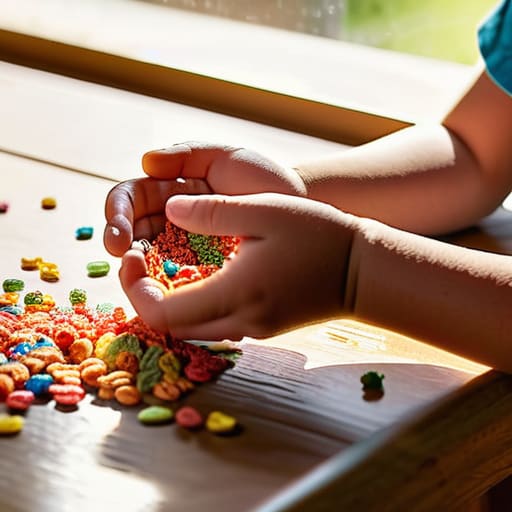
When I was on the ward, I saw kids who could bounce back from a scary procedure with a shrug, and others who folded the moment things got uncomfortable. The difference wasn’t magic; it was about how they were taught to handle the “messy middle.” For a four-year-old, this isn’t about teaching complex stress management for resilience; it’s about the way you react when they drop a bowl of cereal. If you can model psychological flexibility—meaning you show them it’s okay to be frustrated, but it’s also okay to clean it up and try again—you are laying the groundwork. You aren’t building a robot; you’re building a person who knows that a mistake isn’t a dead end.
By the time my second child hit six, I realized that “toughness” was a bit of a misnomer. It’s less about being hard and more about having a toolkit. I started focusing on growth mindset development by catching them doing things the hard way. Instead of saying “you’re so smart,” I’d say, “I saw how you kept trying that Lego tower even when it fell.” It feels small, and when you’re exhausted, it feels like a drop in the ocean, but that’s where the actual overcoming adversity strategies begin.
Common Mistakes to Avoid
The biggest mistake I see—and I’ll admit, I fell into this trap with my second child—is the urge to swoop in and fix everything immediately. When you see your kid struggling with a broken toy or a playground snub, every instinct screams at you to intervene. But if you always clear the path, you never actually give them the chance to practice psychological flexibility. By removing every obstacle, we accidentally teach them that they aren’t capable of handling discomfort. I remember my eldest, about four years old, having a meltdown because he couldn’t get a Lego piece to click; I tried to do it for him, and all I did was signal that his frustration was a problem to be solved rather than a feeling to be managed.
Another pitfall is confusing “toughness” with silence. There’s a common misconception that building resilience means teaching kids to just “get on with it” without making a fuss. That’s not resilience; that’s just suppression. Real emotional intelligence and coping mechanisms aren’t built by ignoring the storm, but by learning how to navigate through it. If we teach them that being upset is a sign of weakness, they won’t learn how to recover; they’ll just learn how to hide.
Final Thoughts
If there is one thing I learned from eleven years on a paediatric ward, it’s that you can’t actually “build” a child like you’re assembling flat-pack furniture. There is no magic sequence of steps that guarantees they’ll be bulletproof. You can read all the books you want about growth mindset development, but when your four-year-old is having a meltdown because their toast was cut into triangles instead of squares, the theory goes right out the window. Resilience isn’t about preventing the struggle; it’s about being the person they can come to when the struggle inevitably happens.
At the end of the day, don’t aim for perfection. If you try to implement every single stress management for resilience technique you’ve read online, you’ll just end up as exhausted as I am. Some days, “resilience” is just getting through the bedtime routine without anyone crying. That counts. Give yourself the same grace you’re trying to give them. You’re doing a much better job than you think you are, even on the nights when it feels like you’re just winging it.
Five ways to actually practice resilience (without the textbook fluff)
- Let them fail small. The textbooks love talking about “autonomy,” but in practice, that means letting your four-year-old struggle with a stubborn Velcro shoe for three minutes instead of swooping in to do it. If you solve every micro-crisis, they never learn that they are capable of solving them themselves. I learned this the hard way with my second; I was so busy being “efficient” that I was accidentally teaching him he couldn’t handle anything.
- Model the “recovery,” not the perfection. When I dropped a tray of pasta at 6:00 PM—which, in a house with four kids, is a regular occurrence—my instinct was to swear and hide in the pantry. But resilience isn’t about never dropping the tray; it’s about how you react when you do. I started saying out loud, “Well, that was frustrating, but I can clean it up,” and suddenly, my kids stopped seeing a disaster and started seeing a process.
- Name the feeling, but don’t let it drive the bus. When my eldest was six, he’d have these massive meltdowns because he couldn’t get a Lego set right. The “clinical” advice is to validate the emotion, which is good, but the real-world trick is: “I see you’re angry, and that’s okay, but we aren’t going to throw the bricks.” You acknowledge the storm without letting the storm wreck the house.
- Scaffolding, not hovering. Think of it like my old job on the ward; we didn’t just do everything for the child, we gave them the tools to do it. For a toddler, that might be giving them two choices (the red cup or the blue cup) to give them a sense of control. For a ten-year-old, it’s helping them map out a plan for a school project rather than doing the research for them. You provide the structure, but they have to walk the path.
- Protect the sleep (and your own sanity). This sounds like a non-sequitur, but you cannot build emotional resilience in a state of total sleep deprivation. I’ve seen it a thousand times on the ward and in my own living room: a child who is “acting out” or “lacking resilience” is often just a child who is exhausted. If it’s 3:00 AM and everything is falling apart, the most “resilient” thing you can do is stop trying to teach a lesson and just focus on getting everyone to sleep.
The Reality Check
Resilience isn’t a skill you “teach” through a series of drills; it’s what happens in the messy, unscripted moments when things go wrong, and it’s built much more by your reaction to their meltdown than by any perfect parenting technique.
Don’t aim for a child who never struggles; aim for a child who knows they can come to you when they do. When my second was four, I realised I was so focused on fixing his problems that I was actually teaching him that struggle was something to be avoided rather than managed.
Watch out for the “Resilience Trap”—the idea that if you just do everything right, your child will be bulletproof. The goal isn’t to remove the obstacles, but to give them the tools to navigate them, which usually means letting them fail a little bit while you’re standing nearby, even when it’s hard to watch.
One Last Thing Before the Chaos Returns
If you take anything away from this, let it be that resilience isn’t a switch you flip or a skill you teach in a single afternoon workshop. It is built in the small, messy, often frustrating gaps between the big milestones. It’s in the way you handle the meltdown over the wrong colored cup, the way you validate a fear about the dark, and—crucially—the way you model your own recovery when you lose your temper. The research tells us that consistent, predictable environments are the foundation, but my experience with four kids tells me that the foundation is often being rebuilt while the house is shaking. Don’t aim for perfection; aim for showing up repeatedly, even when you’re exhausted and the guidance feels completely irrelevant to your actual life.
There will be days when you feel like you are failing because your child isn’t “bouncing back” as quickly as a parenting book promised they would. Please, hear me on this: resilience is not the absence of struggle. It is the ability to navigate through it, and sometimes, navigating through it just looks like a very long nap or a very loud cry. You are doing the heavy lifting of preparing them for a world that isn’t always kind, and that is some of the hardest work there is. You don’t need to have all the answers right now; you just need to keep being their safe place to land.