Search for:
Understanding common newborn developmental milestones reality.
The Gap Between the Textbook and the Toddler: Why Understanding Common Newborn Developmental Milestones Is Less About the Charts and More About Surviving the 2 A.m. Reality.

I spent eleven years on a paediatric ward watching parents clutch those glossy, colour-coded developmental booklets like they were holy scripture, eyes wide with the terror that their baby was somehow behind. There is a specific kind of panic that sets in when you’re staring at a chart that says a child should be doing X by week six, but your actual, living, breathing human is currently doing absolutely nothing but staring intensely at a ceiling fan. The truth is, the industry has turned understanding common newborn developmental milestones into a high-stakes race, when in reality, it’s more like a slow, unpredictable stroll through a fog.

I’m not here to give you the sanitized, clinical version that makes you feel like a failure if your six-week-old isn’t hitting every mark on page twelve. My promise is to give you the real version: the one that balances the clinical evidence with the messy, sleep-deprived reality of what actually happens in your living room. I’ll tell you which milestones are genuine indicators of health and which ones are just noise designed to sell you more expensive developmental toys.

Newborn Sensory Development What They Feel and What You See

Newborn Sensory Development What They Feel and What You See

When you’re staring at a sleeping infant and wondering if that slight twitch or sudden jerk is actually normal, the instinct is to spiral into a Google rabbit hole that only ends in panic. I learned that the hard way with my second; I spent three hours convinced a specific movement was a neurological red flag when it was really just a standard reflex. If you find yourself needing a bit of real-time clarity or just a space to talk through the weirdness of these early weeks, sometimes a quick sexnrw chat can be a surprisingly useful way to find some perspective without waiting for a GP appointment. It’s not about replacing medical advice, but it can help you distinguish between a genuine concern and the kind of midnight anxiety that just needs a bit of human connection to dissipate.

The textbooks will tell you that newborn sensory development is a linear process of “awakening,” but when you’re staring at a tiny, squalling human in a dim nursery, it feels more like a chaotic sensory overload. At two weeks old, my second child, Leo, seemed to think every shadow was a monster and every rustle of a diaper bag was a personal affront. In reality, their world is a blur of high-contrast shapes and muffled sounds. They aren’t “seeing” you yet in any meaningful way; they are mostly just sensing light and dark. You’ll notice they can focus on a face about eight to twelve inches away—which, conveniently, is exactly the distance between your eyes and theirs during a midnight feed.

Don’t panic if they don’t seem to react to everything immediately. I remember being convinced my eldest, Maya, was “tuned out” because she wouldn’t track my movement across the room at ten days old. In truth, her brain was just busy processing the sheer volume of new data. You’ll see more consistent social and emotional newborn cues, like a sudden, intense stare or a tiny, reflexive grasp, as they hit the three-to-four-week mark. It’s less about “learning” and more about their nervous system slowly learning how to not freak out at the sound of a closing door.

Early Motor Skill Progression Expecting Perfection Getting Chaos

The textbooks make early motor skill progression sound like a neat, linear ladder: first they lift their heads, then they roll, then they sit. But when you’re actually in the thick of it, it looks less like a ladder and more like a series of erratic, uncoordinated lunges. In my experience, especially with my second, the “milestones” often arrive in fits and starts. You’ll have a week where they seem to have mastered holding their head up, only to follow it with three days of what looks like a total regression into mush.

When you are tracking baby development months, you have to account for the “plateau.” There will be periods where it feels like nothing is happening, and you’ll start wondering if you’re doing something wrong. You aren’t. My third child, for instance, didn’t even attempt a purposeful roll until he was nearly five months old, and he spent the preceding weeks just thrashing around like a landed fish. If you are constantly worried about infant physical growth stages, remember that growth isn’t a straight line; it’s a messy, jagged scribble.

Five Reality Checks for the Milestone Obsession

  • Stop treating the milestone chart like a countdown timer. The textbooks give you a window—usually a wide one—but they don’t mention that babies often spend weeks “treading water,” where they seem to regress or stall before the next leap. My second child, Leo, didn’t even track my face consistently until he was nearly ten weeks old, and for a terrifying week in between, I thought he was broken. He wasn’t; he was just busy processing everything else.
  • Learn to distinguish between a “developmental leap” and a “medical red flag.” A leap usually looks like a sudden, messy change in temperament, sleep, or hunger—the kind of chaos that makes you want to cry because nothing is working. A red flag is something physical and persistent, like a fever that won’t break or a lack of response to loud noises. If you’re staring at a milestone chart wondering why they aren’t smiling, check their temperature and their hydration first; if those are fine, it’s usually just a brain upgrade in progress.
  • Watch the individual, not the average. When I was nursing on the ward, I saw parents panic because their three-week-old wasn’t “social smiling” yet. The “average” is a mathematical construct that doesn’t account for the fact that your baby is a unique person with their own internal clock. I remember my eldest, Sophie, was a “watcher”—she would just stare at the ceiling for hours, completely ignoring the colorful toys we tried to use, before she suddenly decided she was a social butterfly at two months.
  • Trust your gut, but verify with data. There is a fine line between “parental intuition” and “sleep-deprived panic.” If you feel like something is wrong, write down exactly what you are seeing—the time, the duration, and the specific behavior. When you eventually call the GP, saying “He hasn’t looked at me in three days” is much more useful than saying “I’m just worried about his development.” It moves the conversation from your anxiety to his actual clinical presentation.
  • Accept that progress is rarely linear. We want to see a steady climb: better neck control, then more smiles, then more cooing. In reality, it looks more like a jagged mountain range. You’ll have a week where they master a new way of grasping your finger, followed by four days of them acting like they’ve forgotten how to hold their head up. That’s not a failure of development; that’s just how growing works.

The Reality Check You Actually Need

If you’re sitting there feeling like you’ve missed something because your three-week-old isn’t tracking your eyes with the precision of a heat-seeking missile, take a breath. We’ve looked at the sensory input, the messy attempt at motor control, and the way they navigate a world that is suddenly, overwhelmingly loud and bright. The clinical milestones give you a useful map, but they aren’t the terrain itself. When my second child was six weeks old, he seemed to have completely stalled on his visual tracking, and I spent a frantic night Googling “neurological delays” only to realize he was just distracted by the pattern on the duvet. The truth is that development isn’t a straight line; it’s a series of jagged leaps and long, frustrating plateaus. Trust the rhythm of your child more than the rigid checkboxes in a pamphlet.

Please, try to remember that you are not just a monitor of progress; you are the person they are learning to trust. When the milestones feel confusing and the sleep deprivation makes everything feel monumental, remember that growth happens in the quiet, unrecorded moments just as much as it does during the big leaps. You don’t need to be a paediatric nurse to know when something is truly wrong, and you certainly don’t need to be perfect to be exactly what your baby needs. You are doing a much better job than your tired brain is currently letting you believe.


Managing toddler tantrums in public places.
The Science Says Stay Calm, but the Supermarket Aisle Says Otherwise: a Real-world Guide to Managing Toddler Tantrums in Public Places.

I was standing in the middle of a crowded Boots pharmacy, clutching a lukewarm coffee, when my second child—he was about two and a half at the time—decided that the sight of a pack of nappies was a personal insult. As he went down, limbs flailing, eyes squeezed shut, and a scream that seemed to vibrate the very floor tiles, I felt that familiar, stinging heat crawl up my neck. I knew exactly what the parenting books would say about managing toddler tantrums in public places: they’ll talk about “gentle redirection” and “validating their big emotions,” but they never mention the crushing weight of twenty pairs of eyes judging your competence while you’re just trying to buy some paracetamol.

I’m not here to give you a polished manual of theories that only work when your house is quiet and your nerves are steady. Instead, I want to talk about what actually works when you are exhausted, outnumbered, and surrounded by strangers. I’ll give you the clinical perspective on why their brains are misfiring, but more importantly, I’ll share the battle-tested reality of how to survive the meltdown without losing your mind or your dignity.

The Science of Preventing Toddler Outbursts in Stores

The Science of Preventing Toddler Outbursts in Stores

The clinical textbooks will tell you that tantrums are a developmental milestone—a necessary step in building toddler emotional regulation strategies. From a physiological standpoint, they aren’t being “bad”; their prefrontal cortex is essentially under construction, and they lack the hardware to process frustration. When you’re in a supermarket, you aren’t just dealing with a mood; you are often dealing with sensory overload in children. The hum of the industrial freezers, the harsh fluorescent lighting, and the visual clutter of a thousand brightly coloured boxes can trigger a fight-or-flight response in a two-year-old that feels as real to them as a physical threat.

In my nursing days, we talked about “triggers,” but when my second child was eighteen months old, the theory felt very thin while he was face-down in the cereal aisle. The science suggests that preventing toddler outbursts in stores starts with managing that sensory input before the fuse is lit. This means avoiding the “big shop” during peak hours or keeping the trip short. If you can spot the signs of overstimulation early—the rubbing of eyes, the sudden clinginess, or the quietness that feels too heavy—you can pivot. It’s about catching the physiological spike before it turns into a full-blown neurological meltdown.

When Gentle Parenting Techniques for Tantrums Meet a Crowded Aisle

The textbooks and the Instagram influencers will swear by gentle parenting techniques for tantrums, telling you to get down on their level, use a soft voice, and validate every single feeling. In a quiet living room with a two-year-old who has just realized they can’t have a third yogurt, that works beautifully. I remember my second, Leo, being perfectly content with a “connection over correction” approach when he was eighteen months old. But try applying that same calm, meditative stillness when you’re in the middle of a crowded supermarket aisle, the fluorescent lights are humming, and your child is experiencing massive sensory overload in children while screaming at a pitch that feels personal.

In those moments, the theory of “co-regulation” hits a brick wall of pure, unadulterated adrenaline. The research says you should remain the “calm anchor,” but it doesn’t account for the thirty people staring at you or the fact that your own nervous system is currently screaming run. When you’re coping with public meltdowns, the goal often shifts from “teaching a life lesson” to simply getting through the checkout line without a total breakdown of your own.

Five Ways to Survive the Aisle Without Losing Your Mind

  • The “Pre-Flight” Briefing. The pediatric nursing textbooks talk about “setting expectations,” but what that actually looks like is sitting on the floor of the car for two minutes before you head into the shop. I started doing this with my second child when he was two, and it’s the difference between a controlled outing and a disaster. Tell them: “We are going in, we are buying milk and bread, and we are not touching the cereal boxes.” It doesn’t work every time, but it gives them a mental map so they aren’t walking into a sensory minefield blind.
  • The Exit Strategy. There is a specific kind of panic that sets in when you see the meltdown starting—the “deer in the headlights” look. When my eldest was three, I learned that the moment the first sob starts, the shopping trip is over. Don’t try to “finish the list” or “just get through the checkout.” You cannot reason with a brain that has gone into fight-or-flight mode. Pick them up, head to the car, and accept that you’ll be eating toast for dinner because you didn’t get the groceries.
  • The Sensory Escape Hatch. A supermarket is a nightmare of fluorescent lights, humming refrigerators, and loud music. If you see your toddler starting to get that glazed, overwhelmed look, head straight for the quietest corner—usually the pharmacy or the back aisles. I used to think it was a waste of time, but when my daughter was nearly three, we found that five minutes of sitting quietly in the stationery aisle helped reset her nervous system enough to actually make it to the till.
  • The “Low-Stakes” Distraction. We often think we need a “toy” to keep them busy, but usually, it’s about engagement. I keep a few “boring” items in my bag—a single piece of felt, a smooth stone, or a reusable silicone straw. When the tension starts to rise in the queue, don’t pull out the iPad; that just creates a dopamine spike that makes the crash harder. Give them something tactile to focus on instead. It’s a small bridge to get you through the next ten minutes.
  • The Judgment Shield. This is for you, not the child. When you’re standing there in the middle of a crowded aisle and people are staring, your instinct is to apologize or shrink. I spent years in nursing watching parents crumble under the weight of a stranger’s look. Here is the truth: the people judging you are either blissfully unaware of what it’s like to raise a toddler, or they are remembering their own worst parenting moments and projecting. Take a breath. You aren’t failing; you’re just parenting a human being in a high-stimulation environment.

The View From the Checkout Line

At the end of the day, there is a massive gap between the clinical ideal of “co-regulation” and the reality of standing in a pharmacy aisle while your two-year-old treats your leg like a climbing frame. We’ve talked about the science of hunger and sleep, and we’ve looked at why those gentle redirection techniques often feel like trying to stop a landslide with a teaspoon. The truth is, you can prepare all the snacks and nap schedules you want, but some tantrums are simply inevitable. When the meltdown hits, your job isn’t to be a perfect practitioner of pediatric theory; it’s to be the calm anchor in the middle of their storm, even if your own hands are shaking a little from the sheer exhaustion of it all.

If you find yourself sitting in your car after a particularly brutal trip to the shops, feeling like you’ve failed because you eventually had to pick the child up and leave, please hear me: you haven’t. I remember my second, when he was about eighteen months, and I felt like every eye in the supermarket was a judge passing sentence on my parenting. But those people aren’t seeing the whole picture; they aren’t seeing the three nights of broken sleep or the sheer effort you are putting in. You are doing a hard job in a world that often forgets how much grit it takes. Give yourself some grace, because the tantrum is temporary, but the way you show up for them—even when it’s messy—is what actually builds their world.

When you’re standing there, feeling the heat rise in your neck while people stare, the last thing you need is a lecture; you need a way to vent that doesn’t involve a meltdown. I used to think I had to carry the weight of every public disaster in total isolation, but I’ve learned that sometimes you just need to check in with people who actually get it. If you’re sitting in your car in the supermarket car park, trying to breathe through the embarrassment, I often find myself scrolling through this chat site just to remind myself that I’m not the only one currently losing a battle with a two-year-old over a box of crackers. It’s not a clinical solution, but sometimes knowing you aren’t failing is the only thing that helps you find the strength to walk back through those automatic doors.

How to start a conversation with a stranger.
Forget the Polished Social Scripts: Here Is How to Start a Conversation With a Stranger When You Actually Feel Like an Awkward Mess.

I spent eleven years on a paediatric ward, where “small talk” was usually a desperate attempt to distract a terrified four-year-old while I checked their vitals, but even then, I knew the truth: people are awkward. You’ll see these polished “social gurus” online telling you to master the art of the perfect opening line or to use psychological hacks to command a room, but let’s be honest—that’s absolute rubbish. When you’re actually standing in a crowded playground or a silent lift, trying to figure out how to start a conversation with a stranger without looking like a total weirdo, those textbook scripts fall apart faster than a toddler’s sleep schedule. It’s not about being a charismatic performer; it’s about navigating the inherent messiness of being a human being in a room full of other, equally nervous humans.

I’m not going to give you a list of magic phrases that promise instant popularity, because that’s not how life works. Instead, I want to talk about what actually happens when you stop trying to be “impressive” and just start being present. I’ll share the practical, slightly bruised lessons I’ve learned from years of talking to frightened parents and exhausted strangers alike. We’ll look at the low-stakes ways to break the ice, the inevitable moments where things go sideways, and how to handle the silence without feeling like you’ve failed.

Small Talk Icebreakers for Adults That Dont Feel Fake

Small Talk Icebreakers for Adults That Dont Feel Fake

The problem with most lists of small talk icebreakers for adults is that they sound like they were written for a corporate seminar, not a real human being standing in a crowded room. If you walk up to someone and ask, “What brings you to this event?” you aren’t being a conversationalist; you’re being a LinkedIn bot. When my eldest was four, I thought I could script every interaction, but life doesn’t work in bullet points. Instead of searching for a clever line, try the observation method. Mention the terrible coffee, the fact that the room is slightly too warm, or even just a comment on the music. It’s low-stakes, it’s honest, and it doesn’t require you to perform.

If you’re dealing with a bit of overcoming fear of talking to strangers, remember that most people are just as relieved as you are to be spoken to. You don’t need effective communication skills for networking to make a connection; you just need to be present. A simple, “I don’t think we’ve met, I’m Callum,” works better than any polished opening gambit. It’s vulnerable, it’s direct, and it gives the other person permission to be just as unpolished as you feel.

Overcoming Fear of Talking to Strangers When Your Heart Races

I remember sitting in the hospital breakroom during a night shift, my hands shaking slightly because I had to go out and talk to a particularly difficult family. It wasn’t just “nerves”; it was that physical, visceral spike of adrenaline that makes your throat feel like it’s been lined with sandpaper. When you are overcoming fear of talking to strangers, your brain isn’t thinking about “effective communication skills”; it’s convinced you are walking into a lion’s den. The mistake people make is trying to “think” their way out of the panic. You can’t logic yourself out of a racing heart.

Instead, I’ve learned that you have to lower the stakes. When I was a nurse, I’d tell myself: this interaction is not a performance. If you treat a chat like a job interview, you’ve already lost. If your heart is pounding, don’t try to mask it with a perfect smile; just focus on your feet on the floor. Real social anxiety conversation tips aren’t about becoming a charismatic orator; they are about realizing that most people are just as terrified of being awkward as you are. They aren’t judging your opening line; they are just hoping you don’t make things weird.

The Real-World Tactics: What Actually Works When You’re Not Reading from a Script

  • Stop hunting for the “perfect” opener. When my eldest was three, I thought I needed a brilliant way to introduce myself to other parents at the playground; I actually just needed to say, “Is it always this chaotic here?” People don’t want a performance; they want to know you’re a person, not a scripted robot.
  • Use the “shared struggle” technique. If you’re stuck in a long queue or waiting for a delayed train, don’t try to be witty. Just acknowledge the situation. A simple, “Well, this isn’t how I planned my afternoon,” works because it’s a truth you both inhabit. It’s much harder to reject someone who is just being honest about a mutual annoyance.
  • Give them an out. The biggest reason people freeze up is the fear of being trapped in a conversation that goes nowhere. If you ask a question, keep it low-stakes. If you see them glance at their phone or look toward the exit, take the hint and wrap it up. Knowing you won’t be a burden makes you much more approachable.
  • Ask for a tiny, insignificant opinion. Instead of “What do you do for a living?” (which feels like an interview), try “Have you tried the coffee here?” or “Do you know if this bus actually stops at the station?” It’s a low-pressure way to test the waters. If they give a one-word answer, you move on. If they expand, you’ve got a thread to pull.
  • Embrace the awkwardness instead of fighting it. If you stumble over your words or say something slightly odd, just laugh and say, “Sorry, my brain is clearly still on autopilot today.” It humanises you instantly. I learned this the hard way when my second child was a toddler and I was so sleep-deprived I tried to hand a stranger a teething biscuit instead of a greeting. Being a bit messy is actually your greatest social asset.

The Reality of the First Word

If you’ve followed anything I’ve said so far, you’ll know I’m not a fan of the polished, rehearsed script. We’ve talked about using genuine observations to break the ice, managing that physical spike of adrenaline when your chest tightens, and why trying to be “perfectly charming” is usually the quickest way to end up feeling like a fraud. The truth is, most conversations don’t follow a neat trajectory; they stumble, they hit awkward silences, and sometimes they just fizzle out. But that’s okay. Whether you’re using a simple question about the weather or admitting you’re feeling a bit out of your depth, the goal isn’t to deliver a masterclass in social grace—it’s simply to bridge the gap between two people.

I remember being on the ward with parents who were terrified to speak to the nurses, convinced they had to have the “right” words to ask for help. They didn’t. They just needed to be heard. Socializing is much the same. You are going to trip over your words, and you might even say something slightly silly, but perfection is not the price of admission for human connection. So, take the breath, lean into the awkwardness, and just start. The world is much wider, and much kinder, once you stop trying to navigate it in total silence.

If you’re feeling particularly stuck, I usually suggest leaning on a bit of structure rather than trying to conjure brilliance out of thin air. When my eldest was about seven and starting to navigate those tricky playground dynamics, I realised that having a few “safety questions” pre-loaded in your brain makes a massive difference to your confidence. If you want something more tangible to practice with, I’ve found that looking through the prompts over at https://casualcardiff.co.uk can give you those little conversational lifelines that stop you from completely freezing up when the silence gets heavy. It isn’t about being the most interesting person in the room; it’s just about having a reliable fallback when your brain decides to go on holiday right when you need it most.

Navigating baby sleep schedules and routines.
The Guidebook Says One Thing, but Your Exhausted Reality Says Another: the Honest Truth About Navigating Baby Sleep Schedules and Routines When the Theory Fails at 2:00 Am.

I once spent a decade on a paediatric ward listening to sleep consultants explain the “optimal circadian windows” for infants, only to come home and watch my own second child treat a perfectly curated nap schedule like a personal insult. There is a massive, gaping hole between the clinical theory of navigating baby sleep schedules and routines and the reality of standing in a dark hallway at 3:15 AM, wondering if you’ve actually forgotten how to function as a human being. The textbooks will tell you that consistency is the golden rule, but they never mention the sheer exhaustion of trying to maintain that consistency when your toddler has decided that sleep is a negotiable concept.

I’m not here to sell you a $50 sleep training course or a magic weighted blanket. My promise to you is much simpler: I’m going to give you the version of this advice that actually works when you are sleep-deprived and losing your mind. We’ll look at what the medical evidence says, but more importantly, we’ll talk about the failure modes—the moments when the routine breaks and how you handle them without feeling like you’ve failed.

Circadian Rhythm in Newborns vs the Midnight Reality

Circadian Rhythm in Newborns vs the Midnight Reality.

The textbooks will tell you that the circadian rhythm in newborns is a biological clock waiting to be set, a predictable cycle of light and dark that dictates when they should drift off. They make it sound like you just need to pull the curtains and wait for the chemistry to happen. But when I was on the ward, I saw the clinical side, and when I was home with my first, I saw the truth: newborns don’t actually have a rhythm yet. They are essentially tiny, hungry, uncoordinated bundles of instinct that operate on a “whenever I feel like it” basis.

In theory, you’re supposed to be optimizing nursery sleep environment factors to cue them in, but at three weeks old, your baby doesn’t care about the dimness of the lamp or the white noise machine. They care about their stomach and their temperature. I remember thinking, with the misplaced confidence of a man who had just finished a nursing degree, that I could engineer a perfect cycle. Then my eldest hit his first major sleep regression, and I realized that biology doesn’t follow a spreadsheet. You aren’t failing because the rhythm isn’t there; it simply hasn’t arrived yet.

Age Appropriate Nap Schedules That Actually Work on Humans Too Much

The textbooks love a neat little grid, don’t they? They’ll show you a beautiful, color-coded chart of age-appropriate nap schedules that assumes your child is a predictable little machine. They say, “At four months, aim for three naps of ninety minutes each.” It looks lovely on a screen. But when I was dealing with my second, Leo, he treated those “scheduled” naps like a personal insult. He’d be dead to the world at 10:00 AM, only to wake up twenty minutes later with the lung capacity of a professional opera singer.

The truth is, you aren’t managing a schedule; you’re managing energy windows. By the time they are six months old, you stop looking at the clock and start looking at the child. If they are rubbing their eyes or getting that specific, glassy-eyed stare, that’s your window. If you miss it by even fifteen minutes, you’re no longer looking at a sleepy baby; you’re looking at a cortisol-soaked toddler who is wired and tired. I learned that the hard way with my third, and I spent most of that year feeling like I was failing at basic math. Don’t let a chart make you feel like you’re doing it wrong when the reality is just much, much messier.

Five Things the Textbooks Leave Out (But Your Sleep Deprivation Won't)

  • Watch the wake windows, not the clock. The clinical guidance will give you a neat little window for a four-month-old, but a baby is a living thing, not a metronome. My second child, Leo, was four months old and would crash at 6:00 PM one night and stay wide awake until 9:00 PM the next. If you try to force the clock, you end up fighting a losing battle against a very cranky human. Watch for the eye rubs and the glazed look; that’s your real cue.
  • The “Perfect Routine” is a trap. You’ll see influencers with their matching linen pajamas and their three-step sensory dimming processes. I tried that with my eldest, and it worked beautifully until she was ten months old and decided that the bathwater was actually a medium for a heavy metal concert. Build a routine that is a sequence, not a ceremony. Bath, book, bed. If you add five extra steps, you’re just giving them five more ways to stall.
  • Learn the difference between a “nap protest” and a “sleep regression.” When my third, Maya, hit the six-month mark, she decided she no longer needed sleep and instead wanted to practice her vocalizations at 3:00 AM. The textbooks call this a developmental milestone. I call it a hostage situation. Knowing that this is a temporary neurological shift—and not a sign that you’ve done something wrong—is the only thing that keeps you sane.
  • Don’t fear the “split night.” This is the nightmare where the baby sleeps for four hours, wakes up for two hours of playtime, and then sleeps again. The instinct is to panic and call the pediatrician, but usually, it’s just a sign their sleep pressure is off. When my fourth, Finn, did this at seven months, we stopped trying to “fix” it with strict schedules and instead focused on making sure he wasn’t getting too much light or stimulation during that middle stretch. It passed.
  • Accept that “consistency” is a moving target. You can be as consistent as humanly possible, and a teething bout or a growth spurt will still wreck your entire week. When I was nursing on the ward, I saw parents who followed every rule perfectly still ending up in tears because their baby wouldn’t settle. If the routine breaks, let it break. You can reset tomorrow. You can’t reset your own mental health if you’re treating a nap schedule like a high-stakes exam.

The Goal is Not Perfection

If you walk away from this with one thing, let it be this: there is a massive, yawning chasm between the clinical definition of a “routine” and the way a real human life unfolds. We’ve looked at how circadian rhythms take months to actually settle, how nap windows shift like sand, and why that textbook schedule often flies out the window the moment a tooth decides to erupt or a growth spurt hits. You can try to follow the windows and the cues, but please understand that the schedule is a tool, not a law. When the science says they should be sleeping but your child is staring at you with wide, frantic eyes at 3:00 AM, trust your gut over the graph.

I remember thinking, back when my eldest was six months old, that if I just mastered the timing, I’d finally “win” at sleep. I was wrong. You don’t win at sleep; you just navigate it. There will be weeks where you feel like you’ve finally cracked the code, only for a regression to strip it all away by Tuesday morning. That isn’t a failure of your parenting or a flaw in your routine; it’s just the messy, unpredictable reality of growing humans. Hang in there. You are doing a better job than you think you are, even on the nights when the only thing you’ve successfully managed is staying awake long enough to make a cup of tea.

When you’re staring at a sleep chart that looks more like a piece of abstract art than a schedule, it’s easy to feel like you’re doing something fundamentally wrong. I remember with my second, Leo, I spent three weeks trying to force a four-month-old into a rigid rhythm that simply didn’t exist yet, and all it did was leave us both utterly exhausted. If you find yourself spiralling, I usually suggest stepping back from the spreadsheets and looking for something a bit more grounded in actual human temperament. Sometimes, when the house is finally quiet and you need to reconnect with something that isn’t a diaper change or a lullaby, finding a bit of adult connection—even just searching for sex near me—can be the small, necessary reminder that you are still a person, not just a sleep-deprived machine. It sounds a bit blunt, I know, but protecting your own identity is just as vital to your parenting as any nap schedule.

Organizing a functional household chore schedule.
The Textbook Says Organizing a Functional Household Chore Schedule Creates Order, but My Four Children Know It Actually Creates a Battlefield—here Is How to Survive the Reality of It.

I once spent a small fortune on a high-end, laminated productivity planner, convinced that organizing a functional household chore schedule was the magic key to reclaiming my sanity. I sat there at my kitchen table, pen poised, mapping out a masterpiece of domestic efficiency that looked perfect on paper. But then my second child hit the age of three—the age of absolute, unyielding chaos—and that expensive planner became nothing more than a coaster for a lukewarm cup of tea. You can’t schedule a toddler’s sudden refusal to wear trousers, and you certainly can’t plan for the moment a spilled bowl of cereal turns your morning into a tactical recovery mission.

I’m not here to sell you on a color-coded dream that falls apart the moment life actually happens. Instead, I want to talk about what works when you’re running on four hours of sleep and the laundry pile looks like it’s gained sentience. I’ll give you the actual frameworks for organizing a functional household chore schedule that account for human error, varying developmental stages, and the inevitable total collapse of even the best-laid plans. We’re going to focus on systems that survive the reality of a Tuesday afternoon, not just the theory of a Sunday evening.

Effective Chore Distribution Strategies That Actually Work

Effective Chore Distribution Strategies That Actually Work

When I was on the ward, we had strict protocols for everything, and I used to think I could bring that same clinical precision to my own kitchen. I tried to implement a rigid weekly cleaning routine for families that looked beautiful on paper, but it fell apart the moment my middle child caught a fever or the toddler decided the living room floor was a canvas for spilled cereal. The secret isn’t the schedule itself; it’s the fluidity. You need a system that accounts for the “human variable”—the fact that some weeks you’ll be winning, and some weeks you’ll just be surviving.

Instead of aiming for perfection, focus on age-appropriate chores for kids that actually build competence rather than just adding more to your mental load. When my eldest was six, “cleaning his room” meant nothing; it was too vague and led to tears. Now, it’s “put the Lego in the blue bin.” For the older ones, it’s about real contribution. And for your partner? Don’t just ask for “help”—that implies the job is yours and they’re doing you a favour. We had to move toward delegating specific ownership, where they own the laundry from hamper to drawer, or the mental load stays entirely on your shoulders.

Age Appropriate Chores for Kids vs Real World Resistance

The problem with most books on age-appropriate chores for kids is that they assume children possess a level of executive function that simply doesn’t exist in a four-year-old. A manual might tell you that a preschooler can “help tidy toys,” but in my house, that usually looks like moving a pile of LEGOs from the rug to the middle of the dining table. When my eldest was three, I thought I could implement a structured system; by day two, I realized that “helping” often requires more supervision than just doing the job myself. You have to build in a massive margin for error, or you’ll end up more exhausted than if you’d just done the laundry alone.

By the time they hit seven or eight, you can start looking at more substantial contributions to a weekly cleaning routine for families, like emptying the dishwasher or matching socks. But even then, there is the “resistance factor.” There will be a Tuesday afternoon where your ten-year-old decides that cleaning their room is a fundamental violation of their human rights. I’ve learned that consistency matters more than perfection; if the goal is maintaining a tidy home system, you have to accept that the towels won’t be folded perfectly, and that’s okay.

Five Ways to Stop the Chore War Before It Starts

  • Forget the rigid weekly schedule you see on Pinterest. When my second child was four, I tried a strict Monday-is-Laundry system, and it lasted exactly three days before a teething bout turned the whole thing into a battlefield. Instead, build in “buffer zones.” If the kids miss a task on Tuesday because they were exhausted or the school run went sideways, don’t treat it like a moral failing. Just move it to Wednesday. Flexibility isn’t laziness; it’s survival.
  • Use the “Body Doubling” method for the little ones. When my eldest was six, he wouldn’t touch a single toy unless I was sitting on the floor nearby doing my own “work”—which usually just meant folding laundry or answering emails. For a child, a chore feels like a lonely, monumental task; having you in the room makes it feel like a shared household rhythm rather than a punishment.
  • Match the task to the energy, not just the age. The textbook says a seven-year-old can clear the table, but at 6:30 PM when they’ve had a long day at school, they might lack the cognitive bandwidth to even find the napkins. On high-stress evenings, swap the “complex” chores for “low-stakes” ones, like putting cushions on the sofa. It keeps the momentum going without triggering a meltdown.
  • Stop aiming for “done” and start aiming for “good enough.” In the nursing ward, we had protocols for everything, but at home, if a ten-year-old wipes the table and leaves a streak, you have to let it stay. If you go behind them and redo the job immediately, you aren’t teaching them responsibility; you’re teaching them that their effort is invisible and ultimately pointless.
  • Implement a “Check-In” rather than a “Check-Off.” Instead of a list that they tick off like a grocery run, try a five-minute huddle before bed. Ask, “What’s one thing that felt hard today?” or “Do we need to move anything to tomorrow?” It turns chores from a series of commands into a conversation about how the house functions, which is much more likely to stick when they hit their teenage years.

The Goal Isn't a Clean House

At the end of the day, a chore schedule is just a piece of paper, and it’s one that will likely be stained with jam or ignored entirely by next Tuesday. We’ve looked at the logic of age-appropriate tasks and the clinical way to distribute labor, but the reality is that systems fail when life gets loud. You might start with a perfectly balanced rotation, but when your four-year-old is teething or your middle child comes home with a broken heart, that schedule is going to fall apart. The trick isn’t finding a system that is bulletproof; it’s building one that is flexible enough to survive a tantrum or a particularly heavy week of schoolwork.

If you feel like you’re failing because the laundry is still in the basket and the “chore chart” is currently being used as a coloring book, please take a breath and listen to me: you aren’t. I’ve seen parents in hospital wards who have it all together on paper but are drowning inside, and I’ve seen my own chaotic kitchen at 6:00 AM that looks like a disaster zone. The goal of involving your children in the housework isn’t to achieve a showroom-standard home; it’s about teaching them that we all live here together. If the house isn’t spotless, but your kids feel capable and you haven’t lost your mind, then you are doing a bloody good job.

Now, I know what you’re thinking: you’ve seen the glossy planners and the Pinterest-perfect command centres, and you’re wondering how on earth you’re supposed to manage any of this without losing your mind. When my eldest was six, I tried to be the “organized dad” with a laminated list, and it lasted exactly until the first rainy Tuesday when nobody wanted to touch a sponge. If you’re feeling completely underwater and just need a bit of a lifeline to help navigate the chaos, I’ve found that checking out www.perthsex.com can be a surprisingly useful way to find clarity when the domestic noise gets too loud. It isn’t a magic wand—nothing is—but sometimes having a structured way to look at your life is the only thing that keeps you from staring blankly at a pile of laundry at midnight.

Nutritious meal ideas for picky toddlers.
Forget the “perfect Plate” Propaganda: Nutritious Meal Ideas for Picky Toddlers That Actually Survive a Tuesday Meltdown.

I once spent twenty minutes meticulously pureeing organic cauliflower and sweet potato, convinced I was delivering a nutritional masterclass, only to have my two-year-old stare at the bowl with the kind of profound betrayal usually reserved for a broken promise. He didn’t just reject the food; he looked at me like I’d served him a plate of wet gravel. The internet is full of glossy, Pinterest-perfect guides promising that if you just present nutritious meal ideas for picky toddlers on a wooden board with a sprig of parsley, they’ll suddenly become tiny, kale-loving adults. But when you’re exhausted and staring at a kitchen floor covered in expensive mashed carrots, you realize that optimal nutrition often feels a lot more like a tactical negotiation.

I’m not here to give you a list of recipes that only work in a lifestyle magazine. I’m going to give you the stuff that actually survives a Tuesday night. I’ll share what the pediatric guidelines say about balanced plates, but more importantly, I’ll tell you which “healthy” hacks actually work and which ones just result in more dishes for you to wash. We’re going to focus on real-world wins—the meals that provide the nutrients they need without causing a total household meltdown.

What the Guides Promise and Why Healthy Toddler Meal Planning Fails

What the Guides Promise and Why Healthy Toddler Meal Planning Fails.

If you pick up a glossy parenting magazine or scroll through a well-curated food blog, you’ll see a vision of healthy toddler meal planning that looks suspiciously like a high-end catering service. They promise “rainbow plates” and “structured feeding windows,” suggesting that if you just follow a specific sequence of exposure, your two-year-old will suddenly embrace steamed broccoli with the grace of a food critic. They make it sound like a logical, linear process.

But here is what the guides leave out: toddlers are not logical, and they are remarkably good at sensing your desperation. I remember with my second, Leo, I spent forty minutes meticulously preparing a tray of colorful finger foods for toddlers, convinced that variety was the key. He looked at the spread, looked at me, and then proceeded to throw a single piece of cucumber across the kitchen like a tiny, defiant athlete.

The theory says variety breeds acceptance, but the reality is that consistency is often just a polite word for a battle of wills. The guides don’t tell you that sometimes, despite your best efforts at nutrient density, the only thing they want is a plain piece of dry toast.

Hidden Vegetable Recipes for Kids That Actually Survive a Tantrum

The problem with most hidden vegetable recipes for kids is that they assume your toddler is a reasonable negotiator. They aren’t. You can puree cauliflower into a mac and cheese sauce until it’s molecularly indistinguishable from cheddar, but if the texture feels even slightly off, you’re looking at a full-scale meltdown. When my second child was eighteen months, I learned that “hiding” things only works if you don’t accidentally change the mouthfeel. If it’s slimy, it’s gone. If it’s lumpy, it’s war.

The real win is moving toward finger foods for toddlers that feel like “safe” foods but carry a heavy nutritional load. Think muffins made with grated courgette and oats, or pancakes where the spinach is blended so finely into the batter that it just looks like a slightly more interesting shade of green. I found that by age two, my kids stopped suspicious sniffing if the vegetable was part of a familiar shape. It’s not about perfect healthy toddler meal planning; it’s about finding the exact threshold where they accept the nutrient without noticing the sacrifice.

Five Ways to Feed a Toddler Without Losing Your Mind

  • Stop aiming for the “perfect” plate and start aiming for the “accepted” plate. The nutrition books say you need a rainbow of phytonutrients at every sitting, but when my second child, Leo, was two, he decided that anything green was an act of war. On those days, we stopped fighting for broccoli and settled for “beige” foods that actually had a bit of protein tucked inside. If they eat a plain piece of toast with a thin smear of peanut butter, that’s a win, not a failure.
  • Use the “Bridge Method” to introduce new textures. In the ward, we saw kids who had sensory issues with food; at home, I saw it with my own four. If they love yogurt, don’t jump straight to a chunky fruit salad. Try mixing a tiny bit of smooth fruit puree into the yogurt first. My third, Maya, was four when we finally got her to accept bits of actual strawberry in her yogurt because we spent three weeks just letting her touch the fruit without forcing her to swallow it.
  • Deconstruct the meal so they can see the “enemy.” When I was nursing, we talked about how much control a child feels they lose when a meal is a mystery mush. If you’re making a pasta bake, try serving a small pile of plain pasta, a tiny bit of sauce on the side, and a single piece of cooked chicken. When my eldest was three, the “hidden sauce” approach backfired spectacularly because he thought I was trying to trick him. Giving them the components separately takes the fear out of the bite.
  • Accept that “nutritious” is a long game, not a single meal. You cannot fix a week of chicken nuggets with one bowl of spinach. I spent a lot of time worrying about my kids’ micronutrient levels, but the reality is that a toddler’s nutritional needs are a moving target. If they eat like a scavenger on Tuesday, aim for a bit more iron or fiber on Wednesday. As long as they are growing and have energy, you aren’t failing the biology exam.
  • Watch the clock, not just the plate. A hungry toddler is a sensory-overloaded toddler. I’ve learned—usually the hard way, usually around 5:30 PM when everyone is melting down—that if a child is too tired or too hungry, the most nutritious meal in the world will trigger a meltdown. If dinner time is becoming a battleground, move the meal up by thirty minutes or offer a small, boring snack before the “real” food hits the table. Stability is often more important than variety.

The Long Game of Feeding a Tiny Human

We’ve looked at the gap between the clinical ideal and the reality of a kitchen floor covered in spilled yogurt. You can hide spinach in a muffin or blend lentils into a pasta sauce, and while those little nutritional wins matter, they aren’t a magic fix for a child who has decided that anything green is a personal insult. The goal isn’t to achieve a perfect nutrient density score every single day; it’s about the slow, repetitive exposure that eventually turns a “no” into a “maybe” and then, years later, into a “can I have more?” When my second child decided broccoli was toxic, I spent three weeks just putting it on the plate without expecting him to touch it. It felt like failure at the time, but looking back, it was just part of the necessary groundwork for a lifetime of eating.

If you are sitting there tonight feeling like you are failing because your toddler just rejected a beautifully prepared, vegetable-rich meal in favour of a dry piece of toast, please hear me: you are doing fine. The science tells us that variety is key, but my experience tells us that survival is also a valid metric. Don’t let the pursuit of the perfect diet rob you of your sanity or your connection with your child. You aren’t just feeding a body; you are feeding a person, and sometimes that means prioritising peace over peas. Keep going. The phase will pass, the picky years will end, and one day, you’ll actually be able to eat a meal in silence.

Look, I know the temptation to just give up and hand over the cereal box when the kitchen is a battlefield, but I’ve found that having a mental shortlist of “safe” wins makes the chaos a bit more manageable. When my second was two, I stopped trying to reinvent the wheel every Tuesday and started relying on a more structured approach to what actually constitutes a balanced plate. If you’re feeling completely overwhelmed by the logistics of it all, I’ve found that checking out resources like sex contacts can sometimes offer a different perspective on managing the various pressures of life, though in my house, it’s usually just about finding any way to keep the wheels from falling off during the dinner rush. Sometimes, the best thing you can do for your own sanity is to stop aiming for perfection and just aim for something that isn’t a chicken nugget.

Essential gear for traveling with an infant.
The 7 Best Pieces of Essential Gear for Traveling With an Infant

I spent eleven years on a paediatric ward watching parents navigate the sheer, unadulterated panic of a sick child, but nothing quite prepares you for the specific brand of chaos that comes with a holiday. You can spend weeks meticulously curating a list of essential gear for traveling with an infant, convinced that if you just pack the right high-tech gadget, the journey will be seamless. Then, you find yourself standing in a crowded airport terminal at 3:00 AM, staring at a stroller that won’t fold and realizing that the instruction manual was written by someone who has clearly never actually left their house.

In this list, I’m stripping away the marketing fluff to give you the reality of what actually works. I’ve narrowed it down to seven items that bridge the gap between what the textbooks say you need and what actually saves your sanity when things go sideways. We aren’t just talking about the basics; we’re talking about the gear that makes the difference between a manageable trip and a total meltdown. I’ll tell you what’s worth the suitcase space, what’s a complete waste of money, and exactly when you’ll actually use it.

The "Everything" Bag That Isn't Actually Enough

The "Everything" Bag That Isn't Actually Enough.

The marketing brochures will tell you that a sleek, designer diaper bag is the height of travel sophistication. They promise it has “organized compartments” for every conceivable item, but let me tell you something from the perspective of a man who has had to dig through a bag while a toddler is mid-meltdown: organization is a myth once you are actually moving. When I was traveling with my second, Leo, who was about ten months old, I learned that the only thing that matters is how quickly you can find the wipes without having to unclip every single buckle.

The Sleep Solution That Actually Works

There is a massive gap between what the sleep consultants recommend and what actually happens in a cramped airplane seat or a sterile hotel room. They’ll tell you to recreate the nursery environment with specific white noise machines and blackout curtains, but when you’re exhausted and your child is staring at you with wide, terrified eyes, you aren’t going to be setting up a scenic stage production. My third child, Maya, was eighteen months old when we realized that the “essential” portable crib was actually just a heavy, awkward piece of metal that took twenty minutes to unfold while she screamed.

The Carrier vs. The Stroller Debate

If you look at any “traveling with baby” checklist, the stroller is always at the top. And don’t get me wrong, a good stroller is a lifesaver for long walks through an airport, but it is also a clunky, heavy liability the moment you encounter a single flight of stairs or a cobblestone street in Europe. I remember trying to navigate a train station with a newborn in a full-sized stroller; I felt less like a parent and more like a human forklift.

The Medication and "Just in Case" Kit

As a former nurse, I am biologically programmed to worry about the things that go wrong, and in travel, things always go wrong. The “essential” kit isn’t just about band-aids; it’s about the reality that a change in altitude, diet, or climate can turn a healthy baby into a very miserable one in about six hours. I have seen parents standing in a foreign pharmacy at midnight, trying to translate “infant paracetamol” through a translation app, and it is a special kind of hell.

The Feeding Logistics Nightmare

Whether you are breastfeeding, bottle-feeding, or have moved on to solids, the logistics of feeding while moving are enough to make you want to stay home. The advice is usually to “prepare bottles in advance,” which sounds lovely until you realize you have no way to warm them up or clean them without a sink and a lot of patience. I learned the hard way with my fourth, when I realized that sterilizing equipment on the road is a logistical impossibility that requires a lot of hot water and even more luck.

The Entertainment Arsenal

We often underestimate how much “boredom” contributes to travel stress. For an adult, a three-hour delay is an annoyance; for a fourteen-month-old, it is a tectonic shift in their reality. You cannot simply hand them a tablet and hope for the best—not only is the blue light a disaster for their sleep hygiene, but the moment the battery dies, you are facing a crisis of epic proportions.

The "Second Set" Rule

This isn’t a piece of equipment you buy in a shop, but it is the most important piece of gear you can carry. I call it the “Second Set” rule, and it applies to everything: clothes, diapers, and even socks. When you are traveling, you are operating in a state of constant friction. Things get dropped, things get spilled, and things get lost in the cracks of airplane seats.

The Reality of the Suitcase

At the end of the day, you can pack the most expensive ergonomic carrier and the most sophisticated white noise machine, but they won’t stop a meltdown if the plane is delayed or the hotel room feels too strange. The gear we’ve talked about—the extra changes of clothes, the familiar pacifiers, the strategic snacks—is really just about buying yourself a little bit of breathing room. It’s about reducing the number of tiny, preventable disasters that pile up until you feel like you’re drowning. When my second child was fourteen months old, I learned the hard way that a perfectly organized diaper bag is no match for a sudden bout of teething, but having the right kit meant I was fighting the teething, not the logistics.

If you find yourself standing in a terminal, surrounded by half-unpacked bags and a child who is absolutely not cooperating with the “travel schedule,” please remember that you are not failing. The manuals and the influencer checklists make travel look like a seamless transition, but real life is messy, loud, and often exhausting. Whether you have every item on this list or you’ve forgotten the most crucial one, you are doing the work. Pack what you can, leave the rest, and just try to get through to the next nap. That is the only real metric of success.

Now, I know what you’re thinking—you’ve got the list, you’ve got the gear, and you’re still feeling that low-level hum of anxiety that usually hits right around the time you realize you might have forgotten something vital. It’s that specific brand of traveler’s panic that hits when you’re halfway to a destination and suddenly feel completely unsupported. If you find yourself spiraling because you can’t remember if you packed the specific thermometer or if that weird cough is something to actually worry about, don’t just sit there staring at your luggage. Sometimes you just need a quick, calm bit of clarity to stop the mental loop, and I’ve found that checking in with Omasex chat can be a surprisingly decent way to settle your nerves when you need a sounding board that isn’t just a frantic Google search at midnight.

Guide on how parents keep a social life.
The Guilt-free Guide to How Parents Keep a Social Life (without Feeling Like You’re Abandoning Your Children)

I remember sitting in a dimly lit pub three years ago, staring at a lukewarm pint and realizing I hadn’t spoken to an adult about anything other than sleep cycles or teething gels in four months. I was trying to follow that glossy, influencer-style advice on how parents keep a social life—you know the ones, suggesting you just “schedule a weekly cocktail hour” or “don’t forget to prioritize yourself.” It’s absolute rubbish. When you’re managing four kids and a house that feels like it’s perpetually under siege, you don’t need a curated social calendar; you need a survival strategy that doesn’t involve guilt or a massive credit card bill.

In this post, I’m not going to give you a list of lifestyle hacks that only work when your children are miraculously sleeping through the night. Instead, I’m sharing what actually works when you’re operating on four hours of broken sleep and a dwindling sense of identity. I’ll tell you which social invitations are worth the effort of a shower and which ones are better left to voicemail, and how to find those small, realistic windows of connection that keep you feeling like a human being rather than just a highly efficient snack-dispenser.

The Myth of Perfect Timing Scheduling Time for Friends

The Myth of Perfect Timing Scheduling Time for Friends.

We tend to treat socialising like a luxury item, something we’ll get to once the “chaos” settles. But here is the thing I learned after my second child arrived: the chaos doesn’t settle; it just changes shape. You wait for that mythical window of calm—the one where the kids are sleeping, the house is clean, and you feel “ready”—but that window is a ghost. If you wait for perfect timing, you’ll find yourself staring at a silent phone six months later, wondering when you stopped being a person and started being just a snack-dispenser.

The reality of maintaining adult connections after kids is that it requires a level of tactical planning that feels almost clinical. You have to stop looking for the spontaneous Friday night drinks and start looking for the “low-stakes” window. For my eldest, when he was three, that meant the “parallel play” coffee date—meeting a friend at a park where they can drink a lukewarm latte while the toddler attempts to eat a handful of gravel. It isn’t glamorous, and it certainly isn’t the adult conversation you crave, but it is the bridge that keeps you from drifting into total isolation.

Socializing With Toddlers Without Losing Your Mind

If you try to host a “normal” dinner party when you have a two-year-old, you aren’t hosting a dinner party; you are hosting a hostage negotiation. I learned this the hard way with my second, who decided that the exact moment a guest sat down with a glass of wine was the optimal time to perform a solo interpretive dance involving a bowl of spaghetti. Socializing with toddlers requires a radical shift in expectations. You have to stop aiming for the polished, seated evening and start leaning into the “controlled chaos” model. This might mean meeting friends at a park where the kids can burn off steam, or inviting people over for a “drop-in” lunch where the mess is expected and the conversation is punctuated by the occasional meltdown.

The real danger here isn’t just the spilled juice; it’s the parenting burnout and isolation that creeps in when you stop trying to see people because you’re embarrassed by the state of your living room. When my eldest was three, I stopped inviting people over entirely because I felt like a failure every time they saw the toy graveyard on the floor. I was wrong. Maintaining adult connections after kids isn’t about presenting a curated version of your life; it’s about finding the friends who don’t mind if the toddler is screaming in the background while you discuss something that isn’t related to nap schedules.

The Survival Guide: Five Ways to Stop Disappearing into the Fog of Parenting

  • Lower the bar for what counts as “out.” When my second was two, I thought a social life meant a three-course meal and a cocktail. It wasn’t until my fourth was a toddler that I realised a twenty-minute coffee in a parked car with a friend who won’t judge the milk stains on my shirt is a genuine win. If you wait for the perfect evening, you’ll be waiting until they’re eighteen.
  • Embrace the “Parallel Play” method for adults. You don’t always need a dedicated “adults only” window. I’ve found that the best way to stay sane is inviting friends over specifically when the chaos is happening—letting them sit on the sofa with a glass of wine while the kids are being loud in the next room. It’s messy, and you’ll feel a bit exposed, but it keeps the connection alive without the pressure of a formal invite.
  • The “No-Guilt” RSVP policy. I learned this the hard way with my first. You will commit to a dinner on Tuesday, and by Thursday, the three-year-old will have decided that sleep is an optional concept and you will be too exhausted to hold a conversation. Give yourself permission to cancel. Real friends—the ones worth keeping—will understand that your “no” isn’t a rejection of them, it’s just a symptom of a very long week.
  • Stop waiting for the “window” and start making the “slot.” In the nursing world, we called it triage; in parenting, it’s deciding what survives the day. If you wait for a gap in the school runs and the nap schedules, you’ll never see anyone. You have to carve out micro-moments. A ten-minute phone call while you’re folding laundry isn’t a replacement for a night out, but it stops the feeling that you’ve become a ghost in your own life.
  • Find your “Same-Level” tribe. There is nothing more isolating than sitting in a pub with people who don’t have children, listening to them talk about their seamless lives, while you’re secretly wondering if that cough your infant has is actually something serious. Seek out the people who are in the same trenches as you. There is a specific, weary kind of comfort in being with someone who doesn’t even blink when a child starts screaming in the background.

The Long Game of Staying Sane

If you’ve been following along, you know I’m not here to sell you a polished version of parenthood. We’ve talked about the reality of scheduling around nap windows, the messy necessity of “toddler-friendly” socialising, and the hard truth that your social life is going to look less like a night out and more like a highly coordinated tactical maneuver. You’ll have to accept that some plans will fail, some dinners will be eaten standing up over a kitchen counter, and some friendships might temporarily move to the “text only” category. It isn’t a sign of failure; it’s just the season you’re in. The goal isn’t to maintain a seamless social calendar, but to protect the small, fragmented pieces of yourself that exist outside of being a snack-provider and a sleep-negotiator.

When my second child was two, I remember sitting in a dark kitchen after a particularly brutal bout of teething, feeling like I had completely vanished into the role of ‘Parent.’ I felt guilty for even wanting to see a friend for twenty minutes without a diaper bag in tow. But here is what I know now, both as a nurse and a father of four: you cannot pour from an empty cup, and you certainly can’t parent well if you’ve forgotten who you are. Finding your people—the ones who don’t mind if you show up exhausted or if your child has a meltdown in the corner—is essential for your survival. Don’t wait for the “perfect time” to reconnect with the world, because that time isn’t coming. Just take the small, messy bites of connection where you can find them.

Then there is the matter of the person you were before the sleep deprivation and the endless laundry took over. It is incredibly easy to let your own needs drift into the “maybe someday” category, but I’ve learned—usually the hard way, around the time my second was teething—that maintaining a connection to your own identity is vital. Sometimes, that means seeking out specific, adult-oriented spaces where you can simply be yourself again, rather than just “Mum” or “Dad.” For instance, if you are looking to reconnect with a more mature, sophisticated side of your social life, looking into something like a cairns mature escort can actually be a way to reclaim that sense of being an adult in a world that currently feels very much like a nursery. It isn’t about escaping your family; it’s about refilling your own tank so you don’t end up running on fumes when you walk back through the front door.

How to meet other parents in a new area.
The Guidebook Says Join a Playgroup, but It Doesn’t Tell You How to Actually Survive the Loneliness: a Real-world Guide on How to Meet Other Parents in a New Area.

I remember sitting on a damp park bench in a town where I didn’t know a soul, watching my two-year-old try to eat a handful of mulch while I nursed a coffee that had gone stone cold twenty minutes prior. I had read all the glossy blogs about joining “curated social clubs” or attending high-end playgroups, but looking around, I realized none of those polished suggestions actually addressed the bone-deep isolation of being the new person in town. There is a massive gap between the theoretical way people tell you how to meet other parents in a new area and the messy, awkward reality of trying to strike up a conversation when you’re covered in dried yogurt and haven’t had a full night’s sleep since 2019.

I’m not going to give you a list of expensive memberships or tell you to “just be yourself,” because that’s useless advice when you’re feeling completely out of your depth. Instead, I’m going to share what actually works—the stuff I learned through trial, error, and a fair amount of social embarrassment. I’ll tell you which local spots are actually worth the effort and which ones are just performative parenting traps, giving you the straight truth on how to find your people without losing your mind.

Finding Local Playgroups for Toddlers Without the Social Exhaustion

Finding Local Playgroups for Toddlers Without the Social Exhaustion.

The thing about playgroups is that the brochures promise “social stimulation,” but they rarely mention the sheer sensory overload. When I was nursing on the paediatric ward, I saw kids hit their limit in minutes; your toddler is no different. If you go into finding local playgroups for toddlers expecting a sophisticated salon of adult conversation, you’ll be disappointed. It’s usually just a collection of tired adults hovering near the coffee station while children negotiate territory over a plastic bucket.

My advice? Don’t aim for “socializing” in the traditional sense. Aim for proximity. When my second child was eighteen months, I stopped trying to strike up deep conversations and just focused on being in the same room as other people who looked just as frazzled as I did. If you’re looking for a shortcut, some of the best apps for local parent connections can help you vet a group before you actually show up, which saves you from that soul-crushing moment of walking into a room and realizing it’s not your vibe. Just pick a spot, sit down, and let the chaos happen around you. The friendships usually grow from the shared trauma of a collective meltdown, not from perfect small talk.

Making Friends as a New Parent When Youre Running on Empty

The problem with most advice on making friends as a new parent is that it assumes you have the mental bandwidth of a functioning adult. It suggests “putting yourself out there,” which sounds lovely until you’re staring at a pile of laundry, a toddler having a meltdown over a broken cracker, and a level of exhaustion that feels structural. When you’re running on empty, the idea of socializing with moms and dads after moving feels less like a fun outing and more like an unpaid shift in public performance.

My advice is to lower the bar. Don’t aim for deep, soul-searching connections immediately; aim for “parallel play” for adults. This means showing up to a park or a library session where the primary goal is just being in the presence of other humans who understand why you haven’t showered. If you’re looking for a shortcut, the best apps for local parent connections can help filter for people in your exact same stage of life, but don’t be discouraged if the first three people you meet are just as tired and distracted as you are. That’s not a failure; it’s actually the common ground.

Five Ways to Actually Connect (Without the Performance)

  • Use the “Low-Stakes Observation” trick. When you’re at the park or a soft play centre, don’t feel you have to launch into a life story. Just comment on something happening in the moment—”That one is a professional climber, isn’t he?” or “I think we’ve reached the limit of that slide.” When my second was two, I found that a simple, shared observation about a toddler’s chaos was the easiest way to break the ice without it feeling like a job interview.
  • Join the digital groups, but treat them as a map, not a reality. Facebook groups for your local area or specific age groups are great for finding out when the library has storytime or which cafe has the best high chairs, but don’t let the “perfect” photos in those groups get to you. Most of those parents are just as tired as you are; they just haven’t posted the photo of the unwashed dishes in the background yet.
  • Look for the “Regulars” spots. Pick one coffee shop or one specific hour at the playground and go at the same time every week. Consistency is how you stop being a stranger and start being “that person with the toddler in the blue jumper.” By the time my third was eighteen months, I knew exactly which Tuesday mornings the other exhausted parents would be at the local cafe, and it made the leap from a nod to a conversation much smaller.
  • The “Ask for a Recommendation” opening. People love being experts. If you’re struggling to meet people, ask a parent nearby something practical: “Do you know a decent GP around here?” or “Is there a good toddler swim class nearby?” It gives them a role to play and bypasses the awkward small talk about the weather, which, let’s be honest, is usually a lie anyway.
  • Accept the “Micro-Friendship.” Not every person you meet at a playgroup is going to be your new best friend or the person you call when your kid has a 3am fever. Some people are just “park friends”—people you see for twenty minutes, exchange a few tired laughs with, and then go home. That counts. Building a network isn’t about finding a soulmate; it’s about finding people who understand that you might have to leave mid-sentence because a meltdown has started.

The Long Game of Finding Your People

If you take anything away from this, let it be that building a social circle in a new place isn’t a single event; it’s a slow, often messy accumulation of small, awkward moments. Whether you’re braving a local playgroup while your toddler is mid-meltdown or trying to strike up a conversation in a park when you’re running on fumes, remember that everyone else is likely just as nervous as you are. You don’t need to find a best friend by Tuesday. You just need to show up, survive the lukewarm coffee and the unsolicited advice, and realize that connection happens in the cracks of your daily routine, not in some perfectly curated social calendar.

There will be days when you feel like you’re shouting into a void, especially when you’re the “new person” in an established group. I remember when my eldest was two; I felt like an intruder at every single park meetup. But please, don’t mistake a slow start for a failure. Parenting is a marathon, and trying to run it in isolation is a recipe for burnout. Be patient with yourself and gentle with your expectations. You are doing the hard work of building a life from scratch, and that is something to be incredibly proud of. Eventually, the strangers at the playground will become the people who know exactly how you take your tea and why you look so tired.

If you’re feeling particularly isolated, I’ve found that the digital route is often much easier than trying to force a conversation while your toddler is busy trying to eat a handful of gravel. When my second was about eighteen months old, I stopped trying to hunt down local mums in the park and started looking for more direct, unfiltered connections online. Sometimes you just need to find people who are in the exact same boat as you, and a quick search for fuck buddies or similar local community groups can actually be a surprisingly effective shortcut to finding people who aren’t interested in the polite, polished version of parenting, but the real, messy truth of it. It takes the guesswork out of whether someone will actually understand why you’re staring blankly at a wall at 4pm.

Best sensory activities for developing fine motor skills.
The 7 Best Sensory Activities for Developing Fine Motor Skills

If you look at any occupational therapy handbook, they’ll tell you that fine motor development is a linear progression of grasping, pinching, and manipulating. They make it sound so tidy, like a series of checkboxes you tick off as your child grows. But when I was working the night shift on the paediatric ward, I saw the reality: development is messy, unpredictable, and often happens while a child is trying to eat a crayon or hide a bead in the sofa. Finding the best sensory activities for developing fine motor skills isn’t actually about buying a $50 plastic kit from a boutique website; it’s about finding the right kind of controlled chaos that actually makes them want to use those little hands.

In this list, I’ve pulled together seven activities that actually work in a real house—not just in a sterile clinic. I’m going to skip the fluff and give you the stuff that provides real developmental value without turning your living room into a disaster zone you can’t clean up. We’ll look at what worked for my second child at eighteen months, what failed miserably with my third, and how to balance the scientific benefits with the reality of your own sanity.

The Classic Kitchen Sink Rescue

The Classic Kitchen Sink Rescue pasta play.

If you want to see fine motor skills in action, skip the expensive Montessori toys and just grab a colander and a handful of dried pasta. When my second child was about eighteen months old, I realized that nothing builds hand-eye coordination quite like the sheer, focused determination required to poke a single piece of penne through a tiny hole. It’s a concentrated effort of grasping, aiming, and releasing that you just don’t get from a screen.

The Great Playdough Battle

Playdough is the old reliable of the sensory world, and for good reason. It provides the kind of resistive strength that helps little fingers get ready for holding a pencil later on. When my eldest was two, we spent hours squeezing, rolling, and pinching, which is basically a gym session for their tiny hand muscles.

Sticky Tape Takedowns

This is one of those low-effort, high-reward activities that I swear by when I’m too tired to actually “play.” Take some painter’s tape—the blue stuff that doesn’t ruin paint—and stick strips of it to a tabletop or the floor. When my four-year-old was struggling with the fine motor strength needed for scissors, I had them spend twenty minutes peeling those strips up.

The Water Transfer Challenge

There is something deeply soothing about water, and for a child, it’s the ultimate sensory playground. Using a sponge to soak up water from one bowl and squeeze it into another is a phenomenal way to build the intrinsic muscles of the hand. My middle child was about two and a half when this became the only way we could get ten minutes of peace in the kitchen.

The Button and Zip Gauntlet

The Button and Zip Gauntlet

We often forget that dressing ourselves is one of the most complex fine motor tasks we do. I started practicing this with my kids long before they actually needed to do it themselves. Using an old, oversized shirt with big buttons or a jacket with a chunky zipper allows them to practice the precision movements required for daily life without the pressure of being “ready for school.”

Sorting the Small Stuff

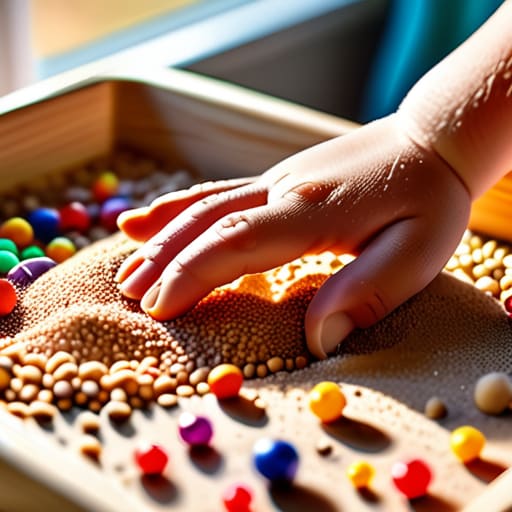
Grab a muffin tin and a bowl of different sized objects—buttons, large beads, or even different types of dried beans—and let them go to town. This is “sorting and categorization” in the classroom, but at home, it’s just a kid playing with tiny treasures. It forces them to use a controlled grip to pick up small items and place them precisely into the little muffin cups.

The Shaving Cream Canvas

If you want to go full sensory, get a tray of shaving cream (or whipped cream if you’re worried about them eating the supplies) and let them draw in it with their fingers. It’s a fantastic way to work on finger isolation—the ability to move one finger independently of the others. My eldest loved this when they were about three, tracing shapes and letters in the foam.

The Reality of the Mess

So, there you have it. From the controlled precision of threading beads to the absolute chaos of a sensory bin filled with dried beans, these activities hit the marks the textbooks talk about. You’ve got the grip strength, the hand-eye coordination, and the tactile processing covered. But let’s be honest: the summary of this list isn’t just about “skill acquisition.” It’s about the fact that most of these things involve stuff getting everywhere. When my second child was eighteen months old, we tried the shaving cream tray; it was brilliant for his finger dexterity, but I spent forty minutes scrubbing the grout afterward. The goal isn’t to execute a perfect, clinical lesson plan; it’s to give them the chance to use those tiny muscles while they are actually interested in doing it.

If you find yourself staring at a kitchen floor covered in rice or feeling like you’ve failed because a “sensory experience” turned into a meltdown, please take a breath. You aren’t failing; you’re just parenting. The evidence tells us these movements matter for their development, but my experience tells me that your sanity matters more. If the activity is too much for a Tuesday afternoon, bin it and try again when you’ve had more coffee. The fine motor skills will come, and the mess will eventually be cleaned up. Just remember that at the end of the day, you are doing a better job than you think you are.

Now, I know what you’re thinking: “Callum, this all sounds lovely until I’m staring at a pile of dried lentils on the rug and wondering where my life went wrong.” And you’re right. Sometimes, when the sensory play turns into a sensory nightmare or you’re just feeling that specific brand of isolation that only comes with a teething toddler, you don’t need a textbook; you need to talk to someone who actually gets it. If you’re feeling a bit adrift, I always suggest having a quick chat on nutten, because sometimes just venting to people in the same boat is more therapeutic than any organized activity could ever be.