
Boredom Is Not a Problem to Solve
I remember sitting in the breakroom of the paediatric ward during a night shift, watching a mother stare blankly at a color-coded planner for her six-year-old, looking more exhausted than the kids in the beds. She was trying to balance gymnastics, Mandarin, and swimming, convinced that if she stopped for even a second, her child would fall behind. We’ve been sold this idea that a “rich” childhood is one packed with back-to-back enrichment, but I’ve seen firsthand how that frantic pace actually erodes a child’s ability to just be. If you are currently staring at a calendar that looks like a game of Tetris and wondering how to avoid over scheduling children without feeling like you’re failing their potential, I want you to take a breath.
I’m not going to give you a list of “enrichment alternatives” or tell you to buy more educational toys. Instead, I’m going to give you the truth from someone who has managed both clinical schedules and the absolute chaos of four kids at home. We’ll talk about the specific age when “structured play” actually becomes a burden, how to spot the difference between a hobby and a chore, and why white space in a calendar is actually the most important developmental tool you own.
Table of Contents
- The Guilt of the Empty Calendar How to Avoid Over Scheduling Children
- Managing Extracurricular Activities Without Breaking Your Family
- Spotting the Signs of Childhood Burnout Before the Meltdown
- Childhood Mental Health and Stress the Hidden Cost of More
- Why the Importance of Unstructured Play Outweighs Any Trophy
- Finding the Benefits of Free Time for Kids and Sanity
- Five Ways to Reclaim Your Calendar (Without Feeling Like a Failure)
- The Reality Check: Three Things to Remember When the Calendar Gets Full
- The View from the Other Side of the Chaos
The Guilt of the Empty Calendar How to Avoid Over Scheduling Children

The hardest part isn’t actually the logistics of the driving; it’s the quiet, gnawing guilt that sets in when you look at a Saturday with nothing on the books. When my second child was five, I felt like a failure every time I saw a neighbor’s kid heading off to karate or swimming while mine was just… sitting on the rug with a pile of mismatched socks. We’ve been conditioned to believe that a productive child is a busy child, but in my nursing days, I saw what happens when that momentum hits a wall. You start seeing the signs of childhood burnout—the sudden irritability, the stomach aches that have no medical explanation, and that glazed look in their eyes that says they’ve simply run out of juice.
The truth is, we need to protect the importance of unstructured play like it’s a vital nutrient, because it is. When I was managing my own four, I had to learn that a blank afternoon isn’t “wasted” time; it’s recovery time. It’s the space where they learn how to be bored, which is the precursor to learning how to be creative. If we fill every gap with a structured activity, we aren’t just managing their time; we are accidentally crowding out their ability to regulate themselves.
Managing Extracurricular Activities Without Breaking Your Family

When I was working the night shifts on the paediatric ward, I saw plenty of kids who weren’t there because of a virus, but because they were simply exhausted. You start with one football practice or a swimming lesson because it seems healthy, but before you know it, your Tuesday through Friday looks like a logistics operation for a small military campaign. The trick to managing extracurricular activities isn’t about saying “no” to everything; it’s about looking for the cracks. If your six-year-old is suddenly losing their temper over a dropped piece of toast or becoming unusually withdrawn, those are classic signs of childhood burnout. At that age, they don’t have the vocabulary to say, “I’m overwhelmed,” so they just start breaking down in small, frustrating ways.
I learned this the hard way with my second child, who was seven when we realized we’d overshot the mark with piano and gymnastics. We had to learn that the importance of unstructured play isn’t just some lovely sentiment in a child development textbook; it is a biological necessity. Kids need time to be bored, to wander the garden, or to build a fort out of sofa cushions without a coach or a curriculum telling them how to do it. If your calendar is so full that there’s no room for a spontaneous trip to the park, you aren’t building a well-rounded child; you’re just building a tired one.
Spotting the Signs of Childhood Burnout Before the Meltdown
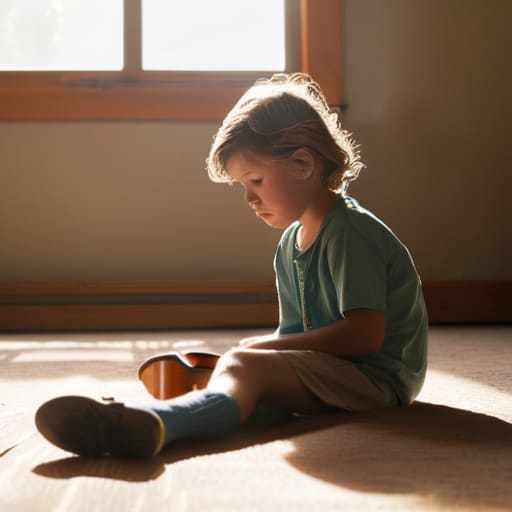
In the ward, we used to see kids who weren’t physically ill, but they looked dimmed. They had this hollowed-out quality that wasn’t a fever, but something deeper. In your own living room, the signs of childhood burnout rarely arrive with a fanfare; they arrive in the quiet shifts. It’s the way your six-year-old suddenly stops asking “why?” about everything, or the way your ten-year-old becomes uncharacteristically snappy during a simple task like putting on shoes. When a child moves from being “spirited” to being perpetually exhausted or irritable, they aren’t just being difficult—they are likely running on empty.
I remember with my second, around age five, he stopped wanting to go to his football practice. He didn’t cry; he just became incredibly lethargic, a sort of heavy-limbed compliance that felt wrong. We had focused so much on managing extracurricular activities that we’d accidentally stripped away his ability to just exist. We often forget the importance of unstructured play—that messy, aimless time where a brain actually processes the world. If your child is losing their spark, it’s usually a signal that their schedule has outpaced their capacity to cope.
Childhood Mental Health and Stress the Hidden Cost of More
When I was working the night shifts on the paediatric ward, I saw plenty of kids who were physically fine but looked utterly hollowed out. They weren’t there because of a virus; they were there because the sheer weight of expectation had finally tipped them over. We talk a lot about physical health, but we often overlook the quiet erosion of childhood mental health and stress that happens when a child’s life becomes a series of appointments rather than a series of experiences. By the time my second child was six, I realized I was treating his week like a corporate merger, and the cost was a kid who had forgotten how to just be.
The real danger isn’t just a bad mood; it’s the loss of that vital, messy space where kids learn to navigate boredom and solve their own problems. This is why the importance of unstructured play cannot be overstated. When we fill every gap with a tutor, a coach, or a music lesson, we rob them of the chance to develop internal resilience. If a child never has to figure out what to do with a rainy Tuesday afternoon without an adult directing the flow, they’ll struggle immensely when life inevitably throws them a curveball later on.
Why the Importance of Unstructured Play Outweighs Any Trophy
I remember a kid on the ward—maybe five years old—who was practically vibrating with exhaustion. His parents were lovely, terrified they were failing him, but they’d filled every gap in his week with “enrichment” sessions. He wasn’t just tired; he was losing that spark, that ability to just be. That’s when I realized that the importance of unstructured play isn’t some soft, academic concept; it’s a biological necessity. When a child is just sitting on a rug with a pile of sticks or a box of old Tupperware, they aren’t “doing nothing.” They are practicing the high-level cognitive work of problem-solving, boredom management, and self-regulation.
The problem is that we’ve been conditioned to view a quiet afternoon as a vacuum that needs filling. We see a child staring at a wall and think they’re wasting potential, when in reality, they are recharging. If you’re constantly managing extracurricular activities to ensure they hit every developmental milestone, you might inadvertently rob them of the ability to inhabit their own minds. I learned this the hard way with my second, who was six when he finally stopped asking “what’s next?” and started just playing in the garden for hours. That was the moment I knew we’d finally found the balance.
Finding the Benefits of Free Time for Kids and Sanity
When I was working the night shifts on the paediatric ward, I saw plenty of kids who looked physically fine but were clearly running on empty. They weren’t sick with a virus, but they were vibrating with a kind of frantic, low-level exhaustion that usually came from a calendar that never stopped moving. We often talk about the benefits of free time for kids as if it’s a luxury, but in reality, it’s a physiological necessity. It’s the buffer that allows their nervous systems to reset. My second child, who was about five at the time, didn’t need another gymnastics class to build coordination; he needed forty minutes of sitting in a garden being bored until his brain finally stopped whirring.
Finding that balance isn’t about being a “lazy” parent; it’s about recognizing that doing nothing is actually doing something. When you stop trying to optimize every waking hour, you stop being the family’s unpaid logistics manager and start being a person again. It’s the difference between a household that feels like a high-speed transit hub and one that actually feels like a home.
Five Ways to Reclaim Your Calendar (Without Feeling Like a Failure)
- The “One-Thing” Rule: When my second child was four, I thought we could do gymnastics, swimming, and French on Tuesdays. By week three, nobody was having fun, and I was driving in a state of near-catatonic exhaustion. Pick one structured activity per child per term. If they want to try something else, wait until the next term. It gives them time to actually miss the activity rather than just enduring it.
- Audit the “Performative” Activities: Ask yourself if you signed them up because they love it, or because you feel like you’re falling behind the other parents at the school gate. I’ve seen kids as young as six burn out on competitive football because the goal wasn’t the game, it was the trophy. If the activity feels like a chore you’re managing rather than a joy they’re experiencing, it’s time to cut it.
- Protect the “Buffer Zone”: The textbooks say kids need “transitions,” but what they mean is they need a gap between the school bell and the next commitment. If your kid is seven, they don’t need an immediate leap from a classroom to a violin lesson. They need twenty minutes of doing absolutely nothing—staring at a wall, eating a biscuit, or just being loud in the living room. Without that buffer, the meltdown at 6:00 PM isn’t a behavioral issue; it’s a physiological one.
- The Sunday Night Reality Check: Every Sunday, look at the week ahead not through the lens of “what needs to get done,” but “where are the pressure points?” If Wednesday has a late practice and Thursday has a birthday party, Friday needs to be a low-stakes night. Don’t schedule a big family outing on a day when the calendar is already screaming.
- Embrace the “Boredom Threshold”: We are terrified of our children being bored because we think it means they aren’t learning. It doesn’t. When my eldest was five, I used to rush in with a toy or a game the second he started whining about being bored. I was wrong. That boredom is the exact moment their brain starts working to figure out how to entertain itself. Let them sit in the quiet for a bit; it’s where the creativity actually lives.
The Reality Check: Three Things to Remember When the Calendar Gets Full
Trust your gut over the glossy brochures; if your child is six years old and starting to lose their spark or showing more “big feelings” at dinner than they used to, it doesn’t matter how much developmental benefit the activity promises—the schedule is already too full.
Prioritise “nothing time” as a non-negotiable part of the week, because a child who has had twenty minutes to simply stare at a bug in the garden or sit on the floor with a pile of random blocks is far more resilient than one who has been perfectly optimised by a series of structured lessons.
Accept that you will occasionally feel like you’re “falling behind” the other parents at the school gate, but remember that a quiet, slightly boring afternoon at home is often the best preventative medicine for the burnout and meltdowns that I used to see on the wards.
The View from the Other Side of the Chaos
If you take anything away from this, let it be this: a calendar full of color-coded blocks isn’t a badge of honor; it’s often just a recipe for a house full of exhausted people. We’ve looked at the burnout signs, the vital need for unstructured play, and the way “more” can actually cost us our children’s mental health. I learned this the hard way with my second child, who was four years old and would literally collapse into a heap on the floor of the car if we even mentioned a Saturday morning football match. You can provide all the enrichment in the world, but if there is no space left for them to simply exist—to be bored, to be messy, or to just be still—then you aren’t building a future, you’re just building a pressure cooker. Protect the white space on the calendar like it is the most important appointment you have.
At the end of the day, your kids won’t remember the third extracurricular activity they joined or the specific trophy they won in third grade. They will remember the afternoons when you were actually present because you weren’t rushing them out the door. They will remember the quiet, unplanned moments that happen when nothing is scheduled. Parenting is a marathon, not a sprint through a series of highly organized obstacle courses, and the most important developmental milestone isn’t a skill they learn in a classroom—it’s the feeling of being safe and steady in a home that isn’t constantly in a state of frantic motion. Take a breath. Delete a commitment. Go for a walk. You’re doing better than you think.