The Complete Guide to Bottle Feeding
I’ve spent years reading “complete guides to bottle feeding” that read like they were written by people who have never actually had milk splash onto a clean shirt at three in the morning. They talk about “optimal flow rates” and “ergonomic positioning” as if you’re performing a delicate surgical procedure rather than trying to feed a screaming six-week-old while your own brain is halfway through a sleep fog. The truth is, most of those manuals assume your baby will follow the rules, but my first two children treated a standard nipple flow like a personal insult.
In this guide, I’m stripping away the clinical jargon and the expensive, gadget-heavy nonsense you don’t actually need. I’ll give you the clinical reality of what the textbooks say, but I’m also going to tell you what actually works when you’re exhausted and the baby refuses every bottle you offer. Whether you’re navigating colicky nights or just trying to figure out if that specific teat shape is worth the money, I’ll tell you the failure modes before you encounter them. This isn’t about perfection; it’s about getting through the night.
Table of Contents
- The Manual vs Reality a Complete Guide to Bottle Feeding
- The Great Debate Bottle Feeding vs Breastfeeding in Practice
- Nipple Flow Rates for Newborns Avoiding the Midnight Meltdown
- Infant Formula Preparation and the Chaos of Safe Milk Storage Temperatures
- Sterilizing Baby Bottles Without Losing Your Sanity
- Preventing Gas During Feeding When Everything Is Going Wrong
- Five Things the Nursing Manual Skips (But Your Tired Brain Needs)
- The Three Things You Actually Need to Remember
- The View from the Other Side of the Night
The Manual vs Reality a Complete Guide to Bottle Feeding
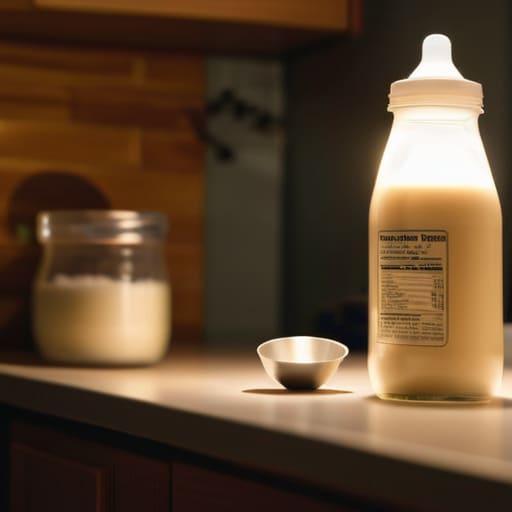
The clinical textbooks are very tidy about this. They talk about the precision of infant formula preparation, stressing exact measurements and the importance of temperature to ensure every milligram of nutrition is accounted for. In the ward, we followed these protocols to the letter because, on paper, it’s the only way to guarantee safety. But when you are standing in a dark kitchen at 3:00 AM with a screaming six-week-old, that precision feels like a cruel joke. You realize quickly that a slightly too-thick mixture or a poorly timed feed isn’t just a clinical error; it’s a recipe for a very long, very loud night.
Then there is the technical side, like choosing between different nipple flow rates for newborns. The manual will tell you to match the flow to the baby’s developmental stage to prevent choking or frustration. And it’s right, technically. But what the manual doesn’t tell you is that your baby might reject a “perfectly matched” teat simply because they are teething, or because they’ve decided they prefer the rhythm of the breast. There is no perfect setting that accounts for a baby’s mood, and sometimes, the best way to get them fed is to stop worrying about the flow rate and just focus on the connection.
The Great Debate Bottle Feeding vs Breastfeeding in Practice

If you look at any clinical pamphlet, the comparison of bottle feeding vs breastfeeding is usually presented as a clean, binary choice based on nutritional equivalence. And scientifically, that’s largely true; modern formula is a marvel of engineering. But the textbooks fail to mention the psychological weight of the choice. When I was nursing on the ward, I saw parents who felt like they were failing because they couldn’t sustain breastfeeding, and I saw others who felt guilty for choosing the convenience of a bottle. The reality is that the “best” method is whichever one allows the parent to function without collapsing from exhaustion.
In practice, the transition or the choice itself introduces a new set of logistical hurdles that no one prepares you for. Suddenly, your life revolves around the ritual of sterilizing baby bottles and obsessing over nipple flow rates for newborns to ensure they aren’t choking or working too hard. When my second child was six weeks old, I spent forty minutes trying to figure out why he was screaming, only to realize I’d picked a nipple that was too slow. It wasn’t a medical crisis; it was just a mismatch of equipment. It’s those small, frustrating variables that actually dictate your day.
Nipple Flow Rates for Newborns Avoiding the Midnight Meltdown

The textbooks will tell you that nipple flow rates for newborns are straightforward: start with “Level 1” or “Slow Flow” and work your way up. In a clinical setting, that makes perfect sense. But in your living room, at 3:00 AM, it’s a delicate, frustrating dance. If the flow is too slow, your baby gets frustrated, starts rooting aggressively, and eventually ends up in a screaming fit because they’re working harder than they should for every drop. If it’s too fast, they gulp, swallow air, and you spend the next hour trying to master the art of preventing gas during feeding while a tiny human screams in your arms.
I remember with my eldest, he was about three weeks old when we finally hit the sweet spot. We’d been using a slow-flow nipple that was essentially a drip feed, and he was becoming a very angry, very hungry little person. We switched to a slightly faster flow, and suddenly, the feeding time went from a forty-minute battle to a ten-minute peaceful event. Don’t feel like you’re “cheating” by moving up a level early if the current one is causing a meltdown; sometimes, the “correct” clinical progression is the enemy of a sleeping household.
Infant Formula Preparation and the Chaos of Safe Milk Storage Temperatures
The clinical guidelines for infant formula preparation are incredibly precise: use cooled boiled water, follow the exact scoop-to-water ratio, and discard any leftovers after an hour. In a bright kitchen at noon, that’s easy. At 3:15 AM, with one child crying in the next room and the other potentially waking up to join the chorus, precision feels like a cruel joke. I remember with my second, Leo, I once tried to “eyeball” the powder because I was too tired to find the measuring scoop. He ended up with a stomach ache that lasted until sunrise. The rule is there for a reason—too much powder can dehydrate them, and too little means they aren’t getting the calories they need to grow.
Then there is the logistical nightmare of safe milk storage temperatures. If you are prepping bottles in advance, the science says they are fine in the fridge for up to 24 hours, but the reality is that a fridge door being opened every twenty minutes by hungry toddlers makes you second-guess everything. When it comes to sterilizing baby bottles, don’t let the perfectionism paralyze you; if you’re using fresh water and a clean environment, you’re doing fine. Just remember that once that milk is warmed and the baby has started drinking, the clock is ticking. Don’t leave a half-finished bottle sitting on the side—the bacteria don’t care how tired you are.
Sterilizing Baby Bottles Without Losing Your Sanity
The clinical guidelines are very clear: boil them, use a UV sterilizer, or use chemical tablets. They make it sound like a tidy, rhythmic part of the day. But they don’t account for the fact that when you’re on your third night of interrupted sleep, a steaming pot of boiling water feels like a high-stakes chemistry experiment you’re destined to fail. When my eldest was four months old, I remember staring at a pile of plastic parts at midnight, wondering if a quick rinse with hot soapy water was “close enough” or if I was inviting a hospital visit.
The truth is, sterilizing baby bottles becomes a logistical nightmare once you move past the newborn stage and the sheer volume of gear increases. You’ll find yourself caught in a cycle of washing, drying, and re-sterilizing just to stay ahead of the curve. My advice? Don’t aim for perfection; aim for manageable hygiene. If you have a dishwasher with a high-heat sanitizing cycle, use it. It’s a lifesaver. Just remember that while cleanliness is vital for infant formula preparation, your own mental health is also a priority. If you’re exhausted, just get the bottles clean and move on.
Preventing Gas During Feeding When Everything Is Going Wrong
The textbooks will tell you to keep the baby upright and burp them every ounce, but they don’t account for the sheer physics of a screaming, arched-back infant who refuses to settle. When you’re deep into the rhythm of preventing gas during feeding, you realize that the “perfect” technique often flies out the window when you’re exhausted. I remember with my second—he was about six weeks old—that even if I followed the manual to the letter, he’d still swallow air like he was trying to win a race. It wasn’t about the technique being wrong; it was about the reality of a baby who just wasn’t ready to cooperate with the clinical ideal.
If you find yourself in that cycle of feeding, gas, and crying, check your nipple flow rates for newborns first. If the milk is coming too fast, they gulp, they swallow air, and they end up in a state of digestive misery. I’ve learned that sometimes the best way to stop the cycle isn’t a fancy new gadget, but simply slowing down. It’s about finding that sweet spot where the baby feels in control, rather than just trying to keep up with a stream they aren’t ready for.
Five Things the Nursing Manual Skips (But Your Tired Brain Needs)
- Watch the pace, not the clock. The textbooks talk about feeding intervals, but when I was nursing on the ward, I saw that a baby’s hunger doesn’t follow a spreadsheet. If they’re rooting or sucking on their hands, feed them. If they’re mid-bottle and suddenly turn their head away, stop. Forcing those last ten millilitres just to “get it all in” is a one-way ticket to a tummy ache and a very long night of fussing.
- The “Paced Feeding” trick is your best friend. When my second child was about three weeks old, I learned that if you hold the bottle horizontally rather than pointing it straight up, gravity does less of the heavy lifting. It forces them to actually swallow rather than just gulping air, which is the difference between a peaceful sleep and a baby who treats 3:00 AM like a wrestling match.
- Temperature is a suggestion, not a law. You’ll see guides saying milk must be exactly X degrees, but in the heat of a midnight meltdown, you’re going to fail at that. Aim for lukewarm, but always test it on the inside of your wrist. If it feels hot to you, it’s too hot for them. I’ve seen enough scalded tongues in my eleven years to know that “close enough” is better than “perfectly calibrated and too late.”
- Don’t fear the burp, but don’t obsess over it either. The standard advice is to burp every ounce or so, but if you have a baby who is content and settling well, don’t feel you have to interrupt their flow every two minutes. However, if they start getting that “strained” look in their face, stop immediately. My third child was a champion at swallowing air, and we learned the hard way that a mid-feed pause for a burp saved us hours of crying later.
- Accept the “Good Enough” bottle. You will eventually reach a point where you have three different brands of bottles, four different nipple shapes, and a collection of cleaning brushes that look like something from a science lab. It doesn’t matter. By the time they are four months old, they usually settle on one. Don’t spend your precious sleep hours researching the “ergonomic grip” of a new brand; just use what is clean, what is safe, and what is currently in the cupboard.
The Three Things You Actually Need to Remember
Trust your gut over the textbook when it comes to flow rates; if your baby is frustrated and pulling at the nipple at three months, it’s time to move up a level, regardless of what the “ideal” feeding schedule says.
Safety is non-negotiable but perfection is a myth; prioritize clean, safe formula prep, but don’t let the fear of a slightly imperfect sterilization cycle keep you awake at night when you’re already running on fumes.
Feeding is a rhythm, not a rulebook; whether you’re navigating gas or nipple frustration, remember that what worked for your first child at six weeks will likely fail miserably with your second at four months, and that’s just the job.
The View from the Other Side of the Night
We have covered a lot of ground, from the clinical precision of nipple flow rates to the sheer, unadulterated chaos of trying to sterilize equipment when you haven’t slept since Tuesday. If you remember anything from this, let it be this: the textbooks provide the framework, but they don’t provide the emotional scaffolding. You now know how to manage the gas, how to navigate the different milk types, and how to keep things safe, but please remember that none of these technicalities are more important than the connection happening during the feed. Whether you are struggling with a slow flow or a sudden refusal to latch, remember that the goal isn’t a perfect feeding schedule; the goal is a fed baby and a parent who hasn’t completely lost their mind.
I remember my second child, a particularly stubborn ten-week-old, who seemed to treat every bottle like a personal affront. I spent hours reading about optimal temperatures and pacing, convinced I was doing something fundamentally wrong. Looking back, I realize that perfection is a myth we tell ourselves to feel in control of something inherently unpredictable. You are doing a hard job, often in the dark, with very little immediate thanks. If the bottles are clean, the baby is growing, and you are making it through to sunrise, you are doing better than you think. Hang in there; the sleep will come, and eventually, these long nights will just be stories you tell.