
Homework: Support Without Doing It for Them
You’ll see plenty of parenting influencers claiming that the secret to academic success is a “dedicated, distraction-free zone” and a color-coded schedule that would make a Swiss watchmaker weep. They make it sound like if you just buy the right ergonomic chair or implement a “positive reinforcement reward system,” the screaming will simply stop. But they aren’t the ones sitting on a kitchen floor at 6:15 PM, staring at a half-finished worksheet on fractions while a seven-year-old performs a meltdown of Shakespearean proportions. I’ve spent years learning how to handle homework battles, and I can tell you right now: no amount of expensive stationery is going to fix the sheer, bone-deep exhaustion of trying to teach long division to a child who is quite literally refusing to exist in the same dimension as math.
I’m not here to give you more textbook theories that fall apart the moment a pencil lead snaps. Instead, I’m going to give you the messy reality of what actually works—and what doesn’t—based on eleven years of clinical observation and four children who have each tested my patience in entirely different ways. I’ll tell you when to push through, when to call it a night and walk away, and how to distinguish between a genuine learning struggle and a simple power struggle.
Table of Contents
- Why the Textbook Method Fails When Managing After School Meltdowns
- The Truth About Establishing a Homework Routine That Actually Sticks
- How to Handle Homework Battles Without Losing Your Mind
- Moving Past Threats Toward Real Positive Reinforcement for Studying
- Fostering Student Autonomy Instead of Policing Every Single Page
- Reducing Academic Stress in Kids and Effective Communication With Teachers
- Five things that actually work when the textbooks stop making sense
- The Real-World Summary
- The Long View
Why the Textbook Method Fails When Managing After School Meltdowns
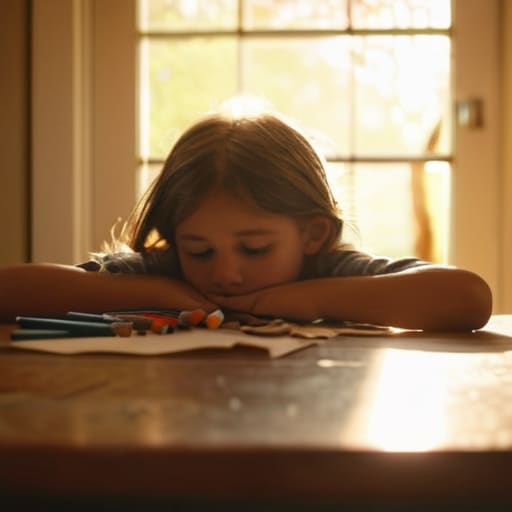
The textbook approach to establishing a homework routine is deceptively tidy. It suggests a calm, structured environment: a dedicated desk, a snack, and a clear schedule. In a clinical setting or a perfect lifestyle magazine, that works. But in my house, the reality is usually a ten-year-old who has been “on” at school for seven hours and has absolutely nothing left in the emotional tank. When you try to enforce that “structure” at 4:15 PM, you aren’t met with a focused student; you’re met with a wall of resistance.
The problem is that academic theory rarely accounts for the physiological crash that happens after school. You can talk all you want about positive reinforcement for studying, but it’s incredibly hard to reward a child who is currently experiencing a sensory meltdown because their socks feel “wrong” or their brain feels “loud.” I learned this the hard way with my second child, who was six at the time; no amount of sticker charts could fix the fact that he was simply too exhausted to process a single fraction. Sometimes, the most “effective” strategy isn’t a routine at all, but a thirty-minute window of absolute nothingness.
The Truth About Establishing a Homework Routine That Actually Sticks

The textbooks love to talk about establishing a homework routine as if it’s a piece of furniture you just assemble on a Sunday afternoon. They suggest a dedicated desk, a specific time, and a quiet environment. But they don’t account for the fact that by 4:00 PM, a six-year-old has usually spent six hours navigating the social complexities of the playground and is running on empty. When I was working on the ward, I saw how much physical exhaustion masquerades as “defiance.” If you try to force a rigid schedule onto a child who is hitting a sensory wall, you aren’t building a habit; you’re just scheduling a fight.
Instead of a clock-based routine, I found much more success with a state-of-mind routine. For my second, who was about seven, we stopped trying to do math the second he walked through the door. We learned that ten minutes of “decompressing time”—which usually involved a snack and zero questions about his day—was the only way of reducing academic stress in kids before opening a workbook. The goal isn’t to make them compliant robots; it’s about recognizing when their brain is actually capable of holding information.
How to Handle Homework Battles Without Losing Your Mind

When the shouting starts, your instinct is to escalate—to match their volume with your own “parental authority.” I learned that the hard way with my second, who was six and possessed the lung capacity of a professional opera singer. Instead of doubling down, try the “low and slow” approach. Lower your physical height so you aren’t looming over them, and drop your voice to a near-whisper. It sounds counterintuitive, but you can’t engage in a power struggle if you aren’t providing the friction. This is less about being a pushover and more about managing after-school meltdowns by refusing to join the chaos.
If the task is genuinely causing a breakdown, stop. The textbooks talk endlessly about fostering student autonomy, but they don’t account for a child who is cognitively fried by 4:00 PM. At age seven, my son’s brain simply hit a wall; no amount of “encouragement” was going to fix a neurological shutdown. If they are sobbing, the learning has stopped. Take a twenty-minute break, grab a snack, or just sit in silence. You aren’t failing the curriculum; you are just acknowledging that a child is a person, not a machine.
Moving Past Threats Toward Real Positive Reinforcement for Studying
When I was working on the paediatric ward, I saw plenty of kids who were physically fine but absolutely wiped out by the sheer pressure of “performing” at school. We tend to fall into the trap of using threats because they work in the short term—“If you don’t finish that worksheet, no iPad”—but they are a terrible way to build a brain. Threats trigger that fight-or-flight response, and you can’t learn long division when your nervous system is screaming. Instead of leaning on consequences, I’ve found that positive reinforcement for studying works much better when it’s about the effort, not just the grade. When my second child was six, I stopped praising the “A” and started noticing when he sat down without being asked. It felt small, but it changed the entire energy of the kitchen table.
The goal is fostering student autonomy, which is a fancy way of saying letting them feel like they are the ones in the driver’s seat. If we act like the drill sergeants, they’ll eventually rebel or, worse, shut down entirely. I try to catch them doing something right—even if it’s just opening the bag and taking out the pencil—and acknowledge it. It’s not about bribing them with sweets; it’s about making the struggle feel seen.
Fostering Student Autonomy Instead of Policing Every Single Page
The problem with being a “homework police officer” is that eventually, you run out of breath and they run out of interest. I spent years in nursing seeing how much easier things go when people feel they have a bit of skin in the game, and parenting is no different. When I was trying to get my second child, who was about seven, to sit down with a math sheet, I realised that hovering over their shoulder was actually increasing the tension rather than helping. By constantly correcting every pencil stroke, I wasn’t teaching math; I was just teaching them that I didn’t trust them to do it right.
Fostering student autonomy is a terrifying prospect for a parent because it feels like letting go of the steering wheel. It means moving from “Do this now” to “What is your plan for this?” When my eldest was nine, we shifted to a system where they chose the order of their tasks. It wasn’t perfect—there were still days of heavy resistance—but it was a massive step toward reducing academic stress in kids. You have to accept that they might do it slightly differently than you would, or even slightly slower, but if they own the process, you aren’t the enemy anymore.
Reducing Academic Stress in Kids and Effective Communication With Teachers
When we talk about reducing academic stress in kids, the textbooks often suggest “creating a calm environment.” That’s lovely, but it doesn’t account for the fact that your child has been sitting in a hard plastic chair, navigating social hierarchies and sensory overload for seven hours straight. By the time they hit the kitchen table, their cognitive battery isn’t just low; it’s dead. I learned this the hard way with my second, who would go from being a bright, inquisitive five-year-old to a sobbing mess the moment a worksheet touched the table. Sometimes, the most effective “academic strategy” isn’t more practice; it’s a twenty-minute snack break and a complete change of scenery.
Then there is the bridge between home and school. I used to think effective communication with teachers meant being the parent who sent an email every time a spelling test went sideways. I was wrong. Real communication isn’t about litigating every lost pencil; it’s about flagging the patterns. If your child is consistently hitting a wall at 4:00 PM, tell the teacher—not as a complaint, but as data. They need to know that the “struggle” isn’t a lack of ability, but a matter of timing and exhaustion.
Five things that actually work when the textbooks stop making sense
- Watch the clock, not just the curriculum. By the time a seven-year-old has finished a day of sitting still in a classroom, their cognitive battery is often in the red. I learned this with my second, who would turn into a different person if I asked him to look at a math sheet at 4:00 PM. If the battle is happening immediately after school, stop fighting it. Give them forty-five minutes of “brain nothing”—no screens, just a snack and some space—before you even mention the backpack.
- Separate the “doing” from the “learning.” When I was nursing, I saw how much anxiety comes from a child feeling they are being tested rather than supported. If they are stuck on a single problem for ten minutes and the tears are starting, the learning has stopped and the cortisol has taken over. At that point, the “correct” thing is to write a note to the teacher saying, “We hit a wall tonight,” and move on. You cannot teach a child who is in fight-or-flight mode.
- Use “Body Doubling” instead of hovering. The instinct is to stand over their shoulder, which feels like a spotlight to a child. Instead, sit at the table and do your own “homework”—pay bills, read a book, or fold laundry. My eldest, who was about eight when this clicked, found that having me nearby doing something quiet made the task feel like a shared domestic moment rather than an interrogation.
- The “Low-Stakes Choice” tactic. When you’re staring down a meltdown, the battle is often about power, not the actual schoolwork. Give them two paths to the same destination. “Do you want to do the reading first or the writing?” or “Do you want to work at the kitchen table or on the floor with a clipboard?” It sounds small, but giving a child a sense of agency can bypass the “no” that usually triggers the shouting match.
- Know when to call it a night. There is a specific kind of parental guilt that tells us if we don’t finish the worksheet, we are failing them. But I have seen more damage done by a 9:00 PM meltdown over long division than by a missed assignment. If they are exhausted, hungry, or genuinely distressed, the most professional—and parental—advice I can give is to close the book. The world won’t end, and your relationship with your child is worth more than a completed page of fractions.
The Real-World Summary
Stop trying to force a “perfect” routine when the child is hitting a wall; by age seven or eight, most kids have already used up their decision-making energy at school, so if they’re melting down, it’s usually a sign of exhaustion, not defiance.
Move away from the “if you don’t finish this, no screen time” threats, because while they work for about ten minutes, they usually just turn the kitchen table into a battlefield and make the actual learning feel like a punishment.
Focus on being the person who helps them navigate the frustration rather than the person policing the progress; I learned with my second child that being the “calm in the storm” gets much better results than being the “enforcer of the curriculum.”
The Long View
If you’ve taken anything from this, let it be this: the “perfect” homework routine is a myth. We’ve talked about why the textbook methods crumble under the weight of a tired six-year-old, why threats and timers often backfire, and why giving them a bit of breathing room—even when it feels counterintuitive—is actually the better long-term play. You can’t force a child to care about fractions through sheer willpower, and you certainly can’t do it if you’re both running on empty. Some nights, the win isn’t a completed worksheet; sometimes, the win is simply deciding that the math can wait until tomorrow so that everyone can go to bed without a screaming match.
I remember sitting in the paediatric ward with a mother whose seven-year-old was struggling with school anxiety, and she felt like she was failing because she couldn’t “fix” it. I wanted to tell her then what I’ll tell you now: you are not a failure because your child struggles. These battles are often just growing pains wrapped in academic frustration. Focus on the relationship, not the grade point average. In ten years, they won’t remember the spelling test they failed, but they will remember how you showed up when things got hard. Hang in there; the heavy lifting of childhood is a marathon, not a sprint.