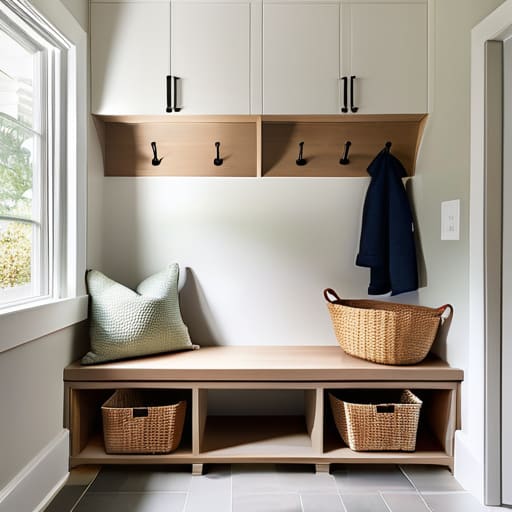
The Complete Guide to Organising a Family Home
If you’ve spent any time on Pinterest lately, you’ve seen the “perfect” life: clear countertops, matching beige bins, and a sense of calm that looks like it was achieved through heavy sedation. I’ve seen those influencers promise a complete guide to household organisation that relies on expensive acrylic dividers and a level of discipline that frankly doesn’t exist when you’re dealing with a three-year-old who has just discovered that yogurt is a weapon. Let’s be honest—those systems are designed for houses that don’t have people living in them, let alone four children who treat a tidy living room like a personal challenge.
I’m not here to sell you a lifestyle of aesthetic minimalism; I’m here to talk about functional survival. I want to give you the version of a complete guide to household organisation that actually holds up when you’re sleep-deprived and running on cold tea. I’ll tell you which systems actually save you ten minutes in the morning and which ones are just a waste of money that will be buried under a pile of mismatched socks by Tuesday. This is about finding a rhythm that works for real, messy lives, not a curated showroom.
Table of Contents
- The Theory of Order vs the Reality of a Complete Guide to Household Organis
- Why Decluttering Techniques for Home Fail When Reality Hits
- Effective Home Storage Solutions That Survive a Toddler Meltdown
- Room by Room Organisation Tips for When You Are Exhausted
- Smart Space Saving Ideas for Living in Real World Chaos
- Maintaining a Tidy Living Space Without Losing Your Mind
- Five Rules for a House That Actually Functions
- The Hard Truths to Carry With You
- The Goal Isn't Perfection, It's Sanity
The Theory of Order vs the Reality of a Complete Guide to Household Organis
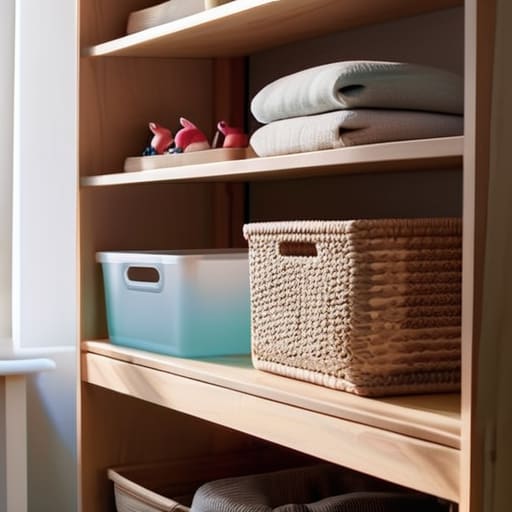
If you pick up a glossy magazine or scroll through a curated home feed, you’ll see a version of life that looks like a museum. It’s all about minimalist lifestyle habits and perfectly labeled acrylic bins where every single toy has a designated, aesthetic home. On paper, it looks effortless. You follow a step-by-step plan, implement some effective home storage solutions, and suddenly, your living room looks like a showroom. It’s a lovely theory, and in a vacuum, it’s technically correct.
But theory doesn’t account for a three-year-old who has just discovered that Lego bricks are much more fun when scattered across a dark hallway like tiny, plastic landmines. I remember when my second was about eighteen months old; I had spent an entire Saturday morning obsessing over a new system for the toy cupboard, thinking I’d finally cracked it. By 7:00 PM, that “system” had been dismantled, bypassed, and replaced by a mountain of plushies in the middle of the kitchen floor. The truth is, most advice focuses on the setup, but it completely ignores the maintenance required when life is actually happening. Real organisation isn’t about perfection; it’s about building systems that can survive a tantrum.
Why Decluttering Techniques for Home Fail When Reality Hits
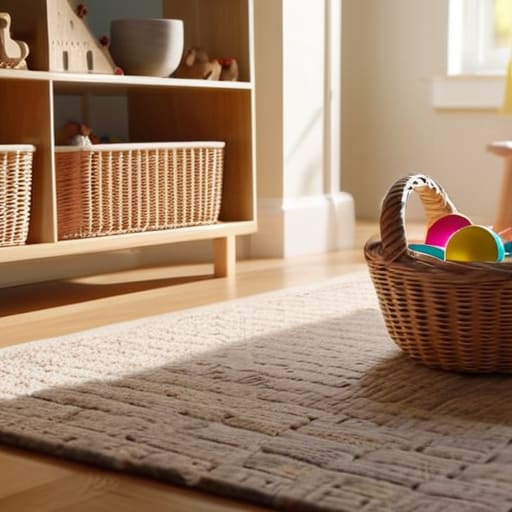
The problem with most decluttering techniques for home is that they assume your house is a static environment. They work beautifully in a lifestyle blog where the subjects don’t have a three-year-old who treats a beautifully curated toy shelf like a demolition site. I remember trying to implement a strict “one-in, one-out” rule with my second when she was twenty months old; it lasted exactly four days before a birthday party resulted in a mountain of plastic, battery-operated chaos that rendered my “system” completely moot. You can buy all the aesthetic wicker baskets you want, but if they don’t account for the velocity of stuff entering a house with growing kids, they’re just expensive dust collectors.
Most advice focuses on the initial purge, but it ignores the exhausting reality of maintaining a tidy living space when you are running on five hours of interrupted sleep. You’ll find these lovely room by room organisation tips that suggest color-coding everything, but when you’re mid-tantrum or rushing to get a toddler into a car seat, nobody is looking for the teal-colored bin. Real organization isn’t about perfection; it’s about building systems that are sturdy enough to survive a bad day.
Effective Home Storage Solutions That Survive a Toddler Meltdown
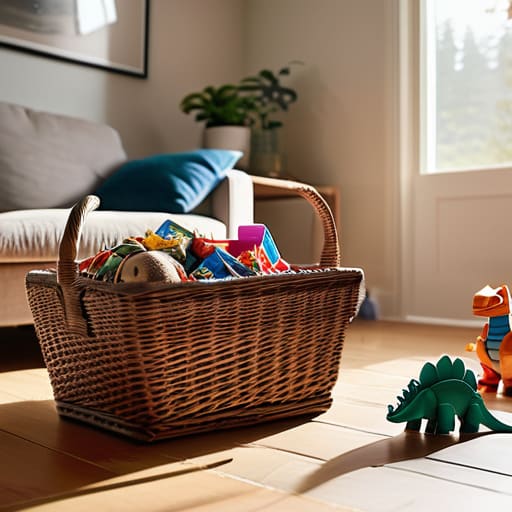
When you’re looking at those Pinterest boards, everything looks like clear acrylic bins and perfectly labeled baskets. It’s beautiful, and it’s a lie. In a house with a toddler, those rigid systems are essentially a trap. The moment a two-year-old decides they must have the blue dinosaur right now, your pristine, categorized bins become obstacles. I learned this the hard way with my second; I had spent an entire Saturday implementing these high-end effective home storage solutions, only to find myself sweeping a mountain of plastic toys into a single, overflowing tub by Tuesday evening just to keep from losing my mind.
If you want a system that actually lasts, you have to build in a “chaos buffer.” This means choosing open baskets rather than lids that require fine motor skills, and low-level shelving that allows a child to participate in the mess. I stopped trying to maintain a showroom and started using low-stakes zones. If the toy corner is a disaster, fine—but the kitchen counters stay clear. It’s about choosing smart space saving ideas that prioritise accessibility over aesthetics. If a storage solution requires you to be a perfectionist to make it work, it isn’t a solution; it’s just another chore.
Room by Room Organisation Tips for When You Are Exhausted
When you’re running on four hours of broken sleep, the idea of a “system” feels like a personal insult. If you try to tackle the whole house at once, you’ll end up sitting on the kitchen floor surrounded by half-empty toy bins and feeling like a failure. Instead, focus on micro-zones. In the living room, don’t aim for perfection; just aim for a “reset basket.” Every evening, sweep the stray Lego and rogue socks into one container. It isn’t a permanent fix, but it means you aren’t tripping over a plastic dinosaur at 6:00 AM.
In the bedrooms, forget those complex decluttering techniques for home that require color-coding everything. My second child, who was about three when I finally learned this, didn’t care about aesthetic bins; he cared about accessibility. Use open baskets for toys rather than heavy lids that require fine motor skills they haven’t mastered yet. For the nursery or toddler room, keep a “station” approach—one basket for nappies, one for sleepsuits. It’s about reducing the cognitive load when you’re too tired to think, ensuring that even when the house is chaotic, the essentials are exactly where you left them.
Smart Space Saving Ideas for Living in Real World Chaos
When you’re looking at smart space saving ideas in a glossy magazine, they usually involve clear acrylic bins and perfectly labelled spice jars. They look lovely until you’re trying to navigate a hallway blocked by a Lego dragon and a rogue tricycle. In a real house—especially one with more than two kids—vertical space is your only true ally. I learned this with my second, when he was about eighteen months old and decided that every single toy on the floor was a tripping hazard. We stopped trying to find more floor space and started using the walls. Floating shelves and over-the-door organisers aren’t just for aesthetics; they are the only way to keep the “stuff” from becoming a permanent part of the carpet.
The trick isn’t just about finding a place for things, but finding a place that a tired, distracted human can actually use. If a storage solution requires a PhD and ten minutes of precise alignment, it will fail by Tuesday. I’ve found that low-level, open bins work far better than heavy drawers or complicated lids. When my eldest was four, we moved all his “independent” items to bottom shelves. It meant he could reach them, and more importantly, he could put them back without me having to perform a surgical operation every evening.
Maintaining a Tidy Living Space Without Losing Your Mind
The problem with most advice on maintaining a tidy living space is that it assumes you have a baseline of calm to work from. It suggests “resetting the room” every evening, as if you aren’t already physically exhausted from a day of negotiating with a three-year-old who refuses to wear trousers. When I was nursing, I saw how much environment mattered for recovery, but at home, I’ve learned that a “perfectly tidy” house is often a house where nobody is actually playing. My second child, Leo, was four when I realised that trying to enforce strict minimalist lifestyle habits was a losing battle; he didn’t need a curated shelf, he needed a floor where he could actually build a Lego tower without it being a tripping hazard.
Instead of aiming for perfection, aim for functional zones. Don’t try to tidy the whole house; just focus on the “launchpad”—that one spot by the door where the school bags and shoes live. If you can keep that one area from descending into total anarchy, you’ve won a small, vital victory. It’s not about being a neat freak; it’s about reducing the friction of your morning routine so you aren’t hunting for a single lost sock while the kettle is screaming.
Five Rules for a House That Actually Functions
- The “One-Handed Rule” for Storage. When I was working the night shift on the paediatric ward, everything had to be accessible with one hand because the other was usually holding a crying toddler or a lukewarm coffee. Apply this at home: if your organisation system requires two hands, a ladder, and a specific ritual to access a single pair of socks, it will fail by Tuesday. Keep the things you use every single day—diapers, wipes, the remote, the charger—at waist height and within arm’s reach.
- Build “Forgiveness Zones.” You cannot organise a house to be museum-quality when you have four children. Instead of trying to keep the entire living room pristine, pick one corner or one basket where the “chaos” is allowed to live. When the school run is looming and you’re already ten minutes late, you don’t tidy the whole room; you just sweep the stray Lego and the half-eaten toast into the Forgiveness Zone. It’s not “mess,” it’s a temporary containment strategy.
- The “Age-Appropriate Contribution” Method. I learned with my second child, who was three, that asking him to “tidy his toys” is a useless command that leads to nothing but frustration. Instead, give him a specific, physical task: “Put all the blue cars in this box.” If you wait until they are five or six, you can give them more complex jobs, but the key is to stop expecting a toddler to understand the concept of ‘organising’ and start giving them ‘sorting’ tasks.
- Prep for the “Morning Collapse.” Most household organisation fails between 7:00 am and 8:30 am. I used to think being organised meant having a clean kitchen; I was wrong. Being organised means having the school bags by the door, the water bottles filled, and the outfits laid out the night before. If you do the heavy lifting at 9:00 pm when the house is quiet, you won’t be staring at a mountain of unfolded laundry while trying to find a matching sock at 7:15 am.
- Stop Buying “Pretty” and Start Buying “Durable.” I see so many parents buy these beautiful, delicate wicker baskets that look lovely in Instagram photos, only to have them shredded by a teething two-year-old or tipped over in a tantrum. When you are buying storage, ignore the aesthetic for a second and ask: “Can a tired person throw something into this without it breaking?” Plastic bins with lids or heavy-duty canvas bags will survive your life much better than anything that looks like it belongs in a boutique.
The Hard Truths to Carry With You
Aim for “functional enough” rather than “picture perfect”; a house that works for a four-year-old is rarely the one you see in a lifestyle magazine, and that is perfectly okay.
Choose storage based on how your children actually move, not how they should move—if a bin is too heavy for a two-year-old to lift, it’s not a solution, it’s just another obstacle.
Forgive yourself when the system breaks; the goal of organisation is to make your life easier, not to give you another job that makes you feel like you’re failing when the laundry inevitably piles up again.
The Goal Isn't Perfection, It's Sanity
If you take anything away from this, let it be that no amount of colour-coded bins or clever space-saving hacks will ever truly defeat the entropy of a house full of growing humans. We’ve talked about storage that survives a toddler meltdown and room-by-room strategies for when you’re too tired to think, but the reality is that organisation is a moving target. You can implement the most efficient systems in the world, but when my second child was three, a single bout of stomach flu turned our “systematic” toy rotation into a pile of plastic debris in the hallway within twenty minutes. The point isn’t to reach a state of permanent tidiness; it’s to build a functional baseline that prevents the chaos from becoming overwhelming.
Please, stop looking at those curated, minimalist homes on social media and expecting them to be your benchmark. Those spaces aren’t living in them; they are staging them. In a real home, especially one with young children, the goal is to create a space that supports your life rather than demanding you serve it. If the laundry stays in the basket for an extra day because you needed to sit down and breathe, that is a successful day. Focus on the systems that actually work for your specific brand of chaos, and remember that a messy house is often just a sign of a life being lived.