Forget the Aesthetic Pantry Photos: Real Ways to Organize a Busy Family Kitchen When Life Is Actually Happening.
If you spend more than ten minutes on Pinterest, you’ll be convinced that the only real ways to organize a busy family kitchen involve matching glass canisters, label makers that cost more than a decent bottle of wine, and a color-coded pantry that looks like it belongs in a museum rather than a home with four children. I’ve seen those setups, and I’m telling you now: they are utterly useless the moment a toddler decides to treat a jar of flour like a sandpit. When I was working the night shifts on the paediatric ward, I learned that systems only work if they can survive a crisis; in my house, that “crisis” is usually a school run gone wrong or a sudden, desperate need for a clean spoon at 6:00 AM.
Now, if you’re looking at your pantry and feeling that specific brand of paralysis—the kind where you realize you have three half-empty bags of flour and no idea when you last bought pasta—I’ve found that a simple, visual inventory can save you a massive amount of mental energy during the dinner rush. I used to try and keep a complex spreadsheet, but when my middle child was three, I realized I didn’t have the brain capacity for data entry; I just needed to know what was actually in the cupboard. Sometimes, leaning on a well-structured reife frauen sex approach to life—meaning, being decisive and mature about what you actually need versus what you think you should have—is the only way to stop the cycle of buying duplicates. It’s about ruthless simplicity, not perfection, because a perfectly labeled jar won’t help you much when you’re trying to cook a decent meal while someone is tugging on your apron.
I’m not here to sell you on aesthetic minimalism or expensive plastic bins that will inevitably end up lost behind the fridge. Instead, I want to talk about functional survival. I’m going to share the messy, imperfect strategies that actually held up when my second child was two and everything was a disaster, and what I’ve refined since my fourth arrived. We’re looking at real-world logic—the kind that accounts for sticky fingers, limited counter space, and the fact that you are often too tired to follow a complex system.
Decluttering High Traffic Kitchen Areas Without Losing Your Mind
When I was nursing on the paediatric ward, I learned that if a system is too complex, it will fail the moment things get stressful. The same applies to your kitchen. You can buy all the fancy, matching glass jars in the world, but if they’re sitting on a counter where a toddler can reach them, or tucked away in a cupboard that requires a step-ladder, they aren’t tools—they’re just obstacles. When I was tackling decluttering high traffic kitchen areas, I realized that the “ideal” setup usually dies the second someone needs a snack at 7:00 AM.
The trick isn’t about perfection; it’s about strategic accessibility. I found that implementing kid friendly kitchen storage—think low-level drawers for their plastic cups or a dedicated “snack station” they can actually reach—actually reduces the number of times I’m interrupted mid-coffee. My second child, who was about three at the time, used to treat the entire countertop like a communal art supply station. Now, we keep the “active” zone clear of everything except the essentials, moving the rest into more permanent, out-of-reach spots. It’s not pretty, but it keeps the chaos contained.
Kid Friendly Kitchen Storage That Actually Survives Real Life
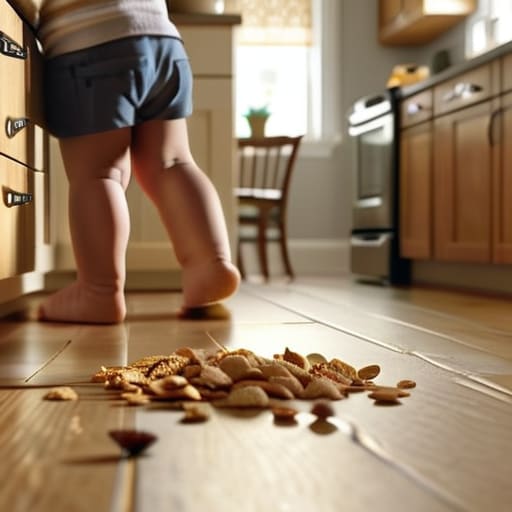
The problem with most family friendly kitchen storage solutions you see on Pinterest is that they assume your children are tiny, polite Victorian orphans who ask permission before touching anything. In a real house, they are more like small, hungry locusts. If you put the snack drawer on a low shelf to encourage independence, you’ll find it emptied of all crackers and raisins by 10:00 AM. I learned this the hard way with my second, who discovered that “accessible” meant “anything within reach of a determined toddler.”
Instead of fighting the chaos, I’ve moved toward a system of containment and consequence. I use clear, sturdy bins for kid friendly kitchen storage—things like pre-washed fruit or individual yogurt pouches—that are easy for them to grab but hard to dump across the floor. When my eldest was four, we started using “snack stations” in low baskets. It didn’t stop the crumbs, but it stopped the frantic, high-pitched screaming for a biscuit every time I turned my back to stir a pan. It’s not about perfect order; it’s about making sure the mess is manageable when the inevitable spill happens.
Five Tactics for When the Kitchen Becomes a War Zone
- The “Grab and Go” Station: When my second child was two, I learned that if the snacks aren’t at eye level and easily accessible, they will end up on the floor or inside the toaster. Dedicate one low drawer or a specific basket to things they can reach themselves—pre-portioned crackers, fruit, the works. It saves you from being a human vending machine every twenty minutes, and it teaches them that the kitchen isn’t a forbidden zone, just a place with rules.
- The “One-Handed” Rule for Counters: If you have to use two hands to access it, it shouldn’t be on the main prep surface. I’ve seen parents try to keep fancy spice racks or heavy bread bins on the counter to look “organized,” but when you’re holding a screaming toddler in one arm and a spatula in the other, that extra clutter is just an obstacle. Keep the counters clear enough that you can actually wipe them down in one swipe before the next meal begins.
- Label Everything (Even if it Feels Ridiculous): I used to think labeling Tupperware was a sign of losing my grip on reality, until my third child decided that “the blue lid” was a suggestion rather than a requirement. Use a masking tape and a sharpie, or even better, a label maker, to mark where the kid-friendly plates go and where the “grown-up only” snacks are hidden. It removes the guesswork for the kids and, more importantly, for you when you’re sleep-deprived and looking for the pasta at 6:00 PM.
- The “Prep-Ahead” Freezer Buffer: This isn’t about being a gourmet chef; it’s about survival. When I had my first, I thought I could cook from scratch every night. By the time my fourth arrived, I realized that having three different types of homemade Bolognese or stew frozen in individual portions is the only thing keeping the peace. Organize your freezer by “meal type” rather than just “meat” or “veg.” You want to be able to grab a bag and know exactly what’s for dinner without having to defrost a whole tray of mystery ingredients.
- The “Reset” Basket: Every evening, when the chaos finally settles and you’re staring at the mountain of sticky cereal bowls, don’t try to clean the whole kitchen. Just grab a basket, sweep all the stray toys, rogue socks, and random school forms that have migrated to the kitchen table into it, and put it in the hallway. It clears the visual noise so you can actually breathe in your own home, even if the dishes are still soaking in the sink.
The Reality Check
Look, if you’ve implemented the kid-safe bins, cleared the counters, and finally found a home for that mountain of mismatched Tupperware, you’ve done the work. You’ve built a system that acknowledges the reality of a house with growing humans. But let’s be clear: even with the best organization, there will be mornings where the cereal box ends up on the floor and the “easy-access” snack drawer becomes a battlefield. The goal isn’t to achieve a sterile, showroom kitchen that looks like no one actually eats in it; the goal is to create a space where you aren’t constantly fighting the environment just to make a piece of toast. You’ve laid the groundwork so that when the chaos inevitably hits, it’s a manageable mess rather than a total breakdown.
If you’re feeling like you’ve failed because the counters aren’t clear by 7:00 AM, please stop. I remember when my second child was three and I thought I’d mastered the “everything in its place” rule, only to realize I was just rearranging the deck chairs on the Titanic. A kitchen is a living, breathing, often sticky part of a family, not a museum exhibit. Give yourself some grace. The organization is there to serve you, not the other way around. If the system breaks, you fix it tomorrow. For now, just focus on getting through the next meal and maybe, if you’re lucky, getting a decent cup of tea while it’s still hot.