Teaching a Child to Lose Without Falling Apart
I remember sitting on the floor of our living room when my second was four years old, watching a board game dissolve into what felt like a legitimate international crisis. It wasn’t just a pout; it was a full-throttle, tear-streaked refusal to accept that losing a game of Snakes and Ladders was a mortal wound. Every parenting blog I’d ever skimmed promised that if you just modeled “good sportsmanship,” the problem would vanish, but they never mention the sheer exhaustion of negotiating with a tiny human who views second place as a personal insult. If you are currently wondering how to handle competitiveness while your toddler treats a simple race to the bathroom like the Olympic finals, please know that you aren’t doing anything wrong.
I’m not going to give you any lofty, theoretical frameworks that only work when everyone is well-rested and calm. Instead, I want to talk about what actually works when the stakes are low but the emotions are sky-high. I’ll share the distinction between healthy drive and the kind of rigidity that needs a gentle pivot, drawing on my years in paediatrics and the messy reality of raising four kids. We’ll look at specific ages, the common failure modes, and how to tell if your child is just being a typical kid or if you actually need to step in.
Table of Contents
- The Theory vs the Tantrum How to Handle Competitiveness
- Distinguishing Healthy vs Unhealthy Competition in the Heat of Battle
- When Winning Is Everything Managing Competitive Anxiety at Home
- The Meltdown After the Loss Real Ways of Coping With Defeat
- Beyond the Trophy Building a Growth Mindset in Competition
- From Fear of Failure to Emotional Intelligence in Sports
- Five Things the Textbooks Miss About Competitive Kids
- The Short Version for When You’re Too Tired to Read
- The Long Game
The Theory vs the Tantrum How to Handle Competitiveness
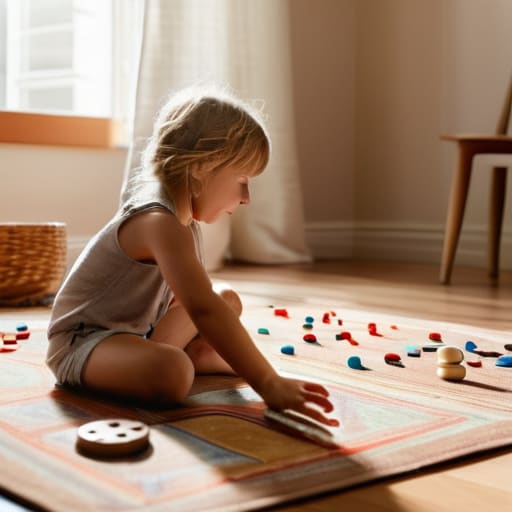
In the clinical setting, we talk about “healthy vs unhealthy competition” like it’s something you can toggle on and off with a well-placed sentence. The textbooks suggest that if you just model a growth mindset in competition, your child will naturally view a loss as a learning opportunity rather than a personal catastrophe. It sounds lovely in a seminar. But when your five-year-old is screaming on the living room floor because they lost a game of Snakes and Ladders, “learning opportunity” is the last thing on your mind.
The reality is that for a small child, losing isn’t an abstract concept; it feels like a total collapse of their world. When they are coping with defeat, they aren’t being “difficult”—they are experiencing a genuine physiological spike in stress. I remember my second, around age four, who would physically recoil if he saw someone else winning a race at the park. He wasn’t being a “sore loser”; he was genuinely terrified of being seen as less than. You can’t lecture a child out of a cortisol spike. You have to sit in the mess with them first.
Distinguishing Healthy vs Unhealthy Competition in the Heat of Battle
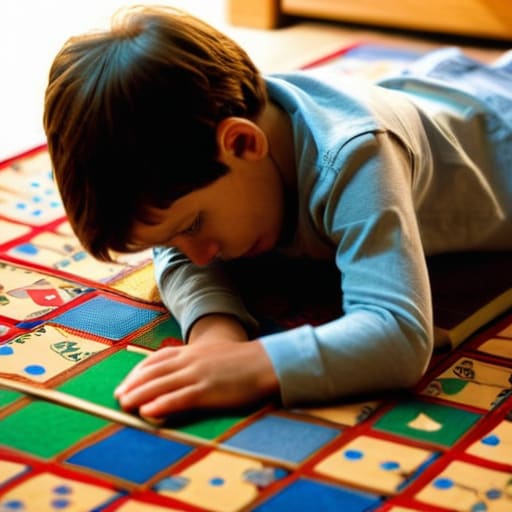
In the ward, I used to see kids who weren’t just playing; they were performing. There’s a fine line between a child who wants to win because they love the challenge and one who is terrified of what happens if they don’t. When I was dealing with my second, a boy who was about four, he didn’t just want to win at Snakes and Ladders; he wanted to dismantle the board if he lost. That’s the red flag. Healthy competition feels like energy—it’s the buzz of trying harder next time. Unhealthy competition feels like a crisis. If you notice your child isn’t just disappointed, but is actually spiraling into a sense of personal inadequacy, you aren’t just dealing with a “strong personality”; you are likely managing competitive anxiety.
The real test happens when the “win” is taken away. I look for the difference between a child who sulks for ten minutes and one who experiences a total emotional collapse. When we talk about healthy vs unhealthy competition, we’re really talking about how they handle the gap between their ambition and the reality of the scoreboard. If they can eventually find their footing, they’re learning. If they can’t, they aren’t just “losing a game”—they’re struggling with the fear that they themselves are a failure.
When Winning Is Everything Managing Competitive Anxiety at Home
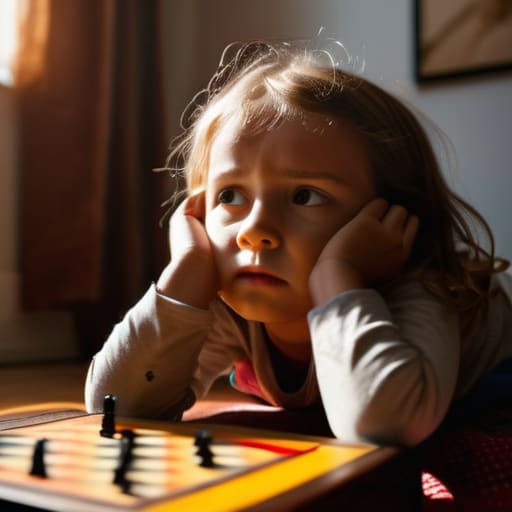
There is a specific kind of silence that falls over a house when a child loses, and it’s not the peaceful kind. It’s the heavy, pressurized silence of a four-year-old staring at a broken Lego tower or a seven-year-old sitting on the edge of the bed, convinced they are fundamentally “bad” because they didn’t come first in the race. When I was nursing, I saw this in older kids too—that paralyzing fear that their worth was tied to the scoreboard. At home, it looks like a meltdown because the board game didn’t go their way. This isn’t just being a “sore loser”; it’s managing competitive anxiety in real-time.
The trick isn’t to tell them “it doesn’t matter,” because to them, it matters more than anything in the world. That’s a lie that just makes them feel unheard. Instead, we have to work on coping with defeat by naming the feeling. When my middle child was five, I stopped trying to fix the loss and started acknowledging the sting. I’d say, “It really sucks to work that hard and not get the prize.” Once they feel seen, the panic subsides, and you can actually start talking about what comes next.
The Meltdown After the Loss Real Ways of Coping With Defeat
When the game ends and the realization hits that they haven’t won, the “growth mindset” we all talk about in theory usually goes straight out the window. My eldest, Leo, was about five when he first experienced a true, bone-shaking defeat over a simple board game. He didn’t want to talk about “learning opportunities”; he wanted to flip the table. In those moments, the most important thing isn’t teaching a lesson—it’s regulating the nervous system. You can’t lecture a child on emotional intelligence while they are in the middle of a meltdown. First, you just sit with them. You let the storm pass.
Once the tears have dried and the breathing has slowed, that’s when you move toward coping with defeat in a way that actually sticks. I’ve learned that instead of saying “it’s okay, you’ll win next time” (which is a lie that feels patronizing to a frustrated kid), try acknowledging the sting. “That really sucked, didn’t it?” works wonders. It validates the feeling without making the loss seem trivial. We aren’t aiming for perfection; we’re just trying to help them realize that a loss isn’t a character flaw.
Beyond the Trophy Building a Growth Mindset in Competition
The problem with the “participation trophy” debate is that it misses the point entirely. It’s not about whether they get a plastic gold star; it’s about what they think when they stumble. In my nursing days, I saw how much a child’s sense of self-worth hinged on their ability to handle a setback. If they think they are only “good” when they are winning, they develop a brittle kind of confidence that shatters the moment life gets difficult. We want to move them toward a growth mindset in competition, where the goal isn’t just the result, but the actual process of getting better.
I remember my second, when he was about six, absolutely losing his mind because he missed a goal in football. He didn’t need a trophy; he needed to learn that his value wasn’t tied to that single moment. You do this by changing the way you praise them. Instead of saying, “You’re such a winner,” try, “I saw how hard you worked to keep your footing even when you were tired.” It sounds small, but it’s how you start overcoming fear of failure. You’re teaching them that effort is a skill, and skill is something you can actually control.
From Fear of Failure to Emotional Intelligence in Sports
When I was on the ward, I saw plenty of kids who didn’t just get upset about losing a game; they looked genuinely devastated, like their whole sense of self had just cracked. That’s the difference between a bad day at football and overcoming fear of failure. If a child feels that losing a match makes them a “loser” as a person, we aren’t just looking at a bit of bruised ego; we’re looking at the roots of deep-seated anxiety. My second, Leo, was a classic example at age seven. If he didn’t come first in a race, he wouldn’t just cry; he would go silent, a sort of hollow, frozen kind of grief that was far harder to manage than a standard tantrum.
The goal isn’t to stop them from wanting to win—that drive is actually quite useful later in life—but to help them build emotional intelligence in sports. It’s about teaching them that the frustration they feel is a signal, not a catastrophe. When we focus on balancing ambition and teamwork, we teach them that they can be a fierce competitor while still being a decent human being to the person they just beat. It’s a slow process, and it usually involves a lot of messy, tearful conversations in the car on the way home.
Five Things the Textbooks Miss About Competitive Kids
- Stop praising the win and start praising the ‘grit.’ When my second child was four, I realized I was constantly saying, “Well done, you won!” which basically told him that if he didn’t come first, the effort didn’t matter. Now, I catch myself saying, “I saw how hard you worked to stay focused even when you were losing,” which feels a bit clunky in the moment, but it actually sticks.
- Narrate the struggle, not just the result. When a six-year-old is mid-meltdown because they lost a board game, don’t just tell them to “be a good sport”—they aren’t capable of that in the heat of the moment. Instead, say, “It’s really frustrating when you have a plan and it doesn’t work out.” It sounds simple, but naming the feeling often lowers the temperature faster than any lecture on sportsmanship.
- Model how to lose without being a martyr. I used to think I was being a good role model by saying, “Oh, it’s fine, I didn’t really want to win anyway,” when I lost at cards. That was a lie, and my kids knew it. They saw the eye-roll. Now, I say, “Man, that stung! I’m disappointed, but I had a good time playing with you.” It shows them that losing is uncomfortable, but it isn’t fatal.
- Watch out for the “Performance Parent” trap. This is the one that gets me most. You’ll be at a football match or a dance recital, and you’ll catch yourself feeling that surge of anxiety about how they look to everyone else. If you’re hovering or coaching from the sidelines, they aren’t playing for fun; they’re playing to manage your emotions. At age seven, they need a cheerleader, not a second coach.
- Create “Low-Stakes Chaos” at home. If every game in your house has a winner and a loser, the tension never breaks. We started doing things where the goal is intentionally ridiculous—like seeing who can build the tallest tower out of mismatched socks or who can make the funniest face. It teaches them that engagement is the point, and it breaks that rigid “win-at-all-costs” cycle that starts creeping in around age five or six.
The Short Version for When You’re Too Tired to Read
Ditch the “good sport” lecture in the heat of the moment; when a child is mid-meltdown because they lost a board game at age five, their prefrontal cortex has effectively left the building, so just focus on getting them calm before you try to teach them a lesson about grace.
Watch for the shift from “I want to do well” to “I am only good if I win”—if you notice the anxiety starting to outweigh the fun, it’s time to pivot the focus away from the scoreboard and back to the actual process of playing.
Remember that your reaction to their loss is the blueprint they’ll use; if you treat a defeat like a catastrophe, they will too, but if you show them that losing is just a messy, frustrating part of being human, they’ll eventually learn to navigate it without the world ending.
The Long Game
We’ve covered a lot of ground, from distinguishing between a healthy drive to succeed and the kind of soul-crushing anxiety that makes a child fear every mistake. We’ve looked at why the textbook advice on “growth mindsets” often flies out the window when a six-year-old is sobbing because they came in second, and why managing that post-loss meltdown is more important than any trophy. Ultimately, handling competitiveness isn’t about suppressing their urge to win; it’s about teaching them that their worth isn’t tied to the scoreboard. It’s about being the person who sits on the floor with them when they’ve lost, rather than the person who only cheers when they’ve won.
If you’re currently sitting in the middle of a living room strewn with discarded board games and a child who is convinced they are a failure because they lost at Uno, please hear me: you aren’t doing it wrong. I learned this the hard way with my second child, who was about seven when I finally realized that my attempts to “fix” their disappointment were actually just making them feel more alone. This is a long, messy game of trial and error. You won’t get the response right every time, and some nights will still end in tears, but as long as you are showing up with kindness and a steady hand, you are building the resilience they will need for the rest of their lives.